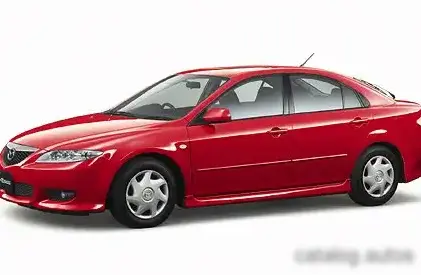
The Mazda Atenza Sport 2.3i 16V, produced between 2002 and 2005, represented a key offering in Mazda’s lineup during that period. Positioned as a mid-range trim within the broader Atenza (known as the Mazda6 outside of Japan) generation, this variant aimed to balance performance with practicality and affordability. The Atenza Sport, a five-door hatchback, was primarily marketed in Europe and Asia, offering a more dynamic alternative to traditional sedans. This specific 2.3-liter engine and four-speed automatic transmission combination provided a comfortable and capable driving experience, appealing to buyers seeking a refined daily driver.
Technical Specifications
| Brand | Mazda |
| Model | Atenza |
| Generation | Atenza Sport |
| Type (Engine) | 2.3 i 16V (175 Hp) |
| Start of production | 2002 |
| End of production | 2005 |
| Powertrain Architecture | Internal Combustion engine |
| Body type | Hatchback |
| Seats | 5 |
| Doors | 5 |
| Fuel Type | Petrol (Gasoline) |
| Weight-to-power ratio | 7.7 kg/Hp, 129.2 Hp/tonne |
| Weight-to-torque ratio | 6.2 kg/Nm, 162.4 Nm/tonne |
| Power | 175 Hp @ 6500 rpm |
| Power per litre | 77.4 Hp/l |
| Torque | 220 Nm @ 5000 rpm (162.26 lb.-ft. @ 5000 rpm) |
| Engine layout | Front, Transverse |
| Engine displacement | 2261 cm3 (137.97 cu. in.) |
| Number of cylinders | 4 |
| Engine configuration | Inline |
| Cylinder Bore | 87.5 mm (3.44 in.) |
| Piston Stroke | 94 mm (3.7 in.) |
| Compression ratio | 10.6:1 |
| Number of valves per cylinder | 4 |
| Fuel injection system | Multi-port manifold injection |
| Engine aspiration | Naturally aspirated engine |
| Valvetrain | DOHC |
| Engine oil capacity | 4.3 l (4.54 US qt | 3.78 UK qt) |
| Kerb Weight | 1355 kg (2987.26 lbs) |
| Trunk (boot) space – minimum | 430 l (15.19 cu. ft.) |
| Fuel tank capacity | 64 l (16.91 US gal | 14.08 UK gal) |
| Length | 4670 mm (183.86 in.) |
| Width | 1780 mm (70.08 in.) |
| Height | 1435 mm (56.5 in.) |
| Wheelbase | 2675 mm (105.31 in.) |
| Front track | 1540 mm (60.63 in.) |
| Rear (Back) track | 1540 mm (60.63 in.) |
| Drivetrain Architecture | The Internal combustion engine (ICE) drives the front wheels of the vehicle. |
| Drive wheel | Front wheel drive |
| Number of gears and type of gearbox | 4 gears, automatic transmission |
| Front suspension | Coil spring |
| Rear suspension | Coil spring |
| Front brakes | Ventilated discs |
| Rear brakes | Disc |
| Assisting systems | ABS (Anti-lock braking system) |
| Steering type | Steering rack and pinion |
| Power steering | Hydraulic Steering |
| Tires size | 215/45 R17 87 V |
| Wheel rims size | 7J x 17 ET 55 |
Powertrain & Engine Architecture
At the heart of the Atenza Sport 2.3i lay Mazda’s F2 2.3-liter inline-four cylinder engine. This engine, part of the FS family, was a naturally aspirated powerplant featuring a double overhead camshaft (DOHC) valvetrain and four valves per cylinder. The multi-port fuel injection system delivered fuel directly into the intake ports, optimizing combustion efficiency. The engine produced 175 horsepower at 6,500 rpm and 220 Nm (162.26 lb-ft) of torque at 5,000 rpm. The engine’s design prioritized smooth power delivery and reliability over outright performance. Paired with this engine was a four-speed automatic transmission. While not offering the most modern gear count, this transmission was known for its durability and relatively smooth shifts. The transmission was tuned for comfort and fuel efficiency, rather than aggressive acceleration.
Driving Characteristics
The 2.3i automatic Atenza Sport offered a comfortable and predictable driving experience. The four-speed automatic transmission, while lacking the responsiveness of a manual gearbox or a more modern automatic, provided smooth gear changes suitable for everyday driving. Acceleration was adequate, with the 175 hp engine providing sufficient power for highway merging and overtaking. However, it wasn’t a particularly sporty setup; the focus was on ease of use and refinement. The automatic transmission’s gear ratios were optimized for fuel economy and relaxed cruising, resulting in a slightly less engaging driving experience compared to the manual transmission options available on other Atenza trims. The weight of the vehicle, at 1355 kg (2987.26 lbs), did contribute to a slightly less nimble feel.
Equipment & Trim Levels
The Atenza Sport 2.3i typically came equipped with a respectable level of standard features. These included air conditioning, power windows and mirrors, central locking, and an integrated audio system. Interior upholstery was typically cloth, with options for leather upgrades available. The dashboard layout was functional and ergonomically designed, prioritizing ease of use. Optional extras included alloy wheels (often 17-inch, as indicated by the tire size), a sunroof, and upgraded audio systems. Safety features such as ABS (Anti-lock Braking System) were standard, contributing to the vehicle’s overall safety profile.
Chassis & Braking
The Atenza Sport utilized a MacPherson strut front suspension and a multi-link rear suspension, providing a comfortable ride and decent handling characteristics. The front brakes were ventilated discs, offering good stopping power, while the rear brakes were solid discs. The hydraulic power steering provided a reasonably weighted feel, although it lacked the precision of more modern electric power steering systems. The 215/45 R17 tires offered a good balance of grip and ride comfort. The chassis was designed to provide a stable and predictable driving experience, prioritizing comfort over outright sportiness.
Market Reception & Comparison
The Atenza Sport 2.3i automatic was generally well-received by automotive critics as a practical and comfortable family car. It was often praised for its spacious interior, comfortable ride, and reliable engine. However, some critics noted that the four-speed automatic transmission felt dated compared to the five or six-speed automatics offered by competitors. Compared to the higher-performance Atenza trims, such as those equipped with the 2.0-liter turbocharged engine, the 2.3i automatic offered less exhilarating performance but better fuel economy and a lower price point. Compared to the diesel variants, the 2.3i offered a smoother, quieter driving experience, but at the expense of fuel efficiency.
Legacy
The Mazda Atenza Sport 2.3i 16V has proven to be a relatively reliable vehicle in the used car market. The F2 2.3-liter engine is known for its durability, and the four-speed automatic transmission, while not the most advanced, is generally robust. Common maintenance items include regular oil changes, timing belt replacements (typically every 60,000-80,000 miles), and inspection of the suspension components. Today, these vehicles are often sought after by enthusiasts looking for a comfortable and affordable Japanese import. While not a particularly rare or collectible model, the Atenza Sport 2.3i remains a testament to Mazda’s commitment to building well-engineered and reliable vehicles.