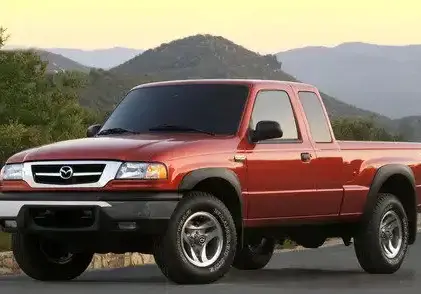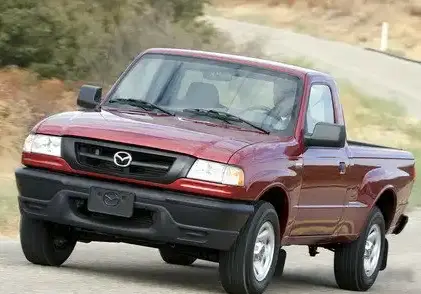
The Mazda B-Series VI 2.5 TD, produced from 1997 to 2006, represents a significant iteration of Mazda’s compact pickup truck lineage. This variant, powered by a 2.5-liter turbocharged diesel engine producing 78 horsepower, was primarily aimed at utility and commercial users. It occupied the entry-level position within the B-Series VI range, offering a more affordable and fuel-efficient alternative to the gasoline-powered models. The B-Series VI itself was a product of Mazda’s partnership with Ford, sharing many components with the contemporary Ford Ranger, and was sold in various global markets, though its presence in North America was limited.
Technical Specifications
| Brand | Mazda |
| Model | B-series |
| Generation | B-Series VI |
| Type (Engine) | 2.5 TD (78 Hp) |
| Start of production | 1997 year |
| End of production | 2006 year |
| Powertrain Architecture | Internal Combustion engine |
| Body type | Pick-up |
| Seats | 2 |
| Doors | 4 |
| Fuel Type | Diesel |
| Maximum speed | 130 km/h (80.78 mph) |
| Weight-to-power ratio | 15.4 kg/Hp, 64.7 Hp/tonne |
| Weight-to-torque ratio | 7.2 kg/Nm, 139.4 Nm/tonne |
| Power | 78 Hp @ 4100 rpm |
| Power per litre | 31.2 Hp/l |
| Torque | 168 Nm @ 2500 rpm (123.91 lb.-ft. @ 2500 rpm) |
| Engine layout | Front, Longitudinal |
| Engine Model/Code | MD25NA |
| Engine displacement | 2499 cm3 (152.5 cu. in.) |
| Number of cylinders | 4 |
| Engine configuration | Inline |
| Cylinder Bore | 93 mm (3.66 in.) |
| Piston Stroke | 92 mm (3.62 in.) |
| Compression ratio | 21.9:1 |
| Number of valves per cylinder | 3 |
| Fuel injection system | Precombustion chamber injection |
| Engine aspiration | Turbocharger |
| Engine oil capacity | 6.3 l (6.66 US qt | 5.54 UK qt) |
| Kerb Weight | 1205 kg (2656.57 lbs.) |
| Max. weight | 1725 kg (3802.97 lbs.) |
| Max load | 520 kg (1146.4 lbs.) |
| Fuel tank capacity | 70 l (18.49 US gal | 15.4 UK gal) |
| Length | 5020 mm (197.64 in.) |
| Width | 1695 mm (66.73 in.) |
| Height | 1740 mm (68.5 in.) |
| Wheelbase | 2835 mm (111.61 in.) |
| Front track | 1488 mm (58.58 in.) |
| Rear (Back) track | 1455 mm (57.28 in.) |
| Drivetrain Architecture | The Internal combustion engine (ICE) drives the rear wheels of the vehicle. |
| Drive wheel | Rear wheel drive |
| Number of gears and type of gearbox | 5 gears, manual transmission |
| Front suspension | Wishbone |
| Rear suspension | Transverse stabilizer |
| Front brakes | Disc |
| Rear brakes | Disc |
| Tires size | 205/80 R16 |
| Wheel rims size | 16 |
Powertrain & Engine Architecture
The heart of the B-Series VI 2.5 TD is the MD25NA engine, a 2.5-liter inline-four cylinder diesel. This engine utilizes a precombustion chamber injection system, a common technology in diesel engines of the era, designed to improve combustion efficiency and reduce noise. The addition of a turbocharger significantly boosts power output compared to naturally aspirated diesel engines. The MD25NA engine features three valves per cylinder, contributing to improved breathing and overall performance. The engine is longitudinally mounted in the chassis, driving the rear wheels. The 5-speed manual transmission was the standard offering for this variant, providing a direct connection between the engine and the drivetrain. While an automatic transmission was available on some B-Series models, it was not typically paired with the 2.5 TD engine due to torque limitations and the intended application of the truck.
Driving Characteristics
The 78 horsepower output of the 2.5 TD engine translates to modest performance. Acceleration is slow, particularly when laden with cargo. The engine’s strength lies in its torque, which is readily available from low engine speeds. This makes it well-suited for hauling and towing, despite its relatively low horsepower figure. The 5-speed manual transmission allows the driver to keep the engine in its optimal power band, but frequent shifting is often required, especially when navigating hilly terrain. Compared to the gasoline-powered B-Series models, the 2.5 TD offers significantly better fuel economy, but at the expense of outright speed and responsiveness. The rear-wheel-drive configuration provides a traditional truck-like driving experience, with a focus on practicality and durability.
Equipment & Trim Levels
The 2.5 TD variant of the B-Series VI was typically offered in a basic trim level, reflecting its position as the entry-level model. Standard features generally included a vinyl or cloth interior, basic instrumentation, and a functional dashboard layout. Power steering was often standard, but air conditioning and power windows were typically optional extras. The exterior trim was minimal, with black plastic bumpers and steel wheels being common features. The focus was on providing a durable and reliable work truck, rather than luxury or comfort.
Chassis & Braking
The B-Series VI chassis is a body-on-frame construction, providing a robust and durable platform for hauling and off-road use. The front suspension utilizes a wishbone design, while the rear suspension features a transverse stabilizer bar to improve handling and reduce body roll. The braking system consists of disc brakes on all four wheels, providing adequate stopping power for the vehicle’s weight and performance. The tires are typically 205/80 R16, chosen for their durability and all-terrain capability.
Market Reception & Comparison
The Mazda B-Series VI 2.5 TD was generally well-received in markets where diesel-powered pickups were popular, particularly in Europe and Asia. Critics praised its fuel efficiency and durability, but noted its lack of power and refinement compared to gasoline-powered alternatives. Compared to the higher-output gasoline engines available in the B-Series VI range, the 2.5 TD offered a more economical option for those prioritizing practicality and low running costs. It also provided a more affordable entry point into the B-Series lineup. The Ford Ranger, being mechanically similar, offered a comparable diesel option, creating direct competition within the same partnership.
Legacy
The MD25NA engine, while not known for being particularly sophisticated, proved to be a relatively reliable and durable powerplant. Properly maintained examples of the B-Series VI 2.5 TD can still be found in use today, often as work vehicles or in the hands of enthusiasts. The availability of spare parts is generally good, thanks to the shared components with the Ford Ranger. However, age-related issues such as corrosion and wear on suspension components are common. In the used car market, the 2.5 TD variant typically commands a lower price than the gasoline-powered models, reflecting its lower performance and basic trim level. Despite its limitations, the B-Series VI 2.5 TD remains a testament to Mazda’s commitment to building durable and practical vehicles.