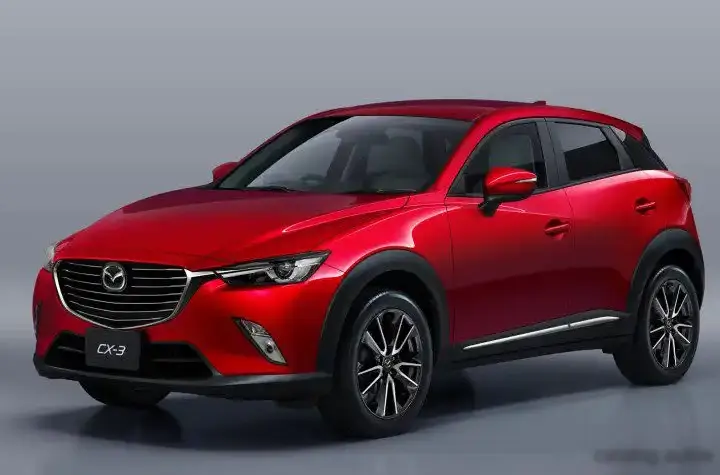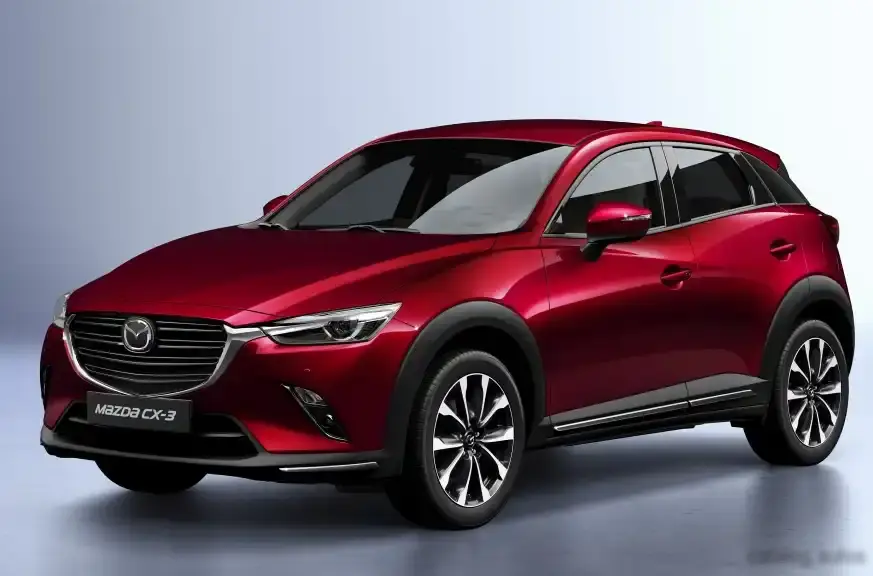
The Mazda CX-3, specifically the facelifted 2018 model year equipped with the 2.0-liter Skyactiv-G engine producing 148 horsepower and paired with a six-speed automatic transmission, represents a significant offering in the subcompact SUV segment. Introduced for the 2019 model year following the mid-cycle refresh, this variant aimed to balance fuel efficiency, practicality, and Mazda’s signature driving dynamics. It occupied a mid-range position within the CX-3 lineup, offering a step up in performance from the base 2.0-liter engine while remaining more accessible than potential future performance-oriented trims. The CX-3, as a whole, was designed to appeal to buyers seeking a stylish and engaging alternative to more conventional small SUVs, particularly in markets like North America where the subcompact crossover segment was rapidly expanding.
Technical Specifications
| Brand | Mazda |
| Model | CX-3 |
| Generation | CX-3 (facelift 2018) |
| Type (Engine) | 2.0 Skyactiv-G (148 Hp) Automatic |
| Start of production | 2019 |
| Powertrain Architecture | Internal Combustion engine |
| Body type | SUV |
| Seats | 5 |
| Doors | 5 |
| Fuel consumption (combined) | 5.8 l/100 km (40.6 US mpg, 48.7 UK mpg, 17.2 km/l) |
| CO2 emissions | 135.5 g/km |
| Fuel Type | Petrol (Gasoline) |
| Weight-to-power ratio | 8.9 kg/Hp, 113 Hp/tonne |
| Weight-to-torque ratio | 6.7 kg/Nm, 148.9 Nm/tonne |
| Power | 148 Hp @ 6000 rpm |
| Power per litre | 74.1 Hp/l |
| Torque | 195 Nm @ 2800 rpm (143.82 lb.-ft. @ 2800 rpm) |
| Maximum engine speed | 6800 rpm |
| Engine layout | Front, Transverse |
| Engine Model/Code | PEXB |
| Engine displacement | 1998 cm3 (121.93 cu. in.) |
| Number of cylinders | 4 |
| Engine configuration | Inline |
| Cylinder Bore | 83.5 mm (3.29 in.) |
| Piston Stroke | 91.2 mm (3.59 in.) |
| Compression ratio | 13:1 |
| Number of valves per cylinder | 4 |
| Fuel injection system | Direct injection |
| Engine oil capacity | 4.2 l (4.44 US qt | 3.7 UK qt) |
| Coolant capacity | 5.9 l (6.23 US qt | 5.19 UK qt) |
| Kerb Weight | 1310 kg (2888.06 lbs.) |
| Max. weight | 1762 kg (3884.55 lbs.) |
| Max load | 452 kg (996.49 lbs.) |
| Trunk (boot) space – minimum | 240-420 l (8.48 – 14.83 cu. ft.) |
| Fuel tank capacity | 48 l (12.68 US gal | 10.56 UK gal) |
| Length | 4275 mm (168.31 in.) |
| Width including mirrors | 2049 mm (80.67 in.) |
| Height | 1545 mm (60.83 in.) |
| Wheelbase | 2570 mm (101.18 in.) |
| Front track | 1523 mm (59.96 in.) |
| Rear (Back) track | 1521 mm (59.88 in.) |
| Drivetrain Architecture | Front wheel drive |
| Number of gears and type of gearbox | 6 gears, automatic transmission |
| Front suspension | Independent, type McPherson with coil spring and anti-roll bar |
| Rear suspension | Torsion |
| Front brakes | Ventilated discs |
| Rear brakes | Disc |
| Tires size | 215/50 R18 |
| Wheel rims size | 18 |
Powertrain & Engine Architecture
At the heart of this CX-3 variant lies Mazda’s 2.0-liter Skyactiv-G four-cylinder engine, designated as the PEXB. This engine is a naturally aspirated powerplant known for its high compression ratio of 13:1, achieved through careful engineering and optimized combustion chamber design. Direct fuel injection is employed to precisely deliver fuel into the cylinders, enhancing efficiency and power output. The engine utilizes a dual-overhead camshaft (DOHC) valvetrain with four valves per cylinder, contributing to its responsive nature. The six-speed automatic transmission, a key component of this configuration, is designed to provide smooth and efficient gear changes. It features a torque converter and utilizes Mazda’s proprietary control logic to optimize shift points based on driving conditions. This transmission isn’t known for being particularly sporty, prioritizing fuel economy and comfort over aggressive downshifts.
Driving Characteristics
The 148-horsepower, automatic transmission CX-3 delivers a comfortable and predictable driving experience. Acceleration is adequate for everyday driving, but it isn’t particularly brisk. The automatic transmission, while smooth, can feel somewhat hesitant during quick acceleration maneuvers. Compared to the manual transmission version of the same engine, the automatic sacrifices some responsiveness. The gear ratios are tuned for fuel efficiency, meaning the engine often operates at lower RPMs during cruising. This contributes to a quieter cabin experience but can sometimes result in the transmission needing to downshift when more power is required. Compared to the higher-output 2.5-liter engine offered in some CX-3 trims, this 2.0-liter version feels noticeably less powerful, especially when fully loaded or tackling steep inclines.
Equipment & Trim Levels
The 2.0-liter automatic CX-3 typically came standard with a respectable array of features. These generally included air conditioning, power windows and locks, a touchscreen infotainment system with Bluetooth connectivity, and a rearview camera. Higher trim levels, such as the Grand Touring, added features like leather upholstery, a premium sound system, automatic climate control, and advanced safety technologies like blind-spot monitoring and rear cross-traffic alert. Optional extras often included a power sunroof, navigation system, and adaptive front lighting. Interior upholstery was typically cloth on lower trims, upgrading to leatherette or full leather on higher-end models. The dashboard layout was consistent across trims, featuring a minimalist design with a focus on driver ergonomics.
Chassis & Braking
The CX-3’s chassis is built around a front-wheel-drive platform. The front suspension utilizes an independent McPherson strut setup with coil springs and an anti-roll bar, providing a comfortable ride and decent handling. The rear suspension employs a torsion beam setup, which is a cost-effective solution that prioritizes space efficiency. Braking duties are handled by ventilated discs at the front and solid discs at the rear. Anti-lock braking system (ABS) is standard, along with electronic brake-force distribution (EBD). The steering is electrically assisted, providing a light and easy steering feel. Stabilizer bars are fitted to both the front and rear axles to reduce body roll during cornering.
Market Reception & Comparison
Critics generally praised the CX-3 for its stylish design, engaging handling, and upscale interior. However, the 2.0-liter automatic variant received mixed reviews. While appreciated for its fuel efficiency (around 40.6 US mpg combined), some reviewers found the engine to be underpowered, particularly when paired with the automatic transmission. Compared to competitors like the Honda HR-V and Toyota C-HR, the CX-3 offered a more engaging driving experience but lacked the spaciousness of some rivals. The 1.8L and 2.5L trims were often seen as better options for those prioritizing performance or interior space, respectively. Reliability reports generally indicate good long-term dependability for the Skyactiv-G engine and automatic transmission, although regular maintenance is crucial.
Legacy
The Mazda CX-3, including the 2.0-liter automatic variant, has established a solid reputation in the used car market. Its combination of style, fuel efficiency, and Mazda’s renowned build quality makes it an attractive option for buyers seeking a reliable and affordable subcompact SUV. The Skyactiv-G engine has proven to be durable and relatively maintenance-free, although owners should be mindful of regular oil changes and timing chain inspections. While not the fastest or most spacious vehicle in its class, the CX-3’s engaging driving dynamics and upscale interior continue to appeal to a wide range of buyers, ensuring its continued presence on used car lots for years to come.