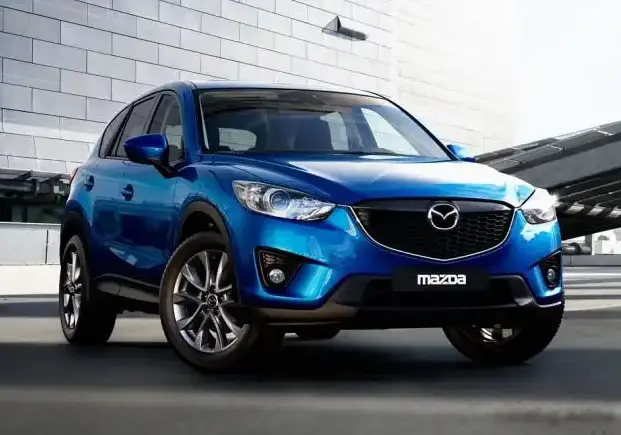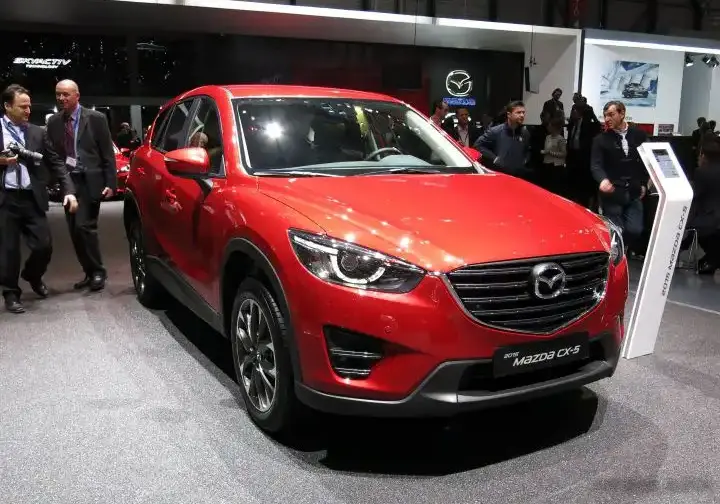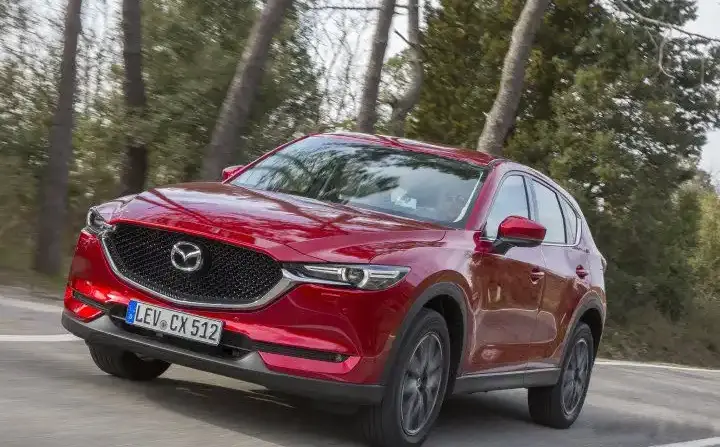
The Mazda CX-5 II 2.0 SKYACTIV-G (156 Hp) Skyactiv-Drive, produced from March 2017 to 2021, represents a key variant within the second generation of Mazda’s popular compact SUV. Positioned as a mainstream offering in the CX-5 lineup, it aimed to balance fuel efficiency with acceptable performance for everyday driving. This model was primarily marketed in Europe, Asia, and Australia, where compact SUVs with smaller displacement engines were highly sought after. It utilized Mazda’s SKYACTIV technology suite, focusing on maximizing combustion efficiency and reducing weight. The CX-5 II, built on the KF platform, represented a significant refinement over the first-generation CX-5, with improvements in ride quality, interior materials, and technology.
Technical Specifications
| Brand | Mazda |
| Model | CX-5 |
| Generation | CX-5 II |
| Type (Engine) | 2.0 SKYACTIV-G (156 Hp) Skyactiv-Drive |
| Start of production | March, 2017 |
| End of production | 2021 |
| Powertrain Architecture | Internal Combustion engine |
| Body type | SUV |
| Seats | 5 |
| Doors | 5 |
| Fuel consumption (urban) | 8.1 l/100 km (29 US mpg, 34.9 UK mpg, 12.3 km/l) |
| Fuel consumption (extra urban) | 6.2 l/100 km (37.9 US mpg, 45.6 UK mpg, 16.1 km/l) |
| Fuel consumption (combined) | 6.9 l/100 km (34.1 US mpg, 40.9 UK mpg, 14.5 km/l) |
| Fuel Type | Petrol (Gasoline) |
| Emission standard | Euro 5 |
| Weight-to-power ratio | 10 kg/Hp, 100.1 Hp/tonne |
| Weight-to-torque ratio | 7.8 kg/Nm, 128.3 Nm/tonne |
| Power | 156 Hp @ 6000 rpm |
| Power per litre | 78.1 Hp/l |
| Torque | 200 Nm @ 4000 rpm (147.51 lb.-ft. @ 4000 rpm) |
| Engine layout | Front, Transverse |
| Engine displacement | 1998 cm3 (121.93 cu. in.) |
| Number of cylinders | 4 |
| Engine configuration | Inline |
| Cylinder Bore | 83.5 mm (3.29 in.) |
| Piston Stroke | 91.2 mm (3.59 in.) |
| Compression ratio | 13:1 |
| Number of valves per cylinder | 4 |
| Fuel injection system | Direct injection |
| Engine aspiration | Naturally aspirated engine |
| Valvetrain | DOHC |
| Engine oil capacity | 4.2 l (4.44 US qt | 3.7 UK qt) |
| Coolant | 7.1 l (7.5 US qt | 6.25 UK qt) |
| Kerb Weight | 1559 kg (3437.01 lbs.) |
| Max. weight | 2025 kg (4464.36 lbs.) |
| Max load | 466 kg (1027.35 lbs.) |
| Trunk (boot) space – minimum | 442 l (15.61 cu. ft.) |
| Trunk (boot) space – maximum | 1342 l (47.39 cu. ft.) |
| Fuel tank capacity | 56 l (14.79 US gal | 12.32 UK gal) |
| Permitted trailer load with brakes (12%) | 1800 kg (3968.32 lbs.) |
| Permitted trailer load without brakes | 750 kg (1653.47 lbs.) |
| Permitted towbar download | 150 kg (330.69 lbs.) |
| Length | 4550 mm (179.13 in.) |
| Width | 1840 mm (72.44 in.) |
| Height | 1675 mm (65.94 in.) |
| Wheelbase | 2700 mm (106.3 in.) |
| Front track | 1585 mm (62.4 in.) |
| Rear (Back) track | 1585 mm (62.4 in.) |
| Ride height (ground clearance) | 193 mm (7.6 in.) |
| Minimum turning circle (turning diameter) | 11 m (36.09 ft.) |
| Drivetrain Architecture | The Internal combustion engine (ICE) drives the front wheels of the vehicle. |
| Drive wheel | Front wheel drive |
| Number of gears and type of gearbox | 6 gears, automatic transmission Skyactiv-Drive |
| Front suspension | Independent, type McPherson with coil spring and anti-roll bar |
| Rear suspension | Independent multi-link spring suspension with stabilizer |
| Front brakes | Ventilated discs, 297 mm |
| Rear brakes | Disc, 303 mm |
| Assisting systems | ABS (Anti-lock braking system) |
| Steering type | Steering rack and pinion |
| Power steering | Electric Steering |
| Tires size | 225/65 R17 |
| Wheel rims size | 7J x 17 |
Powertrain & Engine Architecture
At the heart of the CX-5 II 2.0 SKYACTIV-G is Mazda’s PE-VPH engine, a 1998cc inline-four cylinder gasoline engine. This engine is a cornerstone of Mazda’s SKYACTIV technology, designed for high compression (13:1) and efficient combustion. It utilizes direct injection, optimizing fuel delivery and contributing to improved power and fuel economy. The engine employs a double overhead camshaft (DOHC) valvetrain with four valves per cylinder, enhancing breathing and overall performance. The Skyactiv-Drive automatic transmission is a six-speed unit with a torque converter. Unlike traditional automatic transmissions, the Skyactiv-Drive prioritizes quick, seamless shifts and a more direct driving feel. It achieves this through a sophisticated control system that anticipates driver inputs and selects the optimal gear. This transmission was designed to mimic the responsiveness of a manual gearbox while retaining the convenience of an automatic.
Driving Characteristics
The 156 hp and 200 Nm (147.51 lb-ft) of torque produced by this engine and transmission combination resulted in a comfortable, but not particularly sporty, driving experience. Acceleration was adequate for everyday driving, but overtaking maneuvers required planning. The Skyactiv-Drive transmission contributed to smooth gear changes, but it wasn’t as quick to downshift as some dual-clutch transmissions. Compared to the more powerful 2.5-liter SKYACTIV-G engine offered in other CX-5 trims, this 2.0-liter version felt noticeably less responsive, especially when fully loaded or climbing hills. The gear ratios were tuned for fuel efficiency, prioritizing higher gears at cruising speeds. The front-wheel-drive configuration provided predictable handling, but lacked the enhanced traction and stability of the available all-wheel-drive system.
Equipment & Trim Levels
The 2.0 SKYACTIV-G variant typically served as the entry-level or mid-range trim in the CX-5 II lineup. Standard equipment generally included air conditioning, power windows and locks, a basic infotainment system with a touchscreen display, and a suite of safety features such as ABS, stability control, and multiple airbags. Interior upholstery was typically cloth, with options for leather upgrades on higher sub-trims. Optional extras included a sunroof, navigation system, premium sound system, and advanced driver-assistance systems like blind-spot monitoring and lane departure warning. The dashboard layout was clean and modern, with a focus on ergonomics and ease of use.
Chassis & Braking
The CX-5 II featured a MacPherson strut front suspension and a multi-link rear suspension, providing a comfortable and controlled ride. Stabilizer bars were fitted to both axles to reduce body roll during cornering. The braking system consisted of ventilated discs at the front and solid discs at the rear. ABS (Anti-lock Braking System) was standard, enhancing braking performance and stability in emergency situations. The suspension tuning was geared towards comfort rather than outright sportiness, prioritizing a smooth ride over sharp handling. The 17-inch wheels and 225/65 R17 tires contributed to a balanced ride and handling compromise.
Market Reception & Comparison
The Mazda CX-5 II 2.0 SKYACTIV-G was generally well-received by automotive critics for its fuel efficiency, comfortable ride, and stylish design. However, some reviewers noted that the 156 hp engine felt underpowered, particularly when compared to competitors offering more powerful engines. Fuel economy was a strong point, consistently achieving figures close to the official combined consumption of 6.9 l/100 km (34.1 US mpg). In terms of reliability, the SKYACTIV engines have proven to be generally robust, with few widespread issues reported. Compared to the 2.5-liter variants, this 2.0-liter model offered a lower price point, making it an attractive option for budget-conscious buyers.
Legacy
The Mazda CX-5 II 2.0 SKYACTIV-G remains a popular choice in the used car market, appreciated for its reliability, fuel efficiency, and overall practicality. The Skyactiv-Drive transmission, while not without its critics, has proven to be durable and relatively maintenance-free. The engine itself is known for its longevity, provided it receives regular maintenance. As a result, well-maintained examples of this variant continue to command reasonable prices and offer a compelling value proposition for buyers seeking a comfortable and efficient compact SUV.