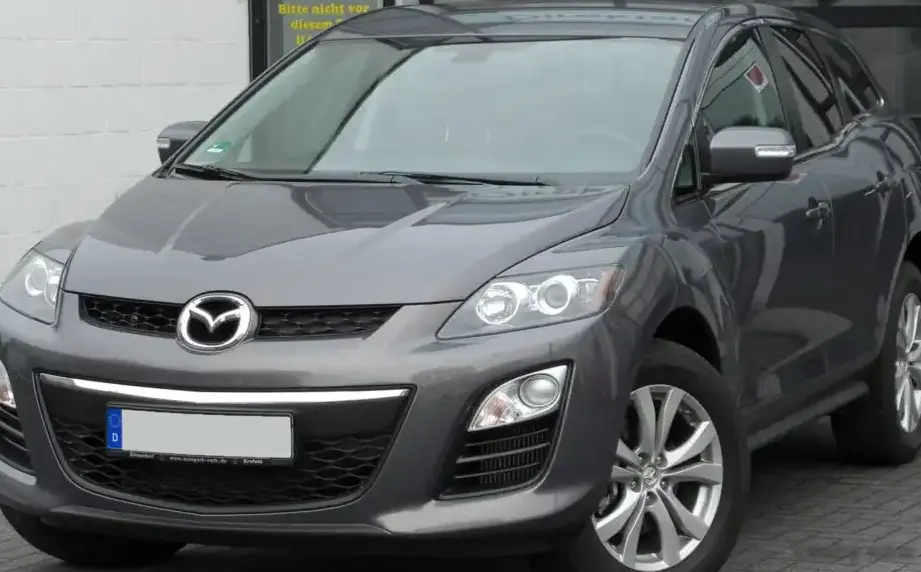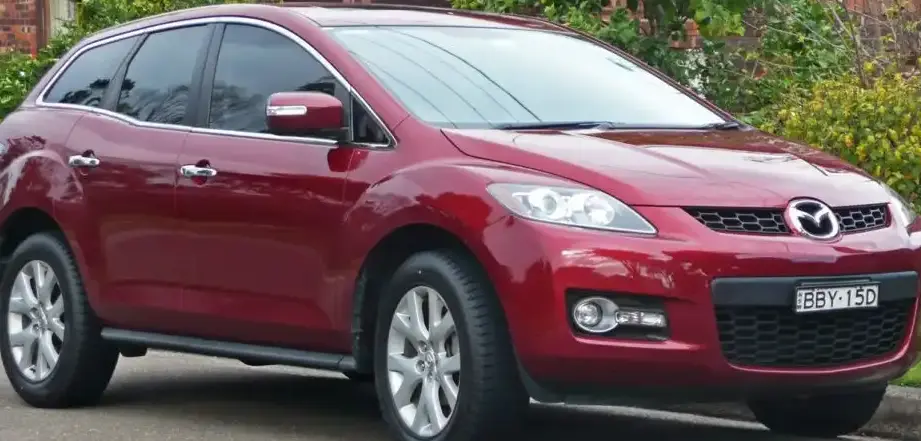
The Mazda CX-7 2.3 DISI Turbo AWD, produced from 2007 to 2009, represented Mazda’s entry into the burgeoning crossover SUV market. Positioned as a sportier alternative to more traditionally styled SUVs, the CX-7 aimed to deliver a more engaging driving experience alongside the practicality expected of the segment. This particular variant, equipped with the 2.3-liter DISI turbocharged engine and all-wheel drive, was a key offering in the CX-7 lineup, targeting buyers who desired performance and all-weather capability. It was built on Mazda’s C-platform, shared with models like the Mazda Atenza (Mazda6).
Technical Specifications
| Brand | Mazda |
| Model | CX-7 |
| Generation | CX-7 |
| Type (Engine) | 2.3 DISI Turbo (260 Hp) AWD |
| Start of production | 2007 |
| End of production | 2009 |
| Powertrain Architecture | Internal Combustion engine |
| Body type | SUV, Crossover |
| Seats | 5 |
| Doors | 5 |
| Fuel consumption (economy) – urban (NEDC) | 13.8 l/100 km (17 US mpg, 20.5 UK mpg, 7.2 km/l) |
| Fuel consumption (economy) – extra urban (NEDC) | 8.1 l/100 km (29 US mpg, 34.9 UK mpg, 12.3 km/l) |
| Fuel consumption (economy) – combined (NEDC) | 10.2 l/100 km (23.1 US mpg, 27.7 UK mpg, 9.8 km/l) |
| CO2 emissions (NEDC) | 243 g/km |
| Fuel Type | Petrol (Gasoline) |
| Acceleration 0 – 100 km/h | 8 sec |
| Acceleration 0 – 62 mph | 8 sec |
| Acceleration 0 – 60 mph | 7.6 sec |
| Maximum speed | 210 km/h (130.49 mph) |
| Emission standard | Euro 4 |
| Weight-to-power ratio | 6.7 kg/Hp, 149.4 Hp/tonne |
| Weight-to-torque ratio | 4.6 kg/Nm, 218.4 Nm/tonne |
| Power | 260 Hp @ 5500 rpm |
| Power per litre | 115 Hp/l |
| Torque | 380 Nm @ 3000 rpm (280.27 lb.-ft. @ 3000 rpm) |
| Engine layout | Front, Transverse |
| Engine Model/Code | L3-VDT |
| Engine displacement | 2261 cm3 (137.97 cu. in.) |
| Number of cylinders | 4 |
| Engine configuration | Inline |
| Cylinder Bore | 87.5 mm (3.44 in.) |
| Piston Stroke | 94 mm (3.7 in.) |
| Compression ratio | 9.5:1 |
| Number of valves per cylinder | 4 |
| Fuel injection system | Direct injection |
| Engine aspiration | Turbocharger, Intercooler |
| Valvetrain | DOHC |
| Engine oil capacity | 5.7 l (6.02 US qt | 5.02 UK qt) |
| Coolant | 9 l (9.51 US qt | 7.92 UK qt) |
| Kerb Weight | 1740 kg (3836.04 lbs.) |
| Max. weight | 2301 kg (5072.84 lbs.) |
| Max load | 561 kg (1236.79 lbs.) |
| Trunk (boot) space – minimum | 455 l (16.07 cu. ft.) |
| Trunk (boot) space – maximum | 774 l (27.33 cu. ft.) |
| Fuel tank capacity | 69 l (18.23 US gal | 15.18 UK gal) |
| Length | 4675 mm (184.06 in.) |
| Width | 1870 mm (73.62 in.) |
| Height | 1645 mm (64.76 in.) |
| Wheelbase | 2750 mm (108.27 in.) |
| Front track | 1615 mm (63.58 in.) |
| Rear (Back) track | 1610 mm (63.39 in.) |
| Minimum turning circle | 11.4 m (37.4 ft.) |
| Drivetrain Architecture | The Internal combustion engine (ICE) drives the front wheels permanently, and the rear wheels are driven through an electrically or mechanically operated clutch if necessary. |
| Drive wheel | All wheel drive (4×4) |
| Number of gears and type of gearbox | 6 gears, manual transmission |
| Front suspension | Independent, type McPherson with coil spring and anti-roll bar |
| Rear suspension | Independent multi-link spring suspension with stabilizer |
| Front brakes | Ventilated discs |
| Rear brakes | Ventilated discs |
| Assisting systems | ABS (Anti-lock braking system) |
| Steering type | Steering rack and pinion |
| Power steering | Electric Steering |
| Tires size | 236/60 R18; 235/55 R19 |
| Wheel rims size | 7.5J x 18; 7.5J x 19 |
INTRODUCTION
The Mazda CX-7 2.3 DISI Turbo AWD was a significant model for Mazda, representing a move upmarket and a focus on driving dynamics within the crossover segment. Introduced in 2007 and continuing through 2009, this variant utilized Mazda’s direct injection spark ignition (DISI) technology coupled with a turbocharger to produce a respectable 260 horsepower. The all-wheel-drive system provided enhanced traction and stability, making it suitable for a variety of driving conditions. Within the CX-7 range, this trim level sat at the top, offering the highest performance and a more premium experience compared to the base 2.5L naturally aspirated engine options.
Powertrain & Engine Architecture
At the heart of the CX-7 2.3 DISI Turbo AWD lies the L3-VDT engine, a 2.3-liter inline-four cylinder powerplant. This engine is notable for its direct injection system, which allows for more precise fuel delivery and improved combustion efficiency. The DISI system, combined with a twin-scroll turbocharger and intercooler, enables the engine to produce 260 hp at 5500 rpm and 380 Nm (280 lb-ft) of torque at 3000 rpm. The engine features a double overhead camshaft (DOHC) valvetrain with four valves per cylinder. The engine’s block is aluminum, contributing to weight savings. The 6-speed manual transmission was standard, providing drivers with full control over the engine’s power.
Driving Characteristics
The CX-7 2.3 DISI Turbo AWD offered a noticeably more spirited driving experience than its lower-powered siblings. Acceleration from 0-60 mph was achieved in around 7.6 seconds, making it one of the quicker crossovers in its class. The turbocharger provided a surge of power in the mid-range, offering strong passing acceleration. The 6-speed manual transmission allowed for precise gear selection and maximized engine performance. While the all-wheel-drive system added weight, it also enhanced cornering stability and provided confident traction in inclement weather. Compared to the naturally aspirated 2.5L engine, the turbo variant felt significantly more responsive and capable, though the turbo lag was noticeable at lower RPMs.
Equipment & Trim Levels
The 2.3 DISI Turbo AWD trim typically included a generous array of standard features. These often included leather upholstery, a premium sound system, automatic climate control, power-adjustable front seats, and alloy wheels. Optional extras could include a sunroof, navigation system, and upgraded audio options. The interior design focused on a sporty aesthetic, with metallic accents and a driver-focused layout. The CX-7 aimed to provide a more upscale interior experience than many of its competitors, emphasizing quality materials and thoughtful design.
Chassis & Braking
The CX-7 utilized an independent suspension system at all four corners. The front suspension employed a McPherson strut design with coil springs and an anti-roll bar, while the rear suspension featured a multi-link setup with a stabilizer bar. This configuration provided a good balance between ride comfort and handling precision. Braking duties were handled by ventilated discs on all four wheels, providing ample stopping power. The anti-lock braking system (ABS) was standard, enhancing safety and control during emergency braking situations. The steering was a rack-and-pinion system with electric power assistance, offering responsive and precise steering feel.
Market Reception & Comparison
The Mazda CX-7 2.3 DISI Turbo AWD was generally well-received by automotive critics. It was praised for its sporty handling, powerful engine, and upscale interior. However, some reviewers noted the relatively small cargo area compared to some competitors and the noticeable turbo lag. Fuel economy was also a point of concern, with the combined fuel consumption of 10.2 l/100 km (23.1 US mpg) being relatively high for its class. Compared to other trims in the CX-7 lineup, the 2.3 DISI Turbo AWD offered a significant performance upgrade but came at a higher price point. It appealed to buyers who prioritized driving enjoyment and performance over maximum fuel efficiency or cargo space.
Legacy
The Mazda CX-7 2.3 DISI Turbo AWD, while only produced for a short period, left a lasting impression on the crossover SUV market. Its focus on driving dynamics and sporty styling helped to differentiate it from more conventional competitors. The L3-VDT engine proved to be relatively reliable, although regular maintenance, including oil changes and turbocharger inspections, was crucial. Today, the CX-7 2.3 DISI Turbo AWD remains a desirable vehicle in the used car market, particularly among enthusiasts who appreciate its unique blend of performance, style, and practicality. Finding well-maintained examples can be challenging, but the CX-7 continues to offer a compelling alternative to more mainstream crossover SUVs.