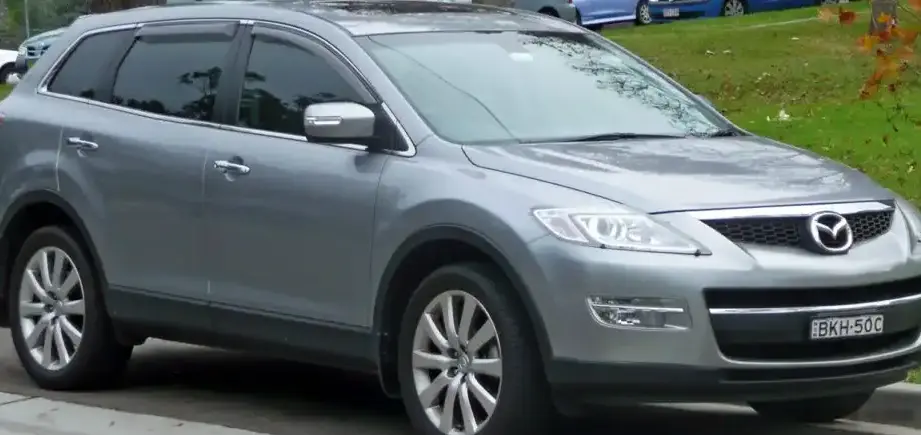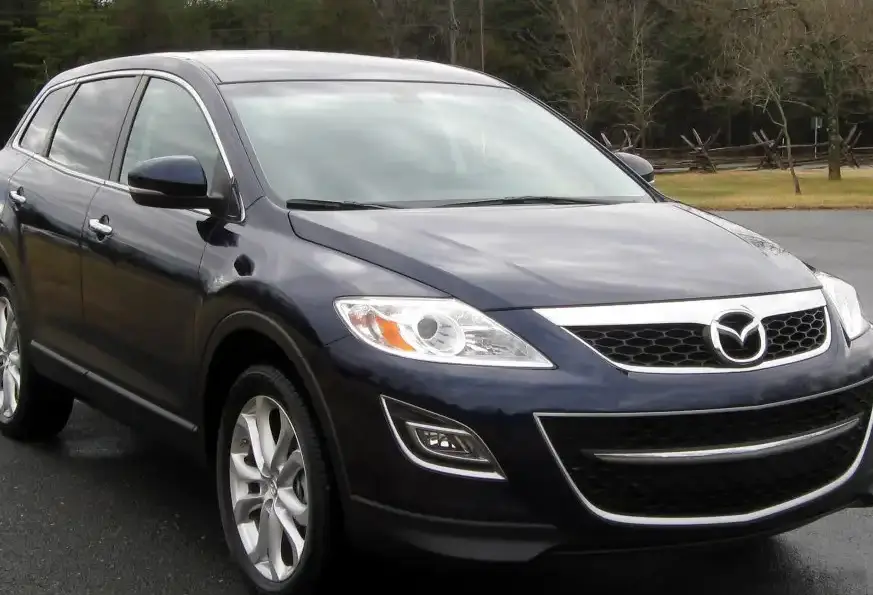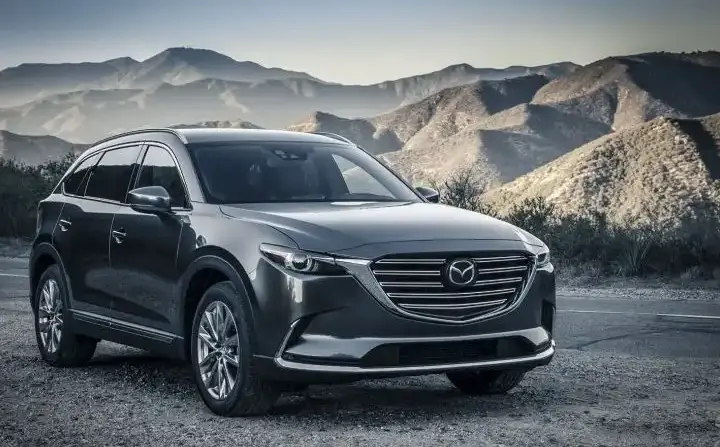
The Mazda CX-9 II, specifically the 2.5 SKYACTIV-G (250 Hp) 4×4 Automatic variant, represents Mazda’s second-generation foray into the mid-size, three-row crossover SUV segment. Produced from 2016 to 2023, this model aimed to provide a more premium and engaging driving experience than many of its competitors, while still offering the practicality demanded by families. This particular configuration, combining the 2.5-liter SKYACTIV-G engine with a six-speed automatic transmission and all-wheel drive, served as a popular mid-range offering within the CX-9 II lineup, balancing performance, fuel efficiency, and features.
Technical Specifications
| Brand | Mazda |
| Model | CX-9 |
| Generation | CX-9 II |
| Type (Engine) | 2.5 SKYACTIV-G (250 Hp) 4×4 Automatic |
| Start of production | 2016 |
| End of production | 2023 |
| Powertrain Architecture | Internal Combustion engine |
| Body type | SUV |
| Seats | 7 |
| Doors | 5 |
| Fuel consumption (urban) | 11.5 l/100 km (20.5 US mpg) |
| Fuel consumption (extra urban) | 8.9 l/100 km (26.4 US mpg) |
| Fuel Type | Petrol (Gasoline) |
| Weight-to-power ratio | 7.9 kg/Hp |
| Weight-to-torque ratio | 6.4 kg/Nm |
| Power | 250 Hp @ 5000 rpm |
| Power per litre | 100.5 Hp/l |
| Torque | 310 Nm @ 2000 rpm (228.64 lb.-ft. @ 2000 rpm) |
| Engine layout | Front, Transverse |
| Engine Model/Code | PYZ4 |
| Engine displacement | 2488 cm3 (151.83 cu. in.) |
| Number of cylinders | 4 |
| Engine configuration | Inline |
| Cylinder Bore | 89 mm (3.5 in.) |
| Piston Stroke | 100 mm (3.94 in.) |
| Compression ratio | 10.5:1 |
| Number of valves per cylinder | 4 |
| Fuel injection system | Direct injection |
| Engine aspiration | Turbocharger, Intercooler |
| Engine oil capacity | 4.8 l (5.07 US qt | 4.22 UK qt) |
| Coolant | 9.8 l (10.36 US qt | 8.62 UK qt) |
| Kerb Weight | 1969 kg (4340.9 lbs.) |
| Trunk (boot) space – minimum | 407 l (14.37 cu. ft.) |
| Trunk (boot) space – maximum | 2017 l (71.23 cu. ft.) |
| Fuel tank capacity | 74 l (19.55 US gal | 16.28 UK gal) |
| Length | 5065 mm (199.41 in.) |
| Width | 1969 mm (77.52 in.) |
| Width including mirrors | 2207 mm (86.89 in.) |
| Height | 1716-1753 mm (67.56 – 69.02 in.) |
| Wheelbase | 2930 mm (115.35 in.) |
| Front track | 1659 mm (65.31 in.) |
| Rear (Back) track | 1656 mm (65.2 in.) |
| Ride height (ground clearance) | 216-224 mm (8.5 – 8.82 in.) |
| Minimum turning circle (turning diameter) | 11.8 m (38.71 ft.) |
| Drive wheel | All wheel drive (4×4) |
| Number of gears and type of gearbox | 6 gears, automatic transmission |
| Front suspension | Independent, type McPherson with coil spring and anti-roll bar |
| Rear suspension | Independent multi-link suspension |
| Front brakes | Ventilated discs |
| Rear brakes | Disc |
| Tires size | 255/60 R18; 255/50 R20 |
| Wheel rims size | 8J x 18; 8.5J x 20 |
Powertrain & Engine Architecture
At the heart of the CX-9 II 2.5 SKYACTIV-G 4×4 Automatic lies Mazda’s PYZ4 engine, a 2.5-liter inline-four cylinder gasoline engine. This engine is a key component of Mazda’s SKYACTIV technology suite, designed to maximize efficiency and performance. The engine utilizes direct injection, a 10.5:1 compression ratio, and a twin-scroll turbocharger with an intercooler. This combination allows for a broad torque curve and responsive acceleration. The engine’s output of 250 horsepower at 5000 rpm and 310 Nm (228.64 lb-ft) of torque at 2000 rpm provides ample power for everyday driving and highway passing. The six-speed automatic transmission was specifically tuned to complement the engine’s characteristics, offering smooth shifts and efficient operation. Unlike some competitors who opted for continuously variable transmissions (CVTs), Mazda retained a traditional automatic, prioritizing a more engaging driving feel.
Driving Characteristics
The 2.5-liter turbocharged engine and six-speed automatic transmission deliver a noticeably different driving experience compared to the naturally aspirated engine options available in earlier CX-9 generations. While not as overtly sporty as some rivals, the CX-9 II 2.5T offers a refined and capable driving experience. The turbocharger provides a noticeable boost in power, making merging onto highways and overtaking other vehicles relatively effortless. The automatic transmission is well-programmed, providing smooth and timely shifts. Compared to a manual transmission equipped CX-9, the automatic prioritizes convenience and ease of use, but sacrifices some driver engagement. The all-wheel-drive system provides enhanced traction in various weather conditions, contributing to a secure and confident driving experience.
Equipment & Trim Levels
The 2.5 SKYACTIV-G 4×4 Automatic trim typically sat in the mid-range of the CX-9 II lineup. Standard features generally included three-zone automatic climate control, Mazda Connect infotainment system with a 7-inch touchscreen display, Bluetooth connectivity, a rearview camera, and keyless entry. Higher trim levels, such as the Signature trim, added features like leather upholstery, a premium sound system, a power moonroof, and advanced safety technologies like adaptive cruise control and lane departure warning. Optional extras for the 2.5T 4×4 Automatic could include navigation, a power liftgate, and heated front seats.
Chassis & Braking
The CX-9 II utilizes a robust chassis with independent suspension at all four corners. The front suspension employs a McPherson strut design with coil springs and an anti-roll bar, while the rear features a multi-link setup. This suspension configuration provides a comfortable ride quality while maintaining good handling characteristics. Braking duties are handled by ventilated discs at the front and solid discs at the rear. The braking system is equipped with ABS (Anti-lock Braking System) and electronic brake-force distribution. The CX-9 II’s curb weight of 1969 kg (4340.9 lbs) is relatively competitive for its class, contributing to its balanced handling.
Market Reception & Comparison
The Mazda CX-9 II, and particularly the 2.5 SKYACTIV-G 4×4 Automatic variant, received generally positive reviews from automotive critics. It was praised for its stylish design, upscale interior, and engaging driving dynamics. Compared to competitors like the Honda Pilot and Toyota Highlander, the CX-9 II was often noted for its more refined driving experience and premium feel. Fuel economy was generally considered average for the segment, with EPA estimates around 22 mpg combined. Reliability ratings were generally good, although some owners reported minor issues with the infotainment system.
Legacy
The Mazda CX-9 II 2.5 SKYACTIV-G 4×4 Automatic has proven to be a relatively reliable and durable vehicle in the used car market. The PYZ4 engine, while turbocharged, has demonstrated good long-term reliability with proper maintenance. Regular oil changes and adherence to the manufacturer’s recommended service intervals are crucial for maintaining the engine’s health. The six-speed automatic transmission is also known for its durability. As of today, well-maintained examples of the CX-9 II 2.5T 4×4 Automatic continue to command reasonable prices in the used car market, appealing to buyers seeking a stylish, practical, and engaging three-row crossover SUV.