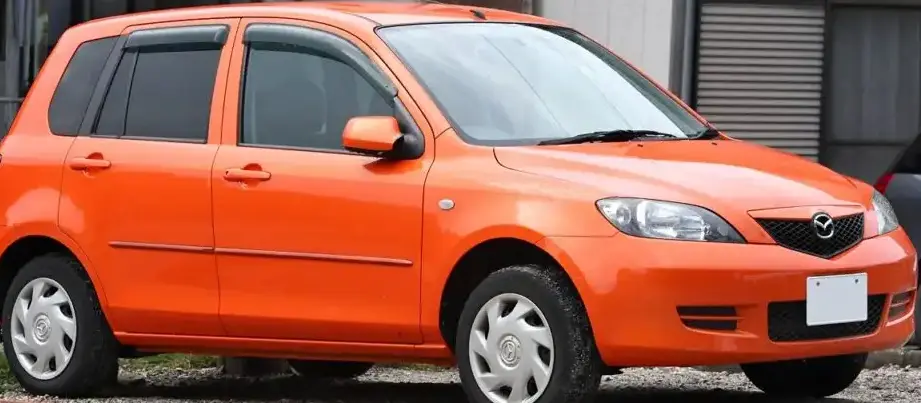
The Mazda Demio (DW) 1.5 16V Automatic, produced between 2000 and 2002, represents a key variant within the second generation (DW) of Mazda’s popular subcompact hatchback. Positioned as an entry-level to mid-range offering, this model aimed to provide affordable and practical transportation with the convenience of an automatic transmission. The Demio (known as the Mazda2 in many markets) was a significant vehicle for Mazda, particularly in Europe and Asia, offering a blend of fuel efficiency, nimble handling, and a surprisingly spacious interior for its size. This specific 1.5L engine and automatic transmission combination was designed to appeal to buyers prioritizing ease of use over outright performance.
Technical Specifications
| Brand | Mazda |
| Model | Demio |
| Generation | Demio (DW) |
| Type (Engine) | 1.5 16V (75 Hp) Automatic |
| Start of production | 2000 |
| End of production | 2002 |
| Powertrain Architecture | Internal Combustion engine |
| Body type | Hatchback |
| Seats | 5 |
| Doors | 5 |
| Fuel consumption (urban) | 10.2 l/100 km (23.1 US mpg, 27.7 UK mpg, 9.8 km/l) |
| Fuel consumption (extra urban) | 6.6 l/100 km (35.6 US mpg, 42.8 UK mpg, 15.2 km/l) |
| Fuel consumption (combined) | 7.9 l/100 km (29.8 US mpg, 35.8 UK mpg, 12.7 km/l) |
| Fuel Type | Petrol (Gasoline) |
| Acceleration 0 – 100 km/h | 16.1 sec |
| Acceleration 0 – 62 mph | 16.1 sec |
| Acceleration 0 – 60 mph | 15.3 sec |
| Maximum speed | 150 km/h (93.21 mph) |
| Weight-to-power ratio | 12.9 kg/Hp, 77.3 Hp/tonne |
| Weight-to-torque ratio | 8.4 kg/Nm, 119.6 Nm/tonne |
| Power | 75 Hp @ 5000 rpm |
| Power per litre | 50.1 Hp/l |
| Torque | 116 Nm @ 2500 rpm (85.56 lb.-ft. @ 2500 rpm) |
| Engine layout | Front, Transverse |
| Engine Model/Code | B5 E |
| Engine displacement | 1498 cm3 (91.41 cu. in.) |
| Number of cylinders | 4 |
| Engine configuration | Inline |
| Cylinder Bore | 78 mm (3.07 in.) |
| Piston Stroke | 78.4 mm (3.09 in.) |
| Compression ratio | 9.4:1 |
| Number of valves per cylinder | 4 |
| Fuel injection system | Multi-port manifold injection |
| Engine aspiration | Naturally aspirated engine |
| Valvetrain | OHC |
| Engine oil capacity | 3.5 l (3.7 US qt | 3.08 UK qt) |
| Coolant capacity | 6 l (6.34 US qt | 5.28 UK qt) |
| Kerb Weight | 970 kg (2138.48 lbs.) |
| Trunk (boot) space – minimum | 330 l (11.65 cu. ft.) |
| Trunk (boot) space – maximum | 1298 l (45.84 cu. ft.) |
| Fuel tank capacity | 40 l (10.57 US gal | 8.8 UK gal) |
| Length | 3815 mm (150.2 in.) |
| Width | 1670 mm (65.75 in.) |
| Height | 1535 mm (60.43 in.) |
| Wheelbase | 2390 mm (94.09 in.) |
| Front track | 1420 mm (55.91 in.) |
| Rear track | 1418 mm (55.83 in.) |
| Drivetrain Architecture | Front wheel drive |
| Number of gears | 4 |
| Gearbox type | Automatic transmission |
| Front suspension | Spring Strut |
| Rear suspension | Coil spring |
| Front brakes | Disc |
| Rear brakes | Drum |
| Assisting systems | ABS (Anti-lock braking system) |
| Steering type | Steering rack and pinion |
| Power steering | Hydraulic Steering |
| Tires size | 175/60 R14 |
| Wheel rims size | 14 |
Powertrain & Engine Architecture
The heart of the Demio 1.5 Automatic is the B5-E engine, a 1.5-liter inline-four cylinder gasoline engine. This engine utilizes a single overhead camshaft (SOHC) valvetrain with four valves per cylinder, contributing to reasonable performance for its displacement. Fuel delivery is managed by a multi-point fuel injection system, a common setup for vehicles of this era. The B5-E engine is known for its relative simplicity and durability, though it doesn’t boast the power output of more sophisticated engines. The automatic transmission is a conventional four-speed unit, chosen for its ease of use and suitability for urban driving. While not particularly sporty, the transmission provides smooth shifts and adequate performance for everyday commuting. The engine’s 9.4:1 compression ratio represents a balance between efficiency and power.
Driving Characteristics
The 1.5L 75 hp engine paired with the four-speed automatic transmission delivers a driving experience focused on practicality rather than excitement. Acceleration is modest, taking approximately 16 seconds to reach 60 mph. The automatic transmission’s gear ratios are tuned for fuel economy and smooth cruising, rather than aggressive acceleration. Compared to the manual transmission version of the same engine, the automatic sacrifices some responsiveness. Higher-spec Demio models equipped with larger engines (like the 1.8L) offered significantly more power and a more engaging driving experience. However, the 1.5 Automatic excels in city driving, providing a comfortable and effortless ride.
Equipment & Trim Levels
The 1.5 16V Automatic trim typically included standard features such as power steering, central locking, electric front windows, and an AM/FM radio. Interior upholstery was generally cloth, with a simple and functional dashboard layout. Optional extras could include air conditioning, alloy wheels, and a CD player. The trim level aimed to provide a good balance of features for the price, making it an attractive option for budget-conscious buyers. Safety features were relatively basic for the time, typically including a driver’s airbag and ABS (Anti-lock Braking System).
Chassis & Braking
The Demio (DW) utilizes a front-wheel-drive layout with a MacPherson strut suspension in the front and a coil spring suspension in the rear. The suspension setup is tuned for comfort and ride quality, providing a reasonably smooth ride over uneven surfaces. Braking duties are handled by disc brakes in the front and drum brakes in the rear, a common configuration for vehicles in this class. The ABS system enhances braking performance and stability, particularly in wet or slippery conditions. The relatively lightweight nature of the Demio helps to offset the limitations of the braking system.
Market Reception & Comparison
The Mazda Demio 1.5 Automatic was generally well-received by critics as a practical and affordable subcompact car. Its fuel economy was a strong point, with combined fuel consumption around 30 mpg. However, the engine’s lack of power and the automatic transmission’s somewhat sluggish performance were often noted. Compared to other trims in the Demio lineup, the 1.5 Automatic offered the lowest price point but also the least amount of performance. Competitors such as the Toyota Yaris and Honda Fit offered similar levels of practicality and fuel efficiency, but the Demio distinguished itself with its nimble handling and surprisingly spacious interior.
Legacy
The B5-E engine and the four-speed automatic transmission used in the Demio 1.5 Automatic are generally considered reliable, although regular maintenance is crucial. Common issues include oil leaks and wear on the timing belt. In the used car market, these Demios are often sought after as affordable and dependable transportation. While not a performance icon, the Demio 1.5 Automatic represents a solid and practical choice for buyers seeking a fuel-efficient and easy-to-drive subcompact hatchback. Its simplicity and durability contribute to its continued presence on roads today.