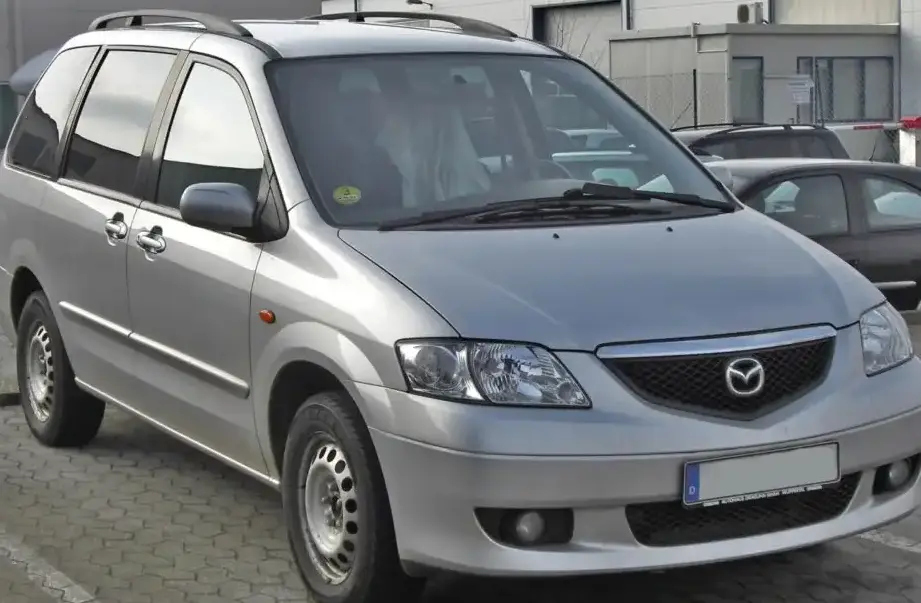
The Mazda MPV I (LV) 3.0 i V6, produced between 1996 and 1999, represented a significant offering in Mazda’s lineup as a spacious and versatile minivan. This generation MPV, designated the LV chassis code, was primarily aimed at the North American and Japanese markets, where larger family vehicles were in high demand. The 3.0 i V6 variant, equipped with a 3.0-liter V6 engine producing 148 horsepower, occupied a mid-to-upper position within the MPV range, offering a balance of performance and practicality. It was positioned above the base 2.5-liter four-cylinder models and below any potential future turbocharged or higher-specification trims.
Technical Specifications
| Brand | Mazda |
| Model | MPV |
| Generation | MPV I (LV) |
| Type (Engine) | 3.0 i V6 (148 Hp) |
| Start of production | 1996 |
| End of production | 1999 |
| Powertrain Architecture | Internal Combustion engine |
| Body type | Minivan |
| Seats | 7 |
| Doors | 4 |
| Fuel consumption (urban) | 16.4 l/100 km (14.3 US mpg, 17.2 UK mpg, 6.1 km/l) |
| Fuel consumption (extra urban) | 9.3 l/100 km (25.3 US mpg, 30.4 UK mpg, 10.8 km/l) |
| Fuel Type | Petrol (Gasoline) |
| Acceleration 0 – 100 km/h | 13.9 sec |
| Acceleration 0 – 62 mph | 13.9 sec |
| Acceleration 0 – 60 mph | 13.2 sec |
| Maximum speed | 185 km/h (114.95 mph) |
| Weight-to-power ratio | 11.6 kg/Hp, 86.5 Hp/tonne |
| Weight-to-torque ratio | 7.4 kg/Nm, 134.5 Nm/tonne |
| Power | 148 Hp @ 4700 rpm |
| Power per litre | 50.1 Hp/l |
| Torque | 230 Nm @ 4000 rpm (169.64 lb.-ft. @ 4000 rpm) |
| Engine layout | Front, Longitudinal |
| Engine displacement | 2954 cm3 (180.26 cu. in.) |
| Number of cylinders | 6 |
| Engine configuration | V-engine |
| Cylinder Bore | 90 mm (3.54 in.) |
| Piston Stroke | 77.4 mm (3.05 in.) |
| Compression ratio | 8.5:1 |
| Number of valves per cylinder | 3 |
| Fuel injection system | Multi-port manifold injection |
| Engine aspiration | Naturally aspirated engine |
| Valvetrain | OHC |
| Kerb Weight | 1710 kg (3769.9 lbs.) |
| Max. weight | 2310 kg (5092.68 lbs.) |
| Max load | 600 kg (1322.77 lbs.) |
| Trunk (boot) space – minimum | 335 l (11.83 cu. ft.) |
| Trunk (boot) space – maximum | 1060 l (37.43 cu. ft.) |
| Fuel tank capacity | 74 l (19.55 US gal | 16.28 UK gal) |
| Length | 4670 mm (183.86 in.) |
| Width | 1825 mm (71.85 in.) |
| Height | 1750 mm (68.9 in.) |
| Wheelbase | 2805 mm (110.43 in.) |
| Front track | 1525 mm (60.04 in.) |
| Rear (Back) track | 1540 mm (60.63 in.) |
| Drivetrain Architecture | The Internal combustion engine (ICE) drives the rear wheels of the vehicle. |
| Drive wheel | Rear wheel drive |
| Number of gears and type of gearbox | 5 gears, manual transmission |
| Front suspension | Wishbone |
| Rear suspension | Coil spring |
| Front brakes | Ventilated discs |
| Rear brakes | Ventilated discs |
| Assisting systems | ABS (Anti-lock braking system) |
| Steering type | Steering rack and pinion |
| Power steering | Hydraulic Steering |
| Tires size | 215/65 R15 |
| Wheel rims size | 15 |
Powertrain & Engine Architecture
The heart of the MPV 3.0 i V6 is the Mazda J-series engine, specifically the 3.0-liter (2954 cc) V6. This engine, designated internally as the VF30, is a naturally aspirated, 60-degree V-engine featuring a cast iron block and aluminum cylinder heads. It utilizes a multi-port fuel injection system, delivering fuel directly into the intake ports, and a single overhead camshaft (OHC) design for each cylinder bank. The engine produces 148 horsepower at 4700 rpm and 230 Nm (169.64 lb-ft) of torque at 4000 rpm. The 8.5:1 compression ratio was a compromise between performance and the fuel quality available in target markets. The five-speed manual transmission was the standard offering, providing drivers with direct control over the engine’s power. The transmission’s gear ratios were tuned for a balance of acceleration and highway cruising efficiency.
Driving Characteristics
The 3.0 i V6 MPV offered a noticeable step up in performance compared to the base four-cylinder models. While not a sports car, the V6 provided adequate power for comfortably carrying a full load of passengers and cargo. Acceleration from 0-60 mph took approximately 13.2 seconds, and the top speed was around 115 mph. The manual transmission allowed for precise gear selection, enabling drivers to maximize the engine’s torque for passing maneuvers or climbing hills. However, the MPV’s weight (approximately 3770 lbs) meant that it wasn’t particularly nimble, and the rear-wheel-drive configuration could lead to oversteer if pushed hard in corners. The ride quality was generally comfortable, thanks to the coil spring rear suspension, but it wasn’t as refined as some of its front-wheel-drive competitors.
Equipment & Trim Levels
The 3.0 i V6 MPV typically came standard with features such as air conditioning, power windows and locks, and an AM/FM stereo. Higher trim levels offered options like a CD player, upgraded upholstery, and alloy wheels. Interior appointments were generally functional and durable, prioritizing practicality over luxury. The seven-passenger seating configuration was standard, with a split-folding second-row bench seat and a removable third-row seat providing flexibility for cargo and passenger needs. Available options included a sunroof, cruise control, and rear-wheel drive.
Chassis & Braking
The MPV I (LV) utilized a body-on-frame construction, which contributed to its robust feel and towing capacity. The front suspension consisted of independent wishbones, while the rear featured a coil spring setup. Braking duties were handled by ventilated discs on all four wheels, providing adequate stopping power for the vehicle’s weight. An anti-lock braking system (ABS) was included as standard equipment, enhancing safety during emergency braking situations. The steering system employed a rack-and-pinion setup with hydraulic power assistance, offering reasonably precise steering feel.
Market Reception & Comparison
The Mazda MPV I (LV) 3.0 i V6 was generally well-received by critics for its spacious interior, comfortable ride, and available V6 engine. However, it faced stiff competition from established minivan players like the Dodge Caravan, Chrysler Town & Country, and Toyota Previa. The MPV’s rear-wheel-drive layout was a distinguishing feature, offering a more truck-like feel and potentially better towing capacity, but it also resulted in a less refined driving experience compared to front-wheel-drive rivals. Fuel economy was average for its class, and reliability was generally good, although some owners reported issues with the automatic transmission.
Legacy
The Mazda MPV I (LV) 3.0 i V6 remains a relatively uncommon sight on today’s roads. While not known for exceptional longevity, the J-series V6 engine is generally considered to be a durable and reliable powerplant when properly maintained. Parts availability can be a challenge, but many components are still obtainable through aftermarket suppliers. The MPV I (LV) represents a unique chapter in Mazda’s history, showcasing the company’s attempt to enter the competitive minivan market with a rear-wheel-drive offering. Today, it’s appreciated by enthusiasts for its distinctive styling and practical versatility.