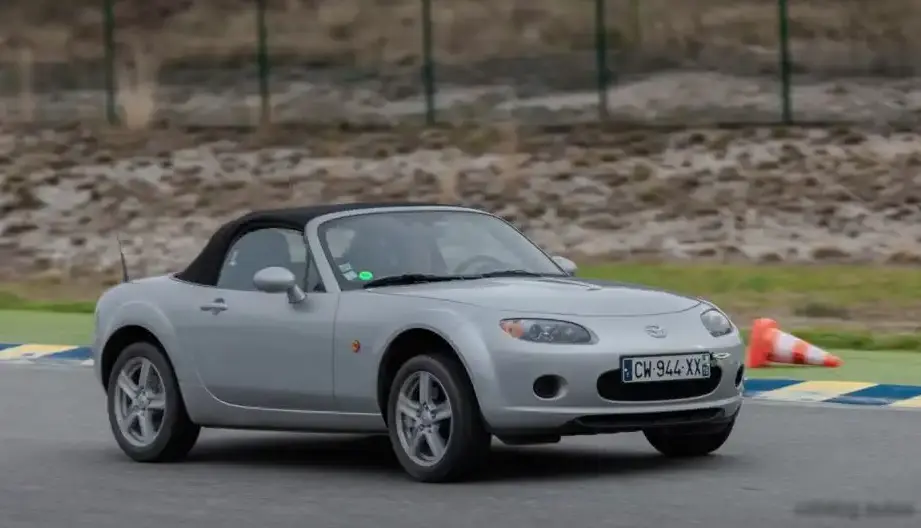
The Mazda MX-5 NA, introduced in 1989 and produced through 1997, marked a return to the classic British roadster formula. The 1.6-liter (97.52 cu. in.) variant, producing 115 horsepower, was the original engine offered in many markets, including Japan and Europe, from 1990-1994. It represented the entry point into the MX-5 experience, prioritizing affordability and accessible fun over outright performance. This initial iteration laid the foundation for the MX-5’s enduring popularity as a lightweight, driver-focused sports car. It was the first of the NA generation (internally known as A80) and established the core principles of the MX-5: Jinba Ittai – a connection between horse and rider, emphasizing harmony between driver and machine.
Technical Specifications
| Brand | Mazda |
| Model | MX-5 |
| Generation | MX-5 I (NA) |
| Type (Engine) | 1.6 (115 Hp) |
| Start of production | 1990 year |
| End of production | 1994 year |
| Powertrain Architecture | Internal Combustion engine |
| Body type | Roadster |
| Seats | 2 |
| Doors | 2 |
| Fuel consumption (economy) – urban | 9.6 l/100 km (24.5 US mpg) |
| Fuel consumption (economy) – extra urban | 6.1 l/100 km (38.6 US mpg) |
| Fuel consumption (economy) – combined | 7.8 l/100 km (30.2 US mpg) |
| Fuel Type | Petrol (Gasoline) |
| Acceleration 0 – 100 km/h | 8.7 sec |
| Acceleration 0 – 62 mph | 8.7 sec |
| Acceleration 0 – 60 mph | 8.3 sec |
| Maximum speed | 185 km/h (114.95 mph) |
| Weight-to-power ratio | 8.3 kg/Hp |
| Weight-to-torque ratio | 7.1 kg/Nm |
| Power | 115 Hp @ 6500 rpm |
| Power per litre | 72 Hp/l |
| Torque | 135 Nm @ 5500 rpm (99.57 lb.-ft. @ 5500 rpm) |
| Engine layout | Front, Longitudinal |
| Engine displacement | 1598 cm3 (97.52 cu. in.) |
| Number of cylinders | 4 |
| Engine configuration | Inline |
| Cylinder Bore | 78 mm (3.07 in.) |
| Piston Stroke | 83.6 mm (3.29 in.) |
| Compression ratio | 9.4:1 |
| Number of valves per cylinder | 4 |
| Fuel injection system | Multi-port manifold injection |
| Engine aspiration | Naturally aspirated engine |
| Valvetrain | DOHC |
| Kerb Weight | 955 kg (2105.41 lbs.) |
| Max. weight | 1190 kg (2623.5 lbs.) |
| Max load | 235 kg (518.09 lbs.) |
| Trunk (boot) space – minimum | 135 l (4.77 cu. ft.) |
| Fuel tank capacity | 48 l (12.68 US gal | 10.56 UK gal) |
| Length | 3975 mm (156.5 in.) |
| Width | 1675 mm (65.94 in.) |
| Height | 1230 mm (48.43 in.) |
| Wheelbase | 2265 mm (89.17 in.) |
| Front track | 1410 mm (55.51 in.) |
| Rear (Back) track | 1430 mm (56.3 in.) |
| Minimum turning circle | 9.7 m (31.82 ft.) |
| Drivetrain Architecture | Rear wheel drive |
| Drive wheel | Rear wheel drive |
| Number of gears | 5 gears, manual transmission |
| Front suspension | Double wishbone |
| Rear suspension | Double wishbone |
| Front brakes | Ventilated discs |
| Rear brakes | Disc |
| Assisting systems | ABS (Anti-lock braking system) |
| Steering type | Steering rack and pinion |
| Power steering | Hydraulic Steering |
| Tires size | 185/60 R14 82 H |
| Wheel rims size | 5.5J x 14 ET 40 |
Powertrain & Engine Architecture
The heart of the early MX-5 was the 1.6-liter inline-four cylinder engine. Internally designated as the B6-ZE, this engine featured a double overhead camshaft (DOHC) valvetrain operating four valves per cylinder. This configuration allowed for efficient cylinder filling and improved breathing, contributing to the engine’s relatively high specific output for its displacement. Fuel delivery was handled by a multi-port fuel injection system, providing precise fuel metering for optimal combustion. The engine’s 9.4:1 compression ratio was a compromise between performance and reliability, allowing it to run on readily available gasoline grades. The engine was mounted longitudinally in the front of the vehicle, driving the rear wheels. The five-speed manual transmission was the standard offering, known for its precise shift feel and relatively short throws.
Driving Characteristics
The 1.6-liter MX-5, paired with the five-speed manual transmission, offered a balanced driving experience. While not exceptionally powerful, the engine’s 115 horsepower and 135 Nm (99.57 lb-ft) of torque were sufficient to propel the lightweight roadster with enthusiasm. Acceleration from 0-60 mph took around 8.3 seconds, and the car could reach a top speed of 115 mph. The key to the MX-5’s appeal wasn’t outright speed, but its agility and responsiveness. The car’s low weight (around 2100 lbs) and well-tuned suspension provided excellent handling characteristics. The rear-wheel-drive layout contributed to a balanced feel, and the precise steering allowed for accurate cornering. Compared to later, more powerful MX-5 variants (like the 1.8L or the turbocharged models), the 1.6 felt more nimble and approachable, making it an ideal car for learning the fundamentals of sports car driving.
Equipment & Trim Levels
The initial MX-5 1.6 was relatively sparsely equipped, reflecting its positioning as an affordable sports car. Standard features typically included power steering, disc brakes on all four wheels, and a basic instrument cluster. Interior appointments were functional rather than luxurious, with cloth upholstery and a simple dashboard layout. Optional extras included a cassette stereo, air conditioning, and power windows. Early models often featured a limited range of exterior colors, with a focus on classic roadster hues like red, white, and blue. The emphasis was on providing a pure driving experience, rather than overwhelming the driver with unnecessary features.
Chassis & Braking
The MX-5 NA utilized a lightweight, body-on-frame construction, contributing to its low curb weight. The suspension consisted of double wishbones at both the front and rear, providing excellent wheel control and a comfortable ride. The front suspension incorporated anti-roll bars to reduce body roll during cornering. Rear brakes were discs, a notable feature for a car in this price range at the time. The steering was a rack-and-pinion system with hydraulic power assistance, providing precise and responsive steering feel. The 185/60 R14 tires offered a good balance of grip and ride comfort.
Market Reception & Comparison
The MX-5 was an instant success upon its launch, revitalizing the roadster segment. Critics praised its handling, affordability, and overall driving experience. The 1.6-liter variant was particularly well-received for its accessibility and fuel efficiency. Compared to other sports cars of the era, the MX-5 offered a unique combination of performance, reliability, and affordability. While some critics noted the engine’s lack of outright power, they acknowledged that it was more than adequate for spirited driving on winding roads. Fuel economy was respectable, averaging around 30 mpg in combined driving. Compared to the later 1.8L version, the 1.6 offered a more raw and engaging driving experience, but with slightly less power and refinement.
Legacy
The Mazda MX-5 NA 1.6 remains a popular choice among enthusiasts today. Its simple mechanical design and readily available parts make it relatively easy to maintain. The engine is known for its durability, and many examples have exceeded 200,000 miles. The car’s lightweight construction and engaging driving dynamics continue to appeal to drivers who appreciate a pure, analog driving experience. Values for well-maintained examples have been steadily increasing in recent years, reflecting the car’s growing status as a modern classic. The 1.6-liter MX-5 represents the purest expression of the original MX-5 vision: a lightweight, affordable, and fun-to-drive roadster that embodies the spirit of the classic British sports car.