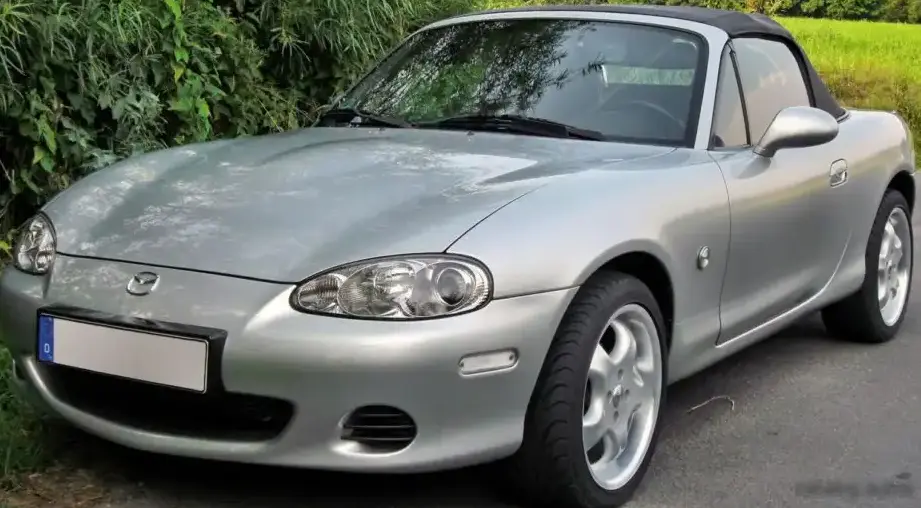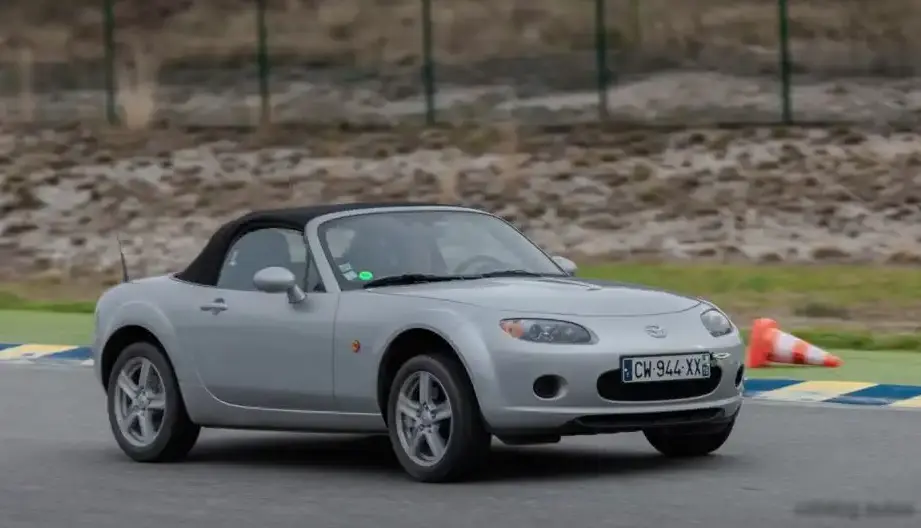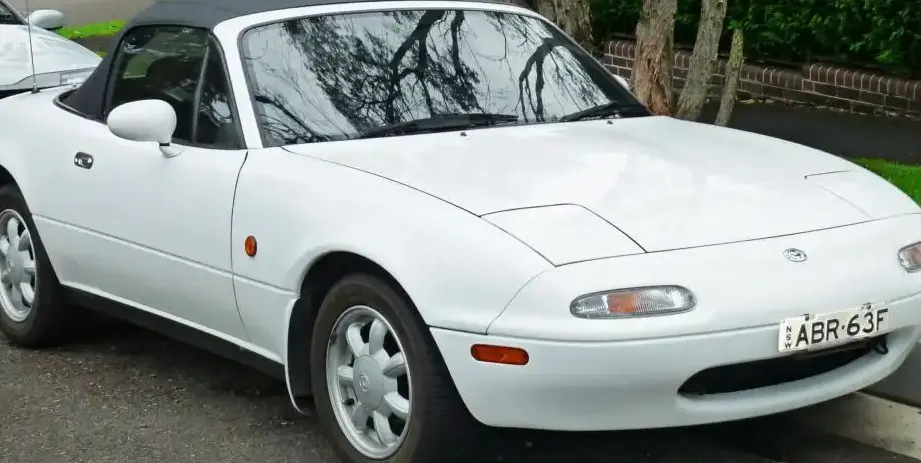
The Mazda MX-5 NA, introduced in 1989 and produced through 1997, revolutionized the affordable sports car segment. The 1.6-liter (90 hp) variant, available from 1995-1998 in many markets, represented an entry point into the MX-5 experience, offering a balance of nimble handling and accessible performance. This version was particularly significant in Europe and Japan, where smaller displacement engines were favored due to tax regulations and driving conditions. While the US market primarily received the 1.8-liter engine, the 1.6L model found a niche among enthusiasts seeking a purer, lighter driving experience. It sat as the base model, below the more powerful 1.8L options.
Technical Specifications
| Brand | Mazda |
| Model | MX-5 |
| Generation | MX-5 I (NA) |
| Type (Engine) | 1.6 (90 Hp) |
| Start of production | 1995 year |
| End of production | 1998 year |
| Powertrain Architecture | Internal Combustion engine |
| Body type | Roadster |
| Seats | 2 |
| Doors | 2 |
| Fuel consumption (economy) – combined | 8.7 l/100 km |
| Fuel consumption (economy) – combined | 27 US mpg |
| Fuel consumption (economy) – combined | 32.5 UK mpg |
| Fuel consumption (economy) – combined | 11.5 km/l |
| Fuel Type | Petrol (Gasoline) |
| Acceleration 0 – 100 km/h | 10.6 sec |
| Acceleration 0 – 62 mph | 10.6 sec |
| Acceleration 0 – 60 mph | 10.1 sec |
| Maximum speed | 175 km/h |
| Maximum speed | 108.74 mph |
| Weight-to-power ratio | 10.9 kg/Hp |
| Weight-to-power ratio | 91.7 Hp/tonne |
| Weight-to-torque ratio | 7.6 kg/Nm |
| Weight-to-torque ratio | 131.5 Nm/tonne |
| Power | 90 Hp @ 6000 rpm |
| Power per litre | 56.3 Hp/l |
| Torque | 129 Nm @ 4000 rpm |
| Torque | 95.15 lb.-ft. @ 4000 rpm |
| Engine layout | Front, Longitudinal |
| Engine displacement | 1598 cm3 |
| Engine displacement | 97.52 cu. in. |
| Number of cylinders | 4 |
| Engine configuration | Inline |
| Cylinder Bore | 78 mm |
| Cylinder Bore | 3.07 in. |
| Piston Stroke | 83.6 mm |
| Piston Stroke | 3.29 in. |
| Compression ratio | 9:1 |
| Number of valves per cylinder | 4 |
| Fuel injection system | Multi-port manifold injection |
| Engine aspiration | Naturally aspirated engine |
| Valvetrain | DOHC |
| Kerb Weight | 981 kg |
| Kerb Weight | 2162.73 lbs |
| Max. weight | 1230 kg |
| Max. weight | 2711.69 lbs |
| Max load | 249 kg |
| Max load | 548.95 lbs |
| Trunk (boot) space – minimum | 135 l |
| Trunk (boot) space – minimum | 4.77 cu. ft. |
| Fuel tank capacity | 48 l |
| Fuel tank capacity | 12.68 US gal |
| Fuel tank capacity | 10.56 UK gal |
| Length | 3975 mm |
| Length | 156.5 in. |
| Width | 1675 mm |
| Width | 65.94 in. |
| Height | 1230 mm |
| Height | 48.43 in. |
| Wheelbase | 2265 mm |
| Wheelbase | 89.17 in. |
| Front track | 1410 mm |
| Front track | 55.51 in. |
| Rear (Back) track | 1430 mm |
| Rear (Back) track | 56.3 in. |
| Drivetrain Architecture | The Internal combustion engine (ICE) drives the rear wheels of the vehicle. |
| Drive wheel | Rear wheel drive |
| Number of gears and type of gearbox | 5 gears, manual transmission |
| Front suspension | Double wishbone |
| Rear suspension | Double wishbone |
| Front brakes | Ventilated discs |
| Rear brakes | Disc |
| Assisting systems | ABS (Anti-lock braking system) |
| Steering type | Steering rack and pinion |
| Power steering | Hydraulic Steering |
| Tires size | 185/60 R14 82 H |
| Wheel rims size | 5.5J x 14 ET 40 |
Powertrain & Engine Architecture
The heart of this MX-5 variant is the 1.6-liter inline-four cylinder engine, typically identified by engine codes like B6ZE. This engine utilizes a naturally aspirated setup with multi-port fuel injection, delivering a modest but engaging 90 horsepower. The double overhead camshaft (DOHC) valvetrain contributes to efficient cylinder filling and improved performance compared to older single overhead cam designs. The engine’s longitudinal front-engine, rear-wheel-drive layout is a key element of the MX-5’s balanced handling characteristics. The 5-speed manual transmission was standard, providing precise gear changes and allowing drivers to fully exploit the engine’s powerband. The transmission’s gear ratios were tuned for acceleration and responsiveness, rather than outright top speed.
Driving Characteristics
The 1.6-liter MX-5 offered a distinctly different driving experience compared to the later 1.8-liter models. While lacking the outright punch of the larger engine, the 1.6 felt lighter and more nimble. Acceleration to 60 mph took around 10.1 seconds, making it no performance champion, but the car’s low weight (approximately 2163 lbs) and well-tuned suspension made it incredibly fun to drive on winding roads. The 5-speed manual transmission encouraged active driving, and the engine responded well to being revved. Compared to the 1.8L, the 1.6 demanded more driver involvement to extract the most from it, appealing to those who prioritized feel and balance over sheer speed.
Equipment & Trim Levels
The 1.6-liter MX-5 typically came with a relatively basic level of equipment, reflecting its position as the entry-level model. Standard features generally included power steering, disc brakes on all four wheels, and a basic audio system. Interior upholstery was typically cloth, and the dashboard featured a simple, functional design. Optional extras included air conditioning, a limited-slip differential, and upgraded audio systems. The focus was on providing a pure driving experience, rather than luxurious amenities.
Chassis & Braking
The MX-5 NA’s chassis was a key element of its success. It featured a double wishbone suspension at both the front and rear, providing excellent handling and ride quality. The relatively light weight of the 1.6-liter model contributed to its agility. Braking duties were handled by ventilated discs at the front and solid discs at the rear, providing adequate stopping power for the car’s performance level. An anti-lock braking system (ABS) was often included as standard equipment, enhancing safety.
Market Reception & Comparison
The 1.6-liter MX-5 was generally well-received by automotive critics, who praised its handling, affordability, and fun-to-drive nature. However, some reviewers noted that the engine lacked the power of the 1.8-liter models. In terms of fuel economy, the 1.6-liter variant offered a slight advantage over the 1.8L, achieving around 27 mpg in combined driving. Reliability was generally excellent, with the 1.6-liter engine proving to be durable and long-lasting. Compared to other roadsters of the era, such as the Fiat Barchetta or BMW Z3, the MX-5 offered a more balanced package of performance, handling, and affordability.
Legacy
The Mazda MX-5 NA 1.6-liter remains a popular choice among enthusiasts today. Its simple mechanicals, lightweight construction, and engaging driving experience make it a rewarding car to own and drive. While not as sought-after as the 1.8-liter models, the 1.6 offers a unique and purist driving experience. Parts availability is generally good, and the car’s robust construction ensures that many examples are still on the road today. The 1.6L MX-5 is often seen as a gateway into the world of classic sports cars, offering an accessible and enjoyable entry point for new enthusiasts.