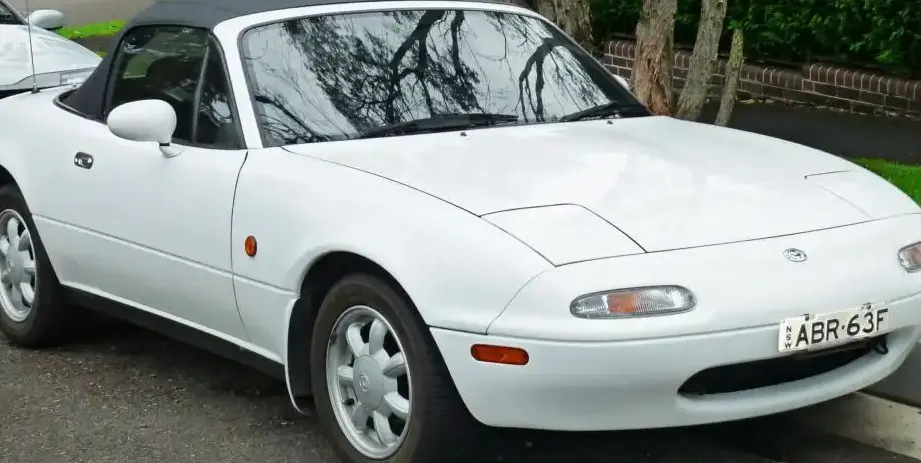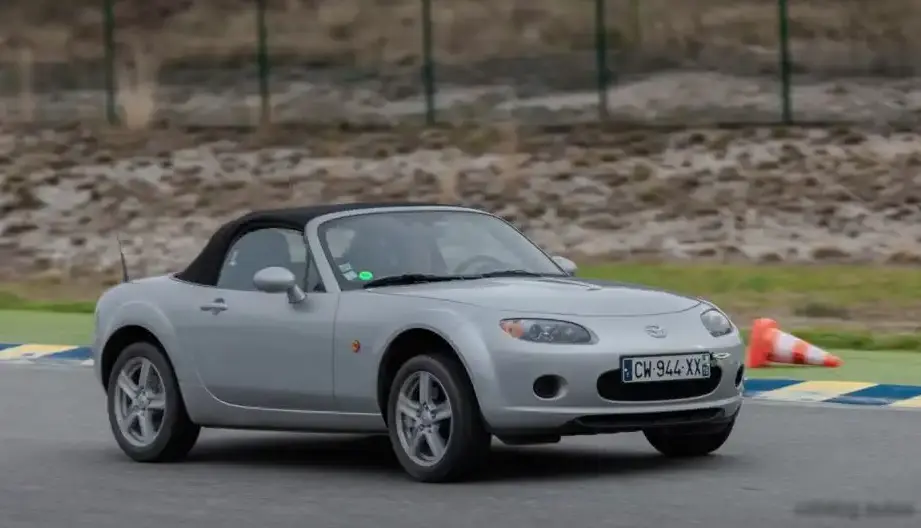
The Mazda MX-5 NB, produced from 1998 to 2005, represented the second generation of Mazda’s iconic roadster. The 1.8i 16V variant with the automatic transmission, available from 2000-2005, occupied a middle ground in the NB lineup, offering a balance between affordability and performance. It aimed to broaden the MX-5’s appeal beyond the purist, manual-transmission enthusiast, providing a more accessible entry point into the world of open-top motoring. This version was particularly popular in markets where automatic transmissions were preferred, including the United States and parts of Europe.
Technical Specifications
| Brand | Mazda |
| Model | MX-5 |
| Generation | MX-5 II (NB) |
| Type (Engine) | 1.8i 16V (146 Hp) Automatic |
| Start of production | 2000 year |
| End of production | 2005 year |
| Powertrain Architecture | Internal Combustion engine |
| Body type | Roadster |
| Seats | 2 |
| Doors | 2 |
| Fuel consumption (urban) | 13 l/100 km (18.1 US mpg, 21.7 UK mpg, 7.7 km/l) |
| Fuel consumption (extra urban) | 7.5 l/100 km (31.4 US mpg, 37.7 UK mpg, 13.3 km/l) |
| Fuel consumption (combined) | 9.5 l/100 km (24.8 US mpg, 29.7 UK mpg, 10.5 km/l) |
| Fuel Type | Petrol (Gasoline) |
| Acceleration 0 – 100 km/h | 8.4 sec |
| Acceleration 0 – 62 mph | 8.4 sec |
| Acceleration 0 – 60 mph | 8 sec |
| Maximum speed | 190 km/h (118.06 mph) |
| Weight-to-power ratio | 7.3 kg/Hp, 137.1 Hp/tonne |
| Weight-to-torque ratio | 6.3 kg/Nm, 157.7 Nm/tonne |
| Power | 146 Hp @ 7000 rpm |
| Power per litre | 79.3 Hp/l |
| Torque | 168 Nm @ 5000 rpm (123.91 lb.-ft. @ 5000 rpm) |
| Engine layout | Front, Longitudinal |
| Engine Model/Code | BP-Z3 |
| Engine displacement | 1840 cm3 (112.28 cu. in.) |
| Number of cylinders | 4 |
| Engine configuration | Inline |
| Cylinder Bore | 83 mm (3.27 in.) |
| Piston Stroke | 85 mm (3.35 in.) |
| Compression ratio | 10:1 |
| Number of valves per cylinder | 4 |
| Fuel injection system | Multi-port manifold injection |
| Engine aspiration | Naturally aspirated engine |
| Valvetrain | DOHC |
| Kerb Weight | 1065 kg (2347.92 lbs.) |
| Max. weight | 1280 kg (2821.92 lbs.) |
| Max load | 215 kg (473.99 lbs.) |
| Trunk (boot) space – minimum | 145 l (5.12 cu. ft.) |
| Fuel tank capacity | 50 l (13.21 US gal | 11 UK gal) |
| Length | 3975 mm (156.5 in.) |
| Width | 1680 mm (66.14 in.) |
| Height | 1220 mm (48.03 in.) |
| Wheelbase | 2265 mm (89.17 in.) |
| Front track | 1405 mm (55.31 in.) |
| Rear (Back) track | 1430 mm (56.3 in.) |
| Minimum turning circle | 9.7 m (31.82 ft.) |
| Drivetrain Architecture | Rear wheel drive |
| Drive wheel | Rear wheel drive |
| Number of gears | 4 gears, automatic transmission |
| Front suspension | Spring Strut |
| Rear suspension | Coil spring |
| Front brakes | Ventilated discs |
| Rear brakes | Disc |
| Assisting systems | ABS (Anti-lock braking system) |
| Steering type | Steering rack and pinion |
| Power steering | Hydraulic Steering |
| Tires size | 195/50 R15; 205/45 R16 |
| Wheel rims size | 15; 16 |
INTRODUCTION
The Mazda MX-5 NB 1.8i Automatic, produced between 2000 and 2005, built upon the success of the original NA model, offering a more refined and user-friendly experience. The NB generation (chassis code NC) brought with it a more sculpted exterior, improved interior ergonomics, and enhanced safety features. The 1.8-liter engine, coupled with a four-speed automatic transmission, was positioned as a comfortable and convenient option for drivers who preferred not to grapple with a manual gearbox. It represented a slight step up in power and refinement compared to the earlier 1.6-liter models, while remaining more accessible than the higher-performance variants.
Powertrain & Engine Architecture
At the heart of the MX-5 NB 1.8i Automatic lies the BP-Z3 engine, an inline-four cylinder, naturally aspirated powerplant displacing 1840cc (1.8 liters). This engine featured a double overhead camshaft (DOHC) valvetrain with four valves per cylinder, contributing to its relatively high output for its size. Fuel delivery was handled by a multi-port fuel injection system, ensuring precise fuel metering for optimal combustion. The BP-Z3 engine produced 146 horsepower at 7000 rpm and 168 Nm (123.91 lb-ft) of torque at 5000 rpm. The four-speed automatic transmission was a conventional hydraulic unit, offering smooth, if not particularly sporty, gear changes. It was designed for ease of use and comfort rather than outright performance. The engine’s longitudinal mounting and rear-wheel drive configuration contributed to the MX-5’s balanced handling characteristics.
Driving Characteristics
The 1.8-liter automatic MX-5 offered a distinctly different driving experience compared to its manual counterparts or the later 2.0-liter models. While the automatic transmission provided convenience, it did come at the cost of some responsiveness. The four-speed unit lacked the close ratios of a manual gearbox, resulting in slightly less engaging acceleration. The torque converter also introduced some inherent power loss. However, the engine’s ample low-end torque made it perfectly adequate for everyday driving. Cruising on the highway was comfortable, and the car felt stable and well-balanced. Compared to the manual version, the automatic traded some driver involvement for ease of use, making it a more appealing option for those seeking a relaxed and enjoyable open-top experience. The gear ratios were optimized for fuel efficiency and smooth cruising, rather than aggressive acceleration.
Equipment & Trim Levels
The MX-5 NB 1.8i Automatic typically came equipped with a reasonable level of standard features. These included power windows, power door locks, and a basic audio system. Interior upholstery was typically cloth, although leather options were available. Dashboard configuration was relatively simple and functional, with clearly laid-out gauges and controls. Optional extras included air conditioning, a premium sound system, alloy wheels, and a limited-slip differential (though less common with the automatic transmission). The trim level often dictated the availability of these options, with higher trims offering more standard features and a more luxurious interior.
Chassis & Braking
The MX-5 NB retained the lightweight, rear-wheel-drive chassis layout that made the original NA model so beloved. The suspension consisted of a spring strut setup at the front and a coil spring arrangement at the rear. The 1.8i Automatic models generally featured slightly softer suspension tuning compared to the sportier trims, prioritizing ride comfort over ultimate handling precision. Braking duties were handled by ventilated discs at the front and solid discs at the rear. Anti-lock braking system (ABS) was standard, enhancing safety and stability. The relatively low weight of the vehicle – around 1065 kg (2347.92 lbs) – contributed to its nimble handling and responsive braking performance.
Market Reception & Comparison
The MX-5 NB 1.8i Automatic received generally positive reviews, particularly from those who valued comfort and convenience. Critics praised its refined engine, comfortable ride, and user-friendly automatic transmission. However, some reviewers noted that the automatic transmission detracted from the car’s sporty character. Compared to the manual version, the automatic offered slightly lower fuel economy and slower acceleration. The 1.8-liter engine provided a good balance between performance and efficiency, making it a practical choice for everyday driving. Compared to the later 2.0-liter models, the 1.8-liter offered a more affordable entry point into MX-5 ownership, albeit with slightly less power.
Legacy
The Mazda MX-5 NB 1.8i Automatic has proven to be a reliable and durable vehicle. The BP-Z3 engine is known for its longevity, and the automatic transmission, while not particularly sophisticated, is generally robust. Today, these cars are increasingly sought after by enthusiasts and collectors. They represent a relatively affordable way to experience the joy of open-top motoring. While not as highly regarded as the manual versions or the later 2.0-liter models, the 1.8i Automatic offers a unique blend of comfort, convenience, and Mazda’s signature driving dynamics. Well-maintained examples continue to provide years of enjoyable driving, and their values are steadily appreciating in the used car market.