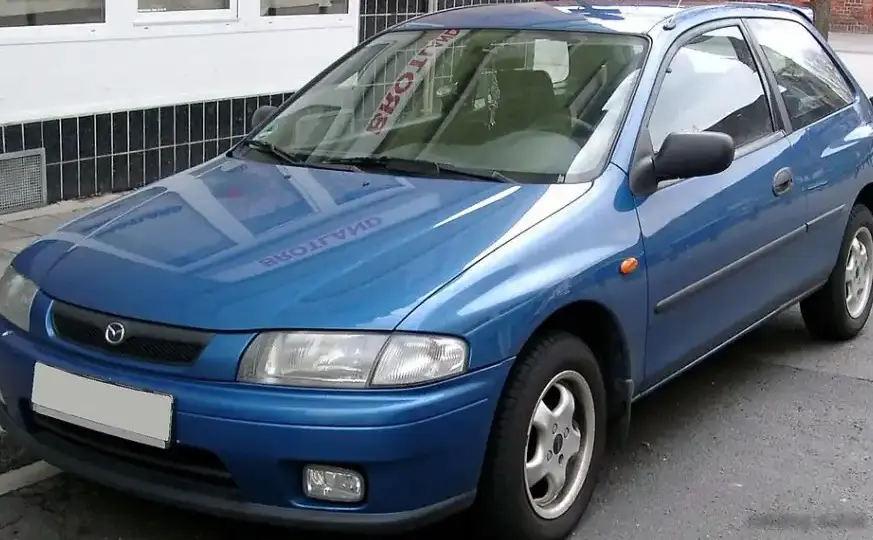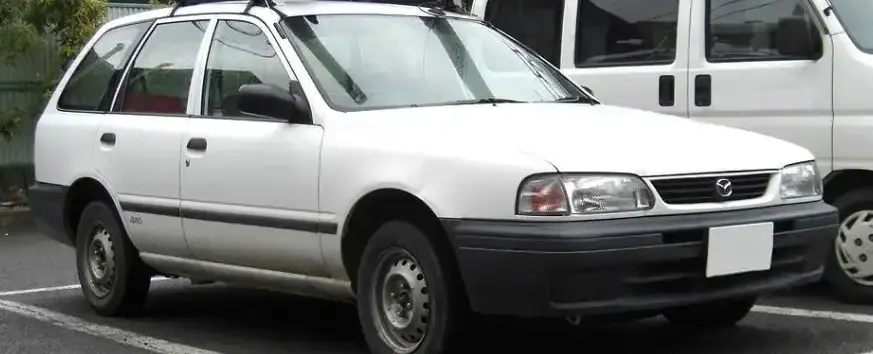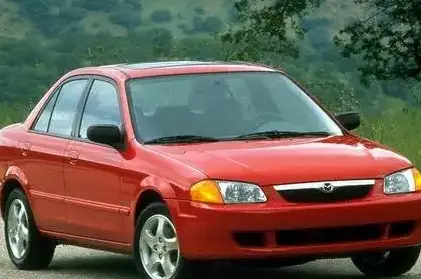
The Mazda Protege 1.6 i, producing 115 horsepower, was a mainstay of the compact car segment from 1994 through 1999. Representing the second generation of the Protege (known as the Familia in many international markets), this variant occupied a crucial position in Mazda’s lineup, offering a balance of affordability, fuel efficiency, and practicality. It was primarily marketed towards budget-conscious buyers seeking reliable transportation, and served as the entry point into the Protege range. This generation, internally designated as the BJ platform, aimed to modernize Mazda’s image and compete effectively with established rivals like the Honda Civic and Toyota Corolla.
Technical Specifications
| Brand | Mazda |
| Model | Protege |
| Generation | Protege |
| Type (Engine) | 1.6 i (115 Hp) |
| Start of production | 1994 |
| End of production | 1999 |
| Powertrain Architecture | Internal Combustion engine |
| Body type | Sedan |
| Seats | 5 |
| Doors | 4 |
| Fuel Type | Petrol (Gasoline) |
| Power | 115 Hp @ 6500 rpm |
| Power per litre | 72 Hp/l |
| Torque | 135 Nm @ 5500 rpm |
| Torque (lb.-ft.) | 99.57 lb.-ft. @ 5500 rpm |
| Engine layout | Front, Longitudinal |
| Engine displacement | 1598 cm3 |
| Engine displacement (cu. in.) | 97.52 cu. in. |
| Number of cylinders | 4 |
| Engine configuration | Inline |
| Cylinder Bore | 78 mm |
| Cylinder Bore (in.) | 3.07 in. |
| Piston Stroke | 83.6 mm |
| Piston Stroke (in.) | 3.29 in. |
| Compression ratio | 9.4:1 |
| Number of valves per cylinder | 4 |
| Fuel injection system | Multi-port manifold injection |
| Engine aspiration | Naturally aspirated engine |
| Valvetrain | DOHC |
| Max. weight | 1040 kg |
| Max. weight (lbs.) | 2292.81 lbs. |
| Fuel tank capacity | 50 l |
| Fuel tank capacity (US gal) | 13.21 US gal |
| Fuel tank capacity (UK gal) | 11 UK gal |
| Length | 4335 mm |
| Length (in.) | 170.67 in. |
| Width | 1695 mm |
| Width (in.) | 66.73 in. |
| Height | 1420 mm |
| Height (in.) | 55.91 in. |
| Wheelbase | 2605 mm |
| Wheelbase (in.) | 102.56 in. |
| Front track | 1460 mm |
| Front track (in.) | 57.48 in. |
| Rear track | 1460 mm |
| Rear track (in.) | 57.48 in. |
| Minimum turning circle | 9.6 m |
| Minimum turning circle (ft.) | 31.5 ft. |
| Drivetrain Architecture | Front wheel drive |
| Front brakes | Ventilated discs |
| Rear brakes | Drum |
Powertrain & Engine Architecture
The heart of the Protege 1.6 i was the Mazda B6 engine, a 1.6-liter inline-four cylinder powerplant. This engine utilized a multi-port fuel injection system and a double overhead camshaft (DOHC) valvetrain, contributing to its relatively efficient operation and respectable power output for its displacement. The B6 engine was known for its durability and relatively simple design, making it easier to maintain. While not a particularly high-performance engine, it provided adequate power for everyday driving. The 115 horsepower peak was achieved at 6500 rpm, while the 135 Nm (99.57 lb-ft) of torque peaked at 5500 rpm. The engine’s longitudinal mounting was a common configuration for front-wheel-drive vehicles of the era, optimizing space utilization within the engine bay.
Driving Characteristics
The 1.6-liter engine, paired with an automatic transmission (typically a four-speed unit), delivered a comfortable, if not particularly exhilarating, driving experience. Acceleration was adequate for merging onto highways and navigating city streets, but it lacked the punch of the higher-output engines offered in other Protege trims. The automatic transmission was tuned for fuel economy rather than performance, resulting in relatively conservative gear ratios. This meant that the engine often operated at higher rpm during acceleration, contributing to a noticeable engine drone. Compared to the five-speed manual transmission available on other Protege models, the automatic version felt less responsive and engaging. However, it catered to drivers prioritizing ease of use and convenience.
Equipment & Trim Levels
The 1.6 i trim generally represented the base model in the Protege lineup. Standard features typically included power steering, air conditioning, and a basic audio system. Interior upholstery was usually cloth, and the dashboard featured a straightforward design with easy-to-read gauges. Optional extras, depending on the market and year, could include power windows, power locks, and an upgraded audio system. The overall interior ambiance was functional and durable, prioritizing practicality over luxury. The exterior styling was relatively understated, with standard steel wheels and basic trim.
Chassis & Braking
The Protege 1.6 i utilized a MacPherson strut front suspension and a torsion beam rear suspension. This setup provided a reasonable balance of ride comfort and handling. The front brakes were ventilated discs, offering adequate stopping power, while the rear brakes were drums, a cost-saving measure common in entry-level vehicles of the time. The chassis was relatively lightweight, contributing to the car’s fuel efficiency. Stabilizer bars were typically included, helping to reduce body roll during cornering. The suspension tuning was geared towards providing a comfortable ride rather than sporty handling.
Market Reception & Comparison
The Mazda Protege 1.6 i was generally well-received by critics as a practical and affordable compact car. It was praised for its reliability, fuel efficiency, and comfortable ride. However, it was often criticized for its lack of performance and somewhat bland styling. Compared to the higher-trim Protege models, such as those equipped with the 1.8-liter engine, the 1.6 i offered less power and a less refined driving experience. However, it was significantly more affordable and offered better fuel economy. Against competitors like the Honda Civic and Toyota Corolla, the Protege 1.6 i offered a competitive package, often undercutting them in price.
Legacy
The Mazda Protege 1.6 i has proven to be a remarkably durable and reliable vehicle. Many examples are still on the road today, a testament to the quality of its engineering and construction. The B6 engine is known for its longevity, and parts availability remains relatively good. In the used car market, the 1.6 i variant is often sought after by buyers looking for an affordable and dependable transportation option. While it may not offer the performance or features of more modern vehicles, its simplicity and reliability continue to appeal to a wide range of drivers. The Protege 1.6 i represents a solid example of a well-engineered and practical compact car from the 1990s.