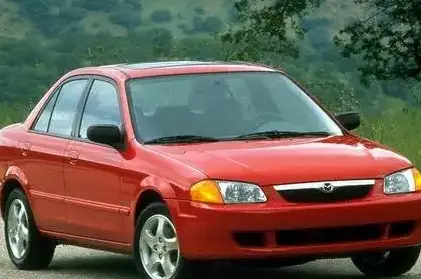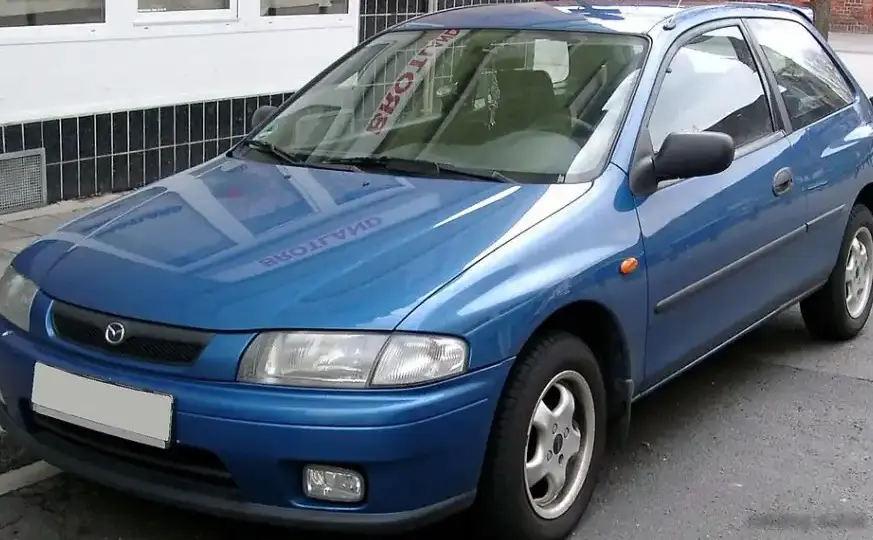
The Mazda Protege Hatchback 1.5i, producing 97 horsepower, was a key offering in Mazda’s lineup from 1994 through 1998. Representing the second generation of the Protege (known as the Familia in Japan), this hatchback variant aimed to provide affordable and practical transportation, particularly in markets where compact, fuel-efficient vehicles were in high demand. It was positioned as the entry-level engine option within the Protege hatchback range, offering a more economical alternative to the higher-performance 1.8-liter engine available in some regions. The 1994-1998 Protege Hatchback was built on Mazda’s BG platform, a front-wheel-drive chassis shared with other Ford and Mazda models of the era.
Technical Specifications
| Brand | Mazda |
| Model | Protege |
| Generation | Protege Hatchback |
| Type (Engine) | 1.5 i (97 Hp) |
| Start of production | 1994 |
| End of production | 1998 |
| Powertrain Architecture | Internal Combustion engine |
| Body type | Hatchback |
| Seats | 5 |
| Doors | 5 |
| Fuel Type | Petrol (Gasoline) |
| Acceleration 0 – 100 km/h | 10.6 sec |
| Acceleration 0 – 62 mph | 10.6 sec |
| Acceleration 0 – 60 mph | 10.1 sec |
| Maximum speed | 181 km/h (112.47 mph) |
| Weight-to-power ratio | 13.6 kg/Hp, 73.3 Hp/tonne |
| Weight-to-torque ratio | 10 kg/Nm, 99.8 Nm/tonne |
| Power | 97 Hp @ 5500 rpm |
| Power per litre | 65.1 Hp/l |
| Torque | 132 Nm @ 4000 rpm (97.36 lb.-ft. @ 4000 rpm) |
| Engine layout | Front, Transverse |
| Engine Model/Code | Z5-DE |
| Engine displacement | 1489 cm3 (90.86 cu. in.) |
| Number of cylinders | 4 |
| Engine configuration | Inline |
| Cylinder Bore | 75.3 mm (2.96 in.) |
| Piston Stroke | 83.6 mm (3.29 in.) |
| Compression ratio | 9.4:1 |
| Number of valves per cylinder | 4 |
| Fuel injection system | Multi-port manifold injection |
| Engine aspiration | Naturally aspirated engine |
| Valvetrain | DOHC |
| Kerb Weight | 1323 kg (2916.72 lbs.) |
| Fuel tank capacity | 50 l (13.21 US gal | 11 UK gal) |
| Length | 4035 mm (158.86 in.) |
| Width | 1695 mm (66.73 in.) |
| Height | 1170 mm (46.06 in.) |
| Wheelbase | 2505 mm (98.62 in.) |
| Front track | 1460 mm (57.48 in.) |
| Rear track | 1460 mm (57.48 in.) |
| Drivetrain Architecture | The Internal combustion engine (ICE) drives the front wheels of the vehicle. |
| Drive wheel | Front wheel drive |
| Front brakes | Ventilated discs |
| Rear brakes | Drum |
Powertrain & Engine Architecture
The heart of the 1.5i Protege Hatchback was the Z5-DE engine, a 1.5-liter inline-four cylinder gasoline engine. This engine utilized a naturally aspirated configuration and a multi-port fuel injection system, delivering a balance of fuel efficiency and adequate power for everyday driving. The Z5-DE featured a double overhead camshaft (DOHC) valvetrain, contributing to improved breathing and overall engine performance. The engine’s 9.4:1 compression ratio was a compromise between performance and the ability to run on readily available fuel grades. The engine was transversely mounted in the front of the vehicle, driving the front wheels. The transmission paired with this engine was typically a four-speed automatic, although a five-speed manual transmission was also available in some markets. The automatic transmission was chosen to appeal to buyers prioritizing ease of use over sporty driving dynamics.
Driving Characteristics
The 1.5i automatic Protege Hatchback offered a comfortable, if not particularly exhilarating, driving experience. With 97 horsepower and 132 Nm (97.36 lb-ft) of torque, acceleration was modest, taking approximately 10.6 seconds to reach 62 mph (100 km/h). The four-speed automatic transmission was geared for fuel economy, resulting in relatively tall gear ratios. This meant that the engine often needed to work harder when accelerating or climbing hills. Compared to the available 1.8-liter engine, the 1.5i felt noticeably slower, particularly at higher speeds. However, the 1.5i’s lighter weight and less stressed engine contributed to better fuel economy and potentially greater long-term reliability. The steering was light and easy, making it well-suited for urban driving.
Equipment & Trim Levels
The 1.5i Protege Hatchback typically came with a fairly basic level of standard equipment. Features generally included power steering, cloth upholstery, and an AM/FM radio. Air conditioning was often an optional extra, as were power windows and door locks. Interior trim was functional and durable, prioritizing practicality over luxury. The dashboard layout was straightforward and easy to use. Higher trim levels, if available, might have added features such as upgraded audio systems, alloy wheels, and a sunroof. The overall focus was on providing a no-frills, affordable transportation solution.
Chassis & Braking
The Protege Hatchback utilized a MacPherson strut front suspension and a torsion beam rear suspension. This setup provided a reasonable balance of ride comfort and handling. The front brakes were ventilated discs, offering adequate stopping power, while the rear brakes were drums, a cost-saving measure common in this class of vehicle. Stabilizer bars were typically included on both the front and rear axles to reduce body roll during cornering. The chassis was designed to be lightweight and rigid, contributing to improved handling and fuel efficiency. The relatively narrow tires were chosen to prioritize fuel economy and ride comfort over ultimate grip.
Market Reception & Comparison
The 1.5i Protege Hatchback was generally well-received as an affordable and reliable compact car. Critics praised its fuel efficiency and practicality, but noted its lack of outright performance. Compared to other vehicles in its class, such as the Honda Civic and Toyota Corolla, the Protege offered a competitive price point and a decent level of features. The 1.8-liter Protege offered significantly more power and a more engaging driving experience, but at a higher price. The 1.5i appealed to buyers who prioritized fuel economy and affordability over performance. Reliability was generally considered good, although some owners reported minor issues with the automatic transmission over time.
Legacy
The 1994-1998 Mazda Protege Hatchback 1.5i remains a relatively common sight on used car markets today. The Z5-DE engine is known for its durability and relatively simple maintenance requirements. While not a particularly exciting vehicle, it represents a solid and dependable choice for those seeking an affordable and fuel-efficient compact car. Parts availability is generally good, and the car’s straightforward design makes it relatively easy to repair. The 1.5i Protege Hatchback helped establish Mazda as a maker of reliable and value-oriented vehicles in the North American market, paving the way for future successes.