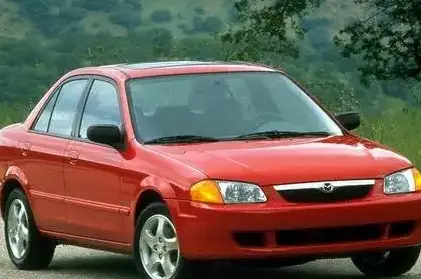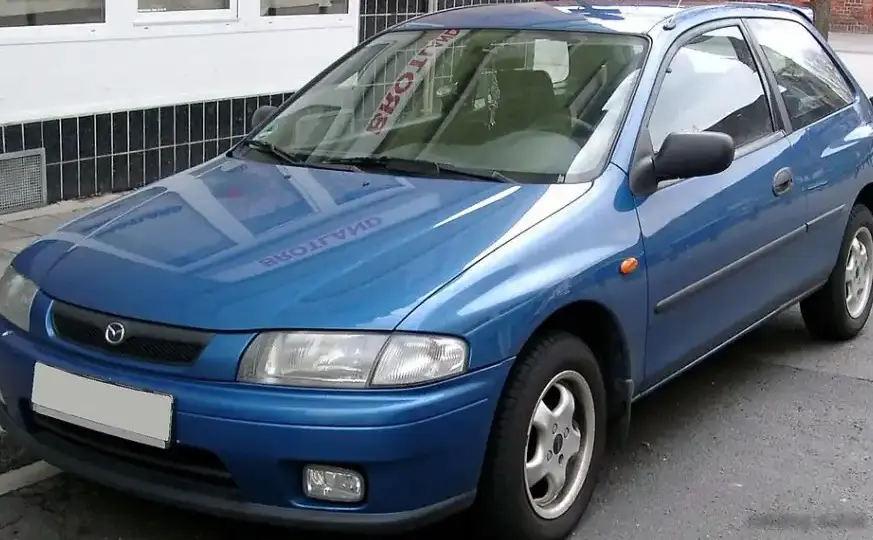
Technical Specifications
| Brand | Mazda |
| Model | Protege |
| Generation | Protege Wagon |
| Type (Engine) | 1.5 i (110 Hp) |
| Start of production | 1994 |
| End of production | 1998 |
| Powertrain Architecture | Internal Combustion engine |
| Body type | Station wagon (estate) |
| Seats | 5 |
| Doors | 5 |
| Fuel Type | Petrol (Gasoline) |
| Weight-to-power ratio | 9.2 kg/Hp, 108.9 Hp/tonne |
| Weight-to-torque ratio | 7.4 kg/Nm, 135.6 Nm/tonne |
| Power | 110 Hp @ 6000 rpm |
| Power per litre | 73.9 Hp/l |
| Torque | 137 Nm @ 4000 rpm (101.05 lb.-ft. @ 4000 rpm) |
| Engine layout | Front, Transverse |
| Engine Model/Code | ZL-DE |
| Engine displacement | 1489 cm3 (90.86 cu. in.) |
| Number of cylinders | 4 |
| Engine configuration | Inline |
| Cylinder Bore | 75.3 mm (2.96 in.) |
| Piston Stroke | 83.6 mm (3.29 in.) |
| Compression ratio | 9:1 |
| Number of valves per cylinder | 4 |
| Fuel injection system | Multi-port manifold injection |
| Engine aspiration | Naturally aspirated engine |
| Valvetrain | DOHC |
| Kerb Weight | 1010 kg (2226.67 lbs.) |
| Fuel tank capacity | 50 l (13.21 US gal | 11 UK gal) |
| Length | 4175 mm (164.37 in.) |
| Width | 1665 mm (65.55 in.) |
| Height | 1480 mm (58.27 in.) |
| Wheelbase | 2400 mm (94.49 in.) |
| Minimum turning circle | 9 m (29.53 ft.) |
| Drivetrain Architecture | The Internal combustion engine (ICE) drives the front wheels of the vehicle. |
| Drive wheel | Front wheel drive |
| Front brakes | Ventilated discs |
| Rear brakes | Drum |
The Mazda Protege Wagon 1.5i, manufactured between 1994 and 1998, marked Mazda’s entry into the competitive compact wagon market in North America. This variant, equipped with the ZL-DE 1.5-liter engine producing 110 horsepower, was designed as a practical and affordable transportation solution for families and individuals requiring versatile cargo capacity. Positioned as the entry-level engine option within the Protege Wagon range, it aimed to strike a balance between reasonable fuel efficiency and adequate performance for everyday driving needs. The Protege Wagon itself was derived from the broader Protege platform (sold as the Mazda 323 in many international markets), offering a more utilitarian body style compared to the available hatchback and sedan configurations.
Powertrain & Engine Architecture
At the core of the Protege Wagon 1.5i was the ZL-DE engine, a 1.5-liter inline-four cylinder gasoline engine. This engine incorporated a multi-port fuel injection system, precisely delivering fuel to each intake port to optimize combustion efficiency. The engine featured a double overhead camshaft (DOHC) valvetrain, operating four valves per cylinder. This configuration enhanced engine breathing and contributed to improved power delivery, particularly at higher engine speeds. The 9:1 compression ratio was a standard specification for naturally aspirated engines of that era, representing a compromise between performance and fuel economy. The engine was mounted transversely in the front of the vehicle, powering the front wheels. While a five-speed manual transmission was offered on other Protege Wagon trims, the 1.5i was predominantly equipped with a four-speed automatic transmission. This automatic transmission utilized a conventional hydraulic control system, prioritizing smooth and comfortable gear changes over aggressive performance.
Driving Characteristics
The combination of the ZL-DE engine’s 110 horsepower and 137 Nm (101 lb-ft) of torque, coupled with the four-speed automatic transmission, resulted in performance that was adequate, but not particularly sporty. Acceleration from a standstill to 60 mph was estimated to take approximately 11-12 seconds. The automatic transmission’s gear ratios were optimized for fuel efficiency and relaxed cruising, rather than rapid acceleration. The transmission occasionally exhibited a tendency to “hunt” for the correct gear when ascending inclines, and downshifts were not always prompt or responsive. In comparison to the manual transmission versions of the Protege Wagon, or models equipped with the larger 1.8-liter engine, the 1.5i automatic felt noticeably slower. However, it provided a more forgiving and relaxed driving experience, especially in congested urban traffic conditions.
Equipment & Trim Levels
The 1.5i trim level represented the base model within the Protege Wagon lineup. Standard features typically included power steering, air conditioning, and an AM/FM radio. Interior upholstery was generally a durable cloth material. Optional extras included a cassette player, upgraded audio systems, and power windows. The dashboard layout was functional and straightforward, emphasizing ease of use over elaborate styling. Safety features were relatively basic for the time, typically consisting of seatbelts and a driver’s side airbag. The overall interior ambiance was practical and focused on providing a comfortable and functional space for both passengers and cargo.
Chassis & Braking
The Protege Wagon employed a MacPherson strut front suspension and a torsion beam rear suspension. This suspension setup provided a reasonable compromise between ride comfort and handling characteristics. The front brakes were ventilated discs, offering sufficient stopping power, while the rear brakes utilized drum brakes, a cost-saving measure common in vehicles of this class. Stabilizer bars were typically incorporated into the front suspension to minimize body roll during cornering maneuvers. The chassis was relatively lightweight, contributing to the vehicle’s overall fuel efficiency. The steering system was hydraulically assisted, making it easy to maneuver at low speeds.
Market Reception & Comparison
The Mazda Protege Wagon 1.5i was generally well-received by consumers as an affordable and practical wagon option. Automotive critics praised its fuel efficiency and spacious interior, but acknowledged its modest performance capabilities. Compared to other compact wagons available at the time, such as the Toyota Corolla Wagon or the Honda Civic Wagon, the Protege Wagon offered a competitive combination of features and value. The 1.8-liter engine options in the Protege lineup delivered a noticeable performance improvement, but came at a higher purchase price. The 1.5i appealed to buyers who prioritized fuel economy and practicality over sporty driving dynamics. Reliability was generally considered to be good, with the ZL-DE engine proving to be a durable and long-lasting powerplant.
Legacy
The Mazda Protege Wagon 1.5i, while not a high-performance vehicle, has earned a reputation as a reliable and affordable used car. The ZL-DE engine is known for its durability, and parts availability remains reasonably good. Today, these wagons are often sought after by individuals looking for a practical and economical vehicle for commuting or light hauling tasks. While not particularly collectible, well-maintained examples are becoming increasingly scarce. The Protege Wagon, in general, represents a period when Mazda offered a diverse range of vehicles, including practical and affordable options like the 1.5i wagon, alongside more sporty and performance-oriented models.