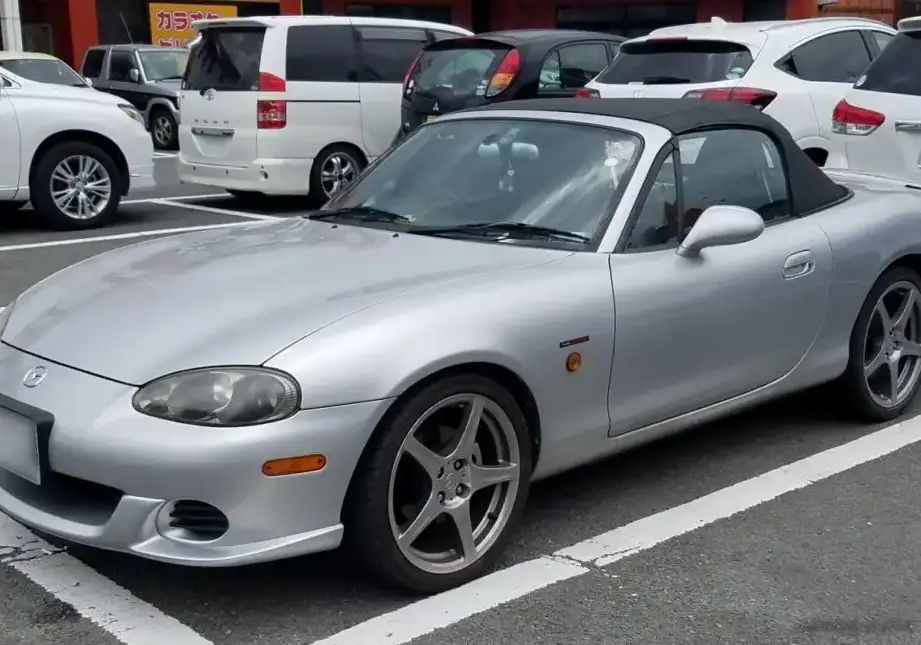
The Mazda Roadster, known as the Miata in North America, NB series produced between 1998 and 2005, represented a significant evolution of the iconic lightweight roadster. Building upon the success of the NA generation, the NB brought refinements in styling, chassis rigidity, and engine technology. The 1.8 i variant, producing 160 horsepower, occupied a sweet spot in the lineup, offering a compelling balance of performance and affordability. It was positioned as a step up from the earlier 1.6L models, providing more power for spirited driving while remaining accessible to a wider range of buyers. The NB generation, built on the BC platform, continued the Roadster’s tradition of providing an engaging, driver-focused experience.
Technical Specifications
| Brand | Mazda |
| Model | Roadster |
| Generation | Roadster (NB) |
| Type (Engine) | 1.8 i (160 Hp) |
| Start of production | 1998 |
| End of production | 2005 |
| Powertrain Architecture | Internal Combustion engine |
| Body type | Roadster |
| Seats | 2 |
| Doors | 2 |
| Fuel Type | Petrol (Gasoline) |
| Weight-to-power ratio | 6.3 kg/Hp, 158.4 Hp/tonne |
| Weight-to-torque ratio | 5.9 kg/Nm, 168.3 Nm/tonne |
| Power | 160 Hp @ 7000 rpm |
| Power per litre | 87 Hp/l |
| Torque | 170 Nm @ 5500 rpm (125.39 lb.-ft. @ 5500 rpm) |
| Engine layout | Front, Longitudinal |
| Engine Model/Code | BP-VE(RS) |
| Engine displacement | 1839 cm3 (112.22 cu. in.) |
| Number of cylinders | 4 |
| Engine configuration | Inline |
| Cylinder Bore | 83 mm (3.27 in.) |
| Piston Stroke | 85 mm (3.35 in.) |
| Compression ratio | 10:1 |
| Number of valves per cylinder | 4 |
| Fuel injection system | Multi-port manifold injection |
| Engine aspiration | Naturally aspirated engine |
| Valvetrain | DOHC |
| Kerb Weight | 1010 kg (2226.67 lbs.) |
| Fuel tank capacity | 48 l (12.68 US gal | 10.56 UK gal) |
| Length | 3955 mm (155.71 in.) |
| Width | 1680 mm (66.14 in.) |
| Height | 1235 mm (48.62 in.) |
| Wheelbase | 2265 mm (89.17 in.) |
| Front track | 1405 mm (55.31 in.) |
| Rear (Back) track | 1430 mm (56.3 in.) |
| Drivetrain Architecture | Rear wheel drive |
| Drive wheel | Rear wheel drive |
| Number of gears and type of gearbox | 5 gears, manual transmission |
| Front brakes | Ventilated discs |
| Rear brakes | Disc |
| Tires size | 185/60 R14 |
| Wheel rims size | 14 |
Powertrain & Engine Architecture
The heart of the 1.8 i Roadster is the BP-VE(RS) engine, a 1.8-liter inline-four cylinder powerplant. This engine represented a significant upgrade over the earlier 1.6-liter versions, featuring increased displacement and revised internals for improved power and torque. The BP-VE utilized a multi-port fuel injection system, delivering fuel directly into the intake ports for efficient combustion. The engine also featured a double overhead camshaft (DOHC) valvetrain, optimizing airflow into and out of the cylinders. The 16-valve configuration contributed to the engine’s responsive nature. The 160 horsepower output was achieved at 7000 rpm, while peak torque of 170 Nm (125.39 lb-ft) arrived at 5500 rpm. The engine’s longitudinal front-engine, rear-wheel-drive layout contributed to the Roadster’s balanced handling characteristics. The standard transmission for this variant was a smooth-shifting 5-speed manual, although a 4-speed automatic transmission was also available, albeit less common and generally considered to diminish the driving experience.
Driving Characteristics
The 1.8 i Roadster with the 5-speed manual transmission offered a genuinely engaging driving experience. The engine’s power delivery was linear and predictable, making it easy to exploit the available performance. While not brutally fast, the 160 hp was sufficient to provide brisk acceleration and enjoyable cornering. The short wheelbase and lightweight construction contributed to the Roadster’s nimble handling. The automatic transmission version, while offering convenience, noticeably dulled the driving experience. The automatic’s gear ratios were less optimized for performance, and the lack of driver control diminished the sense of connection with the car. Compared to the later 1.8L variants with variable valve timing (VVT), the BP-VE offered a more raw and direct feel, lacking the top-end punch of the VVT-equipped engines.
Equipment & Trim Levels
The 1.8 i Roadster typically came equipped with a respectable level of standard features. Interior appointments included comfortable cloth seats, a leather-wrapped steering wheel, and basic instrumentation. Power windows and door locks were standard. Optional extras included air conditioning, a premium sound system, and alloy wheels. The NB series also saw the introduction of a retractable hardtop option, providing increased security and weather protection. Trim levels varied depending on the market, but generally, the 1.8 i sat in the mid-range of the lineup, offering a good balance of features and price. Higher-spec models added features like leather upholstery, upgraded audio systems, and limited-slip differentials.
Chassis & Braking
The NB Roadster benefited from significant chassis improvements over the NA generation. Increased rigidity, achieved through reinforced frame rails and a revised suspension mounting system, resulted in improved handling and reduced body roll. The front suspension utilized independent double wishbones, while the rear featured an independent multi-link setup. Braking duties were handled by ventilated discs at the front and solid discs at the rear. The braking system provided adequate stopping power for the car’s weight and performance. The standard tire size was 185/60 R14, offering a good compromise between grip and ride comfort. A limited-slip differential was available as an option, further enhancing handling performance, particularly during spirited driving.
Market Reception & Comparison
The 1.8 i Roadster was generally well-received by automotive critics. It was praised for its engaging driving dynamics, responsive engine, and attractive styling. Compared to the earlier 1.6L models, the 1.8 i offered a noticeable improvement in performance, making it a more appealing option for drivers seeking a more exhilarating experience. Fuel economy was respectable, averaging around 30-35 mpg in mixed driving. Reliability was generally good, although some owners reported issues with the oil seals and cooling system. Compared to the later VVT-equipped 1.8L models, the BP-VE engine was considered slightly less refined but offered a more direct and visceral driving experience. The automatic transmission version received mixed reviews, with many critics preferring the engagement of the manual gearbox.
Legacy
The NB Mazda Roadster, particularly the 1.8 i variant, has established a strong following among enthusiasts. The BP-VE engine is known for its durability and relatively simple maintenance requirements. While not as collectible as the original NA Roadster, the NB remains a popular choice for those seeking an affordable and enjoyable sports car. In the used car market, well-maintained examples of the 1.8 i Roadster command reasonable prices. The NB’s combination of lightweight construction, responsive engine, and engaging handling continues to make it a compelling option for drivers who appreciate a pure and unadulterated driving experience. The NB generation solidified the Roadster’s reputation as one of the best handling and most fun-to-drive sports cars available, and the 1.8 i variant represents a particularly well-rounded and enjoyable iteration of this iconic model.