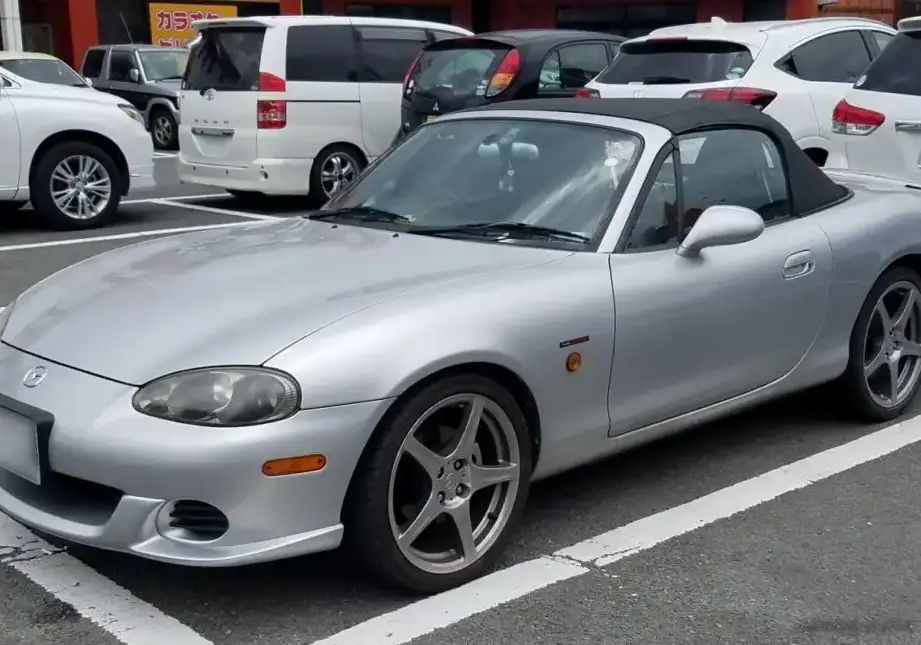
The Mazda Roadster (NCEC) 2.0i, known as the MX-5 in many markets, represents the third generation of Mazda’s iconic lightweight roadster. Produced from 2005 to 2015, this iteration built upon the success of its predecessors, offering a blend of sporty handling, affordability, and open-top driving enjoyment. The 2.0i variant, equipped with the 170 horsepower engine, occupied a mid-range position within the NCEC lineup, offering a significant performance upgrade over the base 1.8-liter models while remaining more accessible than the limited-edition and performance-focused trims. It was a key model for Mazda in both North America and Europe, appealing to driving enthusiasts seeking a pure and engaging roadster experience.
Technical Specifications
| Brand | Mazda |
| Model | Roadster |
| Generation | Roadster (NCEC) |
| Type (Engine) | 2.0 i (170 Hp) |
| Start of production | 2005 |
| End of production | 2015 |
| Powertrain Architecture | Internal Combustion engine |
| Body type | Roadster |
| Seats | 2 |
| Doors | 2 |
| Fuel Type | Petrol (Gasoline) |
| Power | 170 Hp @ 6700 rpm |
| Power per litre | 85.1 Hp/l |
| Torque | 189 Nm @ 5000 rpm / 139.4 lb.-ft. @ 5000 rpm |
| Engine layout | Front, Longitudinal |
| Engine Model/Code | LF-VE |
| Engine displacement | 1998 cm3 / 121.93 cu. in. |
| Number of cylinders | 4 |
| Engine configuration | Inline |
| Cylinder Bore | 87.5 mm / 3.44 in. |
| Piston Stroke | 83.1 mm / 3.27 in. |
| Compression ratio | 10:1 |
| Number of valves per cylinder | 4 |
| Fuel injection system | Multi-port manifold injection |
| Engine aspiration | Naturally aspirated engine |
| Valvetrain | DOHC |
| Fuel tank capacity | 50 l / 13.21 US gal | 11 UK gal |
| Length | 3995 mm / 157.28 in. |
| Width | 1720 mm / 67.72 in. |
| Height | 1245 mm / 49.02 in. |
| Wheelbase | 2330 mm / 91.73 in. |
| Front track | 1490 mm / 58.66 in. |
| Rear (Back) track | 1495 mm / 58.86 in. |
| Minimum turning circle (turning diameter) | 9.4 m / 30.84 ft. |
| Drivetrain Architecture | The Internal combustion engine (ICE) drives the rear wheels of the vehicle. |
| Drive wheel | Rear wheel drive |
| Number of gears and type of gearbox | 5 gears, manual transmission |
| Front brakes | Ventilated discs |
| Rear brakes | Disc |
| Assisting systems | ABS (Anti-lock braking system) |
| Tires size | 205/50 R16 |
| Wheel rims size | 6.5J x 16 |
Powertrain & Engine Architecture
The heart of the 2.0i Roadster is the LF-VE engine, a 1998cc inline-four cylinder powerplant. This engine represented a significant upgrade from the earlier 1.8-liter MZR engine, featuring a larger displacement and revised internals to deliver increased power and torque. The LF-VE utilizes a double overhead camshaft (DOHC) valvetrain with four valves per cylinder, optimizing airflow for improved performance. Fuel delivery is managed by a multi-port fuel injection system, providing precise fuel metering for efficient combustion. The engine’s 10:1 compression ratio strikes a balance between performance and fuel economy. The 2.0i was exclusively offered with a five-speed manual transmission, designed to complement the engine’s power characteristics and provide an engaging driving experience. The transmission features close gear ratios, maximizing acceleration and allowing the driver to keep the engine within its optimal power band.
Driving Characteristics
The 2.0i Roadster delivers a noticeably more spirited driving experience compared to the 1.8-liter variant. The increased horsepower and torque translate to quicker acceleration and improved passing power. The five-speed manual transmission allows for precise gear selection, enabling the driver to fully exploit the engine’s capabilities. The car’s lightweight construction – a hallmark of the MX-5 lineage – contributes to its nimble handling and responsive steering. The rear-wheel-drive configuration further enhances the driving experience, providing a balanced and engaging feel. While not a track-focused machine, the 2.0i offers ample performance for spirited driving on winding roads. The gear ratios are well-matched to the engine’s power curve, providing strong acceleration in each gear. Compared to the 1.8L, the 2.0i feels significantly more confident when overtaking and climbing hills.
Equipment & Trim Levels
The 2.0i trim typically included features such as power windows, power door locks, air conditioning, and a basic audio system. Standard interior appointments included cloth upholstery and a leather-wrapped steering wheel. Optional extras included a premium Bose audio system, leather seats, a limited-slip differential, and various cosmetic enhancements. The 2.0i often served as a platform for special editions, such as the PRHT (Power Retractable Hard Top) which offered a more secure and refined open-top experience. The dashboard layout was functional and driver-focused, with clearly legible gauges and intuitive controls. The interior, while not luxurious, was well-built and durable.
Chassis & Braking
The NCEC Roadster utilizes a MacPherson strut front suspension and a double-wishbone rear suspension, providing a comfortable yet controlled ride. The suspension tuning is geared towards sporty handling, with minimal body roll and precise steering response. The 2.0i models were equipped with ventilated disc brakes at the front and solid disc brakes at the rear, providing adequate stopping power for everyday driving and spirited performance. Anti-lock braking system (ABS) was standard, enhancing safety and stability. The chassis is relatively lightweight, contributing to the car’s agility and responsiveness. The standard tire size was 205/50 R16, providing a good balance between grip and ride comfort.
Market Reception & Comparison
The 2.0i Roadster was generally well-received by automotive critics, who praised its engaging driving dynamics, responsive engine, and affordable price point. It was often lauded as one of the best handling and most fun-to-drive cars in its class. Compared to the 1.8-liter models, the 2.0i offered a significant performance boost, making it a more appealing option for driving enthusiasts. Fuel economy was respectable, averaging around 22-26 mpg in mixed driving conditions. Reliability was generally good, although some owners reported minor issues with the engine’s oil consumption. The 2.0i offered a compelling alternative to other small roadsters, such as the BMW Z4 and Porsche Boxster, at a more accessible price point.
Legacy
The NCEC Mazda Roadster 2.0i has established a strong following among driving enthusiasts. Its combination of sporty handling, affordability, and open-top driving enjoyment has made it a popular choice in the used car market. The LF-VE engine is known for its durability and relatively simple maintenance requirements. While not without its quirks, the 2.0i powertrain has proven to be reliable over the long term. Today, well-maintained examples of the NCEC 2.0i Roadster are highly sought after by collectors and enthusiasts alike, representing a sweet spot in the MX-5 lineage.