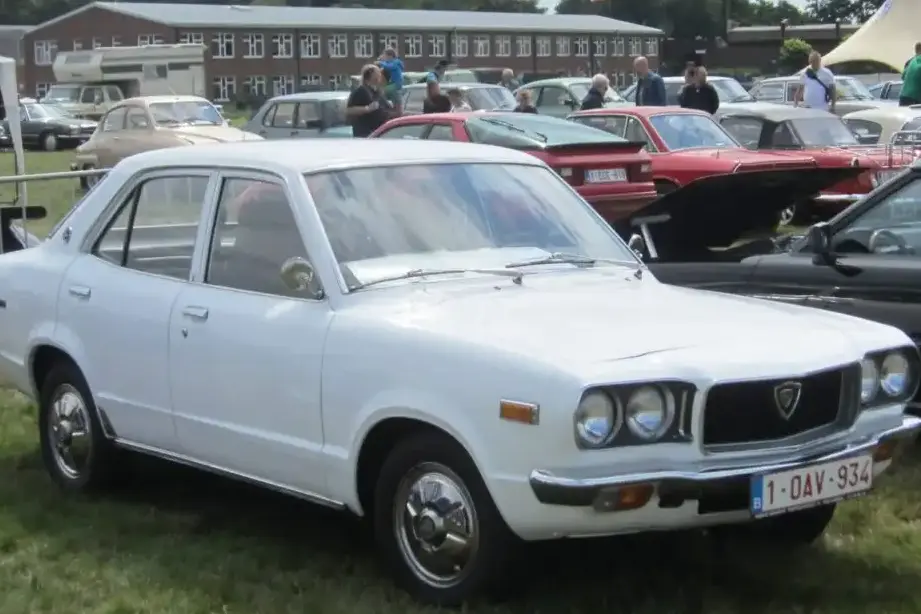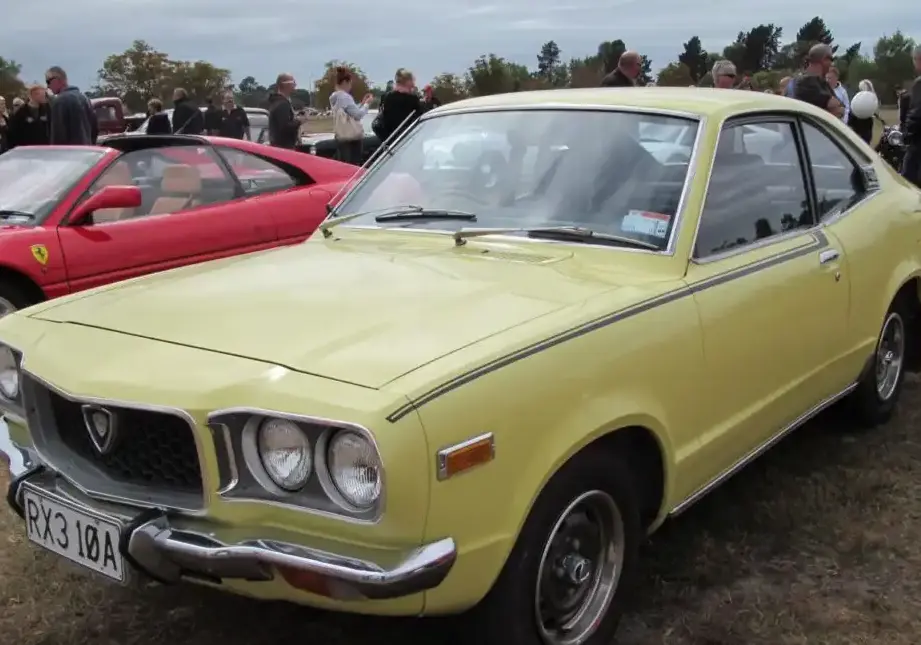
The Mazda RX-3 Coupe (S102A), produced between 1971 and 1973, represents a pivotal moment in Mazda’s rotary engine development and its foray into the compact coupe market. Positioned as a more affordable and accessible alternative to the larger RX-2, the RX-3 offered the unique driving experience of a Wankel rotary engine in a stylish, two-door package. It was primarily marketed in Japan and Australia, with limited exports to other regions. The S102A designation refers to the specific coupe body style within the broader RX-3 range. This variant, equipped with the 1.0-liter (491cc) 110 horsepower Wankel engine, served as the entry point into the RX-3 lineup.
Technical Specifications
| Brand | Mazda |
| Model | RX-3 |
| Generation | RX-3 Coupe (S102A) |
| Type (Engine) | 1.0 (110 Hp) Wankel |
| Start of production | 1971 |
| End of production | 1973 |
| Powertrain Architecture | Internal Combustion engine |
| Body type | Coupe |
| Seats | 4 |
| Doors | 2 |
| Fuel Type | Petrol (Gasoline) |
| Weight-to-power ratio | 8 kg/Hp, 124.3 Hp/tonne |
| Weight-to-torque ratio | 6.5 kg/Nm, 153.7 Nm/tonne |
| Power | 110 Hp @ 7000 rpm |
| Power per litre | 224 Hp/l |
| Torque | 136 Nm @ 4000 rpm (100.31 lb.-ft. @ 4000 rpm) |
| Engine layout | Front, Longitudinal |
| Engine Model/Code | 10A-0866 |
| Engine displacement | 491 cm3 (29.96 cu. in.) |
| Number of cylinders | 2 |
| Engine configuration | Rotary (Wankel) |
| Compression ratio | 9.4:1 |
| Fuel injection system | Carburettor |
| Engine oil capacity | 5.5 l (5.81 US qt | 4.84 UK qt) |
| Coolant capacity | 7 l (7.4 US qt | 6.16 UK qt) |
| Kerb Weight | 885 kg (1951.09 lbs) |
| Fuel tank capacity | 60 l (15.85 US gal | 13.2 UK gal) |
| Length | 4065 mm (160.04 in) |
| Width | 1595 mm (62.8 in) |
| Height | 1350 mm (53.15 in) |
| Wheelbase | 2310 mm (90.94 in) |
| Front track | 1300 mm (51.18 in) |
| Rear track | 1290 mm (50.79 in) |
| Ride height (ground clearance) | 165 mm (6.5 in) |
| Minimum turning circle | 8.6 m (28.22 ft) |
| Drivetrain | Rear wheel drive |
| Number of gears and type of gearbox | 4 gears, manual transmission |
| Front suspension | Spring Strut |
| Rear suspension | Leaf spring |
| Front brakes | Disc |
| Rear brakes | Drum |
| Steering type | Cone worm with recirculation balls |
| Power steering | Hydraulic Steering |
Powertrain & Engine Architecture
The heart of the RX-3 Coupe 1.0 was the 10A-0866 rotary engine, a 491cc twin-rotor Wankel engine. Unlike traditional piston engines, the rotary engine utilizes a triangular rotor spinning within a specially shaped housing to generate power. This design allowed for a remarkably smooth and high-revving engine, despite its relatively small displacement. The 10A engine featured a 9.4:1 compression ratio and was fed by a carburetor, a common setup for the time. The engine’s compact size and lightweight construction contributed significantly to the RX-3’s balanced handling. The four-speed manual transmission was the only gearbox option for this variant, providing a direct connection between the engine and the rear wheels. The longitudinal engine placement further aided weight distribution.
Driving Characteristics
The 110 horsepower output of the 1.0-liter Wankel engine, coupled with the RX-3’s relatively light weight of approximately 1951 pounds, resulted in a surprisingly lively driving experience. While not a powerhouse, the engine delivered a unique powerband characterized by strong mid-range torque and a willingness to rev. The four-speed manual transmission offered a decent spread of gears, but the relatively short gearing meant the engine could be at higher RPMs during highway cruising. Compared to the more powerful RX-3 variants, such as those equipped with larger rotary engines, the 1.0-liter model prioritized fuel efficiency and affordability over outright performance. The rear-wheel-drive configuration and relatively simple suspension setup provided a predictable and engaging driving experience, though it lacked the sophistication of more modern handling technologies.
Equipment & Trim Levels
The RX-3 Coupe 1.0, being the entry-level model, featured a fairly basic level of equipment. Standard features typically included cloth upholstery, a simple dashboard layout with basic instrumentation, and steel wheels with hubcaps. Power steering was a notable inclusion, offering a lighter steering feel. Optional extras, depending on the market, could include upgraded audio systems, a more luxurious interior trim, and even air conditioning. The interior design was functional and focused on providing a comfortable driving environment, rather than lavish luxury. The overall aesthetic was typical of early 1970s Japanese automotive design – clean lines and a minimalist approach.
Chassis & Braking
The RX-3 Coupe utilized a body-on-frame construction, which was common for the era. The front suspension consisted of a simple strut setup, while the rear suspension employed leaf springs. This configuration provided a comfortable ride, but it wasn’t particularly sophisticated in terms of handling precision. The braking system featured disc brakes on the front wheels and drum brakes on the rear. While adequate for the car’s performance capabilities, the braking system lacked the stopping power and modulation of more modern systems. The steering was a cone worm with recirculation balls, assisted by hydraulic power steering, offering a reasonable level of feedback and control.
Market Reception & Comparison
The RX-3 Coupe 1.0 was generally well-received as an affordable and stylish entry into the world of rotary engine technology. Critics praised its smooth engine, engaging driving dynamics, and attractive design. However, some noted the engine’s relatively low power output compared to larger-displacement alternatives. Compared to the RX-2, the RX-3 offered a more compact and modern design, while being more affordable. Within the RX-3 lineup, the 1.0-liter model appealed to buyers who prioritized fuel economy and affordability over outright performance. The larger-engined RX-3 variants catered to enthusiasts seeking a more thrilling driving experience.
Legacy
The Mazda RX-3 Coupe 1.0 holds a significant place in Mazda’s history as a pioneering example of rotary engine technology in a compact and affordable package. While the Wankel engine had a reputation for requiring more frequent maintenance than traditional piston engines, the 10A unit proved to be relatively reliable when properly maintained. Today, the RX-3 Coupe is a sought-after classic car, particularly among rotary engine enthusiasts. Well-maintained examples command a premium in the used car market. The RX-3’s enduring appeal lies in its unique driving experience, stylish design, and its role as a key milestone in Mazda’s automotive heritage. Finding parts can be challenging, but a dedicated community of enthusiasts ensures that these cars continue to be enjoyed for years to come.