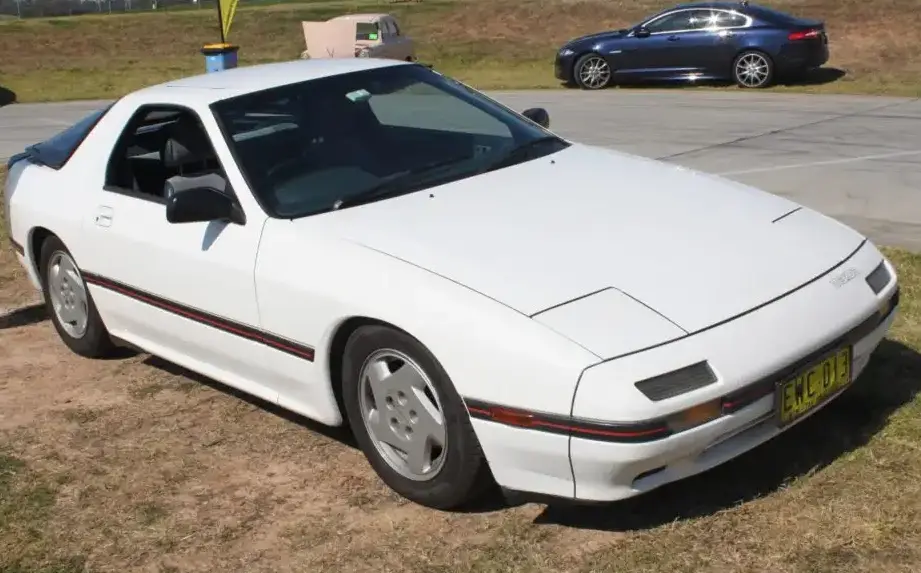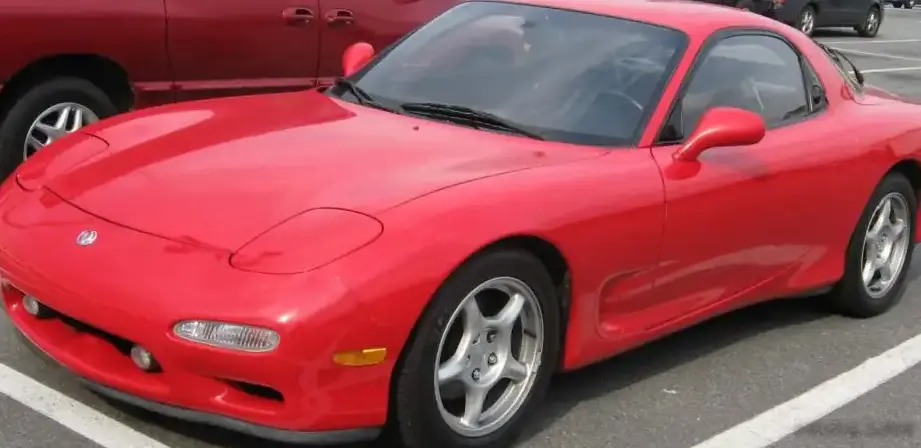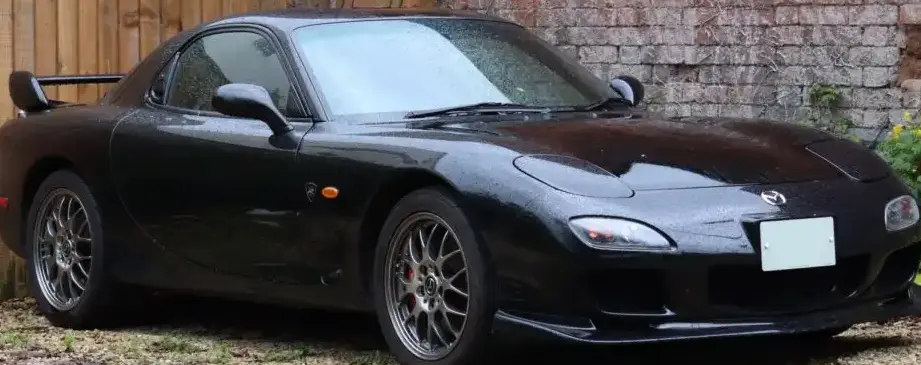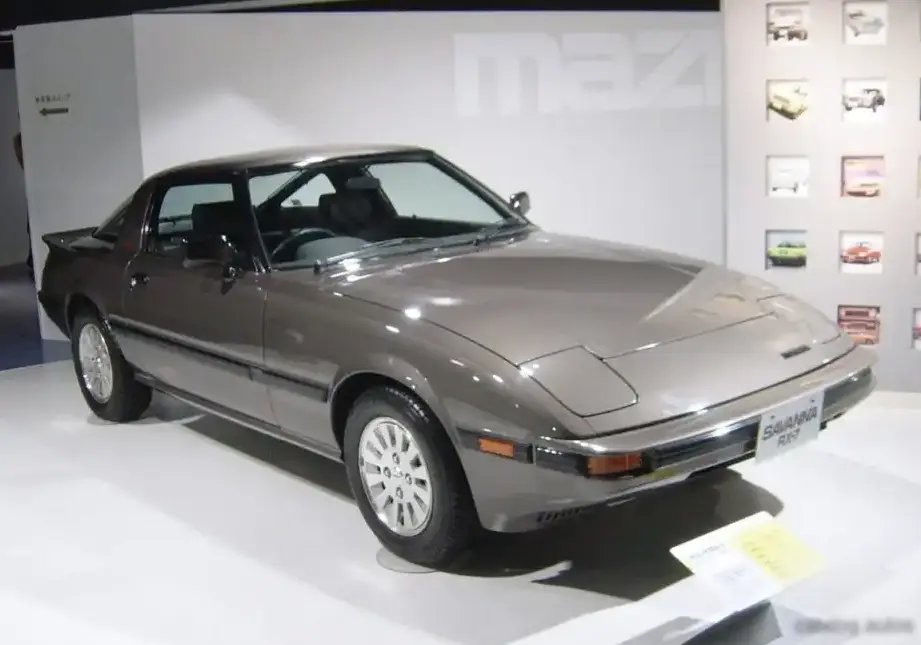
The Mazda RX-7 (SA) represents the first generation of Mazda’s iconic rotary-powered sports car, produced from July 1979 to March 1981. Positioned as a stylish and affordable alternative to more established sports coupes, the RX-7 aimed to deliver a unique driving experience thanks to its innovative Wankel rotary engine. The “SA” designation refers to the initial iteration of the first generation (RX-7 I), and the 1.1 Wankel (105 hp) variant served as the entry point into the RX-7 lineup, offering a balance of performance and economy. It was a key model in establishing Mazda’s reputation for engineering innovation and sporty driving dynamics in the American market, where it competed with vehicles like the Datsun 280Z and Toyota Celica Supra.
Technical Specifications
| Brand | Mazda |
| Model | RX-7 |
| Generation | RX 7 I (SA) |
| Type (Engine) | 1.1 Wankel (105 Hp) |
| Start of production | July, 1979 |
| End of production | March, 1981 |
| Powertrain Architecture | Internal Combustion engine |
| Body type | Coupe |
| Seats | 4 |
| Doors | 2 |
| Fuel consumption (extra urban) | 9.4 l/100 km (25 US mpg) |
| Fuel Type | Petrol (Gasoline) |
| Acceleration 0 – 100 km/h | 9.5 sec |
| Acceleration 0 – 62 mph | 9.5 sec |
| Acceleration 0 – 60 mph | 9 sec |
| Maximum speed | 190 km/h (118.06 mph) |
| Weight-to-power ratio | 10.3 kg/Hp |
| Weight-to-torque ratio | 7.6 kg/Nm |
| Power | 105 Hp @ 6000 rpm |
| Power per litre | 91.6 Hp/l |
| Torque | 142 Nm @ 4000 rpm (104.73 lb.-ft. @ 4000 rpm) |
| Engine layout | Front, Longitudinal |
| Engine Model/Code | 12A |
| Engine displacement | 1146 cm3 (69.93 cu. in.) |
| Number of cylinders | 2 |
| Engine configuration | Rotary (Wankel) |
| Number of valves per cylinder | 2 |
| Fuel injection system | Carburettor |
| Engine aspiration | Naturally aspirated engine |
| Engine oil capacity | 4.2 l (4.44 US qt | 3.7 UK qt) |
| Kerb Weight | 1086 kg (2394.22 lbs.) |
| Max. weight | 1446 kg (3187.88 lbs.) |
| Max load | 360 kg (793.66 lbs.) |
| Trunk (boot) space – minimum | 391 l (13.81 cu. ft.) |
| Fuel tank capacity | 55 l (14.53 US gal | 12.1 UK gal) |
| Max. roof load | 50 kg (110.23 lbs.) |
| Permitted trailer load with brakes (12%) | 900 kg (1984.16 lbs.) |
| Permitted trailer load without brakes | 400 kg (881.85 lbs.) |
| Length | 4293 mm (169.02 in.) |
| Width | 1651 mm (65 in.) |
| Height | 1270 mm (50 in.) |
| Wheelbase | 2413 mm (95 in.) |
| Front track | 1422 mm (55.98 in.) |
| Rear (Back) track | 1397 mm (55 in.) |
| Minimum turning circle | 9.6 m (31.5 ft.) |
| Drivetrain Architecture | Rear wheel drive |
| Number of gears and type of gearbox | 4 gears, manual transmission |
| Front suspension | Independent coil spring, Transverse stabilizer |
| Rear suspension | Independent multi-link spring suspension with stabilizer |
| Front brakes | Ventilated discs |
| Rear brakes | Drum |
| Steering type | Steering rack and pinion |
| Tires size | 185/70 R13 |
| Wheel rims size | 5J x 13; 5.5J x 13 |
Introduction
The first-generation Mazda RX-7, internally designated as the SA series, debuted in 1978 and quickly gained recognition for its distinctive styling and revolutionary engine. Unlike conventional piston engines, the RX-7 utilized a Wankel rotary engine, a design known for its smoothness, high power-to-weight ratio, and compact size. The 1.1 Wankel, displacing 1146cc, produced 105 horsepower and served as the base engine option. This variant was aimed at buyers seeking a sporty and fuel-efficient coupe, offering a more accessible entry point into the RX-7 range compared to later, more powerful versions. The SA RX-7 was a two-door coupe with seating for four, and its design drew inspiration from the Jaguar XJ-S, resulting in a sleek and modern aesthetic for its time.
Powertrain & Engine Architecture
The heart of the RX-7 SA was the 12A rotary engine. This engine featured a triangular rotor spinning within a specially shaped housing, replacing the reciprocating pistons of a traditional engine. The 12A was a two-rotor engine, and the 1.1 designation refers to its approximate displacement in liters. The engine employed a single carburetor for fuel delivery, a relatively simple system for the era. The rotary engine’s valvetrain consisted of side ports, which controlled the intake and exhaust processes. The 105 hp version of the 12A was known for its smooth power delivery and distinctive rotary engine sound. The engine was mounted longitudinally in the front of the car, driving the rear wheels. The standard transmission for this variant was a four-speed manual, although a three-speed automatic transmission was also available, albeit less common. The automatic transmission, while offering convenience, did impact acceleration and fuel economy compared to the manual.
Driving Characteristics
The RX-7 SA 1.1 Wankel with the manual transmission offered a surprisingly engaging driving experience for its time. While not a powerhouse, the 105 hp engine provided adequate acceleration, reaching 60 mph in around 9 seconds. The car’s relatively light weight (approximately 2394 lbs) contributed to its nimble handling. The automatic transmission version, however, noticeably dulled the driving experience. The gear ratios were optimized for fuel efficiency rather than outright performance, resulting in slower acceleration and a less responsive feel. The rotary engine’s unique power delivery meant that peak torque was available at a relatively high engine speed, requiring drivers to keep the engine revving to maintain momentum. Compared to later RX-7 models with larger rotary engines or turbocharging, the 1.1 Wankel was less potent, but it offered a more accessible and forgiving driving experience.
Equipment & Trim Levels
The base RX-7 SA 1.1 Wankel was relatively sparsely equipped, reflecting its position as the entry-level model. Standard features typically included cloth upholstery, basic instrumentation (speedometer, tachometer, fuel gauge), and a four-speaker AM/FM radio. Power steering was not standard, requiring more effort at low speeds. Optional extras included air conditioning, upgraded audio systems, and alloy wheels. Interior trim was generally functional and straightforward, with a focus on durability rather than luxury. The dashboard layout was clean and simple, with easy-to-read gauges. The automatic transmission version often included a few additional comfort features as standard, such as a center console.
Chassis & Braking
The RX-7 SA featured an independent suspension system at all four wheels, contributing to its comfortable ride and responsive handling. The front suspension utilized coil springs and a transverse stabilizer bar, while the rear suspension employed a multi-link design with a stabilizer bar. Braking duties were handled by ventilated discs at the front and drum brakes at the rear. The braking system was adequate for the car’s performance, but it lacked the stopping power of more modern systems. The steering was a rack-and-pinion system, providing precise and responsive steering feel. The car’s relatively low weight and well-balanced chassis contributed to its neutral handling characteristics.
Market Reception & Comparison
The RX-7 SA was generally well-received by automotive critics, who praised its stylish design, innovative engine, and engaging driving dynamics. However, the 1.1 Wankel variant was sometimes criticized for its relatively modest power output. Compared to the later RX-7 models with larger engines, the 1.1 Wankel offered less performance, but it also delivered better fuel economy. The automatic transmission version was often seen as a compromise, sacrificing performance for convenience. In terms of reliability, the rotary engine required more frequent maintenance than a conventional piston engine, including regular apex seal inspections. However, with proper maintenance, the 12A engine proved to be reasonably durable.
Legacy
The Mazda RX-7 SA 1.1 Wankel holds a significant place in automotive history as the first generation of a truly iconic sports car. While the 1.1 Wankel variant may not be the most sought-after version today, it remains a popular choice among enthusiasts seeking a classic rotary-powered coupe. The 12A engine, despite its maintenance requirements, is known for its smooth operation and distinctive sound. In the used car market, well-maintained RX-7 SA models command a premium, particularly those with the manual transmission. The RX-7 SA established Mazda as a serious player in the sports car market and paved the way for future generations of rotary-powered vehicles. The enduring appeal of the RX-7 is a testament to its innovative engineering, stylish design, and unique driving experience.