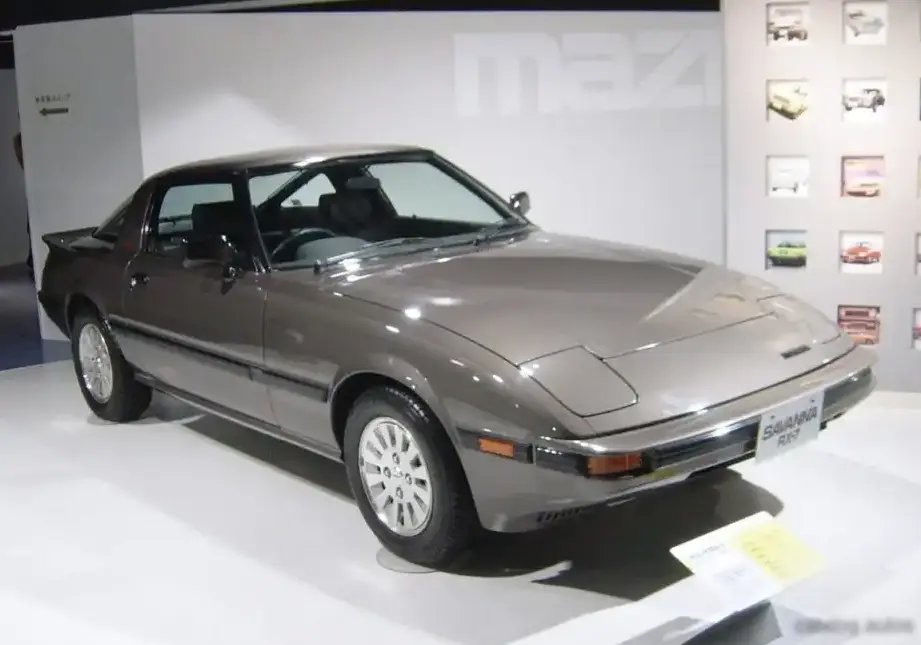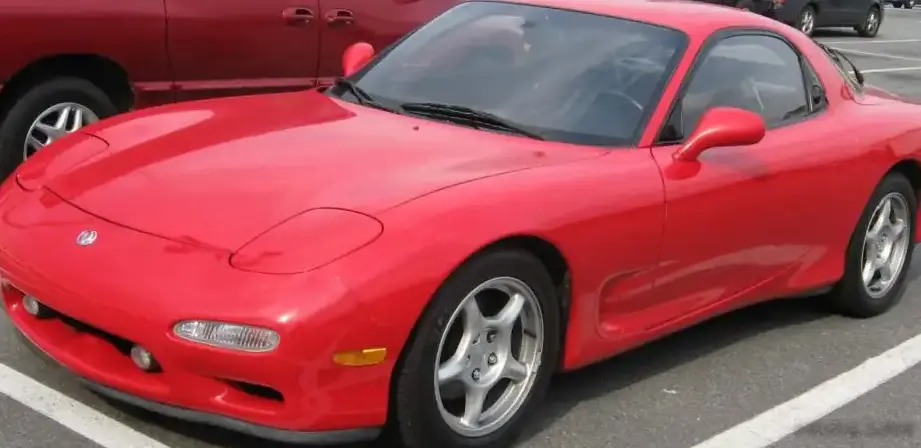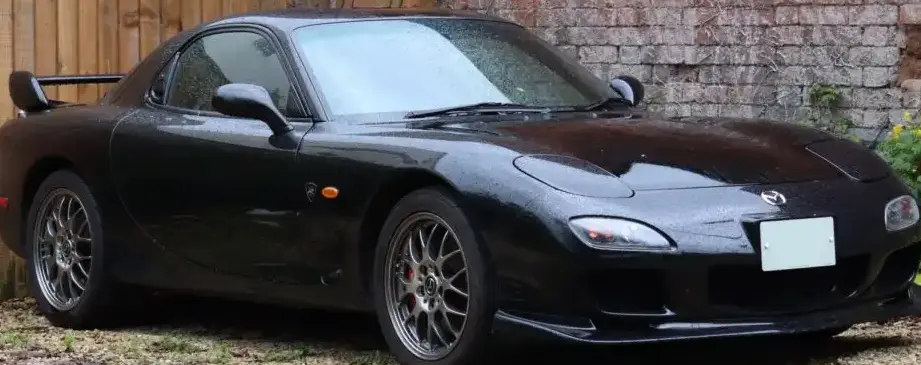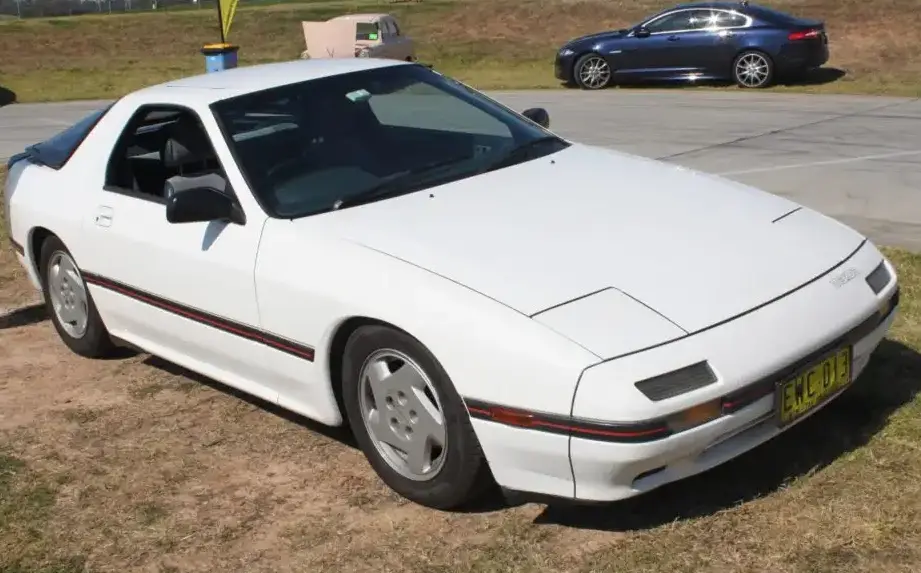
The Mazda RX-7 II (FC) Turbo, produced between 1987 and 1989, represented a significant evolution of Mazda’s iconic rotary-powered sports car. Positioned as the performance flagship of the second-generation RX-7 lineup, the Turbo model offered a substantial power increase over the naturally aspirated variants, appealing to enthusiasts seeking a more engaging driving experience. It was a key model in establishing the RX-7’s reputation for innovative engineering and dynamic handling, particularly within the burgeoning Japanese sports car scene of the late 1980s. The FC generation, internally designated as the 1HX0 chassis code, built upon the success of the original FB RX-7, offering improved refinement, technology, and performance.
Technical Specifications
| Brand | Mazda |
| Model | RX-7 |
| Generation | RX 7 II (FC) |
| Type (Engine) | Turbo (181 Hp) |
| Start of production | 1987 |
| End of production | 1989 |
| Powertrain Architecture | Internal Combustion engine |
| Body type | Coupe |
| Seats | 4 |
| Doors | 2 |
| Fuel consumption (urban) | 16.2 l/100 km (14.5 US mpg, 17.4 UK mpg, 6.2 km/l) |
| Fuel consumption (extra urban) | 11 l/100 km (21.4 US mpg, 25.7 UK mpg, 9.1 km/l) |
| Fuel Type | Petrol (Gasoline) |
| Acceleration 0 – 100 km/h | 7.2 sec |
| Acceleration 0 – 62 mph | 7.2 sec |
| Acceleration 0 – 60 mph | 6.8 sec |
| Maximum speed | 230 km/h (142.92 mph) |
| Weight-to-power ratio | 6.9 kg/Hp, 144.8 Hp/tonne |
| Weight-to-torque ratio | 5.1 kg/Nm, 197.6 Nm/tonne |
| Power | 181 Hp |
| Power per litre | 138.4 Hp/l |
| Torque | 247 Nm @ 3500 rpm (182.18 lb.-ft. @ 3500 rpm) |
| Engine layout | Front, Longitudinal |
| Engine Model/Code | 13B-T |
| Engine displacement | 1308 cm3 (79.82 cu. in.) |
| Number of cylinders | 2 |
| Engine configuration | Rotary (Wankel) |
| Compression ratio | 8.5:1 |
| Fuel injection system | Multi-port manifold injection |
| Engine aspiration | Turbocharger, Intercooler |
| Engine oil capacity | 4.7 l (4.97 US qt | 4.14 UK qt) |
| Kerb Weight | 1250 kg (2755.78 lbs.) |
| Max. weight | 1705 kg (3758.88 lbs.) |
| Max load | 455 kg (1003.1 lbs.) |
| Trunk (boot) space – minimum | 200 l (7.06 cu. ft.) |
| Fuel tank capacity | 72 l (19.02 US gal | 15.84 UK gal) |
| Max. roof load | 50 kg (110.23 lbs.) |
| Permitted trailer load with brakes (12%) | 1200 kg (2645.55 lbs.) |
| Permitted trailer load without brakes | 500 kg (1102.31 lbs.) |
| Length | 4310 mm (169.69 in.) |
| Width | 1690 mm (66.54 in.) |
| Height | 1265 mm (49.8 in.) |
| Wheelbase | 2430 mm (95.67 in.) |
| Front track | 1450 mm (57.09 in.) |
| Rear (Back) track | 1440 mm (56.69 in.) |
| Drag coefficient (Cd) | 0.29 |
| Minimum turning circle (turning diameter) | 9.8 m (32.15 ft.) |
| Drivetrain Architecture | The Internal combustion engine (ICE) drives the rear wheels of the vehicle. |
| Drive wheel | Rear wheel drive |
| Number of gears and type of gearbox | 5 gears, manual transmission |
| Front suspension | Independent type McPherson |
| Rear suspension | Independent coil spring, Transverse stabilizer |
| Front brakes | Ventilated discs |
| Rear brakes | Ventilated discs |
| Assisting systems | ABS (Anti-lock braking system) |
| Steering type | Steering rack and pinion |
| Power steering | Electric Steering |
| Tires size | 205/55 R16 |
| Wheel rims size | 7J x 16 |
INTRODUCTION
The RX-7 II Turbo, produced from 1987-1989, was the performance variant of the second-generation RX-7 (FC). It built upon the foundation laid by the first-generation RX-7 (FB) and offered a more refined and powerful driving experience. The FC generation represented a significant leap forward in terms of styling, technology, and overall sophistication. The Turbo model, with its 13B-T rotary engine, was the range-topper, offering a substantial performance advantage over the naturally aspirated models. It was marketed towards driving enthusiasts who appreciated the unique characteristics of the Wankel rotary engine and the RX-7’s nimble handling.
Powertrain & Engine Architecture
At the heart of the RX-7 II Turbo lies the 13B-T rotary engine. This 1.3-liter, twin-rotor Wankel engine produced 181 horsepower and 182 lb-ft of torque. The “T” designation signifies the presence of a turbocharger and an intercooler, significantly boosting power output compared to the naturally aspirated 13B engine. The engine utilized multi-port fuel injection for precise fuel delivery. The 13B-T featured a compression ratio of 8.5:1. The engine’s unique rotary design, while offering a high power-to-weight ratio and smooth power delivery, also presented unique challenges in terms of apex seal wear and oil consumption. The engine was mounted longitudinally in the front of the vehicle, driving the rear wheels. The standard transmission was a 5-speed manual, although a 4-speed automatic was also available, albeit less common and generally considered to diminish the driving experience.
Driving Characteristics
The RX-7 II Turbo offered a distinctly different driving experience compared to its naturally aspirated siblings. The turbocharger provided a noticeable boost in acceleration, particularly in the mid-range. While not possessing the outright torque of a comparable piston-engine car, the rotary engine’s smooth and linear power delivery made it feel quicker than the numbers suggest. The 5-speed manual transmission featured relatively short gear ratios, encouraging spirited driving. The automatic transmission, while offering convenience, resulted in a noticeable loss of performance and responsiveness. The car’s lightweight construction and well-tuned suspension contributed to its nimble handling and precise steering. The rear-wheel-drive layout provided a balanced and engaging driving experience, although it also required careful throttle control to avoid oversteer.
Equipment & Trim Levels
The RX-7 II Turbo was generally well-equipped for its time. Standard features included power steering, ventilated disc brakes on all four wheels, and an anti-lock braking system (ABS). The interior featured comfortable sport seats, a leather-wrapped steering wheel, and a comprehensive instrument cluster. Optional extras included a sunroof, upgraded audio system, and power windows and locks. The interior trim was typically finished in dark colors, with a focus on functionality and driver engagement. The Turbo model often received unique badging and exterior trim elements to distinguish it from the lower-spec variants.
Chassis & Braking
The RX-7 II Turbo utilized an independent suspension system on both the front and rear axles. The front suspension employed a McPherson strut design, while the rear featured an independent coil spring setup with a transverse stabilizer bar. This suspension configuration provided a good balance between ride comfort and handling performance. The braking system consisted of ventilated disc brakes on all four wheels, providing ample stopping power. The ABS system helped to maintain stability during hard braking. The car’s relatively lightweight construction contributed to its agility and responsiveness.
Market Reception & Comparison
The RX-7 II Turbo was generally well-received by automotive critics. It was praised for its innovative rotary engine, nimble handling, and stylish design. However, some critics noted the engine’s relatively high fuel consumption and potential for maintenance issues. Compared to the naturally aspirated RX-7 models, the Turbo offered a significant performance upgrade, but at a higher price point. Compared to other sports cars of the era, such as the Toyota Supra and Nissan 300ZX, the RX-7 Turbo offered a unique driving experience thanks to its rotary engine and rear-wheel-drive layout. The automatic transmission version was often criticized for diminishing the driving experience and not fully utilizing the engine’s potential.
Legacy
The RX-7 II Turbo remains a highly sought-after sports car among enthusiasts. The 13B-T engine, while requiring diligent maintenance, is known for its potential for modification and tuning. The car’s unique rotary engine and engaging driving dynamics have cemented its place in automotive history. Today, well-maintained examples of the RX-7 II Turbo command premium prices in the used car market. The rotary engine’s inherent complexities mean that finding a mechanically sound example can be challenging, and ongoing maintenance is crucial to ensure its longevity. Despite these challenges, the RX-7 II Turbo continues to be celebrated as a true icon of the Japanese sports car era.