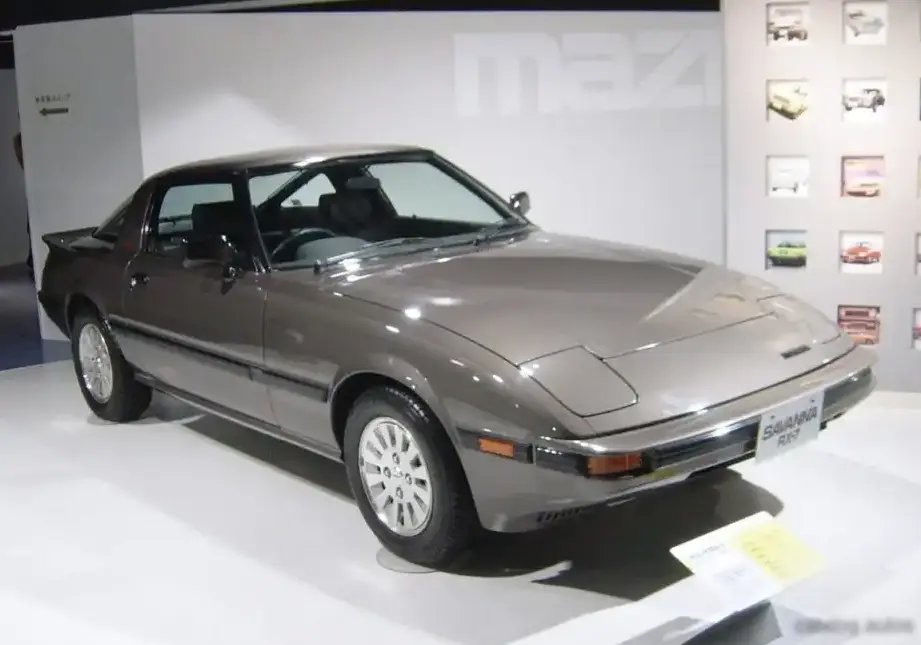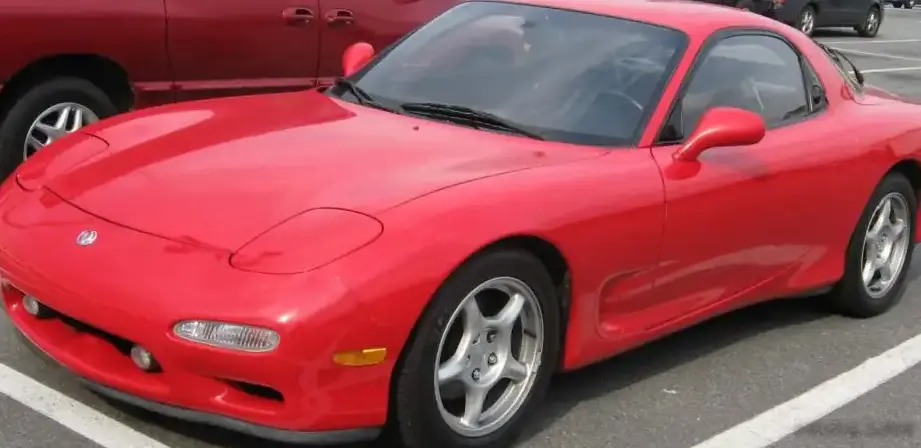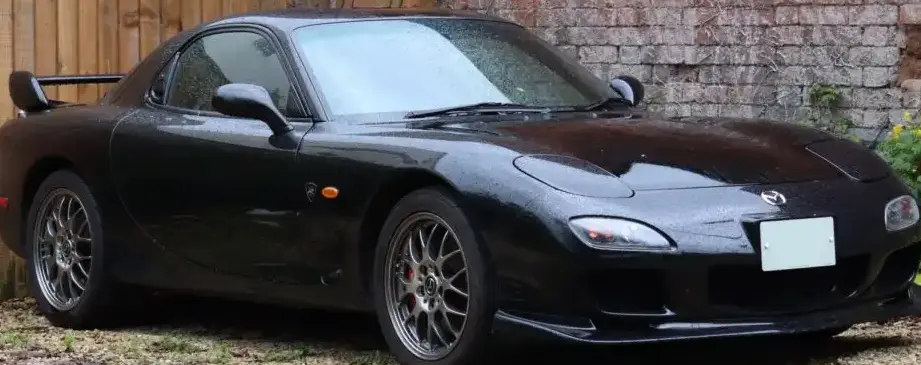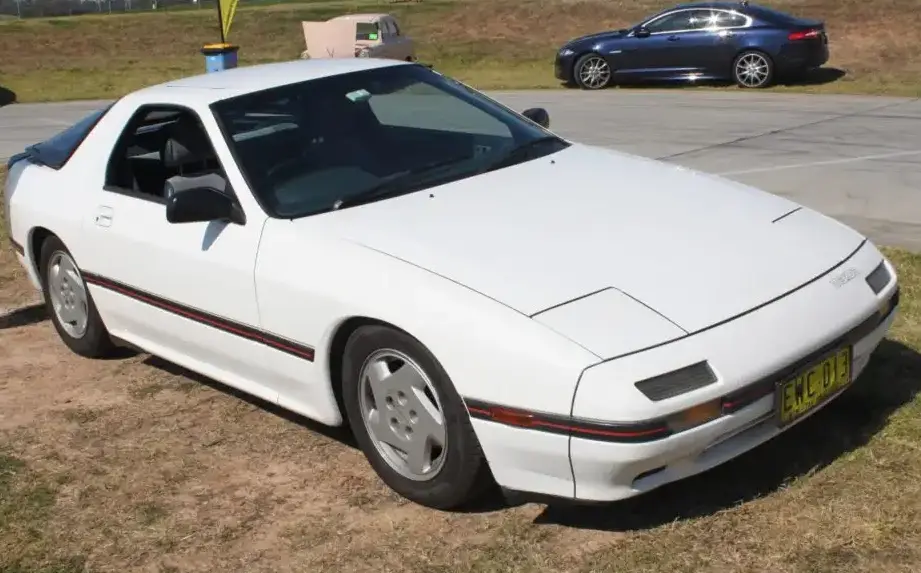
The Mazda RX-7 II (FC) Turbo, produced from 1989 to 1991, represents a significant evolution of Mazda’s iconic rotary-powered sports car. Falling within the second generation (FC) of the RX-7, which spanned from 1985 to 1992, the Turbo model was the performance flagship of the lineup. It built upon the foundation laid by the naturally aspirated models, offering substantially increased power and a more focused driving experience. The FC generation, and particularly the Turbo variant, aimed to bridge the gap between accessible sports car fun and the more exotic, high-performance machines of the era. It was sold primarily in Japan, North America, and Europe, establishing a loyal following for its unique engine and handling characteristics.
Technical Specifications
| Brand | Mazda |
| Model | RX-7 |
| Generation | RX-7 II (FC) |
| Type (Engine) | Turbo (200 Hp) |
| Start of production | 1989 |
| End of production | 1991 |
| Powertrain Architecture | Internal Combustion engine (Rotary) |
| Body type | Coupe |
| Fuel Type | Petrol (Gasoline) |
| Engine Power | 200 Hp |
| Engine Aspiration | Turbocharger |
| Engine Displacement | 1.3 Liters (13B Rotary) |
| Transmission | 5-Speed Manual, 4-Speed Automatic (Optional) |
| Weight | 2715 lbs (approx. manual transmission) |
| Length | 166.1 in (4220 mm) |
| Width | 66.1 in (1680 mm) |
| Height | 45.7 in (1160 mm) |
Powertrain & Engine Architecture
The heart of the RX-7 II Turbo is Mazda’s 13B rotary engine. Unlike traditional piston engines, the 13B utilizes a triangular rotor spinning within a specially shaped housing to generate power. This design allows for a remarkably smooth and high-revving engine, but also presents unique engineering challenges. The 1989-1991 Turbo models featured a twin-scroll turbocharger, significantly improving responsiveness and reducing turbo lag compared to earlier iterations. The turbocharger boosted the engine’s output to 200 horsepower at 6500 rpm and 195 lb-ft of torque at 3000 rpm. Fuel delivery was handled by a multi-point fuel injection system, crucial for managing the unique combustion characteristics of the rotary engine. The engine also incorporated an oil metering pump, essential for lubricating the rotor tips. The 13B engine, while relatively compact, required careful maintenance to ensure longevity. A common issue was apex seal wear, a critical component within the rotary engine. The Turbo model was available with either a five-speed manual transmission or a four-speed automatic transmission. The manual transmission was favored by enthusiasts for its direct engagement and performance benefits, while the automatic offered convenience for daily driving.
Driving Characteristics
The RX-7 II Turbo offered a distinctly different driving experience compared to its piston-engined contemporaries. The rotary engine’s smooth power delivery and willingness to rev were immediately apparent. The turbocharger provided a noticeable surge of acceleration, making the car feel significantly faster than the naturally aspirated models. The manual transmission version could accelerate from 0 to 60 mph in around 6.0 seconds, a respectable figure for the early 1990s. The automatic transmission, while offering smooth shifts, resulted in a slight performance decrease. The FC RX-7 was praised for its balanced handling. The relatively lightweight chassis and well-tuned suspension contributed to a nimble and responsive feel. The steering was precise, providing good feedback to the driver. The Turbo model benefited from upgraded brakes compared to the base models, providing improved stopping power. However, the car’s rear-wheel-drive layout and relatively short wheelbase could make it challenging to control at the limit, particularly in wet conditions.
Equipment & Trim Levels
The RX-7 II Turbo was positioned as the premium trim level within the FC RX-7 range. Standard features included power windows, power locks, air conditioning, and a cassette stereo. The interior featured sport seats upholstered in cloth or leather (optional). A distinctive gauge cluster, including a boost gauge, was specific to the Turbo model. Optional extras included a sunroof, upgraded sound system, and limited-slip differential. The interior design, while functional, was relatively simple and focused on the driving experience. Cosmetically, the Turbo model could be distinguished by its unique front spoiler, rear spoiler, and alloy wheels. Paint options included a variety of solid colors and metallic finishes. The overall aesthetic was sleek and modern for its time, reflecting Mazda’s design philosophy of the late 1980s and early 1990s.
Chassis & Braking
The RX-7 II (FC) utilized a unibody construction, contributing to its relatively lightweight chassis. The suspension consisted of independent double wishbones at all four corners, providing a good balance of ride comfort and handling performance. The Turbo model featured stiffer springs and dampers compared to the base models, further enhancing its handling capabilities. Braking duties were handled by disc brakes at the front and either disc or drum brakes at the rear, depending on the specific configuration. The Turbo model typically came equipped with disc brakes all around. Anti-lock brakes (ABS) were available as an option, providing improved braking performance and stability. The steering system was a rack-and-pinion setup, offering precise and responsive steering feel.
Market Reception & Comparison
The RX-7 II Turbo was generally well-received by automotive critics. It was praised for its unique engine, engaging driving dynamics, and attractive styling. However, the rotary engine’s reputation for requiring frequent maintenance and potential reliability issues was a recurring concern. Compared to the naturally aspirated RX-7 models, the Turbo offered a significant performance upgrade, but at a higher price point. Compared to rivals such as the Toyota Supra and Nissan 300ZX, the RX-7 Turbo offered a more unique and arguably more engaging driving experience. However, the Supra and 300ZX were generally considered to be more reliable and offered a wider range of features. Fuel economy was also a consideration; the rotary engine, while powerful, was not particularly fuel-efficient.
Legacy
The Mazda RX-7 II Turbo remains a highly sought-after sports car among enthusiasts. Its unique rotary engine and engaging driving dynamics have earned it a dedicated following. However, the 13B rotary engine requires diligent maintenance, and finding qualified mechanics can be challenging. Apex seal wear remains a common issue, and rebuilding the engine can be expensive. Despite these challenges, well-maintained RX-7 Turbo models continue to command high prices in the used car market. The FC RX-7 Turbo represents a pivotal moment in Mazda’s history, showcasing the company’s commitment to innovation and its willingness to challenge conventional automotive engineering. It’s a car that continues to captivate enthusiasts with its unique character and thrilling driving experience, solidifying its place as a classic Japanese sports car.