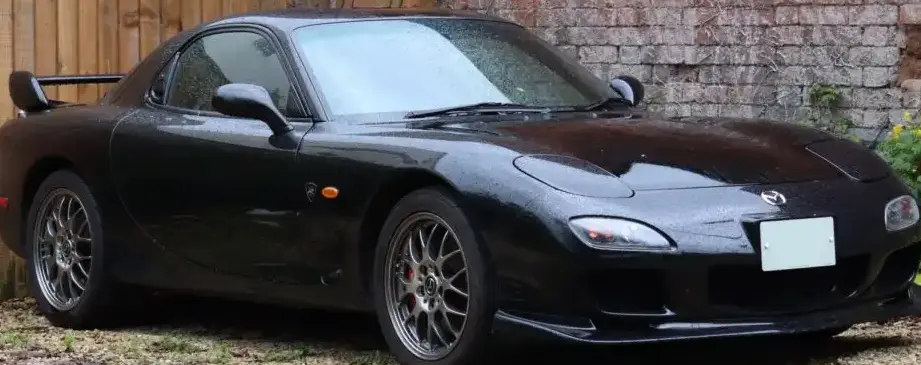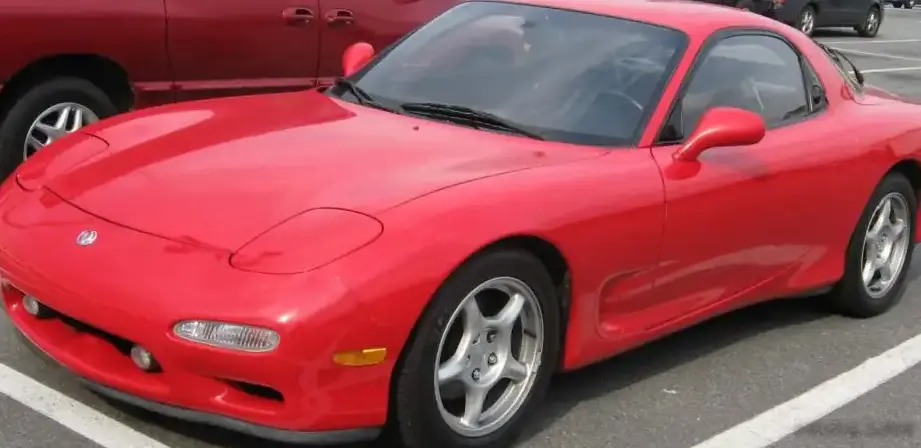
The Mazda RX-7 (FD) represents the third and final generation of Mazda’s iconic rotary-powered sports car. Produced from 1992 to 2002, with the twin-turbocharged variant arriving in 1994, the FD was a significant leap forward in performance and refinement compared to its predecessors. This version, boasting 255 horsepower, quickly became a benchmark for Japanese sports cars and garnered a dedicated following worldwide. The FD RX-7 was never officially sold in the United States after 1995 due to increasingly stringent emissions regulations, further enhancing its desirability among American enthusiasts. It was built on the FD platform, a dedicated rear-wheel-drive chassis designed specifically for the rotary engine.
Technical Specifications
| Brand | Mazda |
| Model | RX-7 |
| Generation | RX 7 III (FD) |
| Type (Engine) | Wankel Twin Turbo (255 Hp) |
| Start of production | 1994 |
| End of production | 2000 |
| Powertrain Architecture | Internal Combustion engine |
| Body type | Coupe |
| Seats | 4 |
| Doors | 2 |
| Fuel consumption (economy) – urban | 13.8 l/100 km (17 US mpg, 20.5 UK mpg, 7.2 km/l) |
| Fuel consumption (economy) – extra urban | 9.4 l/100 km (25 US mpg, 30.1 UK mpg, 10.6 km/l) |
| Fuel consumption (economy) – combined | 10.6 l/100 km (22.2 US mpg, 26.6 UK mpg, 9.4 km/l) |
| Fuel Type | Petrol (Gasoline) |
| Maximum speed | 250 km/h (155.34 mph) |
| Weight-to-power ratio | 5.1 kg/Hp, 197.7 Hp/tonne |
| Weight-to-torque ratio | 4.4 kg/Nm, 227.9 Nm/tonne |
| Power | 255 Hp @ 6500 rpm |
| Power per litre | 195 Hp/l |
| Torque | 294 Nm @ 5000 rpm (216.84 lb.-ft. @ 5000 rpm) |
| Engine layout | Front, Longitudinal |
| Engine displacement | 1308 cm3 (79.82 cu. in.) |
| Engine configuration | Rotary (Wankel) |
| Compression ratio | 8.5:1 |
| Fuel injection system | Multi-port manifold injection |
| Engine aspiration | Turbocharger |
| Kerb Weight | 1290 kg (2843.96 lbs) |
| Trunk (boot) space – minimum | 160 l (5.65 cu. ft.) |
| Fuel tank capacity | 76 l (20.08 US gal | 16.72 UK gal) |
| Length | 4295 mm (169.09 in) |
| Width | 1760 mm (69.29 in) |
| Height | 1230 mm (48.43 in) |
| Wheelbase | 2425 mm (95.47 in) |
| Front track | 1460 mm (57.48 in) |
| Rear (Back) track | 1460 mm (57.48 in) |
| Drivetrain Architecture | The Internal combustion engine (ICE) drives the rear wheels of the vehicle. |
| Drive wheel | Rear wheel drive |
| Number of gears and type of gearbox | 5 gears, manual transmission |
| Front suspension | Double wishbone |
| Rear suspension | Coil spring |
| Front brakes | Ventilated discs |
| Rear brakes | Ventilated discs |
| Assisting systems | ABS (Anti-lock braking system) |
| Steering type | Steering rack and pinion |
| Power steering | Hydraulic Steering |
| Tires size | 225/55 R16 V |
| Wheel rims size | 16 |
Powertrain & Engine Architecture
The heart of the FD RX-7 is its 13B-REW twin-turbo rotary engine. Unlike traditional piston engines, the 13B utilizes a triangular rotor spinning within a specially shaped housing to generate power. The twin-turbo setup employs sequential turbochargers – a small turbo for immediate response at low RPMs, and a larger turbo that kicks in at higher RPMs for increased power. This configuration minimized turbo lag and provided a broad, usable powerband. The engine featured multi-port fuel injection and an 8.5:1 compression ratio. The engine code, 13B-REW, is crucial for identifying specific parts and maintenance requirements. The FD RX-7’s engine was known for its relatively high thermal load, requiring careful cooling system maintenance. The standard transmission was a 5-speed manual, optimized for the engine’s power delivery.
Driving Characteristics
The 255 hp twin-turbo RX-7 offered exhilarating performance. Acceleration was quick, with the sequential turbochargers providing a seamless surge of power. While not possessing the raw torque of a comparable V8, the RX-7’s lightweight construction (around 2844 lbs) and responsive engine made it incredibly nimble and fun to drive. The 5-speed manual transmission featured relatively short gear ratios, encouraging spirited driving. Compared to the naturally aspirated versions, the twin-turbo offered a significant performance boost, but also demanded more attentive maintenance. The car’s balance and handling were exceptional, making it a favorite among track day enthusiasts.
Equipment & Trim Levels
The FD RX-7, even in its twin-turbo guise, wasn’t overly luxurious. The focus was on performance. Standard features included power windows, power locks, and air conditioning. The interior featured supportive bucket seats, often upholstered in a combination of cloth and leather. A unique instrument cluster with a prominent tachometer was a defining feature. Optional extras included a Bose sound system, leather upholstery, and various aerodynamic enhancements. The Type RZ trim, introduced later in production, added further performance-oriented upgrades like a lighter flywheel and revised suspension tuning.
Chassis & Braking
The FD RX-7 featured a lightweight and rigid chassis, contributing significantly to its handling prowess. The suspension utilized a double wishbone setup at the front and a multi-link setup at the rear, providing excellent control and responsiveness. Braking duties were handled by ventilated disc brakes on all four wheels, assisted by an Anti-lock Braking System (ABS). The car’s relatively low weight helped to minimize braking distances. The suspension was tuned to provide a balance between comfort and performance, although it was generally firmer than that of more comfort-oriented grand tourers.
Market Reception & Comparison
The Mazda RX-7 FD was widely praised by automotive journalists for its performance, handling, and unique engine. It was often compared favorably to rivals like the Toyota Supra and Nissan 300ZX. However, the rotary engine’s reputation for requiring frequent maintenance and its relatively poor fuel economy (around 22 mpg combined) were often cited as drawbacks. Compared to the naturally aspirated RX-7 models, the twin-turbo offered a substantial performance upgrade, but also came with a higher price tag and increased complexity. The 1.3L engine, while powerful for its size, demanded diligent oil checks and occasional rebuilds to maintain optimal performance.
Legacy
The Mazda RX-7 FD remains a highly sought-after sports car among enthusiasts. Its unique rotary engine, striking design, and exceptional handling have cemented its place in automotive history. While the rotary engine’s maintenance requirements can be demanding, a well-maintained FD RX-7 can provide years of driving enjoyment. The car’s rarity, particularly in the US market, has driven up prices in recent years. Today, the FD RX-7 is considered a modern classic, representing a high point in Japanese sports car engineering. The engine, while complex, is still supported by a dedicated aftermarket, ensuring that parts and expertise remain available for those willing to maintain this iconic machine.