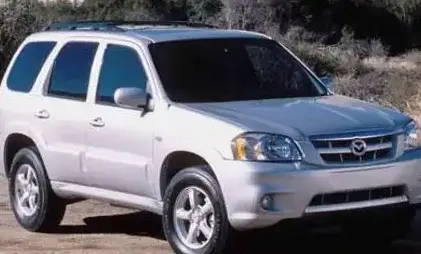
The Mazda Tribute II 3.0i V6 AWD Automatic, produced from 2008 to 2011, represented the second generation of Mazda’s compact SUV offering. Built in collaboration with Ford – sharing a platform with the Ford Escape and Mercury Mariner – the Tribute II aimed to provide a more refined and capable vehicle than its predecessor. This particular variant, equipped with the 3.0-liter V6 engine and a six-speed automatic transmission coupled with all-wheel drive, occupied the upper-mid range of the Tribute II lineup, offering a balance of performance, features, and practicality. It was positioned above the base 2.5L four-cylinder models and below any potential limited-edition or fully-loaded trims.
Technical Specifications
| Brand | Mazda |
| Model | Tribute |
| Generation | Tribute II |
| Type (Engine) | 3.0i V6 (240 Hp) AWD Automatic |
| Start of production | 2008 |
| End of production | 2011 |
| Powertrain Architecture | Internal Combustion engine |
| Body type | SUV |
| Seats | 5 |
| Doors | 5 |
| Fuel consumption (urban) | 13.1 l/100 km (18 US mpg, 21.6 UK mpg) |
| Fuel consumption (extra urban) | 10.2 l/100 km (23.1 US mpg, 27.7 UK mpg) |
| Fuel Type | Petrol (Gasoline) |
| Weight-to-power ratio | 6.7 kg/Hp, 148.9 Hp/tonne |
| Weight-to-torque ratio | 5.3 kg/Nm, 187.3 Nm/tonne |
| Power | 240 Hp @ 6550 rpm |
| Power per litre | 80.9 Hp/l |
| Torque | 302 Nm @ 4300 rpm (222.74 lb.-ft. @ 4300 rpm) |
| Engine layout | Front, Transverse |
| Engine displacement | 2967 cm3 (181.06 cu. in.) |
| Number of cylinders | 6 |
| Engine configuration | V-engine |
| Compression ratio | 10.3:1 |
| Number of valves per cylinder | 4 |
| Fuel injection system | Multi-port manifold injection |
| Engine aspiration | Naturally aspirated engine |
| Valvetrain | DOHC |
| Engine oil capacity | 5.7 l (6.02 US qt | 5.02 UK qt) |
| Coolant capacity | 9 l (9.51 US qt | 7.92 UK qt) |
| Kerb Weight | 1612 kg (3553.85 lbs) |
| Trunk (boot) space – minimum | 889 l (31.39 cu. ft.) |
| Trunk (boot) space – maximum | 1903 l (67.2 cu. ft.) |
| Fuel tank capacity | 66 l (17.44 US gal | 14.52 UK gal) |
| Permitted trailer load with brakes (12%) | 1565 kg (3450.23 lbs) |
| Length | 4442 mm (174.88 in) |
| Width including mirrors | 2065 mm (81.3 in) |
| Height | 1783 mm (70.2 in) |
| Wheelbase | 2619 mm (103.11 in) |
| Front track | 1542 mm (60.71 in) |
| Rear track | 1529 mm (60.2 in) |
| Ride height (ground clearance) | 206 mm (8.11 in) |
| Minimum turning circle | 11.2 m (36.75 ft) |
| Drive wheel | All wheel drive (4×4) |
| Number of gears and type of gearbox | 6 gears, automatic transmission |
| Front suspension | Independent, type McPherson with coil spring and anti-roll bar |
| Rear suspension | Independent multi-link spring suspension with stabilizer |
| Front brakes | Ventilated discs |
| Rear brakes | Drum |
| Assisting systems | ABS (Anti-lock braking system) |
| Steering type | Steering rack and pinion |
| Power steering | Electric Steering |
| Tires size | 235/70 R16 |
| Wheel rims size | 16 |
Powertrain & Engine Architecture
The heart of the Tribute II 3.0i was the Mazda-developed 3.0-liter DOHC 24-valve V6 engine, internally designated as the AJ-30. This engine featured multi-port fuel injection and a relatively high 10.3:1 compression ratio. The engine produced 240 horsepower at 6550 rpm and 302 Nm (222.74 lb-ft) of torque at 4300 rpm. The six-speed automatic transmission, sourced from Aisin, was specifically chosen to handle the V6’s output and provide smooth shifts. This transmission featured a wide gear ratio spread, optimizing both acceleration and highway cruising. The all-wheel-drive system was an on-demand system, primarily operating in front-wheel drive to maximize fuel efficiency, and engaging the rear wheels when traction was lost.
Driving Characteristics
The 3.0i V6 Automatic Tribute II offered a noticeable step up in performance compared to the base four-cylinder models. Acceleration was brisk, and the automatic transmission generally provided smooth and timely shifts. While not a sports SUV, the V6 provided ample power for merging onto highways and passing maneuvers. The automatic transmission, while convenient, did result in a slight reduction in fuel economy compared to the available manual transmission (offered on lower trims). The all-wheel-drive system provided enhanced stability and traction in inclement weather conditions, making it a capable vehicle for year-round use. The gear ratios were tuned for a balance between responsiveness and fuel efficiency, with a focus on providing adequate torque for everyday driving situations.
Equipment & Trim Levels
The 3.0i V6 AWD Automatic typically came standard with features such as air conditioning, power windows and locks, keyless entry, a CD player with auxiliary input, and cloth upholstery. Higher trim levels, often denoted with packages like “Luxury” or “Convenience,” added features like leather upholstery, a sunroof, upgraded audio systems, and automatic climate control. Optional extras included a navigation system, rear parking sensors, and alloy wheels. Safety features such as anti-lock brakes (ABS) were standard across the range.
Chassis & Braking
The Tribute II utilized a McPherson strut front suspension and an independent multi-link rear suspension, providing a comfortable ride quality. Stabilizer bars were fitted to both the front and rear axles to reduce body roll during cornering. The braking system consisted of ventilated discs on the front wheels and drum brakes on the rear. While adequate for most driving situations, the rear drum brakes were a point of criticism compared to the all-disc setups found on some competitors. The steering was rack-and-pinion with electric power assist, offering a reasonably responsive feel.
Market Reception & Comparison
The Mazda Tribute II 3.0i V6 AWD Automatic was generally well-received by automotive critics. It was praised for its comfortable ride, spacious interior, and capable V6 engine. However, some reviewers noted that the interior materials were not as upscale as those found in some competing SUVs. Compared to the four-cylinder models, the V6 offered a significant performance boost, but at the cost of increased fuel consumption. Against rivals like the Honda CR-V and Toyota RAV4, the Tribute II offered a more powerful engine option, but often lagged behind in terms of overall refinement and resale value. Fuel economy figures averaged around 18 mpg city and 23 mpg highway.
Legacy
The Mazda Tribute II, and specifically the 3.0i V6 AWD Automatic variant, has proven to be a relatively reliable vehicle in the used car market. The AJ-30 V6 engine is known for its durability, although regular maintenance, including timing belt replacement (typically around 100,000 miles), is crucial. The automatic transmission has also proven to be generally reliable. Common issues reported by owners include minor electrical glitches and wear-and-tear on suspension components. Today, the Tribute II represents an affordable and practical option for buyers seeking a capable and well-equipped compact SUV, offering a good balance of performance and value.