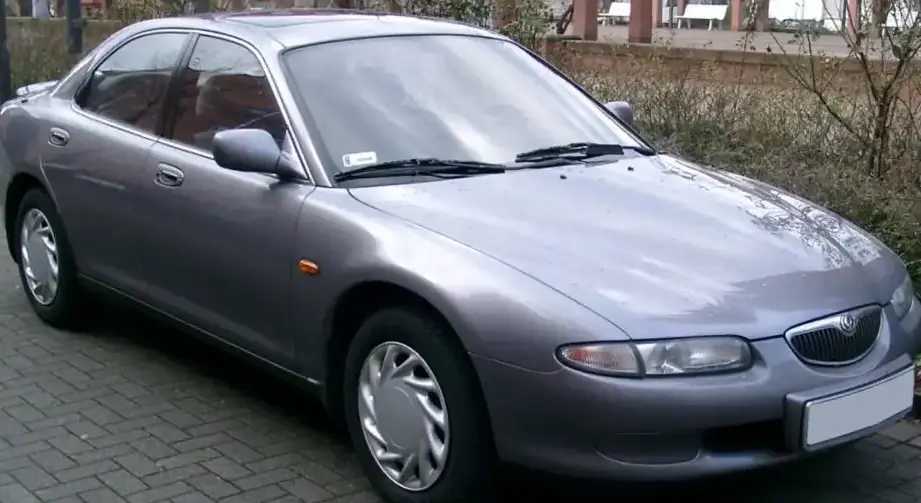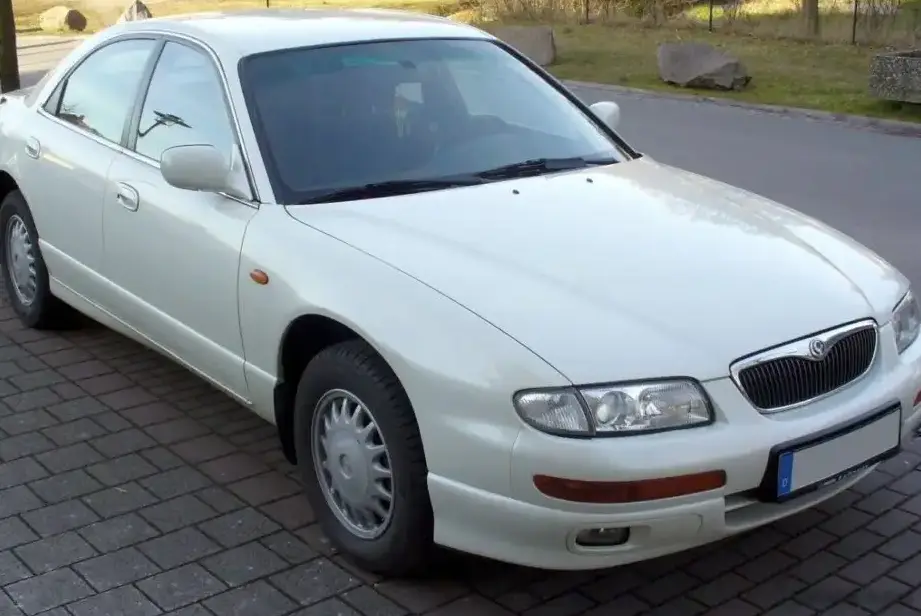
The Mazda Xedos 9, produced between 1993 and 2000, represented Mazda’s foray into the premium, front-wheel-drive sedan market, primarily aimed at European and Japanese consumers. Positioned above the Mazda 626 (known as the Eunos Cosmo in Japan initially), the Xedos 9 sought to offer a more refined and luxurious experience. The 2.0i V6 24V variant, producing 143 horsepower, was a key model within the Xedos 9 range, offering a balance between performance and fuel efficiency. It served as a mid-range offering, slotting between the base 1.6L inline-four and the more powerful 2.5L V6 models.
Technical Specifications
| Brand | Mazda |
| Model | Xedos 9 |
| Generation | Xedos 9 (TA) |
| Type (Engine) | 2.0 i V6 24V (143 Hp) |
| Start of production | 1993 |
| End of production | 2000 |
| Powertrain Architecture | Internal Combustion engine |
| Body type | Sedan |
| Seats | 5 |
| Doors | 4 |
| Fuel consumption (urban) | 11.1 l/100 km (21.2 US mpg) |
| Fuel consumption (extra urban) | 6.3 l/100 km (37.3 US mpg) |
| Fuel consumption (combined) | 7.7 l/100 km (30.5 US mpg) |
| Fuel Type | Petrol (Gasoline) |
| Acceleration 0 – 100 km/h | 10.7 sec |
| Acceleration 0 – 62 mph | 10.7 sec |
| Acceleration 0 – 60 mph | 10.2 sec |
| Maximum speed | 202 km/h (125.52 mph) |
| Weight-to-power ratio | 9.9 kg/Hp |
| Weight-to-torque ratio | 8 kg/Nm |
| Power | 143 Hp @ 6000 rpm |
| Power per litre | 71.7 Hp/l |
| Torque | 176 Nm @ 4900 rpm (129.81 lb.-ft. @ 4900 rpm) |
| Engine layout | Front, Transverse |
| Engine displacement | 1995 cm3 (121.74 cu. in.) |
| Number of cylinders | 6 |
| Engine configuration | V-engine |
| Cylinder Bore | 78 mm (3.07 in.) |
| Piston Stroke | 69.6 mm (2.74 in.) |
| Compression ratio | 9.5:1 |
| Number of valves per cylinder | 4 |
| Fuel injection system | Multi-port manifold injection |
| Engine aspiration | Naturally aspirated engine |
| Valvetrain | DOHC |
| Kerb Weight | 1410 kg (3108.52 lbs.) |
| Max. weight | 1940 kg (4276.97 lbs.) |
| Max load | 530 kg (1168.45 lbs.) |
| Trunk (boot) space – minimum | 430 l (15.19 cu. ft.) |
| Fuel tank capacity | 68 l (17.96 US gal | 14.96 UK gal) |
| Length | 4825 mm (189.96 in.) |
| Width | 1770 mm (69.69 in.) |
| Height | 1395 mm (54.92 in.) |
| Wheelbase | 2760 mm (108.66 in.) |
| Front track | 1530 mm (60.24 in.) |
| Rear (Back) track | 1530 mm (60.24 in.) |
| Drivetrain Architecture | The Internal combustion engine (ICE) drives the front wheels of the vehicle. |
| Drive wheel | Front wheel drive |
| Number of gears and type of gearbox | 5 gears, manual transmission |
| Front suspension | Double wishbone |
| Rear suspension | Several levers and rods |
| Front brakes | Ventilated discs |
| Rear brakes | Disc |
| Assisting systems | ABS (Anti-lock braking system) |
| Steering type | Steering rack and pinion |
| Power steering | Hydraulic Steering |
| Tires size | 205/65 R15 V |
Powertrain & Engine Architecture
The heart of the Xedos 9 2.0i was the Mazda J5-DE engine, a 1.995-liter, 24-valve V6. This engine utilized a 60-degree V-angle, contributing to a smoother power delivery and reduced vibrations. It featured multi-port fuel injection and a double overhead camshaft (DOHC) valvetrain, optimizing airflow for improved performance. The engine’s design prioritized refinement and quiet operation, aligning with the Xedos 9’s luxury aspirations. The 5-speed manual transmission was the standard offering, providing drivers with direct control over the engine’s power. The transmission was chosen for its durability and relatively smooth shifting characteristics.
Driving Characteristics
The 143 hp V6, coupled with the 5-speed manual gearbox, provided adequate performance for everyday driving. Acceleration from 0-60 mph took around 10.2 seconds, and the car could reach a top speed of 125.52 mph. While not a sports car, the Xedos 9 offered a comfortable and composed driving experience. The front-wheel-drive configuration provided predictable handling, and the suspension was tuned for ride comfort rather than outright sportiness. Compared to the base 1.6L model, the 2.0i V6 offered a noticeable improvement in acceleration and overall responsiveness. However, it didn’t possess the outright punch of the 2.5L V6, which was geared towards drivers seeking more spirited performance. The gear ratios were well-matched to the engine’s torque curve, providing usable power across a wide range of speeds.
Equipment & Trim Levels
The 2.0i V6 trim typically included features such as power windows, power door locks, central locking, and an upgraded audio system. Interior upholstery was generally cloth, although leather options were available. The dashboard layout was clean and functional, with a focus on ergonomics. Optional extras included a sunroof, alloy wheels, and climate control. The Xedos 9 aimed to provide a premium feel without the premium price tag, offering a good level of standard equipment for its class.
Chassis & Braking
The Xedos 9 utilized a front-wheel-drive chassis with independent double wishbone suspension at the front and a multi-link setup at the rear. This suspension configuration provided a comfortable ride and decent handling characteristics. The braking system consisted of ventilated discs at the front and solid discs at the rear, supplemented by an Anti-lock Braking System (ABS) as standard. The ABS enhanced safety by preventing wheel lockup during hard braking. The steering was rack and pinion with hydraulic power assistance, offering precise and responsive steering feel.
Market Reception & Comparison
The Mazda Xedos 9 was generally well-received by automotive critics, who praised its stylish design, refined interior, and comfortable ride. The 2.0i V6 variant was considered a good all-rounder, offering a balance between performance, fuel economy, and price. Compared to rivals such as the Honda Accord and Toyota Camry, the Xedos 9 offered a more distinctive design and a slightly more engaging driving experience. However, it didn’t achieve the same level of sales success as its Japanese competitors. Fuel economy was respectable for its class, averaging around 30.5 US mpg in combined driving. Reliability was generally good, although some owners reported minor issues with electrical components.
Legacy
The Mazda Xedos 9, while not a massive sales success, remains a fondly remembered car among enthusiasts. The J5-DE V6 engine proved to be a durable and reliable powerplant, and many examples are still on the road today. The Xedos 9 represented Mazda’s ambition to compete in the premium sedan segment, and it paved the way for future models such as the Mazda 6. In the used car market, the 2.0i V6 variant offers a relatively affordable entry point into Mazda’s premium heritage, providing a comfortable and stylish driving experience for those seeking a classic Japanese sedan.