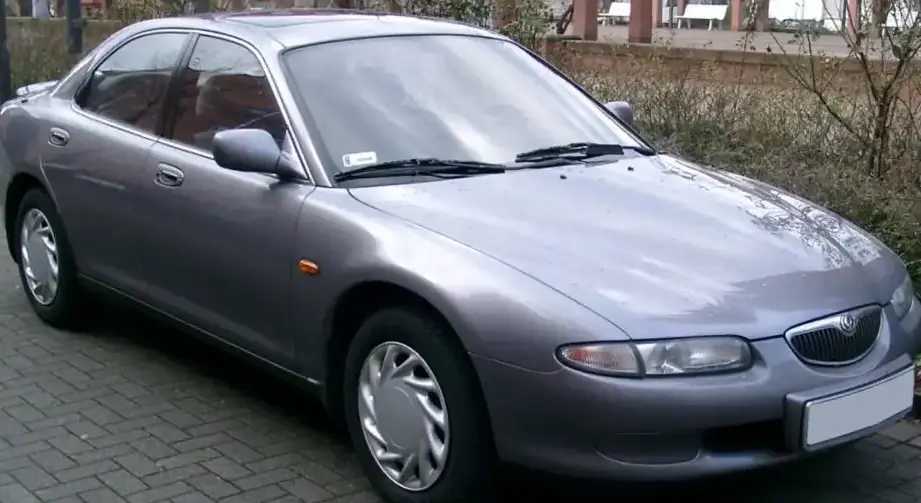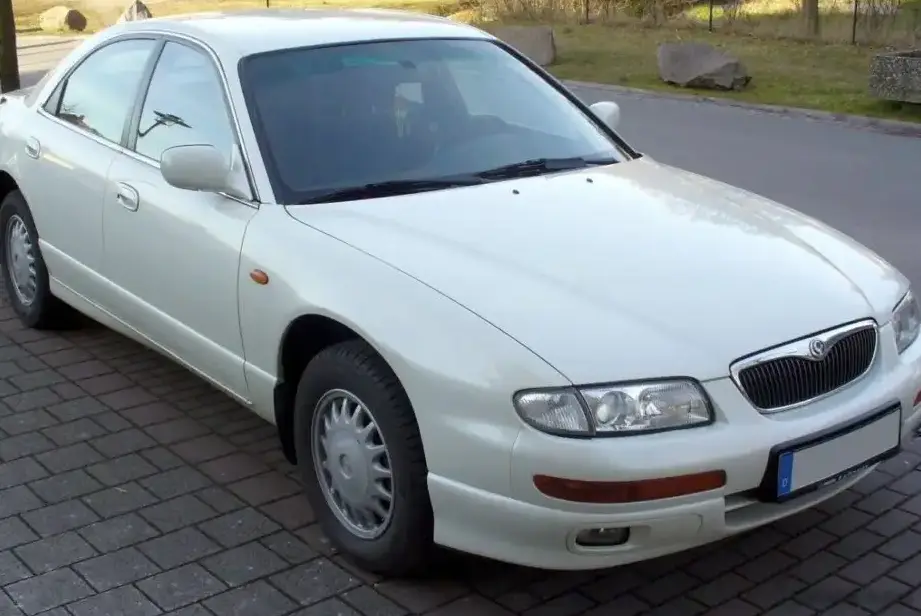
The Mazda Xedos 9, produced between 1993 and 2001, represented Mazda’s foray into the premium, near-luxury sedan segment. Specifically, the 2.5i V6 24V variant, powered by the KL-ZE engine producing 167 horsepower, was a key offering within the TA generation (1993-2001). Positioned as a step up from Mazda’s more mainstream offerings like the 626, the Xedos 9 aimed to compete with European and Japanese rivals like the Honda Accord, Toyota Camry, and BMW 3 Series, offering a blend of style, performance, and refinement. This model was primarily marketed in Japan and Europe, with limited availability in other markets.
Technical Specifications
| Brand | Mazda |
| Model | Xedos 9 |
| Generation | Xedos 9 (TA) |
| Type (Engine) | 2.5i V6 24V (167 Hp) |
| Start of production | 1993 |
| End of production | 2001 |
| Powertrain Architecture | Internal Combustion engine |
| Body type | Sedan |
| Seats | 5 |
| Doors | 4 |
| Fuel consumption (urban) | 12.6 l/100 km (18.7 US mpg) |
| Fuel consumption (extra urban) | 6.8 l/100 km (34.6 US mpg) |
| Fuel consumption (combined) | 8.4 l/100 km (28 US mpg) |
| Fuel Type | Petrol (Gasoline) |
| Acceleration 0 – 100 km/h | 8.6 sec |
| Acceleration 0 – 62 mph | 8.6 sec |
| Acceleration 0 – 60 mph | 8.2 sec |
| Maximum speed | 220 km/h (136.7 mph) |
| Weight-to-power ratio | 8.5 kg/Hp |
| Weight-to-torque ratio | 6.5 kg/Nm |
| Power | 167 Hp @ 6000 rpm |
| Torque | 218 Nm @ 5000 rpm (160.79 lb.-ft. @ 5000 rpm) |
| Engine layout | Front, Transverse |
| Engine displacement | 2497 cm3 (152.38 cu. in.) |
| Number of cylinders | 6 |
| Engine configuration | V-engine |
| Cylinder Bore | 84.5 mm (3.33 in.) |
| Piston Stroke | 74.2 mm (2.92 in.) |
| Compression ratio | 9.5:1 |
| Number of valves per cylinder | 4 |
| Fuel injection system | Multi-port manifold injection |
| Engine aspiration | Naturally aspirated engine |
| Valvetrain | DOHC |
| Kerb Weight | 1415 kg (3119.54 lbs.) |
| Max. weight | 1940 kg (4276.97 lbs.) |
| Max load | 525 kg (1157.43 lbs.) |
| Trunk (boot) space – minimum | 430 l (15.19 cu. ft.) |
| Fuel tank capacity | 68 l (17.96 US gal | 14.96 UK gal) |
| Length | 4825 mm (189.96 in.) |
| Width | 1770 mm (69.69 in.) |
| Height | 1395 mm (54.92 in.) |
| Wheelbase | 2760 mm (108.66 in.) |
| Front track | 1530 mm (60.24 in.) |
| Rear (Back) track | 1530 mm (60.24 in.) |
| Drivetrain Architecture | Front wheel drive |
| Drive wheel | Front wheel drive |
| Number of gears and type of gearbox | 5 gears, manual transmission |
| Front suspension | Double wishbone |
| Rear suspension | Several levers and rods |
| Front brakes | Ventilated discs |
| Rear brakes | Disc |
| Assisting systems | ABS (Anti-lock braking system) |
| Steering type | Steering rack and pinion |
| Power steering | Hydraulic Steering |
| Tires size | 205/65 R15 V |
Powertrain & Engine Architecture
The heart of the Xedos 9 2.5i was the KL-ZE 2.5-liter V6 engine. This engine, a naturally aspirated design, featured a 60-degree V-angle and a dual overhead camshaft (DOHC) valvetrain operating four valves per cylinder. The KL-ZE utilized multi-port fuel injection, delivering fuel directly into each intake port for improved combustion efficiency. The engine’s 9.5:1 compression ratio contributed to its respectable power output for its displacement. The 5-speed manual transmission was the standard offering, providing drivers with direct control over the engine’s power. The engine was transversely mounted, driving the front wheels. The KL-ZE engine was known for its relatively smooth operation and willingness to rev, characteristics typical of Japanese V6 designs of the era. It wasn’t a particularly high-strung engine, but it offered a good balance of performance and refinement.
Driving Characteristics
The 167 hp and 160 lb-ft of torque provided by the KL-ZE engine delivered a reasonably spirited driving experience. Acceleration from 0-60 mph took approximately 8.2 seconds, making it competitive with other sedans in its class. The manual transmission allowed for precise gear changes, and the engine responded well to throttle inputs. Compared to potential higher-performance variants (which weren’t widely available), the 2.5i offered a more balanced approach, prioritizing smooth power delivery and everyday usability over outright speed. The gear ratios were tuned for a blend of acceleration and fuel efficiency, making it suitable for both city and highway driving. While not a sports sedan, the Xedos 9 provided a confident and engaging driving experience. The steering was light and precise, and the suspension provided a comfortable ride without feeling overly soft. The front-wheel-drive configuration offered predictable handling characteristics, although it wasn’t as engaging as a rear-wheel-drive setup.
Equipment & Trim Levels
The Xedos 9 2.5i typically came well-equipped, reflecting its positioning as a premium offering. Standard features often included power windows, power locks, air conditioning, and a decent audio system. Interior upholstery was typically cloth, though leather options were available. The dashboard layout was clean and functional, with a focus on ergonomics. Optional extras could include a sunroof, upgraded audio systems, and alloy wheels. The trim level was generally considered mid-range within the Xedos 9 lineup, offering a good balance of features and price. Higher trim levels added features like automatic climate control, premium sound systems, and woodgrain interior trim. The Xedos 9 aimed to provide a level of luxury and convenience comparable to European competitors, but at a more accessible price point.
Chassis & Braking
The Xedos 9 featured a double wishbone front suspension and a multi-link rear suspension, designed to provide a comfortable ride and stable handling. Ventilated disc brakes were used at the front, while solid discs were fitted at the rear. Anti-lock Braking System (ABS) was standard, enhancing safety. The chassis was designed to minimize noise, vibration, and harshness (NVH), contributing to the car’s refined character. The suspension tuning was geared towards comfort, but still provided adequate body control during cornering. Stabilizer bars were included at both the front and rear to reduce body roll. The braking system provided adequate stopping power for everyday driving, although it wasn’t as powerful as some of its more performance-oriented rivals.
Market Reception & Comparison
The Mazda Xedos 9 was generally well-received by automotive critics, who praised its stylish design, comfortable interior, and refined driving experience. However, some critics noted that it lacked the outright performance of some of its rivals. Fuel economy was considered average for its class, with combined figures around 28 US mpg. Compared to the base model Xedos 9 with a smaller engine, the 2.5i V6 offered significantly more power and a more enjoyable driving experience, but at a higher price point. Reliability was generally good, although some owners reported minor issues with electrical components over time. In the Japanese market, the Xedos 9 was seen as a sophisticated and stylish alternative to domestic rivals like the Toyota Camry and Honda Accord. In Europe, it faced stiffer competition from established German brands like BMW and Audi.
Legacy
The Mazda Xedos 9, while not a massive sales success, played an important role in establishing Mazda as a maker of premium vehicles. The KL-ZE V6 engine proved to be a durable and reliable powerplant when properly maintained. Today, the Xedos 9 is gaining a following among enthusiasts who appreciate its unique styling and refined driving characteristics. Finding well-maintained examples can be challenging, but the 2.5i V6 variant remains a desirable choice for those seeking a comfortable and stylish classic sedan. Parts availability can be limited, but many components are still available through specialist suppliers and online marketplaces. The Xedos 9 represents a unique chapter in Mazda’s history, showcasing the company’s ambition to compete in the premium segment. It demonstrated Mazda’s ability to create a vehicle that offered a compelling blend of style, comfort, and performance, paving the way for future premium models like the Mazda 6 and Mazda 3.