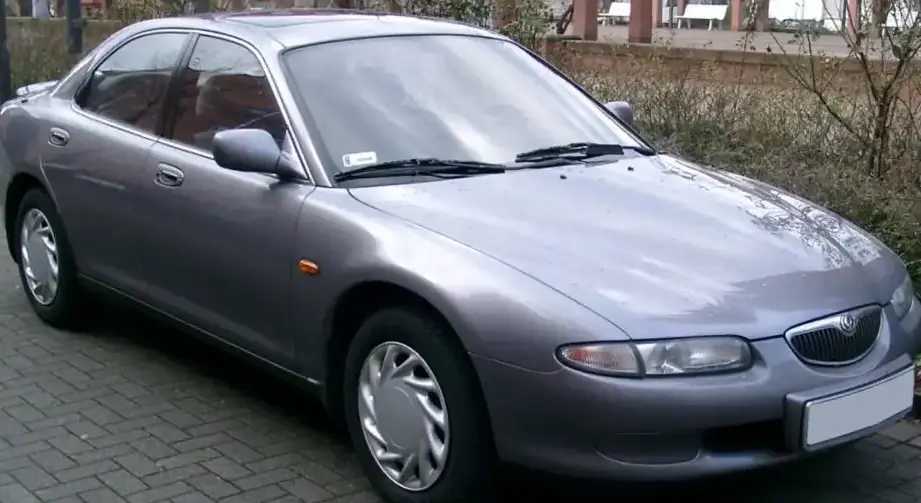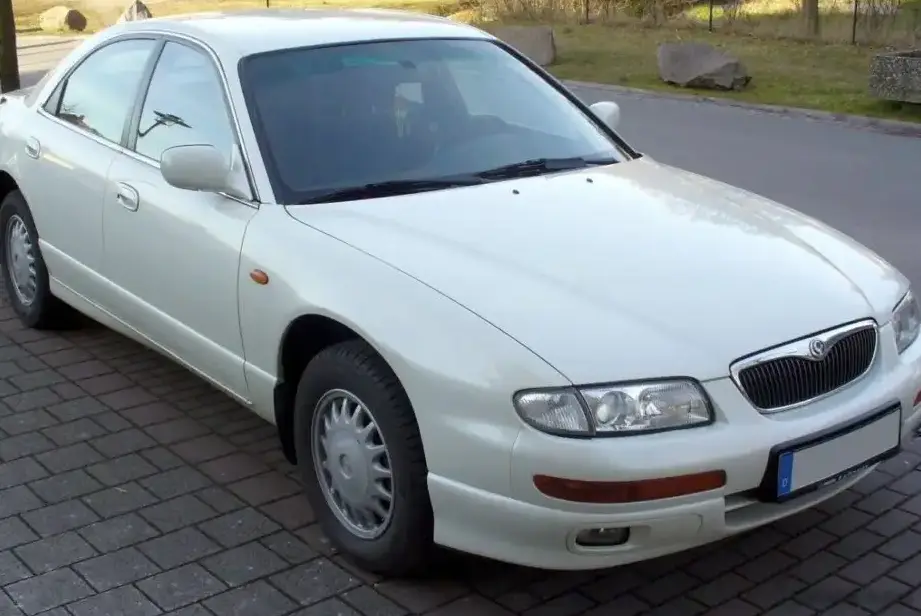
The Mazda Xedos 9, produced between 1993 and 2001, represented Mazda’s foray into the premium, near-luxury sedan segment. Specifically, the 2.5i V6 24V variant, equipped with a four-speed automatic transmission, was a significant offering within the TA generation (1993-2001). Positioned as a step up from Mazda’s more mainstream offerings like the 626, the Xedos 9 aimed to compete with European and Japanese rivals like the Honda Accord, Toyota Camry, and BMW 3 Series. This model was primarily marketed in Japan and Europe, with limited availability in North America. The Xedos line was intended to showcase Mazda’s engineering prowess and commitment to a more refined driving experience.
Technical Specifications
| Brand | Mazda |
| Model | Xedos 9 |
| Generation | Xedos 9 (TA) |
| Type (Engine) | 2.5i V6 24V (167 Hp) Automatic |
| Start of production | 1993 |
| End of production | 2001 |
| Powertrain Architecture | Internal Combustion engine |
| Body type | Sedan |
| Seats | 5 |
| Doors | 4 |
| Fuel consumption (urban) | 12.9 l/100 km (18.2 US mpg, 21.9 UK mpg, 7.8 km/l) |
| Fuel consumption (extra urban) | 6.9 l/100 km (34.1 US mpg, 40.9 UK mpg, 14.5 km/l) |
| Fuel consumption (combined) | 8.5 l/100 km (27.7 US mpg, 33.2 UK mpg, 11.8 km/l) |
| Fuel Type | Petrol (Gasoline) |
| Acceleration 0 – 100 km/h | 11.1 sec |
| Acceleration 0 – 62 mph | 11.1 sec |
| Acceleration 0 – 60 mph | 10.5 sec |
| Maximum speed | 210 km/h (130.49 mph) |
| Weight-to-power ratio | 8.5 kg/Hp, 118 Hp/tonne |
| Weight-to-torque ratio | 6.5 kg/Nm, 154.1 Nm/tonne |
| Power | 167 Hp @ 6000 rpm |
| Power per litre | 66.9 Hp/l |
| Torque | 218 Nm @ 5000 rpm (160.79 lb.-ft. @ 5000 rpm) |
| Engine layout | Front, Transverse |
| Engine displacement | 2497 cm3 (152.38 cu. in.) |
| Number of cylinders | 6 |
| Engine configuration | V-engine |
| Cylinder Bore | 84.5 mm (3.33 in.) |
| Piston Stroke | 74.2 mm (2.92 in.) |
| Compression ratio | 9.5:1 |
| Number of valves per cylinder | 4 |
| Fuel injection system | Multi-port manifold injection |
| Engine aspiration | Naturally aspirated engine |
| Valvetrain | DOHC |
| Kerb Weight | 1415 kg (3119.54 lbs.) |
| Max. weight | 1940 kg (4276.97 lbs.) |
| Max load | 525 kg (1157.43 lbs.) |
| Trunk (boot) space – minimum | 430 l (15.19 cu. ft.) |
| Fuel tank capacity | 68 l (17.96 US gal | 14.96 UK gal) |
| Length | 4825 mm (189.96 in.) |
| Width | 1770 mm (69.69 in.) |
| Height | 1395 mm (54.92 in.) |
| Wheelbase | 2760 mm (108.66 in.) |
| Front track | 1530 mm (60.24 in.) |
| Rear (Back) track | 1530 mm (60.24 in.) |
| Drivetrain Architecture | The Internal combustion engine (ICE) drives the front wheels of the vehicle. |
| Drive wheel | Front wheel drive |
| Number of gears and type of gearbox | 4 gears, automatic transmission |
| Front suspension | Double wishbone |
| Rear suspension | Several levers and rods |
| Front brakes | Ventilated discs |
| Rear brakes | Disc |
| Assisting systems | ABS (Anti-lock braking system) |
| Steering type | Steering rack and pinion |
| Power steering | Hydraulic Steering |
| Tires size | 205/65 R15 V |
| Wheel rims size | 15 |
Powertrain & Engine Architecture
The heart of the Xedos 9 2.5i was the J5-DE engine, a 2.5-liter V6. This engine featured a 90-degree V-angle, contributing to a smoother power delivery. It utilized a multi-port fuel injection system and a double overhead camshaft (DOHC) valvetrain with four valves per cylinder. The engine’s design prioritized refinement and linear power output over outright performance. The automatic transmission was a conventional four-speed unit, chosen for its smoothness and ease of use, aligning with the Xedos 9’s luxury-oriented positioning. While not a particularly advanced transmission by modern standards, it was well-suited to the engine’s torque characteristics. The engine code J5-DE was a key identifier for this specific V6 configuration.
Driving Characteristics
The 2.5i V6 automatic Xedos 9 offered a comfortable and refined driving experience. With 167 horsepower and 161 lb-ft of torque, acceleration was adequate but not sporty. The 0-60 mph time of around 10.5 seconds reflects this. The four-speed automatic transmission, while smooth, did result in noticeable gear changes and wasn’t particularly quick to downshift. Compared to the manual transmission versions, the automatic felt slightly less responsive. The automatic also diminished the engine’s potential, as the manual allowed for better control and utilization of the V6’s powerband. The focus was on providing a relaxed and effortless cruising experience, making it well-suited for long journeys.
Equipment & Trim Levels
The Xedos 9 2.5i V6 Automatic typically came well-equipped, reflecting its premium positioning. Standard features often included power windows, power locks, air conditioning, a quality audio system, and alloy wheels. Interior upholstery was typically cloth, but leather options were available. Higher trim levels added features like a sunroof, upgraded audio systems, and woodgrain interior trim. The dashboard layout was clean and functional, prioritizing ergonomics and ease of use. Optional extras included a navigation system (rare for the time) and automatic climate control.
Chassis & Braking
The Xedos 9 featured a front-engine, front-wheel-drive layout. Suspension consisted of a double wishbone setup at the front and a multi-link arrangement at the rear, providing a comfortable ride and decent handling. Brakes were ventilated discs at the front and solid discs at the rear, equipped with an Anti-lock Braking System (ABS) as standard. The steering was rack and pinion with hydraulic power assistance, offering a reasonably precise feel. The chassis was tuned for comfort rather than outright sportiness, prioritizing a smooth and quiet ride.
Market Reception & Comparison
The Mazda Xedos 9 was generally well-received by critics, who praised its refined engine, comfortable ride, and well-appointed interior. However, it was often criticized for its relatively high price compared to competitors like the Honda Accord and Toyota Camry. The automatic transmission was sometimes seen as detracting from the engine’s potential. Fuel economy, at around 27.7 mpg combined, was average for its class. Compared to other Xedos 9 variants, the 2.5i V6 Automatic offered a balance of performance and refinement, appealing to buyers who prioritized comfort and ease of use over outright sportiness. The smaller engine options were more fuel-efficient, while the manual transmission offered a more engaging driving experience.
Legacy
The Mazda Xedos 9, while not a massive sales success, played an important role in establishing Mazda as a manufacturer capable of producing premium vehicles. The J5-DE V6 engine proved to be relatively reliable, although regular maintenance is crucial for older examples. Today, the Xedos 9 is a relatively rare sight on the roads, and well-maintained examples are becoming increasingly sought after by enthusiasts. The automatic transmission, while not the most technologically advanced, has proven to be durable with proper servicing. The Xedos 9 represents a unique chapter in Mazda’s history, showcasing the brand’s ambition to compete in the premium segment.