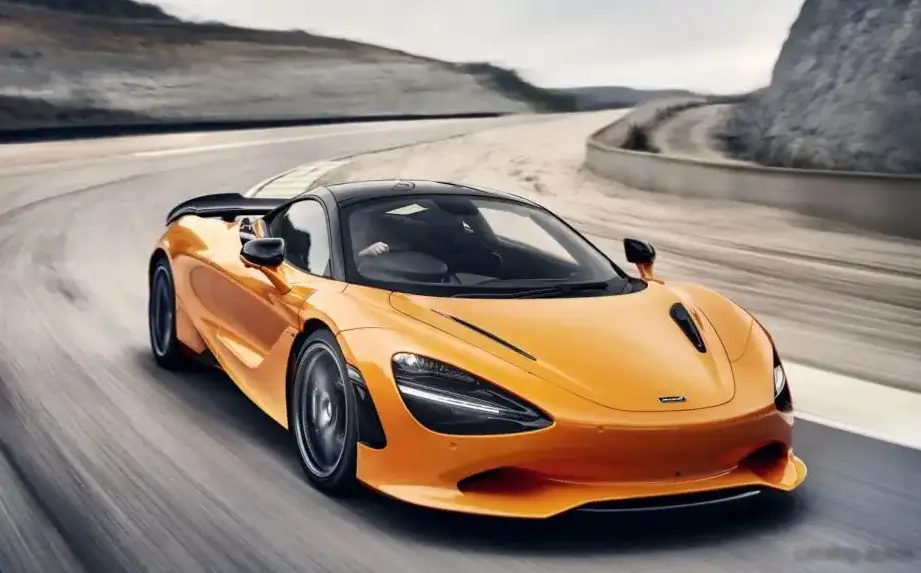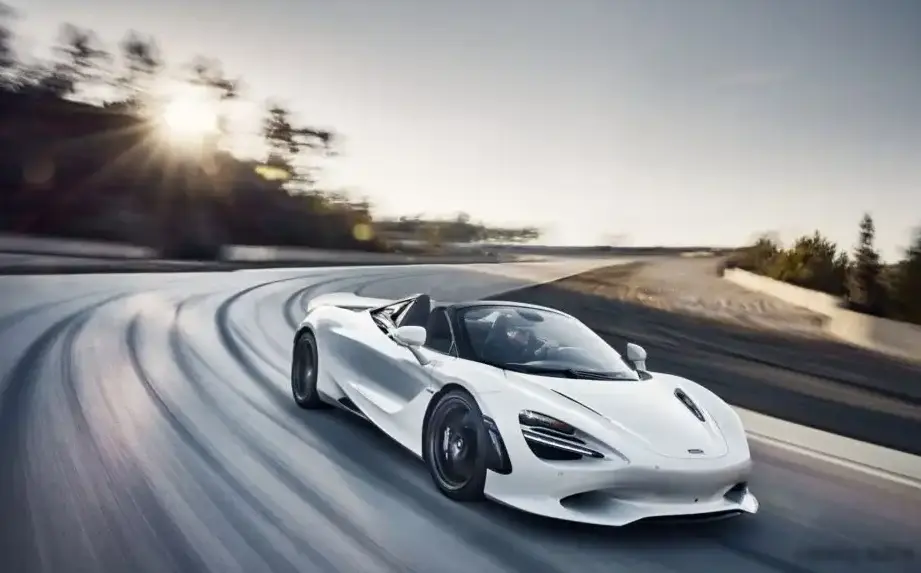
The McLaren 750S Spider is a high-performance, mid-engine, two-seater roadster produced by McLaren Automotive since April 2023. It represents an evolution of the McLaren 720S, focusing on enhanced driving dynamics, increased power, and a more refined aesthetic. The 750S Spider is positioned as a luxury supercar, competing with models from Ferrari, Lamborghini, and other high-end manufacturers. It builds upon the foundation of the established M840T engine family and utilizes McLaren’s expertise in lightweight construction and aerodynamic efficiency.
Technical Specifications
| Brand | McLaren |
| Model | 750S |
| Generation | 750S Spider |
| Type (Engine) | 4.0 V8 (750 Hp) SSG |
| Start of production | April, 2023 |
| Powertrain Architecture | Internal Combustion engine |
| Body type | Roadster |
| Seats | 2 |
| Doors | 2 |
| Combined fuel consumption (WLTP) | 12.2 l/100 km |
| Combined fuel consumption (US mpg) | 19.3 US mpg |
| Combined fuel consumption (UK mpg) | 23.2 UK mpg |
| Combined fuel consumption (km/l) | 8.2 km/l |
| CO2 emissions (WLTP) | 276 g/km |
| Fuel Type | Petrol (Gasoline) |
| Acceleration 0 – 100 km/h | 2.8 sec |
| Acceleration 0 – 62 mph | 2.8 sec |
| Acceleration 0 – 60 mph | 2.7 sec |
| Acceleration 0 – 200 km/h | 7.3 sec |
| Acceleration 0 – 300 km/h | 20.4 sec |
| Maximum speed | 332 km/h (206.3 mph) |
| Weight-to-power ratio | 1.9 kg/Hp, 521.6 Hp/tonne |
| Weight-to-torque ratio | 1.8 kg/Nm, 556.3 Nm/tonne |
| Power | 750 Hp @ 7500 rpm |
| Power per litre | 187.8 Hp/l |
| Torque | 800 Nm @ 5500 rpm (590.05 lb.-ft. @ 5500 rpm) |
| Engine layout | Middle, Longitudinal |
| Engine Model/Code | M840T |
| Engine displacement | 3994 cm3 (243.73 cu. in.) |
| Number of cylinders | 8 |
| Engine configuration | V-engine |
| Fuel injection system | Direct injection |
| Engine aspiration | Twin-Turbo, Intercooler |
| Engine systems | Start & Stop System |
| Kerb Weight | 1438 kg (3170.25 lbs.) |
| Trunk (boot) space – minimum | 58 l (2.05 cu. ft.) |
| Fuel tank capacity | 72 l (19.02 US gal | 15.84 UK gal) |
| Length | 4569 mm (179.88 in.) |
| Width | 1930 mm (75.98 in.) |
| Width with mirrors folded | 2059 mm (81.06 in.) |
| Width including mirrors | 2161 mm (85.08 in.) |
| Height | 1196 mm (47.09 in.) |
| Wheelbase | 2670 mm (105.12 in.) |
| Front track | 1680 mm (66.14 in.) |
| Rear (Back) track | 1629 mm (64.13 in.) |
| Drivetrain Architecture | The Internal combustion engine (ICE) drives the rear wheels of the vehicle. |
| Drive wheel | Rear wheel drive |
| Number of gears and type of gearbox | 7 gears, automatic transmission SSG |
| Front suspension | Double wishbone |
| Rear suspension | Double wishbone |
| Front brakes | Ventilated discs, 390 mm |
| Rear brakes | Ventilated discs, 380 mm |
| Assisting systems | ABS (Anti-lock braking system) |
| Steering type | Steering rack and pinion |
| Power steering | Electric Steering |
| Front wheel tires | 245/35 R19 93Y XL |
| Rear wheel tires | 305/30 R20 103Y XL |
| Front wheel rims | 9J x 19 |
| Rear wheel rims | 11J x 20 |
Powertrain & Engine Architecture
At the heart of the 750S Spider lies the McLaren M840T 4.0-liter twin-turbocharged V8 engine. This engine is a significant evolution of the powerplant found in the 720S, featuring redesigned turbochargers, optimized cooling, and revised engine management software. The engine produces 750 horsepower at 7,500 rpm and 800 Nm (590 lb-ft) of torque at 5,500 rpm. Direct fuel injection ensures precise fuel delivery, maximizing efficiency and power output. The engine’s longitudinal mid-engine placement contributes to optimal weight distribution and handling balance. The 7-speed Seamless Shift Gearbox (SSG) is a dual-clutch transmission known for its incredibly fast and smooth gear changes. It’s calibrated to deliver responsive acceleration and seamless power delivery, enhancing the overall driving experience. The SSG transmission is a key component in McLaren’s pursuit of performance, offering both automatic and manual shifting modes.
Driving Characteristics
The 750S Spider delivers exhilarating performance, with a 0-60 mph acceleration time of just 2.7 seconds and a top speed of 206.3 mph. The combination of the powerful V8 engine and the quick-shifting SSG transmission results in a remarkably responsive and engaging driving experience. The Spider variant, with its retractable hardtop, offers open-air driving without significantly compromising structural rigidity or performance. McLaren has focused on refining the suspension and steering systems to provide a more connected and communicative feel. The car’s lightweight construction, utilizing carbon fiber extensively, contributes to its agility and responsiveness. Compared to the 720S, the 750S Spider offers a more focused and visceral driving experience, with increased power and sharper handling characteristics. While the 720S was known for its balance of comfort and performance, the 750S prioritizes outright performance and driver engagement.
Equipment & Trim Levels
The 750S Spider is a luxury supercar, and as such, comes standard with a high level of equipment. Standard features include a premium leather interior, a sophisticated infotainment system with a central touchscreen display, climate control, and a high-end audio system. The interior is designed to be both luxurious and driver-focused, with supportive seats and a minimalist dashboard layout. Customers can personalize their 750S Spider with a wide range of options, including different interior trim materials, exterior paint colors, and bespoke detailing. Optional extras include a track-focused suspension setup, carbon fiber body panels, and advanced driver-assistance systems. The focus is on providing a highly customizable experience, allowing owners to tailor the car to their individual preferences.
Chassis & Braking
The 750S Spider utilizes a carbon fiber Monocage II chassis, providing exceptional strength and rigidity while minimizing weight. The suspension system features independent double wishbones at both the front and rear, with adaptive dampers that adjust to road conditions and driving style. Braking performance is equally impressive, with ventilated discs measuring 390mm at the front and 380mm at the rear. The braking system is equipped with ABS (Anti-lock Braking System) and other advanced safety features. The lightweight construction and advanced suspension technology contribute to the car’s exceptional handling and stability. McLaren’s engineers have carefully tuned the chassis and braking systems to provide a confident and engaging driving experience, even at high speeds.
Market Reception & Comparison
The McLaren 750S Spider has been widely praised by automotive critics for its exceptional performance, handling, and overall driving experience. Reviewers have noted the significant improvements over the 720S, particularly in terms of power delivery and responsiveness. The car’s fuel economy, while not a primary concern for supercar buyers, is respectable for its performance class, achieving around 19.3 US mpg in combined driving. Compared to competitors like the Ferrari 296 Spider and Lamborghini Huracán Evo Spyder, the 750S Spider offers a unique blend of performance, luxury, and technology. Its carbon fiber construction and advanced suspension systems give it a distinct advantage in terms of handling and agility. Reliability reports are still emerging, but McLaren has a generally good reputation for build quality and reliability.
Legacy
The McLaren 750S Spider represents a significant step forward in McLaren’s ongoing pursuit of automotive excellence. It builds upon the success of the 720S, offering increased performance and a more refined driving experience. The M840T engine is expected to remain a key component of McLaren’s powertrain lineup for the foreseeable future, with further refinements and upgrades likely to follow. The 750S Spider is poised to become a highly sought-after collector’s item, particularly among enthusiasts of high-performance supercars. Its combination of cutting-edge technology, exceptional performance, and luxurious appointments ensures its place in McLaren’s rich history of automotive innovation. The used car market for early examples is expected to remain strong, as demand for this exceptional machine continues to grow.