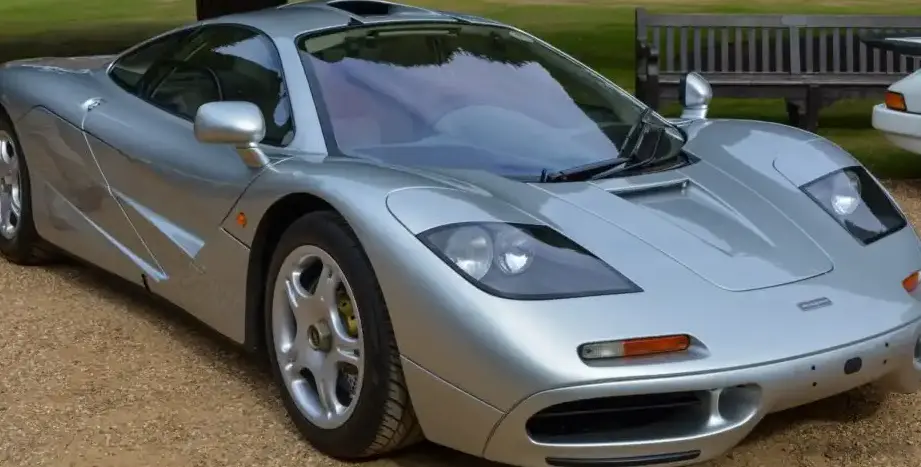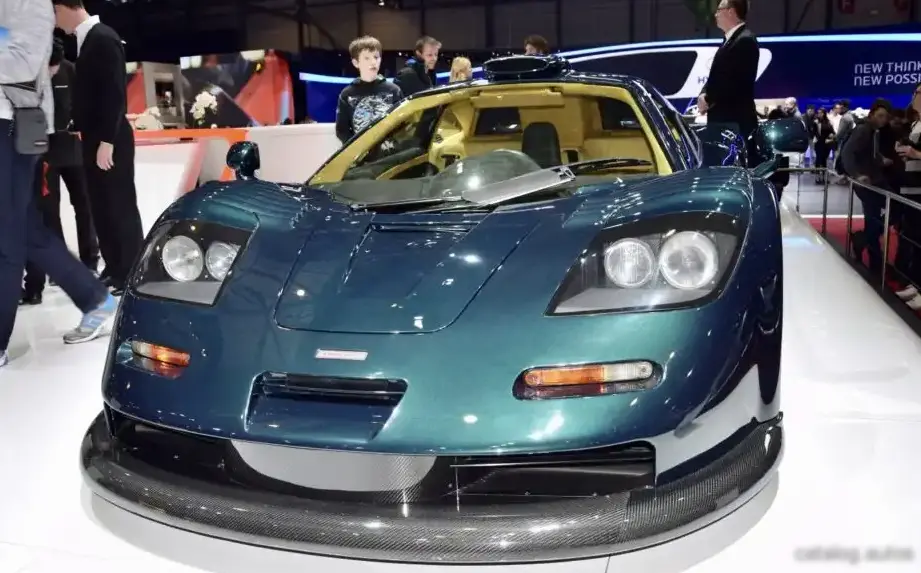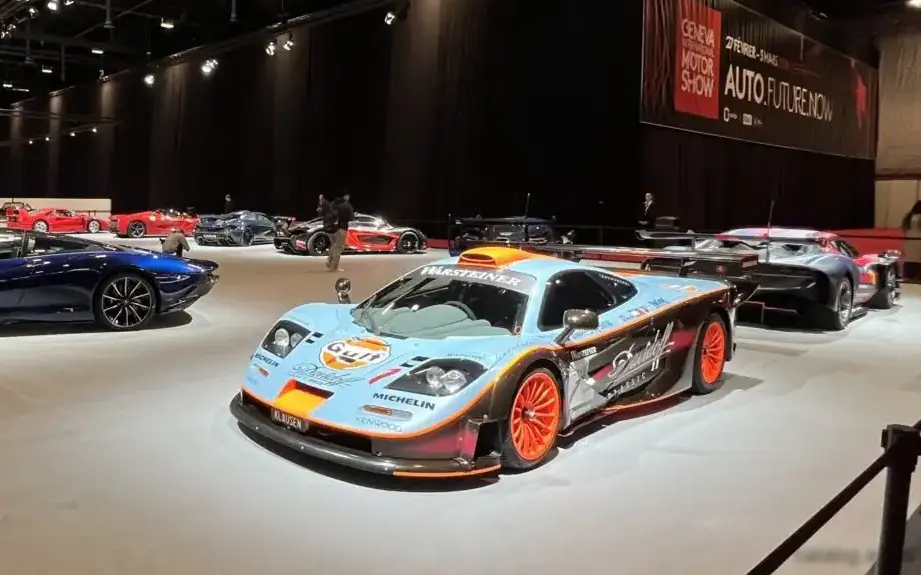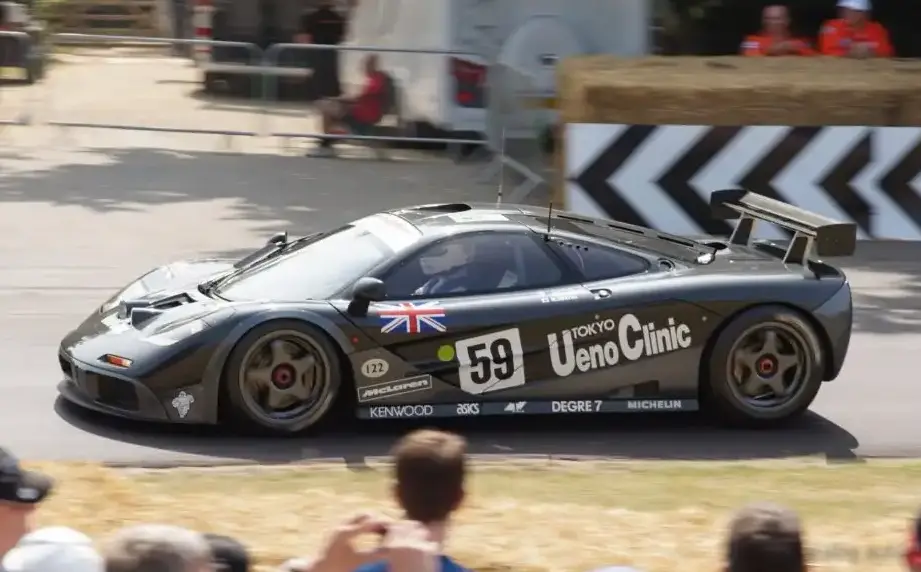
The McLaren F1 GTR 6.1 V12, produced in 1995, represents the pinnacle of McLaren’s early foray into dedicated racing homologation. Built to compete in the BPR Global GT Series, and later the FIA GT Championship, the GTR was a radical departure from the road-going F1, optimized for track performance. This specific 6.1-liter variant, producing 600 horsepower, was a limited-production model designed to dominate GT racing, and it achieved considerable success in its short lifespan. The F1 GTR was not simply a modified road car; it was a purpose-built racing machine, sharing only fundamental structural elements with its road-going counterpart.
Technical Specifications
| Brand | McLaren |
| Model | F1 |
| Generation | F1 GTR |
| Type (Engine) | 6.1 V12 (600 Hp) |
| Start of production | 1995 |
| End of production | 1995 |
| Powertrain Architecture | Internal Combustion engine |
| Body type | Coupe |
| Seats | 1 |
| Doors | 2 |
| Fuel Type | Petrol (Gasoline) |
| Maximum speed | 281 km/h (174.61 mph) |
| Weight-to-power ratio | 1.8 kg/Hp, 571.4 Hp/tonne |
| Weight-to-torque ratio | 2 kg/Nm, 501.9 Nm/tonne |
| Power | 600 Hp @ 7500 rpm |
| Power per litre | 98.9 Hp/l |
| Torque | 527 Nm @ 5600 rpm (388.7 lb.-ft. @ 5600 rpm) |
| Engine layout | Middle, Longitudinal |
| Engine Model/Code | S70/2 |
| Engine displacement | 6064 cm3 (370.05 cu. in.) |
| Number of cylinders | 12 |
| Engine configuration | V-engine |
| Cylinder Bore | 86 mm (3.39 in.) |
| Piston Stroke | 87 mm (3.43 in.) |
| Compression ratio | 11:1 |
| Number of valves per cylinder | 4 |
| Fuel injection system | Multi-port manifold injection |
| Engine aspiration | Naturally aspirated engine |
| Valvetrain | DOHC |
| Kerb Weight | 1050 kg (2314.85 lbs.) |
| Fuel tank capacity | 100 l (26.42 US gal | 22 UK gal) |
| Length | 4287 mm (168.78 in.) |
| Width | 1820 mm (71.65 in.) |
| Height | 1140 mm (44.88 in.) |
| Wheelbase | 2718 mm (107.01 in.) |
| Front track | 1558 mm (61.34 in.) |
| Rear track | 1488 mm (58.58 in.) |
| Front overhang | 970 mm (38.19 in.) |
| Rear overhang | 599 mm (23.58 in.) |
| Ride height (ground clearance) | 75 mm (2.95 in.) |
| Drivetrain Architecture | The Internal combustion engine (ICE) drives the rear wheels of the vehicle. |
| Drive wheel | Rear wheel drive |
| Number of gears and type of gearbox | 6 gears, manual transmission |
| Front suspension | Coil spring, Double wishbone, Transverse stabilizer |
| Rear suspension | Double wishbone, Coil spring |
| Front brakes | Ventilated discs, 380×36 mm |
| Rear brakes | Ventilated discs, 355×36 mm |
| Steering type | Steering rack and pinion |
| Wheel rims size | 18 |
Powertrain & Engine Architecture
The heart of the F1 GTR 6.1 was the BMW S70/2 engine, a naturally aspirated 6.1-liter V12. This engine was a significant upgrade over the 6.0-liter unit found in the road car, with increased displacement achieved through a larger bore. The engine featured a 75-degree V-angle, four valves per cylinder, and a double overhead camshaft (DOHC) design. Fuel was delivered via multi-port fuel injection, carefully calibrated for racing conditions. The S70/2 produced 600 horsepower at 7500 rpm and 527 Nm (388.7 lb-ft) of torque at 5600 rpm. Crucially, the GTR retained the road car’s dry-sump lubrication system, essential for maintaining oil pressure during the extreme cornering forces experienced in racing. The engine was mounted longitudinally in a mid-engine configuration, contributing to the car’s exceptional balance. The GTR utilized a 6-speed manual transmission, optimized for quick shifts and direct power delivery.
Driving Characteristics
The F1 GTR 6.1 offered a raw and visceral driving experience. The combination of the high-revving V12 and the manual gearbox demanded a skilled driver. The car’s relatively lightweight construction (1050 kg / 2314.85 lbs) resulted in a phenomenal power-to-weight ratio. Acceleration was brutal, and the car felt incredibly responsive to throttle inputs. Compared to the road car, the GTR’s suspension was significantly stiffer and lower, and the gear ratios were tailored for track use. While the road car prioritized usability, the GTR was uncompromisingly focused on performance. The lack of electronic driver aids meant that the driver was fully in control, but also fully responsible for managing the car’s immense power.
Equipment & Trim Levels
The F1 GTR was not equipped with the luxurious amenities found in the road car. It was a spartan racing machine, stripped of all unnecessary weight. The interior featured a single racing seat, a roll cage for safety, and a minimalist dashboard with essential gauges. The focus was entirely on functionality. There were no options for leather upholstery or sound systems. The GTR was delivered with racing-specific equipment, including a fire suppression system and a data logging system to aid in performance analysis.
Chassis & Braking
The F1 GTR utilized a carbon fiber monocoque chassis, providing exceptional rigidity and lightness. The suspension featured coil springs, double wishbones, and transverse stabilizers at the front, and double wishbones and coil springs at the rear. The braking system consisted of ventilated discs all around, with 380x36mm discs at the front and 355x36mm discs at the rear. The steering was a rack and pinion system, providing precise and direct control. The car’s aerodynamic package was extensively developed to generate downforce and improve stability at high speeds. A large rear wing and front splitter were key components of the aerodynamic setup.
Market Reception & Comparison
The McLaren F1 GTR was immediately recognized as a dominant force in GT racing. It achieved numerous victories in the BPR Global GT Series and the FIA GT Championship. Critics praised its exceptional performance, handling, and reliability. Compared to other GT racers of the time, the F1 GTR stood out for its advanced technology and uncompromising design. While the initial cost of the F1 GTR was substantial, its racing success and limited production run quickly made it a highly sought-after collector’s item. The GTR’s performance eclipsed that of the road car, and it represented a significant step forward in racing technology.
Legacy
The McLaren F1 GTR 6.1 V12 remains a legendary machine in the world of motorsport. Its innovative design and exceptional performance set a new standard for GT racing cars. Today, original F1 GTRs are incredibly valuable and highly prized by collectors. The powertrain, while demanding in terms of maintenance, has proven to be remarkably durable when properly cared for. The F1 GTR’s legacy extends beyond its racing success; it helped establish McLaren as a serious contender in the automotive industry and paved the way for the company’s future endeavors in high-performance vehicles. The car continues to inspire engineers and enthusiasts alike, and it remains a symbol of automotive excellence.