
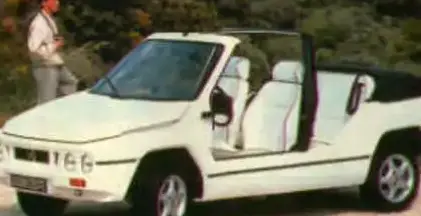
The Mega Club 1.4 i (75 hp) was a popular entry-level hatchback produced between 1992 and 1998. Positioned as the base model within the Mega Club range, it offered affordable transportation for a broad demographic. This variant played a significant role in establishing the Mega brand in several European markets, particularly as a first car for younger drivers or as a practical city vehicle. It was part of the first generation of the Club model, known for its compact size and relatively economical operation. The 1.4 i represented the most accessible powertrain option in the lineup, prioritizing fuel efficiency and ease of use over outright performance.
Technical Specifications
| Brand | Mega |
| Model | Club |
| Generation | Club |
| Type (Engine) | 1.4 i (75 Hp) |
| Start of production | 1992 |
| End of production | 1998 |
| Powertrain Architecture | Internal Combustion engine |
| Body type | Hatchback |
| Seats | 4 |
| Doors | 3 |
| Fuel Type | Petrol (Gasoline) |
| Maximum speed | 150 km/h (93.21 mph) |
| Weight-to-power ratio | 17.5 kg/Hp, 57 Hp/tonne |
| Weight-to-torque ratio | 11.8 kg/Nm, 84.4 Nm/tonne |
| Power | 75 Hp @ 6200 rpm |
| Power per litre | 55.1 Hp/l |
| Torque | 111 Nm @ 4000 rpm (81.87 lb.-ft. @ 4000 rpm) |
| Engine displacement | 1361 cm3 (83.05 cu. in.) |
| Number of cylinders | 4 |
| Engine configuration | Inline |
| Cylinder Bore | 75 mm (2.95 in.) |
| Piston Stroke | 77 mm (3.03 in.) |
| Compression ratio | 9.3:1 |
| Number of valves per cylinder | 2 |
| Fuel injection system | Multi-port manifold injection |
| Engine aspiration | Naturally aspirated engine |
| Valvetrain | OHC |
| Kerb Weight | 1315 kg (2899.08 lbs.) |
| Fuel tank capacity | 41 l (10.83 US gal | 9.02 UK gal) |
| Length | 3775 mm (148.62 in.) |
| Width | 1640 mm (64.57 in.) |
| Height | 1460 mm (57.48 in.) |
| Wheelbase | 2380 mm (93.7 in.) |
| Front track | 1415 mm (55.71 in.) |
| Rear (Back) track | 1380 mm (54.33 in.) |
| Drivetrain Architecture | The Internal combustion engine (ICE) drives the front wheels of the vehicle. |
| Drive wheel | Front wheel drive |
| Number of gears and type of gearbox | 5 gears, manual transmission |
| Front suspension | Spring Strut |
| Rear suspension | Torsion |
| Front brakes | Disc |
| Rear brakes | Drum |
| Assisting systems | ABS (Anti-lock braking system) |
| Steering type | Steering rack and pinion |
| Tires size | 165/65 R13 |
Powertrain & Engine Architecture
The Mega Club 1.4 i was powered by a 1361cc inline four-cylinder engine. This engine, typically identified by its internal code, featured a single overhead camshaft (OHC) valvetrain with two valves per cylinder. The engine utilized a multi-port fuel injection system, which was a common setup for vehicles of this era, providing a balance between fuel efficiency and performance. The 9.3:1 compression ratio was relatively conservative, contributing to the engine’s ability to run on readily available fuel grades. The engine’s design prioritized reliability and low-cost maintenance over high output. The five-speed manual transmission was the standard offering, providing a reasonable spread of gears for both city driving and highway cruising. The transmission was known for its relatively light shift feel, although it wasn’t particularly sporty.
Driving Characteristics
The 75 hp output of the 1.4 i engine translated to modest, but adequate, performance. Acceleration was best described as leisurely, with a 0-60 mph time estimated around 13-14 seconds. The car felt most comfortable at lower speeds, making it well-suited for urban environments. The gear ratios in the five-speed manual transmission were spaced to maximize fuel economy, rather than provide exhilarating acceleration. Compared to potential higher-performance variants (had they existed in the Club range), the 1.4 i lacked the punch needed for spirited driving. However, its lighter weight compared to larger-engined models meant it felt nimble enough in city traffic. The engine delivered its peak torque at 4000 rpm, requiring drivers to shift down a gear for overtaking maneuvers.
Equipment & Trim Levels
The Mega Club 1.4 i was typically equipped with basic, but functional, features. Standard equipment generally included cloth upholstery, a basic instrument cluster, and manual windows and door locks. Power steering was often an optional extra, as was air conditioning. The interior design was simple and utilitarian, prioritizing practicality over luxury. The dashboard layout was straightforward, with easily accessible controls. Optional extras could include a radio/cassette player, upgraded seat fabrics, and central locking. The trim level was generally considered the entry point to the Club range, with more luxurious trims offering additional features and cosmetic enhancements.
Chassis & Braking
The Mega Club 1.4 i utilized a relatively simple chassis design. The front suspension employed a MacPherson strut setup, while the rear suspension featured a torsion beam axle. This configuration provided a reasonable balance between ride comfort and handling. The braking system consisted of disc brakes on the front wheels and drum brakes on the rear. An Anti-lock Braking System (ABS) was often included as standard equipment, enhancing safety by preventing wheel lockup during hard braking. The steering was rack and pinion, providing reasonably precise steering feel. The 165/65 R13 tires were chosen for their balance of comfort, fuel efficiency, and grip.
Market Reception & Comparison
The Mega Club 1.4 i was generally well-received as an affordable and practical hatchback. Critics praised its fuel efficiency and ease of driving, but noted its lack of outright performance. Compared to competitors in the same segment, the Club 1.4 i offered a competitive price point and a reasonable level of equipment. Its fuel economy was considered good for its time, making it an attractive option for budget-conscious buyers. Reliability was generally considered above average, with the 1.4 i engine proving to be durable and relatively trouble-free. However, some reviewers criticized the basic interior and lack of refinement compared to more expensive rivals.
Legacy
The Mega Club 1.4 i remains a relatively common sight on European roads today, particularly as a classic first car. The 1.4 i engine is known for its durability and relatively low maintenance costs. Parts availability is generally good, making it a relatively affordable car to keep running. While not a particularly collectible model, the Club 1.4 i holds a nostalgic appeal for many drivers who learned to drive in one. The powertrain, while modest by modern standards, proved to be reliable and long-lasting, contributing to the car’s enduring presence in the used car market. Its simplicity and affordability continue to make it an attractive option for those seeking a basic, reliable, and inexpensive mode of transportation.
