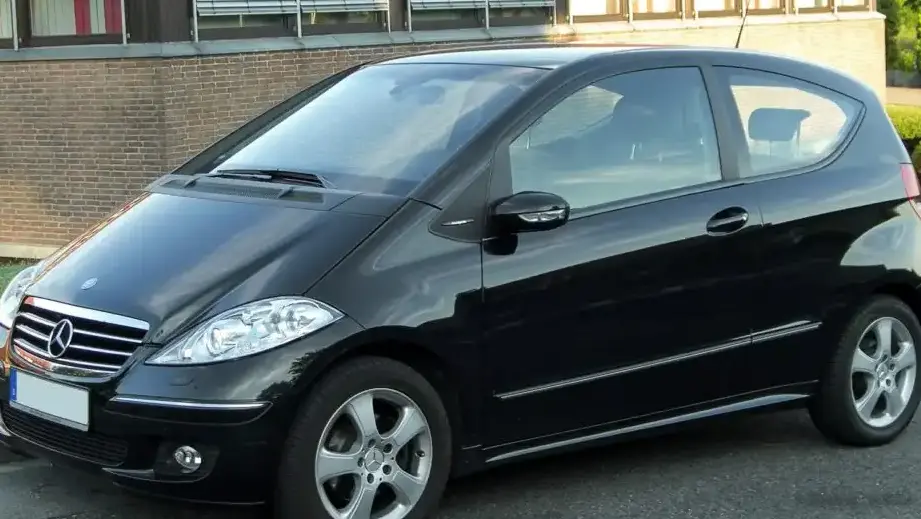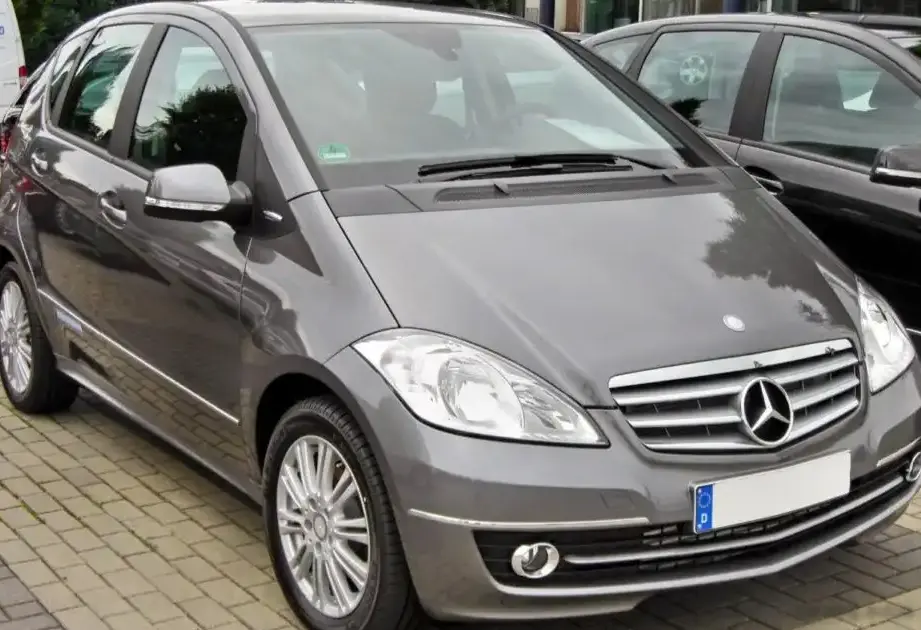
The Mercedes-Benz A-Class W169, specifically the A 170 variant with the Autotronic continuously variable transmission (CVT), was produced from 2008 to 2009 as part of the facelifted second generation of the A-Class. This model aimed to provide an entry-level premium hatchback option for buyers seeking Mercedes-Benz build quality and features in a compact package. Positioned as the base engine and transmission combination, the A 170 Autotronic offered a balance between affordability and the convenience of an automatic transmission, though it represented a different driving experience compared to its more powerful siblings.
Technical Specifications
| Brand | Mercedes-Benz |
| Model | A-Class |
| Generation | A-Class (W169, facelift 2008) |
| Type (Engine) | A 170 (115 Hp) Autotronic |
| Start of production | 2008 |
| End of production | 2009 |
| Powertrain Architecture | Internal Combustion engine |
| Body type | Hatchback |
| Seats | 5 |
| Doors | 5 |
| Fuel consumption (urban) | 8.6 l/100 km (27.4 US mpg, 32.8 UK mpg, 11.6 km/l) |
| Fuel consumption (extra urban) | 5.6 l/100 km (42 US mpg, 50.4 UK mpg, 17.9 km/l) |
| Fuel consumption (combined) | 6.6 l/100 km (35.6 US mpg, 42.8 UK mpg, 15.2 km/l) |
| Fuel Type | Petrol (Gasoline) |
| Acceleration 0 – 100 km/h | 11.5 sec |
| Acceleration 0 – 62 mph | 11.5 sec |
| Acceleration 0 – 60 mph | 10.9 sec |
| Maximum speed | 183 km/h (113.71 mph) |
| Weight-to-power ratio | 10.8 kg/Hp, 92.7 Hp/tonne |
| Weight-to-torque ratio | 8 kg/Nm, 125 Nm/tonne |
| Power | 115 Hp @ 5500 rpm |
| Power per litre | 67.7 Hp/l |
| Torque | 155 Nm @ 3500 rpm (114.32 lb.-ft. @ 3500 rpm) |
| Engine layout | Front, Transverse |
| Engine Model/Code | M 266.940 |
| Engine displacement | 1699 cm3 (103.68 cu. in.) |
| Number of cylinders | 4 |
| Engine configuration | Inline |
| Cylinder Bore | 83 mm (3.27 in.) |
| Piston Stroke | 78.5 mm (3.09 in.) |
| Compression ratio | 11:1 |
| Number of valves per cylinder | 2 |
| Fuel injection system | Multi-port manifold injection |
| Engine aspiration | Naturally aspirated engine |
| Engine oil capacity | 5 l (5.28 US qt | 4.4 UK qt) |
| Coolant capacity | 6.6 l (6.97 US qt | 5.81 UK qt) |
| Kerb Weight | 1240 kg (2733.73 lbs.) |
| Max. weight | 1705 kg (3758.88 lbs.) |
| Max load | 465 kg (1025.15 lbs.) |
| Trunk (boot) space – minimum | 435 l (15.36 cu. ft.) |
| Trunk (boot) space – maximum | 1995 l (70.45 cu. ft.) |
| Fuel tank capacity | 54 l (14.27 US gal | 11.88 UK gal) |
| Length | 3838 mm (151.1 in.) |
| Width | 1764 mm (69.45 in.) |
| Height | 1593 mm (62.72 in.) |
| Wheelbase | 2568 mm (101.1 in.) |
| Front track | 1556 mm (61.26 in.) |
| Rear (Back) track | 1551 mm (61.06 in.) |
| Drivetrain Architecture | The Internal combustion engine (ICE) drives the front wheels of the vehicle. |
| Drive wheel | Front wheel drive |
| Number of gears and type of gearbox | 1 gears, automatic transmission Autotronic |
| Front suspension | Spring Strut |
| Rear suspension | Coil spring |
| Front brakes | Disc |
| Rear brakes | Disc |
| Assisting systems | ABS (Anti-lock braking system) |
| Steering type | Steering rack and pinion |
| Tires size | 185/65 R15 |
| Wheel rims size | 6J x 15 |
INTRODUCTION
The A 170 Autotronic, introduced during the W169 facelift in 2008, represented the entry point into the A-Class range. The W169 A-Class, built on the 1HX0/A3 platform, was Mercedes-Benz’s attempt to appeal to a younger demographic with a more compact and affordable vehicle. The facelift brought revised styling, improved interior materials, and updated engine options. The A 170 Autotronic was designed to offer a comfortable and convenient driving experience, prioritizing ease of use over outright performance. It served as a stepping stone for buyers considering the more powerful A 200 models.
Powertrain & Engine Architecture
The A 170 was powered by the M 266.940, a 1.7-liter inline-four cylinder gasoline engine. This engine utilized multi-port fuel injection and a relatively modest 11:1 compression ratio. The engine produced 115 horsepower at 5500 rpm and 155 Nm (114.32 lb-ft) of torque at 3500 rpm. The key characteristic of this variant was its pairing with the Autotronic, a continuously variable transmission (CVT). This transmission, developed in-house by Mercedes-Benz, aimed to provide smooth, stepless gear changes for improved fuel efficiency and driving comfort. Unlike traditional automatic transmissions with fixed gear ratios, the Autotronic used a belt and pulley system to offer an infinite number of ratios within its operating range. The engine’s design was relatively simple, focusing on reliability and fuel economy rather than cutting-edge performance technology.
Driving Characteristics
The A 170 Autotronic’s driving experience was characterized by smoothness and ease of use. The CVT eliminated the noticeable gear shifts of a traditional automatic, resulting in a linear power delivery. However, this came at the cost of responsiveness. The engine could feel somewhat strained under hard acceleration, and the CVT sometimes exhibited a “rubber band” effect, where engine speed would rise without a corresponding increase in vehicle speed. Acceleration from 0 to 60 mph took approximately 10.9 seconds, and the top speed was 183 km/h (113.71 mph). Compared to the more powerful A 200 models, the A 170 felt noticeably slower, particularly when overtaking or climbing hills. The CVT was programmed for fuel efficiency, prioritizing lower engine speeds whenever possible.
Equipment & Trim Levels
The A 170 Autotronic typically came standard with features such as air conditioning, power windows, power mirrors, and a basic audio system. Safety features included ABS brakes, front airbags, and side airbags. Interior upholstery was typically cloth, and the dashboard featured a straightforward design. Optional extras included alloy wheels, a sunroof, upgraded audio systems, and parking sensors. The A 170 was positioned as the entry-level trim, so it lacked some of the more luxurious features found in higher-spec A-Class models. The focus was on providing essential comfort and convenience features at an affordable price point.
Chassis & Braking
The W169 A-Class featured a MacPherson strut front suspension and a multi-link rear suspension. The A 170 utilized a relatively basic suspension setup, prioritizing comfort over sporty handling. Brakes were disc brakes on all four wheels, providing adequate stopping power for the vehicle’s weight and performance. ABS (Anti-lock Braking System) was standard. The A 170’s suspension was tuned for a comfortable ride, absorbing bumps and imperfections in the road surface effectively. However, this came at the expense of precise handling and body control.
Market Reception & Comparison
The A 170 Autotronic received mixed reviews from automotive critics. While praised for its comfort, fuel efficiency, and smooth transmission, it was often criticized for its lack of performance and somewhat uninspiring driving dynamics. Compared to the A 200 models, the A 170 offered significantly less power and acceleration. However, it was more affordable and generally achieved better fuel economy, with combined fuel consumption figures around 6.6 l/100 km (35.6 US mpg). The A 170 appealed to buyers who prioritized practicality, comfort, and fuel efficiency over sporty driving characteristics.
Legacy
The A 170 Autotronic, while not a performance standout, proved to be a reliable and economical option for buyers seeking a compact premium hatchback. The M 266.940 engine, when properly maintained, is known for its durability. The Autotronic transmission, however, has a reputation for requiring careful maintenance and can be prone to issues if neglected. In the used car market, the A 170 Autotronic remains an affordable entry point into the Mercedes-Benz brand. Its simplicity and relatively low running costs make it an attractive option for budget-conscious buyers. However, potential buyers should be aware of the potential maintenance requirements of the Autotronic transmission and ensure it has been regularly serviced.