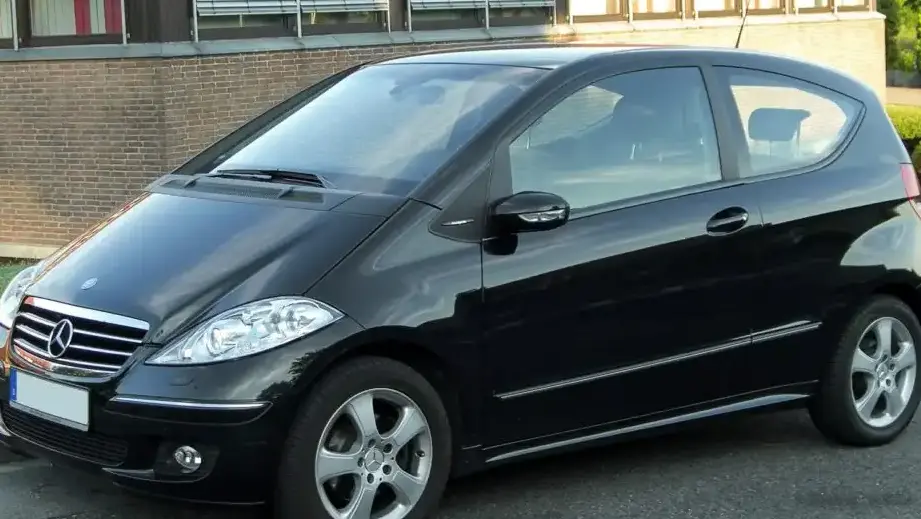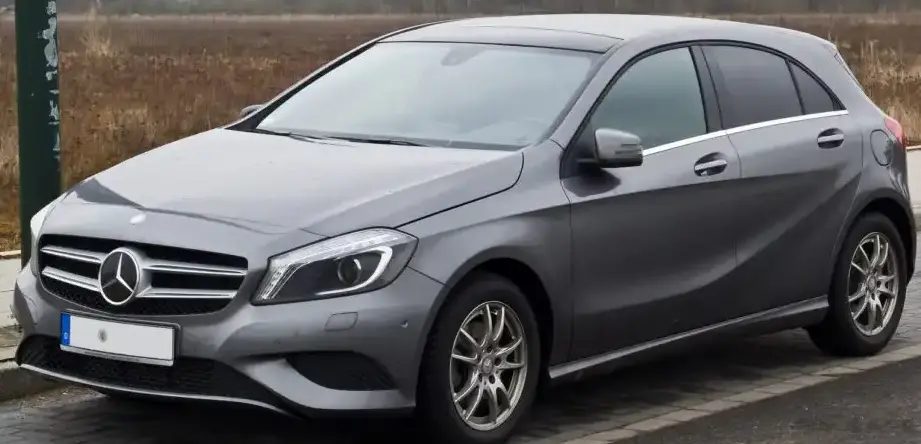
The Mercedes-Benz A-Class (W176) A 180, equipped with a 122 horsepower engine and a 7-speed dual-clutch transmission (DCT), was a key entry point into the premium compact hatchback segment for Mercedes-Benz. Produced from 2012 to 2015, this variant represented a significant shift in the A-Class’s positioning, moving away from its traditionally multi-purpose vehicle (MPV) roots towards a more conventional, style-focused hatchback. It was built on the MFA (Modular Front-wheel drive Architecture) platform, shared with other compact Mercedes-Benz models and Renault vehicles, emphasizing efficiency and packaging.
Technical Specifications
| Brand | Mercedes-Benz |
| Model | A-Class |
| Generation | A-Class (W176) |
| Type (Engine) | A 180 (122 Hp) DCT |
| Start of production | 2012 |
| End of production | 2015 |
| Powertrain Architecture | Internal Combustion engine |
| Body type | Hatchback |
| Seats | 5 |
| Doors | 5 |
| Fuel consumption (urban) | 7.3-7.1 l/100 km (32.2 – 33.1 US mpg) |
| Fuel consumption (extra urban) | 4.8-4.5 l/100 km (49 – 52.3 US mpg) |
| Fuel consumption (combined) | 5.7-5.4 l/100 km (41.3 – 43.6 US mpg) |
| CO2 emissions | 133-127 g/km |
| Fuel Type | Petrol (Gasoline) |
| Acceleration 0 – 100 km/h | 9.1 sec |
| Acceleration 0 – 62 mph | 9.1 sec |
| Acceleration 0 – 60 mph | 8.6 sec |
| Maximum speed | 202 km/h (125.52 mph) |
| Emission standard | Euro 6 |
| Weight-to-power ratio | 11.4 kg/Hp |
| Weight-to-torque ratio | 7 kg/Nm |
| Power | 122 Hp @ 5000 rpm |
| Torque | 200 Nm @ 1250-4000 rpm (147.51 lb.-ft.) |
| Engine layout | Front, Transverse |
| Engine Model/Code | M 270.910 |
| Engine displacement | 1595 cm3 (97.33 cu. in.) |
| Number of cylinders | 4 |
| Engine configuration | Inline |
| Compression ratio | 10.3:1 |
| Number of valves per cylinder | 4 |
| Fuel injection system | Direct injection |
| Engine aspiration | Turbocharger, Intercooler |
| Engine oil capacity | 5.8 l (6.13 US qt | 5.1 UK qt) |
| Coolant capacity | 7 l (7.4 US qt | 6.16 UK qt) |
| Kerb Weight | 1395 kg (3075.45 lbs.) |
| Max. weight | 1920 kg (4232.88 lbs.) |
| Max load | 525 kg (1157.43 lbs.) |
| Trunk (boot) space – minimum | 341 l (12.04 cu. ft.) |
| Trunk (boot) space – maximum | 1157 l (40.86 cu. ft.) |
| Fuel tank capacity | 50 l (13.21 US gal | 11 UK gal) |
| Length | 4292 mm (168.98 in.) |
| Width | 1780 mm (70.08 in.) |
| Height | 1433 mm (56.42 in.) |
| Wheelbase | 2699 mm (106.26 in.) |
| Front track | 1553 mm (61.14 in.) |
| Rear track | 1552 mm (61.1 in.) |
| Minimum turning circle | 11 m (36.09 ft.) |
| Drivetrain Architecture | Front wheel drive |
| Number of gears | 7 |
| Gearbox type | Automatic transmission G-DCT |
| Front suspension | Independent type McPherson |
| Rear suspension | Trailing arm |
| Front brakes | Ventilated discs |
| Rear brakes | Disc |
| Assisting systems | ABS (Anti-lock braking system) |
| Steering type | Steering rack and pinion |
| Power steering | Electric |
| Tires size | 195/65 R15 |
| Wheel rims size | 15 |
Powertrain & Engine Architecture
The A 180 utilized the M 270.910 engine, a 1.6-liter turbocharged inline-four cylinder gasoline engine. This engine was part of Mercedes-Benz’s new modular engine family, designed for efficiency and scalability. It featured direct fuel injection, a single turbocharger with an intercooler, and four valves per cylinder. The turbocharger provided a noticeable boost in power compared to naturally aspirated engines of similar displacement. The engine’s control unit managed fuel delivery and ignition timing for optimal performance and emissions. The 7G-DCT (7-speed dual-clutch transmission) was a crucial component, offering quick and smooth gear changes. This transmission allowed for both fully automatic operation and manual gear selection via steering wheel-mounted paddles, enhancing driver engagement. The DCT’s dual-clutch design minimized power interruption during shifts, contributing to improved acceleration and fuel economy.
Driving Characteristics
The A 180 DCT offered a comfortable and refined driving experience, prioritizing fuel efficiency and ease of use over outright performance. With 122 horsepower and 147 lb-ft of torque, acceleration was adequate for everyday driving, but not particularly sporty. The 0-60 mph time of around 8.6 seconds reflects this. The DCT transmission contributed to a responsive feel, especially during overtaking maneuvers. The gear ratios were tuned for fuel economy, with taller gearing in higher gears. Compared to the more powerful A 250 models, the A 180 felt noticeably less energetic, particularly at higher speeds. However, the turbocharger did provide a useful surge of power in the mid-range. The front-wheel-drive configuration offered predictable handling, but lacked the all-weather capability of the optional 4MATIC all-wheel-drive system.
Equipment & Trim Levels
The A 180 typically came standard with features such as air conditioning, a multi-function steering wheel, a basic audio system, and a suite of safety features including ABS, ESP (Electronic Stability Program), and multiple airbags. Interior upholstery was typically cloth, with options for leather upgrades. Common optional extras included a larger infotainment screen, navigation system, parking sensors, automatic climate control, and a panoramic sunroof. Trim levels varied slightly depending on the market, but generally offered packages that bundled popular options together. The A 180 was positioned as the entry-level model, appealing to buyers seeking a premium hatchback with a focus on affordability and fuel efficiency.
Chassis & Braking
The W176 A-Class featured a McPherson strut front suspension and a multi-link rear suspension, providing a good balance between ride comfort and handling. The suspension was tuned for a relatively soft ride, prioritizing comfort over sporty handling. The A 180 typically came equipped with ventilated disc brakes at the front and solid disc brakes at the rear. ABS (Anti-lock Braking System) and ESP (Electronic Stability Program) were standard safety features, enhancing braking performance and stability in challenging conditions. The electric power steering provided light and precise steering feel, making it easy to maneuver in urban environments.
Market Reception & Comparison
The A 180 DCT was generally well-received by critics as a practical and efficient entry-level premium hatchback. Its fuel economy was a major selling point, with combined fuel consumption figures ranging from 41.3 to 43.6 US mpg. However, some reviewers noted that the engine lacked the punch of its more powerful siblings, particularly the A 250. Compared to the A 200 (available in some markets), the A 180 offered a lower price point but with slightly less power. Reliability reports suggest that the M 270 engine and 7G-DCT transmission are generally reliable, but regular maintenance is crucial to prevent issues.
Legacy
The W176 A-Class, and specifically the A 180 DCT variant, played a significant role in revitalizing the A-Class lineup and attracting a younger demographic to the Mercedes-Benz brand. The 1.6-liter turbocharged engine and 7G-DCT transmission proved to be a durable and efficient combination. On the used car market, the A 180 DCT remains a popular choice for buyers seeking an affordable and well-equipped premium hatchback. Its relatively low running costs and good fuel economy continue to make it an attractive option, although potential buyers should ensure that the vehicle has been properly maintained and that the DCT transmission has been serviced according to Mercedes-Benz’s recommendations.