Technical Specifications
| Brand | Mercedes-Benz |
| Model | A-Class |
| Generation | A-Class (W176) |
| Type (Engine) | A 250 (211 Hp) 4MATIC |
| Start of production | 2013 |
| End of production | 2015 |
| Powertrain Architecture | Internal Combustion engine |
| Body type | Hatchback |
| Seats | 5 |
| Doors | 5 |
| Fuel consumption (urban) | 8.4 l/100 km (28 US mpg, 33.6 UK mpg, 11.9 km/l) |
| Fuel consumption (extra urban) | 5.5-5.4 l/100 km (42.8 – 43.6 US mpg, 51.4 – 52.3 UK mpg, 18.2 – 18.5 km/l) |
| Fuel consumption (combined) | 6.6-6.5 l/100 km (35.6 – 36.2 US mpg, 42.8 – 43.5 UK mpg, 15.2 – 15.4 km/l) |
| CO2 emissions | 159-156 g/km |
| Fuel Type | Petrol (Gasoline) |
| Acceleration 0 – 100 km/h | 6.5 sec |
| Acceleration 0 – 62 mph | 6.5 sec |
| Acceleration 0 – 60 mph | 6.2 sec |
| Maximum speed | 240 km/h (149.13 mph) |
| Emission standard | Euro 6 |
| Weight-to-power ratio | 7.1 kg/Hp, 140.2 Hp/tonne |
| Weight-to-torque ratio | 4.3 kg/Nm, 232.6 Nm/tonne |
| Power | 211 Hp @ 5500 rpm |
| Power per litre | 106 Hp/l |
| Torque | 350 Nm @ 1200-4000 rpm (258.15 lb.-ft. @ 1200-4000 rpm) |
| Engine layout | Front, Transverse |
| Engine Model/Code | M 270.920 |
| Engine displacement | 1991 cm3 (121.5 cu. in.) |
| Number of cylinders | 4 |
| Engine configuration | Inline |
| Compression ratio | 9.8:1 |
| Number of valves per cylinder | 4 |
| Fuel injection system | Direct injection |
| Engine aspiration | Turbocharger, Intercooler |
| Engine oil capacity | 5.6 l (5.92 US qt | 4.93 UK qt) |
| Coolant capacity | 7.8 l (8.24 US qt | 6.86 UK qt) |
| Kerb Weight | 1505 kg (3317.96 lbs.) |
| Max. weight | 2030 kg (4475.38 lbs.) |
| Max load | 525 kg (1157.43 lbs.) |
| Trunk (boot) space – minimum | 341 l (12.04 cu. ft.) |
| Trunk (boot) space – maximum | 1157 l (40.86 cu. ft.) |
| Fuel tank capacity | 56 l (14.79 US gal | 12.32 UK gal) |
| Length | 4292 mm (168.98 in.) |
| Width | 1780 mm (70.08 in.) |
| Height | 1433 mm (56.42 in.) |
| Wheelbase | 2699 mm (106.26 in.) |
| Front track | 1553 mm (61.14 in.) |
| Rear track | 1552 mm (61.1 in.) |
| Minimum turning circle | 11 m (36.09 ft.) |
| Drive wheel | All wheel drive (4×4) |
| Number of gears | 7 |
| Gearbox type | automatic transmission G-DCT |
| Front suspension | Independent type McPherson |
| Rear suspension | Trailing arm |
| Front brakes | Ventilated discs |
| Rear brakes | Disc |
| Assisting systems | ABS (Anti-lock braking system) |
| Steering type | Steering rack and pinion |
| Power steering | Electric Steering |
| Tires size | 225/45 R17 |
| Wheel rims size | 17 |
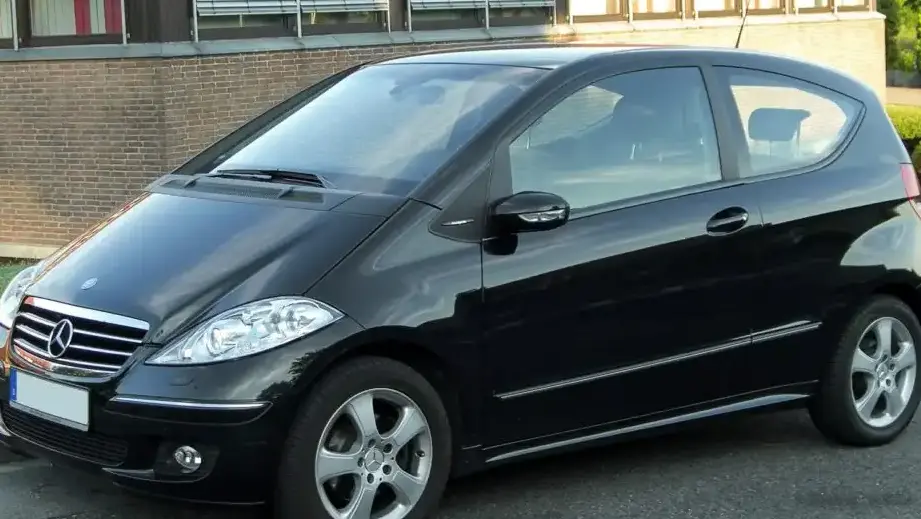
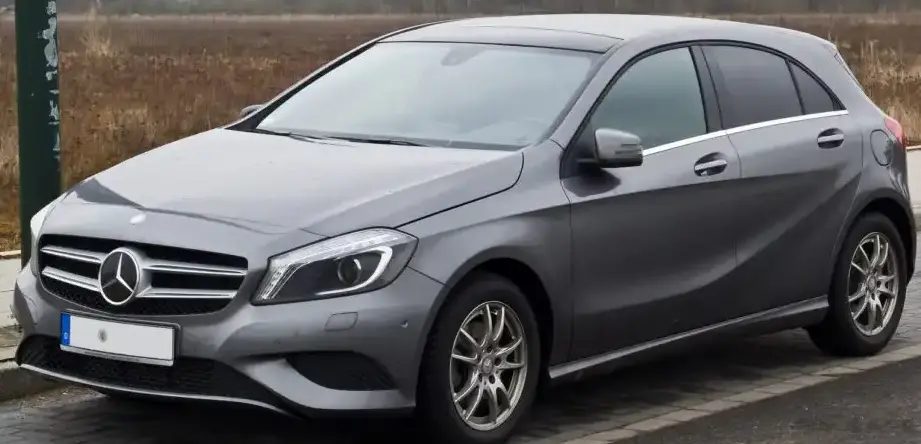
The W176 generation Mercedes-Benz A-Class, launched in 2012, marked a radical departure from its predecessors. Moving away from the sandwich-floor design of the previous two generations (W168 and W169), the W176 adopted a more conventional front-wheel-drive platform (though all-wheel drive was available). The A 250 4MATIC, introduced in 2013, was a key component of this new direction, offering a more dynamic driving experience and appealing to a broader customer base. Built on the MFA (Modular Front-wheel drive Architecture) platform, shared with other compact Mercedes-Benz models, the A 250 4MATIC aimed to deliver a premium experience in a smaller, more accessible package.
Powertrain & Engine Architecture
At the heart of the A 250 4MATIC lies the M270.920 2.0-liter turbocharged inline-four cylinder engine. This engine, part of Mercedes-Benz’s modular engine family, utilizes direct fuel injection and a single turbocharger with an intercooler to produce 211 horsepower at 5500 rpm and 350 Nm (258 lb-ft) of torque between 1200 and 4000 rpm. The engine features a timing chain for durability and is known for its relatively smooth operation. The A 250 4MATIC exclusively paired with the 7G-DCT (7-speed dual-clutch transmission). This transmission offers quick and precise shifts, contributing to the car’s sporty character. The 4MATIC all-wheel-drive system is a fully variable system, automatically distributing torque between the front and rear axles based on driving conditions, enhancing traction and stability.
Driving Characteristics
The A 250 4MATIC offered a noticeable step up in performance compared to the base A 180 and A 200 models. The 2.0-liter turbo engine provided ample power for everyday driving and confident acceleration, achieving 0-60 mph in around 6.2 seconds. The 7G-DCT transmission contributed to a responsive driving experience, with quick gear changes and a sport mode for more aggressive shifting. The 4MATIC system provided enhanced grip, particularly in wet or slippery conditions, making the A 250 4MATIC a more capable all-weather vehicle. While not a dedicated sports car, the A 250 4MATIC offered a balanced and engaging driving experience, with well-weighted steering and a comfortable ride.
Equipment & Trim Levels
The A 250 4MATIC typically came well-equipped as standard, including features like automatic climate control, a multi-function steering wheel, and a high-resolution infotainment display. Upholstery was generally a combination of fabric and synthetic leather, with optional upgrades to full leather available. Common optional extras included a panoramic sunroof, a premium sound system, and various driver assistance systems such as blind-spot monitoring and lane-keeping assist. The interior design was modern and minimalist, reflecting Mercedes-Benz’s design language at the time. Trim levels were relatively simple, with most customization options available through individual selections rather than distinct packages.
Chassis & Braking
The W176 A-Class utilized a McPherson strut front suspension and a multi-link rear suspension, providing a good balance of ride comfort and handling. The A 250 4MATIC featured slightly stiffer suspension components compared to the lower-powered models to better manage the increased power and torque. Braking duties were handled by ventilated discs at the front and solid discs at the rear. ABS (Anti-lock Braking System) was standard, along with electronic stability control and traction control. The 4MATIC system’s all-wheel-drive capability also contributed to improved braking performance, particularly on slippery surfaces.
Market Reception & Comparison
The A 250 4MATIC was generally well-received by automotive critics, who praised its performance, handling, and sophisticated interior. It was often compared to rivals such as the Audi A3 and BMW 1 Series. Compared to the A 200, the A 250 4MATIC offered a significant performance advantage, but at a higher price point. Fuel economy was respectable for its class, averaging around 36 mpg combined. Reliability reports were generally positive, although some owners reported minor issues with the infotainment system and occasional electronic glitches. The 4MATIC system added a premium to the price, but it was considered a worthwhile investment for drivers in regions with harsh winters.
Legacy
The W176 A-Class, and particularly the A 250 4MATIC, played a crucial role in revitalizing Mercedes-Benz’s compact car lineup. It demonstrated that a small Mercedes-Benz could be both luxurious and engaging to drive. The M270 engine proved to be a reliable and capable powerplant, and the 7G-DCT transmission offered a smooth and efficient driving experience. On the used car market, the A 250 4MATIC remains a popular choice, offering a good balance of performance, features, and value. Regular maintenance, including oil changes and inspection of the turbocharger and cooling system, is essential to ensure long-term reliability. The W176 A-Class paved the way for the current generation A-Class (W177), which continues to build on its predecessor’s success.