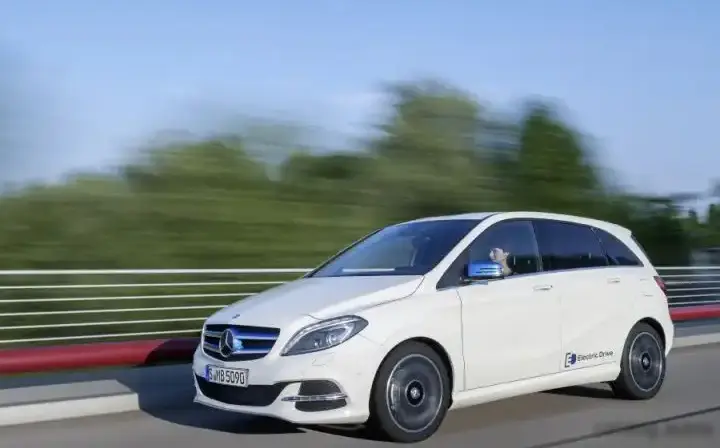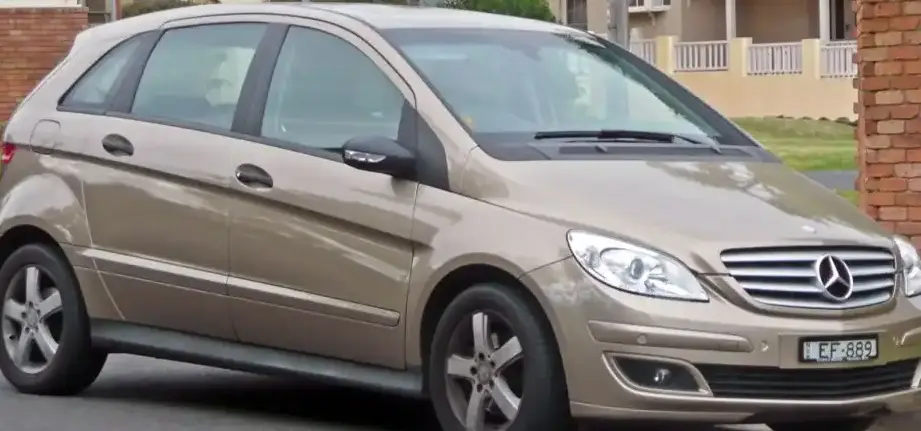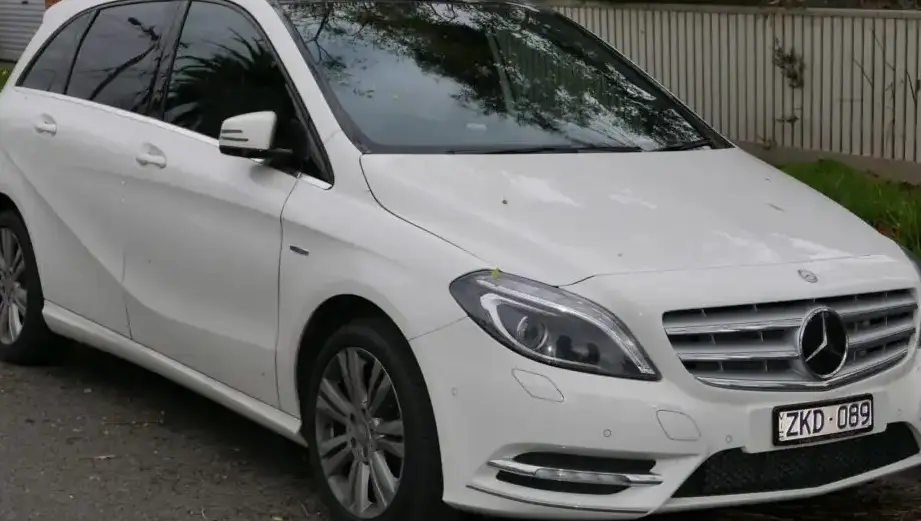
The Mercedes-Benz B 200, powered by a 1.6-liter turbocharged engine and paired with a 7G-DCT dual-clutch transmission, was a significant variant within the W246 B-Class range produced between 2011 and 2014. Positioned as a mid-range offering, it aimed to balance performance and fuel efficiency, appealing to buyers seeking a practical yet refined compact hatchback. This model represented Mercedes-Benz’s continued foray into the premium compact segment, offering a blend of comfort, technology, and a more engaging driving experience than its predecessors.
Technical Specifications
| Brand | Mercedes-Benz |
| Model | B-class |
| Generation | B-class (W246) |
| Type (Engine) | B 200 (156 Hp) 7G-DCT |
| Start of production | 2011 |
| End of production | 2014 |
| Powertrain Architecture | Internal Combustion engine |
| Body type | Hatchback |
| Seats | 5 |
| Doors | 5 |
| Fuel consumption (economy) – urban (NEDC) | 7.6 l/100 km (30.9 US mpg, 37.2 UK mpg, 13.2 km/l) |
| Fuel consumption (economy) – extra urban (NEDC) | 4.8-5 l/100 km (49 – 47 US mpg, 58.9 – 56.5 UK mpg, 20.8 – 20 km/l) |
| Fuel consumption (economy) – combined (NEDC) | 5.8-5.9 l/100 km (40.6 – 39.9 US mpg, 48.7 – 47.9 UK mpg, 17.2 – 16.9 km/l) |
| CO2 emissions (NEDC) | 136-139 g/km |
| Fuel Type | Petrol (Gasoline) |
| Acceleration 0 – 100 km/h | 8.4 sec |
| Acceleration 0 – 62 mph | 8.4 sec |
| Acceleration 0 – 60 mph | 8 sec |
| Maximum speed | 220 km/h (136.7 mph) |
| Emission standard | Euro 6 |
| Weight-to-power ratio | 8.7 kg/Hp, 115.6 Hp/tonne |
| Weight-to-torque ratio | 5.4 kg/Nm, 185.2 Nm/tonne |
| Power | 156 Hp @ 5300 rpm |
| Power per litre | 97.8 Hp/l |
| Torque | 250 Nm @ 1250-4000 rpm (184.39 lb.-ft. @ 1250-4000 rpm) |
| Engine layout | Front, Transverse |
| Engine Model/Code | M 270.910 |
| Engine displacement | 1595 cm3 (97.33 cu. in.) |
| Number of cylinders | 4 |
| Engine configuration | Inline |
| Cylinder Bore | 83 mm (3.27 in.) |
| Piston Stroke | 73.7 mm (2.9 in.) |
| Compression ratio | 10.3:1 |
| Number of valves per cylinder | 4 |
| Fuel injection system | Direct injection |
| Engine aspiration | Turbocharger, Intercooler |
| Valvetrain | DOHC |
| Engine oil capacity | 5.8 l (6.13 US qt | 5.1 UK qt) |
| Coolant | 5.8 l (6.13 US qt | 5.1 UK qt) |
| Kerb Weight | 1350 kg (2976.24 lbs.) |
| Max. weight | 1950 kg (4299.01 lbs.) |
| Max load | 600 kg (1322.77 lbs.) |
| Trunk (boot) space – minimum | 488 l (17.23 cu. ft.) |
| Trunk (boot) space – maximum | 1547 l (54.63 cu. ft.) |
| Fuel tank capacity | 50 l (13.21 US gal | 11 UK gal) |
| Max. roof load | 75 kg (165.35 lbs.) |
| Permitted trailer load with brakes (12%) | 1400 kg (3086.47 lbs.) |
| Permitted trailer load without brakes | 695 kg (1532.21 lbs.) |
| Permitted towbar download | 75 kg (165.35 lbs.) |
| Length | 4359 mm (171.61 in.) |
| Width | 1786 mm (70.31 in.) |
| Width including mirrors | 2010 mm (79.13 in.) |
| Height | 1557 mm (61.3 in.) |
| Wheelbase | 2699 mm (106.26 in.) |
| Front track | 1552 mm (61.1 in.) |
| Rear (Back) track | 1549 mm (60.98 in.) |
| Front overhang | 887 mm (34.92 in.) |
| Rear overhang | 773 mm (30.43 in.) |
| Minimum turning circle (turning diameter) | 11 m (36.09 ft.) |
| Drivetrain Architecture | The Internal combustion engine (ICE) drives the front wheels of the vehicle. |
| Drive wheel | Front wheel drive |
| Number of gears and type of gearbox | 7 gears, automatic transmission DCT |
| Front suspension | Independent type McPherson |
| Rear suspension | Independent multi-link suspension |
| Front brakes | Ventilated discs |
| Rear brakes | Disc |
| Assisting systems | ABS (Anti-lock braking system) |
| Steering type | Steering rack and pinion |
| Power steering | Electric Steering |
| Tires size | 205/55 R16 |
| Wheel rims size | 6.5J x 16 |
INTRODUCTION
The Mercedes-Benz B 200 (W246), produced from 2011 to 2014, was a key component of the second-generation B-Class lineup. Built on the 246 platform, shared with other compact Mercedes-Benz models, the B 200 aimed to provide a more premium and versatile option within the hatchback segment. It represented a shift towards more sophisticated design and technology compared to its predecessor, offering a comfortable and practical vehicle for families and individuals alike. The 1.6-liter turbocharged engine and 7G-DCT transmission combination was a popular choice, offering a balance between performance, fuel economy, and driving enjoyment.
Powertrain & Engine Architecture
At the heart of the B 200 lies the M 270.910 1.6-liter inline-four cylinder engine. This engine is a significant departure from earlier Mercedes-Benz engines, utilizing direct fuel injection and a single turbocharger with an intercooler. The direct injection system, operating at pressures up to 200 bar, ensures precise fuel delivery for improved efficiency and reduced emissions. The engine also features variable valve timing (DOHC) to optimize performance across the rev range. The 7G-DCT (7-speed Dual Clutch Transmission) is a crucial element of the powertrain. This transmission offers rapid and smooth gear changes, contributing to both performance and fuel efficiency. It operates with two separate clutches, one for odd and one for even gears, allowing for pre-selection of the next gear and minimizing interruption in power delivery. The Start & Stop system was also standard, further enhancing fuel economy in urban driving conditions.
Driving Characteristics
The B 200 with the 7G-DCT transmission delivers a refined and comfortable driving experience. While not overtly sporty, the 156 horsepower and 250 Nm (184 lb-ft) of torque provide adequate performance for everyday driving and highway cruising. Acceleration from 0 to 60 mph takes approximately 8 seconds, and the car reaches a top speed of 136.7 mph. The 7G-DCT transmission contributes to seamless gear changes, and the engine provides a relatively broad torque band, making it easy to maintain speed in various driving situations. Compared to the lower-powered B 180 variant, the B 200 offers noticeably more punch, particularly during overtaking maneuvers. However, it doesn’t match the performance of higher-spec models like the B 250. The automatic transmission, while convenient, can sometimes feel slightly hesitant in certain situations, particularly during kickdown.
Equipment & Trim Levels
The B 200 typically came equipped with a generous array of standard features. These included automatic climate control, a multi-function steering wheel, power windows and mirrors, and a high-quality audio system. Interior upholstery was generally a combination of fabric and Artico leather. Optional extras included a panoramic sunroof, navigation system, parking sensors, and upgraded sound systems. The dashboard layout was modern and functional, with a central display screen providing access to various vehicle settings and infotainment features. Trim levels varied slightly depending on the market, but generally, the B 200 offered a step up in terms of comfort and features compared to the base B 180 model.
Chassis & Braking
The W246 B-Class features a McPherson strut front suspension and a multi-link rear suspension, providing a comfortable and controlled ride. The suspension setup is tuned to prioritize comfort over outright sportiness. The B 200 typically came equipped with ventilated disc brakes at the front and solid disc brakes at the rear. Anti-lock Braking System (ABS) was standard, enhancing safety during emergency braking situations. The electric power steering provides a light and precise steering feel, making it easy to maneuver in urban environments. The chassis is relatively lightweight, contributing to the car’s agility and fuel efficiency.
Market Reception & Comparison
The B 200 was generally well-received by automotive critics, who praised its comfortable ride, refined interior, and efficient powertrain. However, some reviewers noted that the driving experience wasn’t particularly engaging compared to some of its rivals. Compared to the B 180, the B 200 offered a noticeable improvement in performance, justifying the higher price tag for buyers who prioritized power. In terms of fuel economy, the B 200 performed competitively with other compact hatchbacks in its class, achieving combined fuel consumption figures of around 40-48 mpg. Reliability was generally good, although some owners reported minor issues with the electronic systems.
Legacy
The Mercedes-Benz B 200 (W246) remains a popular choice in the used car market, offering a blend of practicality, comfort, and reliability. The 1.6-liter turbocharged engine and 7G-DCT transmission have proven to be relatively durable, although regular maintenance is essential to ensure long-term reliability. The B-Class, in general, helped establish Mercedes-Benz as a serious contender in the premium compact segment, paving the way for future models like the A-Class and CLA. Today, the W246 B 200 represents a well-rounded and affordable entry point into the Mercedes-Benz brand.