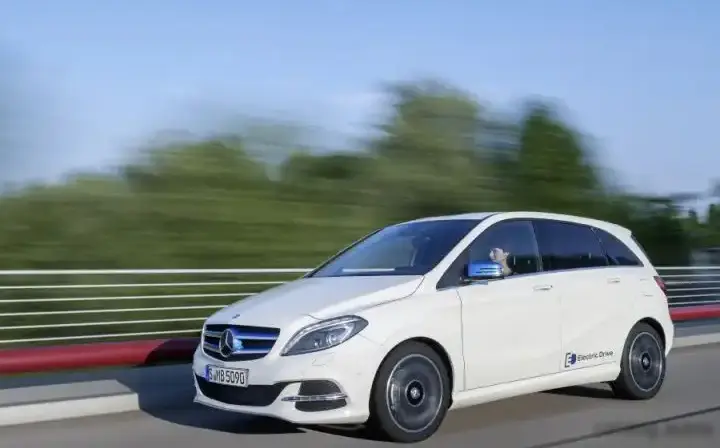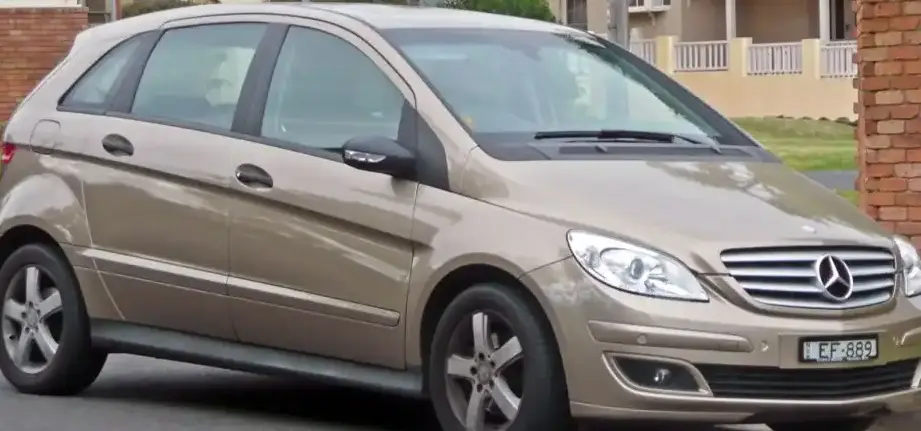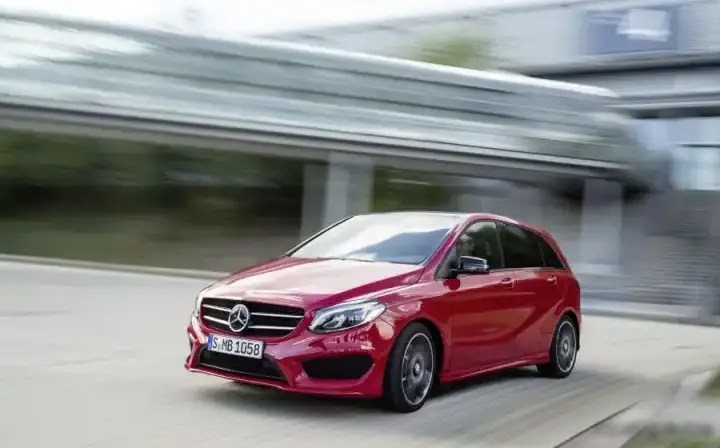
The Mercedes-Benz B 160, part of the W246 facelift generation produced from 2015 to 2018, represented the entry point into the revised B-Class range. Positioned as a practical and relatively affordable compact hatchback, it aimed to deliver Mercedes-Benz quality and comfort in a more accessible package. This variant featured a 1.6-liter turbocharged engine paired with a 7-speed dual-clutch transmission (DCT), offering a balance between fuel efficiency and usability. The W246 B-Class, overall, was designed to appeal to buyers seeking a versatile vehicle suitable for both family duties and everyday commuting, bridging the gap between smaller hatchbacks and larger, more expensive MPVs.
Technical Specifications
| Brand | Mercedes-Benz |
| Model | B-class |
| Generation | B-class (W246 facelift 2014) |
| Type (Engine) | B 160 (102 Hp) DCT |
| Start of production | 2015 |
| End of production | 2018 |
| Powertrain Architecture | Internal Combustion engine |
| Body type | Hatchback |
| Seats | 5 |
| Doors | 5 |
| Fuel consumption (urban) | 7.0-7.1 l/100 km (33.6 – 33.1 US mpg, 40.4 – 39.8 UK mpg, 14.3 – 14.1 km/l) |
| Fuel consumption (extra urban) | 4.6-4.9 l/100 km (51.1 – 48 US mpg, 61.4 – 57.6 UK mpg, 21.7 – 20.4 km/l) |
| Fuel consumption (combined) | 5.5-5.7 l/100 km (42.8 – 41.3 US mpg, 51.4 – 49.6 UK mpg, 18.2 – 17.5 km/l) |
| CO2 emissions | 127-132 g/km |
| Fuel Type | Petrol (Gasoline) |
| Acceleration 0 – 100 km/h | 10.6 sec |
| Acceleration 0 – 62 mph | 10.6 sec |
| Acceleration 0 – 60 mph | 10.1 sec |
| Maximum speed | 190 km/h (118.06 mph) |
| Emission standard | Euro 6 |
| Weight-to-power ratio | 13.2 kg/Hp, 75.6 Hp/tonne |
| Weight-to-torque ratio | 7.5 kg/Nm, 133.3 Nm/tonne |
| Power | 102 Hp @ 4500-6000 rpm |
| Power per litre | 63.9 Hp/l |
| Torque | 180 Nm @ 1200-3500 rpm (132.76 lb.-ft. @ 1200-3500 rpm) |
| Engine layout | Front, Transverse |
| Engine Model/Code | M 270.910 |
| Engine displacement | 1595 cm3 (97.33 cu. in.) |
| Number of cylinders | 4 |
| Engine configuration | Inline |
| Compression ratio | 10.3:1 |
| Fuel injection system | Direct injection |
| Engine aspiration | Turbocharger, Intercooler |
| Engine oil capacity | 5.8 l (6.13 US qt | 5.1 UK qt) |
| Coolant | 7 l (7.4 US qt | 6.16 UK qt) |
| Kerb Weight | 1350 kg (2976.24 lbs.) |
| Max. weight | 1960 kg (4321.06 lbs.) |
| Max load | 610 kg (1344.82 lbs.) |
| Trunk (boot) space – minimum | 488 l (17.23 cu. ft.) |
| Trunk (boot) space – maximum | 1547 l (54.63 cu. ft.) |
| Fuel tank capacity | 50 l (13.21 US gal | 11 UK gal) |
| Max. roof load | 75 kg (165.35 lbs.) |
| Permitted trailer load with brakes (12%) | 1000 kg (2204.62 lbs.) |
| Permitted trailer load without brakes | 710 kg (1565.28 lbs.) |
| Length | 4393 mm (172.95 in.) |
| Width | 1786 mm (70.31 in.) |
| Width including mirrors | 2010 mm (79.13 in.) |
| Height | 1557 mm (61.3 in.) |
| Wheelbase | 2699 mm (106.26 in.) |
| Front track | 1552 mm (61.1 in.) |
| Rear (Back) track | 1549 mm (60.98 in.) |
| Front overhang | 914 mm (35.98 in.) |
| Rear overhang | 780 mm (30.71 in.) |
| Drag coefficient (Cd) | 0.27 |
| Minimum turning circle (turning diameter) | 11.00 m (36.09 ft.) |
| Drivetrain Architecture | The Internal combustion engine (ICE) drives the front wheels of the vehicle. |
| Drive wheel | Front wheel drive |
| Number of gears and type of gearbox | 7 gears, automatic transmission G-DCT |
| Front suspension | Independent, type McPherson with coil spring and anti-roll bar |
| Rear suspension | Independent multi-link suspension |
| Front brakes | Ventilated discs |
| Rear brakes | Disc |
| Assisting systems | ABS (Anti-lock braking system) |
| Steering type | Steering rack and pinion |
| Power steering | Electric Steering |
| Tires size | 195/65 R15 |
| Wheel rims size | 15 |
INTRODUCTION
The Mercedes-Benz B 160 (W246 facelift) arrived in 2015 as part of a mid-cycle refresh for the second-generation B-Class. Built on the 1HX0/A3 platform shared with other compact Mercedes-Benz and alliance partner vehicles, the facelift brought updated styling, improved interior materials, and revised engine options. The B 160, powered by a 1.6-liter turbocharged engine producing 102 horsepower, served as the entry-level model, targeting buyers prioritizing fuel economy and practicality over outright performance. It was primarily sold in European markets, where compact hatchbacks are highly popular, and offered a more affordable alternative to the higher-spec B 200 and B 250 models.
Powertrain & Engine Architecture
The heart of the B 160 is the M 270.910 1.6-liter inline-four cylinder engine. This engine utilizes direct fuel injection and a single turbocharger with an intercooler to boost power and efficiency. The M270 family of engines are known for their relatively compact design and use of friction-reducing coatings. The engine’s output of 102 hp at 4500-6000 rpm and 180 Nm (132.76 lb-ft) of torque between 1200-3500 rpm is managed by a 7G-DCT (7-speed dual-clutch transmission). This transmission, a key feature of the B 160, provides quick and smooth gear changes, contributing to both performance and fuel economy. The DCT operates with two separate clutches, one for odd and one for even gears, allowing for pre-selection of the next gear and minimizing interruption in power delivery.
Driving Characteristics
The B 160’s driving experience is geared towards comfort and ease of use rather than sporty performance. The 102 hp engine provides adequate power for everyday driving, but acceleration is not particularly brisk, taking 10.6 seconds to reach 62 mph. The 7G-DCT transmission helps to maximize the available power, offering responsive shifts and keeping the engine within its optimal torque band. The gear ratios are tuned for fuel efficiency, meaning the engine can feel slightly strained during hard acceleration or when overtaking. Compared to the more powerful B 200 or B 250 models, the B 160 feels noticeably slower, but it offers a smoother and more relaxed driving experience, particularly in urban environments. The front-wheel-drive configuration provides predictable handling, and the suspension is tuned for comfort, absorbing bumps and imperfections in the road well.
Equipment & Trim Levels
The B 160 typically came equipped with a respectable level of standard features, reflecting Mercedes-Benz’s commitment to quality and comfort. Standard equipment generally included air conditioning, a multi-function steering wheel, a basic audio system with Bluetooth connectivity, and a suite of safety features such as ABS, ESP (Electronic Stability Program), and multiple airbags. Interior upholstery was typically cloth, with options for leather upgrades available. Higher trim levels, or optional packages, could add features like a larger infotainment screen, navigation system, parking sensors, automatic climate control, and upgraded interior trim. The dashboard layout was generally clean and functional, with a focus on ergonomics and ease of use.
Chassis & Braking
The W246 B-Class utilizes an independent suspension setup at all four wheels. The front suspension employs a McPherson strut design with coil springs and an anti-roll bar, while the rear features a multi-link suspension. This configuration provides a good balance between ride comfort and handling. The B 160 is equipped with ventilated disc brakes at the front and solid disc brakes at the rear. The braking system is assisted by ABS (Anti-lock Braking System) and ESP (Electronic Stability Program), enhancing safety and control. The steering is a rack-and-pinion system with electric power assistance, providing light and precise steering feel.
Market Reception & Comparison
The B 160 was generally well-received as a practical and affordable entry point into the B-Class range. Critics praised its fuel efficiency and comfortable ride, but noted its lack of outright performance. Compared to the B 200, which featured a more powerful 156 hp engine, the B 160 offered significantly lower running costs but at the expense of acceleration and overall driving enjoyment. The B 160 also competed with other compact hatchbacks from premium brands, such as the Audi A3 and BMW 1 Series, but typically offered a more spacious interior and a more comfortable ride. Fuel economy figures of 5.5-5.7 l/100 km (42.8 – 41.3 US mpg) were competitive for its class.
Legacy
The M 270 engine family, including the 1.6-liter unit found in the B 160, has proven to be generally reliable, although some owners have reported issues with the timing chain and oil leaks over time. The 7G-DCT transmission is also generally robust, but requires regular servicing to ensure smooth operation. In the used car market, the B 160 represents a relatively affordable option for buyers seeking a practical and well-equipped compact hatchback. Its fuel efficiency and comfortable ride make it a good choice for commuting and family use, but potential buyers should be aware of the potential for timing chain issues and ensure the vehicle has been properly maintained.