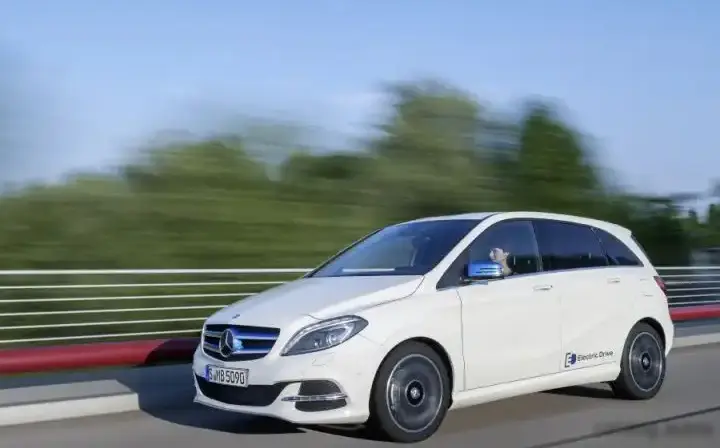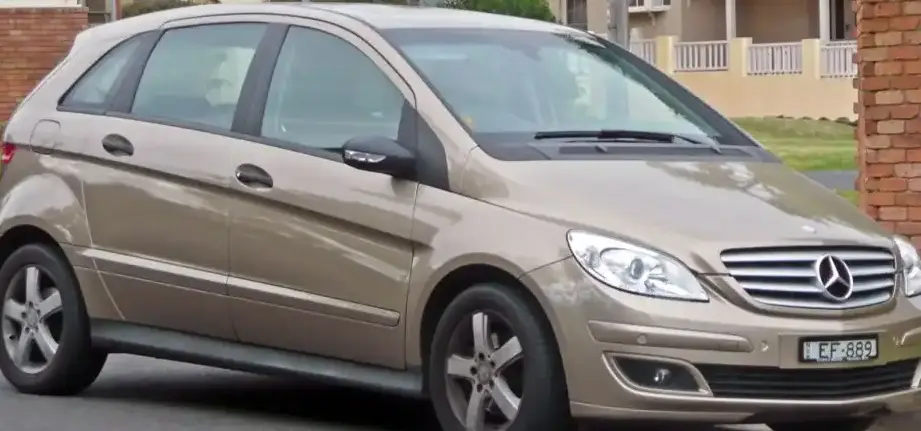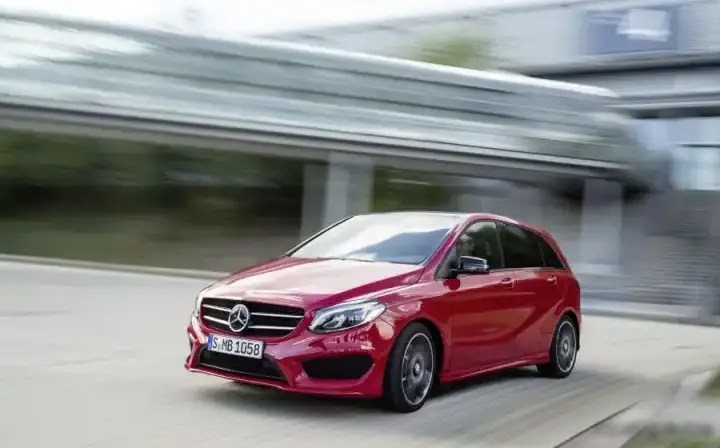
The Mercedes-Benz B-Class (W246 facelift) B 180, equipped with a 122 horsepower engine and a dual-clutch transmission (DCT), was a key variant in the second generation of the B-Class, produced from 2014 to 2018. This model represented a significant update to the W246 platform, offering a blend of practicality, comfort, and efficiency aimed at the compact multi-purpose vehicle (MPV) segment. Positioned as an entry-level offering within the B-Class range, the B 180 DCT served as an accessible gateway to the Mercedes-Benz brand, appealing to buyers prioritizing fuel economy and ease of use over outright performance.
Technical Specifications
| Brand | Mercedes-Benz |
| Model | B-class |
| Generation | B-class (W246 facelift 2014) |
| Type (Engine) | B 180 (122 Hp) DCT |
| Start of production | 2014 |
| End of production | 2018 |
| Powertrain Architecture | Internal Combustion engine |
| Body type | Hatchback |
| Seats | 5 |
| Doors | 5 |
| Fuel consumption (urban) | 6.9 l/100 km (34.1 US mpg, 40.9 UK mpg, 14.5 km/l) |
| Fuel consumption (extra urban) | 4.7-4.5 l/100 km (50 – 52.3 US mpg, 60.1 – 62.8 UK mpg, 21.3 – 22.2 km/l) |
| Fuel consumption (combined) | 5.5-5.4 l/100 km (42.8 – 43.6 US mpg, 51.4 – 52.3 UK mpg, 18.2 – 18.5 km/l) |
| CO2 emissions | 129-125 g/km |
| Fuel Type | Petrol (Gasoline) |
| Acceleration 0 – 100 km/h | 9.1 sec |
| Acceleration 0 – 62 mph | 9.1 sec |
| Acceleration 0 – 60 mph | 8.6 sec |
| Maximum speed | 200 km/h (124.27 mph) |
| Emission standard | Euro 6 |
| Weight-to-power ratio | 11.7 kg/Hp, 85.6 Hp/tonne |
| Weight-to-torque ratio | 7.1 kg/Nm, 140.4 Nm/tonne |
| Power | 122 Hp @ 5000 rpm |
| Power per litre | 76.5 Hp/l |
| Torque | 200 Nm @ 1250-4000 rpm (147.51 lb.-ft. @ 1250-4000 rpm) |
| Engine layout | Front, Transverse |
| Engine Model/Code | M 270.910 |
| Engine displacement | 1595 cm3 (97.33 cu. in.) |
| Number of cylinders | 4 |
| Engine configuration | Inline |
| Compression ratio | 10.3:1 |
| Fuel injection system | Direct injection |
| Engine aspiration | Turbocharger, Intercooler |
| Engine oil capacity | 5.8 l (6.13 US qt | 5.1 UK qt) |
| Coolant | 7 l (7.4 US qt | 6.16 UK qt) |
| Kerb Weight | 1425 kg (3141.59 lbs.) |
| Max. weight | 1960 kg (4321.06 lbs.) |
| Max load | 535 kg (1179.47 lbs.) |
| Trunk (boot) space – minimum | 488 l (17.23 cu. ft.) |
| Trunk (boot) space – maximum | 1547 l (54.63 cu. ft.) |
| Fuel tank capacity | 50 l (13.21 US gal | 11 UK gal) |
| Length | 4393 mm (172.95 in.) |
| Width | 1786 mm (70.31 in.) |
| Height | 1557 mm (61.3 in.) |
| Wheelbase | 2699 mm (106.26 in.) |
| Front track | 1552 mm (61.1 in.) |
| Rear (Back) track | 1549 mm (60.98 in.) |
| Ride height (ground clearance) | 98 mm (3.86 in.) |
| Minimum turning circle (turning diameter) | 11 m (36.09 ft.) |
| Approach angle | 14.2° |
| Departure angle | 19.9° |
| Drivetrain Architecture | The Internal combustion engine (ICE) drives the front wheels of the vehicle. |
| Drive wheel | Front wheel drive |
| Number of gears and type of gearbox | 7 gears, automatic transmission G-DCT |
| Front suspension | Independent, type McPherson with coil spring and anti-roll bar |
| Rear suspension | Independent coil spring |
| Front brakes | Ventilated discs |
| Rear brakes | Disc |
| Assisting systems | ABS (Anti-lock braking system) |
| Steering type | Steering rack and pinion |
| Tires size | 195/65 R 15 |
| Wheel rims size | 15 |
INTRODUCTION
The W246 B-Class, launched in 2011 and facelifted in 2014, represented a departure from the sandwich-floor design of its predecessor. The facelift brought a more conventional front-wheel-drive platform (the MFA platform shared with the A-Class) and a more refined interior. The B 180 DCT, introduced with the facelift, was a crucial model in the lineup, offering a balance between affordability and modern technology. It aimed to attract buyers seeking a practical, comfortable, and fuel-efficient vehicle with the prestige of the Mercedes-Benz badge. Production of this variant continued until 2018, when the W246 was replaced by the W247 generation.
Powertrain & Engine Architecture
The B 180 DCT is powered by the M 270.910, a 1.6-liter inline-four cylinder gasoline engine. This engine utilizes direct fuel injection and is turbocharged, allowing it to produce 122 horsepower and 200 Nm (147.51 lb.-ft.) of torque. The turbocharger provides a broad torque curve, peaking from 1250 to 4000 rpm, contributing to good low-end responsiveness. The engine features a compression ratio of 10.3:1. The “DCT” designation refers to the 7G-DCT dual-clutch transmission, a seven-speed automatic gearbox. This transmission offers quick and smooth gear changes, enhancing both performance and fuel efficiency. The 7G-DCT is a wet dual-clutch system, meaning the clutches are bathed in oil for improved cooling and durability.
Driving Characteristics
The B 180 DCT offers a comfortable and refined driving experience. While not particularly sporty, the engine provides adequate power for everyday driving situations. Acceleration from 0 to 100 km/h (0-62 mph) takes approximately 9.1 seconds. The DCT transmission contributes to a seamless driving experience, with minimal interruption in power delivery during gear changes. Compared to the more powerful B 200 or B 250 models, the B 180 feels less eager to accelerate, but its lower weight and efficient engine contribute to better fuel economy. The gear ratios are tuned for efficiency, prioritizing fuel savings over outright performance. The steering is light and precise, making it easy to maneuver in urban environments.
Equipment & Trim Levels
The B 180 DCT typically came equipped with a respectable level of standard features. These included automatic climate control, a multi-function steering wheel, a central infotainment display, and electric windows. Safety features such as ABS, ESP (Electronic Stability Program), and multiple airbags were also standard. Optional extras included features like a panoramic sunroof, leather upholstery, a premium sound system, and various driver assistance systems such as lane keeping assist and blind spot monitoring. Interior upholstery was typically cloth, with leather options available as an upgrade. The dashboard layout was modern and functional, with a focus on ergonomics.
Chassis & Braking
The W246 B-Class features an independent suspension setup at both the front and rear. The front suspension utilizes a McPherson strut design with coil springs and an anti-roll bar, while the rear suspension employs an independent multi-link setup. This suspension configuration provides a comfortable ride quality and good handling characteristics. The B 180 DCT is equipped with ventilated disc brakes at the front and solid disc brakes at the rear. ABS (Anti-lock Braking System) is standard, providing enhanced braking performance and stability. The relatively light weight of the B 180 contributes to its braking performance.
Market Reception & Comparison
The B 180 DCT was generally well-received by critics as a practical and efficient entry-level option in the B-Class range. It was praised for its comfortable ride, refined interior, and fuel-efficient engine. However, some critics noted that its performance was somewhat underwhelming compared to the more powerful variants. Compared to the B 200, the B 180 offered lower running costs but less performance. The B 180 also competed with other compact MPVs from brands like BMW and Audi, offering a similar blend of practicality and refinement. Fuel economy figures of 5.5-5.4 l/100 km (42.8 – 43.6 US mpg) were competitive for its class.
Legacy
The Mercedes-Benz B-Class W246, including the B 180 DCT variant, has proven to be a relatively reliable vehicle. The M 270 engine, while not without its potential issues (such as occasional oil leaks and potential for carbon buildup), is generally considered durable when properly maintained. The 7G-DCT transmission is also generally reliable, although regular servicing is crucial. On the used car market, the B 180 DCT represents a good value proposition for buyers seeking a comfortable, practical, and fuel-efficient vehicle with the Mercedes-Benz badge. Its relatively low running costs and proven reliability make it an attractive option for those seeking a dependable compact MPV.