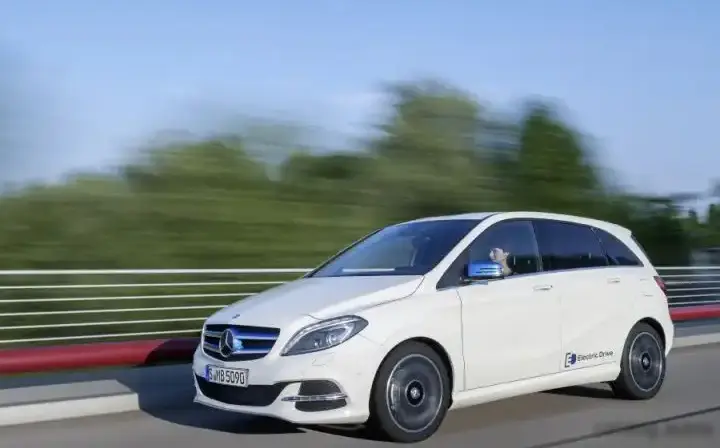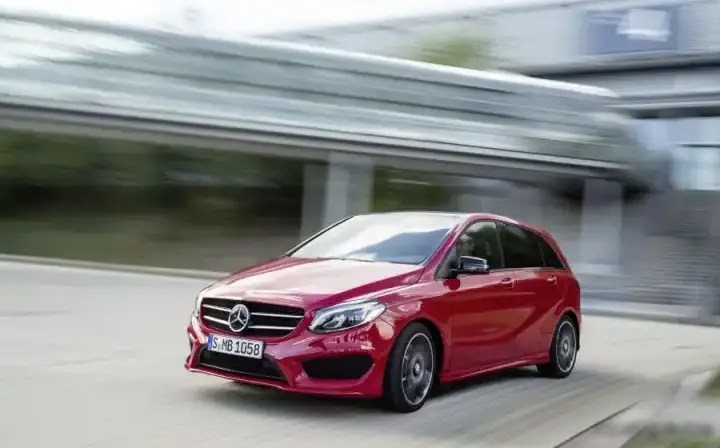
The Mercedes-Benz B 200 Natural Gas Drive (NGD), produced from 2014 to 2018 as part of the W246 facelift generation, represented a unique offering in the premium compact hatchback segment. This variant combined a turbocharged gasoline engine with a dedicated natural gas system, aiming to provide a balance of performance, efficiency, and reduced emissions. Positioned as a mid-range option within the B-Class lineup, it catered to environmentally conscious buyers seeking an alternative to traditional gasoline or diesel powertrains. The W246 B-Class, overall, was Mercedes-Benz’s entry into the growing compact multi-purpose vehicle (MPV) market, offering a more practical and space-efficient alternative to the A-Class hatchback.
Technical Specifications
| Brand | Mercedes-Benz |
| Model | B-class |
| Generation | B-class (W246 facelift 2014) |
| Type (Engine) | B 200 (156 Hp) Natural Gas Drive |
| Start of production | 2014 |
| End of production | 2018 |
| Powertrain Architecture | Internal Combustion engine |
| Body type | Hatchback |
| Seats | 5 |
| Doors | 5 |
| Fuel consumption (economy) – urban | 6 l/100 km (39.2 US mpg, 47.1 UK mpg, 16.7 km/l) |
| Fuel consumption (economy) – extra urban (CNG) | 3.4-3.3 kg/100 km |
| Fuel consumption (economy) – combined (CNG) | 4.4-4.3 kg/100 km |
| CO2 emissions | 119-117 g/km |
| Fuel Type | Petrol / CNG |
| Acceleration 0 – 100 km/h | 9.2 sec |
| Acceleration 0 – 62 mph | 9.2 sec |
| Acceleration 0 – 60 mph | 8.7 sec |
| Maximum speed | 200 km/h (124.27 mph) |
| Emission standard | Euro 6 |
| Weight-to-power ratio | 9.6 kg/Hp, 103.7 Hp/tonne |
| Weight-to-torque ratio | 5.6 kg/Nm, 179.4 Nm/tonne |
| Power | 156 Hp @ 5000 rpm |
| Power per litre | 78.4 Hp/l |
| Torque | 270 Nm @ 1250-4000 rpm (199.14 lb.-ft. @ 1250-4000 rpm) |
| Engine layout | Front, Transverse |
| Engine Model/Code | M 270.920 |
| Engine displacement | 1991 cm3 (121.5 cu. in.) |
| Number of cylinders | 4 |
| Engine configuration | Inline |
| Compression ratio | 11:1 |
| Fuel injection system | Direct injection |
| Engine aspiration | Turbocharger |
| Engine oil capacity | 5.8 l (6.13 US qt | 5.1 UK qt) |
| Coolant | 7 l (7.4 US qt | 6.16 UK qt) |
| Kerb Weight | 1505 kg (3317.96 lbs.) |
| Max. weight | 2020 kg (4453.34 lbs.) |
| Max load | 515 kg (1135.38 lbs.) |
| Trunk (boot) space – minimum | 501 l (17.69 cu. ft.) |
| Trunk (boot) space – maximum | 1456 l (51.42 cu. ft.) |
| CNG cylinder capacity | 12 kg |
| Length | 4359 mm (171.61 in.) |
| Width | 1812 mm (71.34 in.) |
| Height | 1590 mm (62.6 in.) |
| Wheelbase | 2699 mm (106.26 in.) |
| Front track | 1536 mm (60.47 in.) |
| Rear (Back) track | 1542 mm (60.71 in.) |
| Minimum turning circle | 11 m (36.09 ft.) |
| Drivetrain Architecture | The Internal combustion engine (ICE) drives the front wheels of the vehicle. |
| Drive wheel | Front wheel drive |
| Number of gears and type of gearbox | 6 gears, manual transmission |
| Front suspension | Independent, type McPherson with coil spring and anti-roll bar |
| Rear suspension | Independent coil spring |
| Front brakes | Ventilated discs |
| Rear brakes | Disc |
| Assisting systems | ABS (Anti-lock braking system) |
| Steering type | Steering rack and pinion |
| Tires size | 205/55 R 16 |
| Wheel rims size | 16 |
Powertrain & Engine Architecture
At the heart of the B 200 NGD lies the M 270.920 1.6-liter inline-four cylinder engine. This engine is a member of Mercedes-Benz’s modular engine family, known for its compact dimensions and efficiency. It features direct fuel injection and a single turbocharger, producing 156 horsepower at 5000 rpm and 270 Nm (199 lb-ft) of torque between 1250 and 4000 rpm. The key difference, of course, is the addition of a natural gas system. This system allows the engine to run primarily on compressed natural gas (CNG), with the gasoline engine serving as a backup when CNG supply is low. The engine management system automatically switches between fuels seamlessly. The 6-speed manual transmission was standard, providing a relatively engaging driving experience for a compact MPV. The engine’s design prioritized low-end torque, making it suitable for everyday driving conditions.
Driving Characteristics
The B 200 NGD offered a comfortable and refined driving experience. While not particularly sporty, the 156 hp engine provided adequate power for most situations. Acceleration from 0 to 60 mph took approximately 8.7 seconds, and top speed was limited to 124 mph. The manual transmission allowed for precise gear changes, and the engine’s strong low-end torque made it easy to navigate city streets. Compared to the gasoline-only B 200, the NGD version offered similar performance, but with the added benefit of lower running costs when operating on CNG. The suspension was tuned for comfort, absorbing bumps and imperfections in the road effectively. However, the added weight of the CNG tank did slightly impact handling, making it less agile than some of its rivals.
Equipment & Trim Levels
The B 200 NGD typically came well-equipped, reflecting its position as a premium compact vehicle. Standard features included automatic climate control, a multi-function steering wheel, power windows and mirrors, and a basic audio system. Higher trim levels offered options such as leather upholstery, a panoramic sunroof, navigation system, and advanced safety features like lane keeping assist and collision prevention assist. The interior design was modern and functional, with a focus on practicality and usability. The rear seats could be folded down to increase cargo space, making the B-Class a versatile vehicle for families and individuals alike.
Chassis & Braking
The W246 B-Class featured a McPherson strut front suspension and an independent multi-link rear suspension. This setup provided a good balance of ride comfort and handling. The B 200 NGD came equipped with ventilated disc brakes at the front and solid disc brakes at the rear. Anti-lock braking system (ABS) was standard, enhancing safety and control during emergency braking situations. The steering was precise and responsive, providing a confident feel behind the wheel. The chassis was designed to minimize weight and maximize rigidity, contributing to the vehicle’s overall stability.
Market Reception & Comparison
The B 200 NGD was generally well-received by critics, who praised its fuel efficiency and reduced emissions. However, the limited availability of CNG refueling stations was a significant drawback in many markets. Compared to the gasoline-powered B 200, the NGD offered lower running costs but a slightly higher purchase price. It also competed with other alternative fuel vehicles, such as diesel-powered cars and electric vehicles. The B 200 NGD appealed to environmentally conscious buyers who were willing to invest in a more sustainable transportation option.
Legacy
The Mercedes-Benz B 200 NGD represents an interesting chapter in the company’s exploration of alternative fuel technologies. While natural gas vehicles have not achieved widespread adoption in the United States, they remain popular in certain European markets. The M 270 engine family proved to be reliable and durable, and many B 200 NGD models are still on the road today. On the used car market, these vehicles offer a unique combination of fuel efficiency, practicality, and Mercedes-Benz refinement. However, potential buyers should be aware of the potential challenges associated with maintaining a natural gas system and the limited availability of CNG refueling stations.