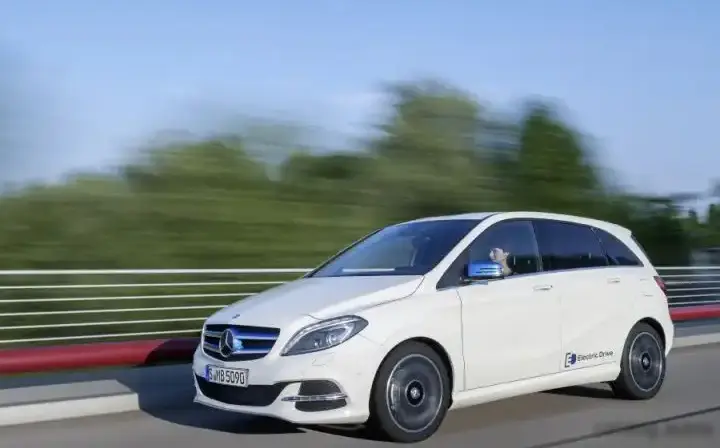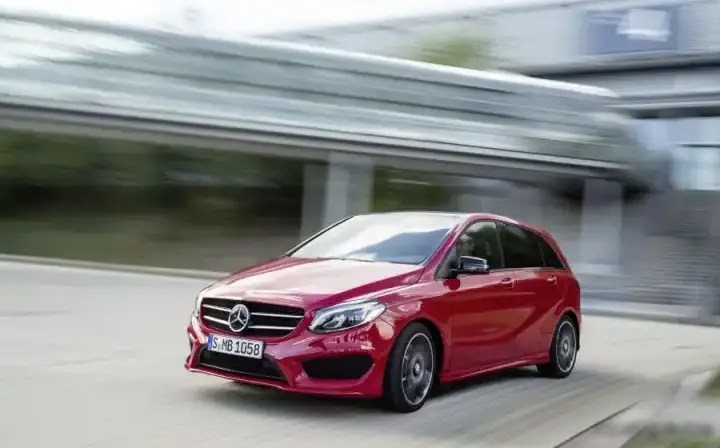
The Mercedes-Benz B 200 Natural Gas Drive (NGD), produced from 2014 to 2018 as part of the W246 facelift generation, represented a unique offering in the premium compact hatchback segment. This variant combined a turbocharged 1.6-liter gasoline engine with a dedicated natural gas (CNG) system, paired exclusively with a 7-speed dual-clutch transmission (DCT). Positioned as an environmentally conscious alternative within the B-Class lineup, it aimed to provide a balance between efficiency, reasonable performance, and the practicality expected of a Mercedes-Benz. The B 200 NGD was primarily marketed in European countries with established CNG infrastructure, offering a lower carbon footprint and potential fuel cost savings.
Technical Specifications
| Brand | Mercedes-Benz |
| Model | B-class |
| Generation | B-class (W246 facelift 2014) |
| Type (Engine) | B 200 (156 Hp) Natural Gas Drive DCT |
| Start of production | 2014 |
| End of production | 2018 |
| Powertrain Architecture | Internal Combustion engine |
| Body type | Hatchback |
| Seats | 5 |
| Doors | 5 |
| Fuel consumption (urban) | 5.6 l/100 km (42 US mpg, 50.4 UK mpg, 17.9 km/l) |
| Fuel consumption (extra urban) | 3.4 l/100 km (69.2 US mpg, 83.1 UK mpg, 29.4 km/l) |
| Fuel consumption (combined CNG) | 4.3-4.2 kg/100 km |
| CO2 emissions | 117-115 g/km |
| Fuel Type | Petrol / CNG |
| Acceleration 0 – 100 km/h | 9.1 sec |
| Acceleration 0 – 62 mph | 9.1 sec |
| Acceleration 0 – 60 mph | 8.6 sec |
| Maximum speed | 200 km/h (124.27 mph) |
| Emission standard | Euro 6 |
| Weight-to-power ratio | 9.8 kg/Hp, 101.6 Hp/tonne |
| Weight-to-torque ratio | 5.7 kg/Nm, 175.9 Nm/tonne |
| Power | 156 Hp @ 5000 rpm |
| Power per litre | 78.4 Hp/l |
| Torque | 270 Nm @ 1250-4000 rpm (199.14 lb.-ft. @ 1250-4000 rpm) |
| Engine layout | Front, Transverse |
| Engine Model/Code | M 270.920 |
| Engine displacement | 1991 cm3 (121.5 cu. in.) |
| Number of cylinders | 4 |
| Engine configuration | Inline |
| Compression ratio | 11:1 |
| Number of valves per cylinder | 4 |
| Fuel injection system | Direct injection |
| Engine aspiration | Turbocharger, Intercooler |
| Valvetrain | DOHC |
| Engine oil capacity | 5.8 l (6.13 US qt | 5.1 UK qt) |
| Coolant | 7 l (7.4 US qt | 6.16 UK qt) |
| Kerb Weight | 1535 kg (3384.1 lbs.) |
| Max. weight | 2050 kg (4519.48 lbs.) |
| Max load | 515 kg (1135.38 lbs.) |
| Trunk (boot) space – minimum | 501 l (17.69 cu. ft.) |
| Trunk (boot) space – maximum | 1456 l (51.42 cu. ft.) |
| CNG cylinder capacity | 12 kg |
| Length | 4359 mm (171.61 in.) |
| Width | 1812 mm (71.34 in.) |
| Height | 1590 mm (62.6 in.) |
| Wheelbase | 2699 mm (106.26 in.) |
| Front track | 1536 mm (60.47 in.) |
| Rear (Back) track | 1542 mm (60.71 in.) |
| Minimum turning circle | 11 m (36.09 ft.) |
| Drivetrain Architecture | The Internal combustion engine (ICE) drives the front wheels of the vehicle. |
| Drive wheel | Front wheel drive |
| Number of gears and type of gearbox | 7 gears, automatic transmission G-DCT |
| Front suspension | Independent, type McPherson with coil spring and anti-roll bar |
| Rear suspension | Independent coil spring |
| Front brakes | Ventilated discs |
| Rear brakes | Disc |
| Assisting systems | ABS (Anti-lock braking system) |
| Steering type | Steering rack and pinion |
| Tires size | 205/55 R 16 |
| Wheel rims size | 16 |
INTRODUCTION
The W246 B-Class, launched in 2011 and facelifted in 2014, was Mercedes-Benz’s entry into the compact multi-purpose vehicle (MPV) segment. The B 200 Natural Gas Drive, introduced with the facelift, distinguished itself through its bi-fuel capability, allowing it to run on either gasoline or compressed natural gas. This model year (2014-2018) represented a significant push towards alternative fuel vehicles by Mercedes-Benz, catering to environmentally conscious buyers in regions where CNG infrastructure was readily available. The B 200 NGD occupied a middle ground in the B-Class range, offering a compromise between the more affordable B 180 and the higher-performance B 250.
Powertrain & Engine Architecture
At the heart of the B 200 NGD lies the M 270.920 1.6-liter inline-four cylinder engine. This engine is a member of Mercedes-Benz’s modular engine family, known for its compact dimensions and efficiency. It features direct fuel injection, a turbocharger with an intercooler, and a dual overhead camshaft (DOHC) valvetrain with four valves per cylinder. The engine is specifically adapted to run on CNG, with a dedicated fuel injection system for the natural gas. When CNG is depleted, the engine automatically switches to gasoline. The 7-speed G-DCT (Getriebe Doppelkupplungsgetriebe) dual-clutch transmission provides quick and smooth gear changes, contributing to both performance and fuel economy. This transmission is known for its efficiency and responsiveness, offering a more engaging driving experience than a traditional automatic.
Driving Characteristics
The B 200 NGD delivers a respectable, though not particularly sporty, driving experience. With 156 horsepower and 270 Nm (199 lb-ft) of torque, acceleration from 0 to 62 mph takes around 9.1 seconds. The DCT transmission helps to maximize the available power, providing quick shifts and a relatively flat torque curve. When running on CNG, the engine’s power output is slightly reduced compared to gasoline operation, but the difference is generally not noticeable during everyday driving. The gear ratios are tuned for efficiency and comfort, prioritizing smooth cruising over aggressive acceleration. Compared to the B 250 with its more powerful engine, the B 200 NGD feels less eager to accelerate, but it offers a more relaxed and fuel-efficient driving experience. The handling is typical of a front-wheel-drive hatchback – safe and predictable, but not particularly engaging.
Equipment & Trim Levels
The B 200 NGD typically came equipped with a generous amount of standard features, reflecting its position as a premium compact vehicle. These included automatic climate control, a multi-function steering wheel, power windows and mirrors, and a basic audio system. Higher trim levels offered options such as leather upholstery, a larger infotainment screen with navigation, parking sensors, and a panoramic sunroof. The interior design was modern and functional, with a focus on practicality and comfort. The rear seats could be folded down to increase cargo space, making the B-Class a versatile vehicle for families or those needing to transport larger items.
Chassis & Braking
The B-Class W246 utilizes an independent McPherson strut suspension at the front and an independent multi-link suspension at the rear, providing a comfortable ride quality. Stabilizer bars are fitted to both axles to reduce body roll during cornering. The braking system consists of ventilated discs at the front and solid discs at the rear, with ABS (Anti-lock Braking System) as standard. The suspension is tuned for comfort rather than outright sportiness, prioritizing a smooth and controlled ride over sharp handling. The steering is precise and responsive, providing good feedback to the driver.
Market Reception & Comparison
The B 200 NGD was generally well-received by critics, who praised its fuel efficiency and environmental credentials. However, some reviewers noted that the CNG infrastructure was limited in many regions, making it less practical for some buyers. Compared to the gasoline-powered B 200, the NGD offered similar performance but with lower running costs, particularly in countries where CNG was significantly cheaper than gasoline. The B 250, with its more powerful engine, offered a more engaging driving experience but at the expense of fuel economy. The B 180 provided a more affordable entry point into the B-Class range, but with less power and fewer features.
Legacy
The Mercedes-Benz B 200 Natural Gas Drive represents an interesting chapter in the brand’s exploration of alternative fuel technologies. While CNG never gained widespread popularity in many markets, the B 200 NGD demonstrated Mercedes-Benz’s commitment to reducing emissions and offering environmentally friendly vehicles. On the used car market, these models are relatively rare and tend to hold their value well, particularly among buyers who prioritize fuel efficiency and environmental responsibility. The M 270 engine, in general, has proven to be a reliable unit, although regular maintenance is essential to ensure long-term durability. The G-DCT transmission is also generally reliable, but it’s important to check for smooth operation and proper fluid levels when considering a used example.