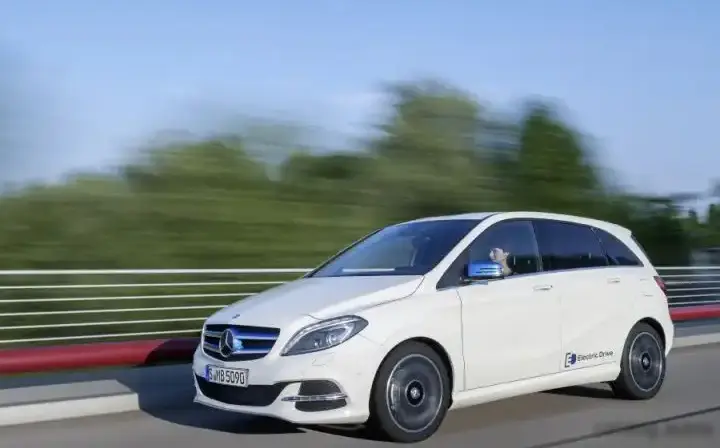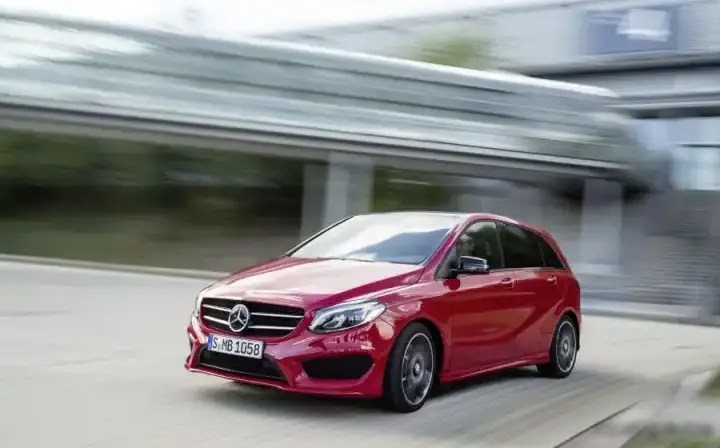
The Mercedes-Benz B-Class (W246 facelift) B 200 CDI, produced from 2014 to 2018, represented a significant iteration of Mercedes-Benz’s compact multi-purpose vehicle (MPV). Positioned as a mid-range offering within the W246 facelift range, it aimed to blend practicality with efficiency and a degree of luxury. This variant featured a 2.1-liter turbocharged diesel engine paired with a 7-speed dual-clutch transmission (DCT), offering a balance between performance and fuel economy. The W246 B-Class, and specifically the B 200 CDI, was primarily marketed in Europe as a premium alternative to more mainstream compact hatchbacks and MPVs, appealing to buyers seeking a refined and versatile vehicle.
Technical Specifications
| Brand | Mercedes-Benz |
| Model | B-Class |
| Generation | B-Class (W246 facelift 2014) |
| Type (Engine) | B 200 CDI (136 Hp) DCT |
| Start of production | 2014 |
| End of production | 2018 |
| Powertrain Architecture | Internal Combustion engine |
| Body type | Hatchback |
| Seats | 5 |
| Doors | 5 |
| Fuel consumption (urban) | 4.9-4.7 l/100 km (48 – 50 US mpg, 57.6 – 60.1 UK mpg, 20.4 – 21.3 km/l) |
| Fuel consumption (extra urban) | 3.8-3.5 l/100 km (61.9 – 67.2 US mpg, 74.3 – 80.7 UK mpg, 26.3 – 28.6 km/l) |
| Fuel consumption (combined) | 4.2-4.0 l/100 km (56 – 58.8 US mpg, 67.3 – 70.6 UK mpg, 23.8 – 25 km/l) |
| CO2 emissions | 111-104 g/km |
| Fuel Type | Diesel |
| Acceleration 0 – 100 km/h | 9.8 sec |
| Acceleration 0 – 62 mph | 9.8 sec |
| Acceleration 0 – 60 mph | 9.3 sec |
| Maximum speed | 210 km/h (130.49 mph) |
| Emission standard | Euro 6 |
| Weight-to-power ratio | 11.1 kg/Hp, 90.4 Hp/tonne |
| Weight-to-torque ratio | 5 kg/Nm, 199.3 Nm/tonne |
| Power | 136 Hp @ 3200-4000 rpm |
| Power per litre | 63.5 Hp/l |
| Torque | 300 Nm @ 1400-3000 rpm (221.27 lb.-ft. @ 1400-3000 rpm) |
| Engine layout | Front, Transverse |
| Engine Model/Code | OM 651.930 |
| Engine displacement | 2143 cm3 (130.77 cu. in.) |
| Number of cylinders | 4 |
| Engine configuration | Inline |
| Compression ratio | 16.2:1 |
| Fuel injection system | Diesel Commonrail |
| Engine aspiration | Turbocharger, Intercooler |
| Engine oil capacity | 7 l (7.4 US qt | 6.16 UK qt) |
| Coolant capacity | 9.5 l (10.04 US qt | 8.36 UK qt) |
| Kerb Weight | 1505 kg (3317.96 lbs.) |
| Max. weight | 2025 kg (4464.36 lbs.) |
| Max load | 520 kg (1146.4 lbs.) |
| Trunk (boot) space – minimum | 488 l (17.23 cu. ft.) |
| Trunk (boot) space – maximum | 1547 l (54.63 cu. ft.) |
| Fuel tank capacity | 50 l (13.21 US gal | 11 UK gal) |
| Length | 4393 mm (172.95 in.) |
| Width | 1786 mm (70.31 in.) |
| Height | 1557 mm (61.3 in.) |
| Wheelbase | 2699 mm (106.26 in.) |
| Front track | 1552 mm (61.1 in.) |
| Rear track | 1549 mm (60.98 in.) |
| Ride height (ground clearance) | 98 mm (3.86 in.) |
| Minimum turning circle | 11 m (36.09 ft.) |
| Drivetrain Architecture | Front wheel drive |
| Number of gears and type of gearbox | 7 gears, automatic transmission G-DCT |
| Front suspension | Independent, type McPherson with coil spring and anti-roll bar |
| Rear suspension | Independent coil spring |
| Front brakes | Ventilated discs |
| Rear brakes | Disc |
Powertrain & Engine Architecture
The B 200 CDI utilized the OM651.930 2.1-liter inline-four cylinder diesel engine. This engine was a mainstay in many Mercedes-Benz models of the period, known for its robust construction and relatively refined operation for a diesel. It featured a common rail direct injection system, delivering fuel at extremely high pressures for optimized combustion. A turbocharger with an intercooler was employed to boost power and torque, providing 136 horsepower at 3200-4000 rpm and a substantial 300 Nm (221 lb-ft) of torque between 1400-3000 rpm. The engine also incorporated a diesel particulate filter (DPF) to meet stringent Euro 6 emissions standards. The engine was transversely mounted in the front of the vehicle.
The transmission was a key component of this variant – a 7-speed dual-clutch transmission (DCT), marketed by Mercedes-Benz as 7G-DCT. This transmission offered quicker and smoother gear changes compared to a traditional torque converter automatic, contributing to both performance and fuel efficiency. The DCT operates using two separate clutches, one for odd-numbered gears and one for even-numbered gears, allowing for pre-selection of the next gear and seamless shifts.
Driving Characteristics
The B 200 CDI with the 7G-DCT offered a comfortable and refined driving experience. Acceleration from 0-100 km/h (0-62 mph) took approximately 9.8 seconds, which was adequate for everyday driving but not particularly sporty. The DCT transmission contributed to brisk acceleration, especially during overtaking maneuvers, thanks to the readily available 300 Nm of torque. The gear ratios were tuned for fuel efficiency, with higher gears engaged at lower speeds during cruising. Compared to the more powerful B 250 variants, the B 200 CDI prioritized fuel economy and lower running costs over outright performance. Manual transmission versions of the B 200 CDI, while offering more driver engagement, typically didn’t significantly improve acceleration figures.
Equipment & Trim Levels
The B 200 CDI typically came equipped with a respectable level of standard features. These included automatic climate control, a multi-function steering wheel, power windows and mirrors, and an audio system with Bluetooth connectivity. Interior upholstery was generally a fabric material, although leather options were available as upgrades. Optional extras included a panoramic sunroof, navigation system, parking sensors, and various driver assistance systems like collision prevention assist. Trim levels varied slightly depending on the market, but generally offered packages that bundled popular options together.
Chassis & Braking
The W246 B-Class featured an independent suspension setup at all four wheels. The front suspension utilized McPherson struts with coil springs and an anti-roll bar, while the rear suspension employed a multi-link setup with coil springs. This configuration provided a good balance between ride comfort and handling. Brakes consisted of ventilated discs at the front and solid discs at the rear. Anti-lock Braking System (ABS) was standard, enhancing safety during emergency braking situations. The relatively modest power output of the B 200 CDI meant that the braking system was generally more than adequate for the vehicle’s weight and performance.
Market Reception & Comparison
The B 200 CDI was generally well-received by automotive critics as a practical and efficient MPV. Its fuel economy was a major selling point, consistently achieving combined figures in the range of 4.0-4.2 l/100 km (56-58.8 US mpg). Compared to the petrol-powered B 200, the B 200 CDI offered significantly better fuel economy and a more relaxed driving experience, particularly on long journeys. However, some critics noted that the diesel engine was slightly noisier than the petrol counterpart. Compared to other compact MPVs like the Volkswagen Touran or Citroën C4 Picasso, the B-Class offered a more premium interior and a more refined driving experience, but at a higher price point.
Legacy
The OM651 engine, used in the B 200 CDI, has proven to be a durable and reliable unit when properly maintained. The 7G-DCT transmission, while generally reliable, can be susceptible to issues if not serviced according to Mercedes-Benz’s recommendations. In the used car market, the B 200 CDI remains a popular choice for buyers seeking a practical, fuel-efficient, and relatively affordable MPV. Its reputation for reliability and low running costs contributes to its continued demand. However, potential buyers should be aware of the importance of maintaining the DPF and ensuring regular servicing of the DCT transmission to avoid costly repairs.