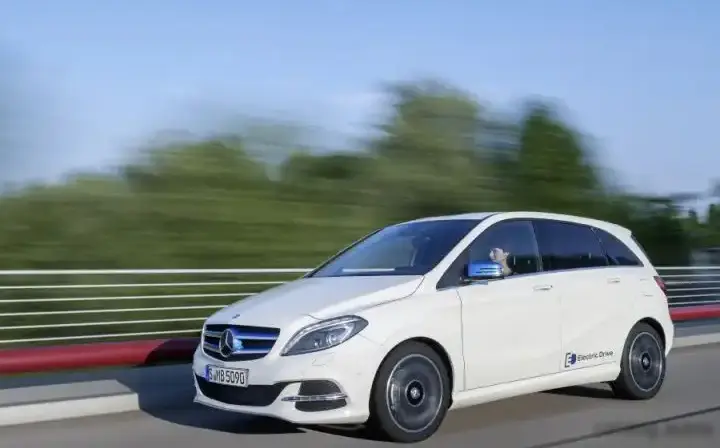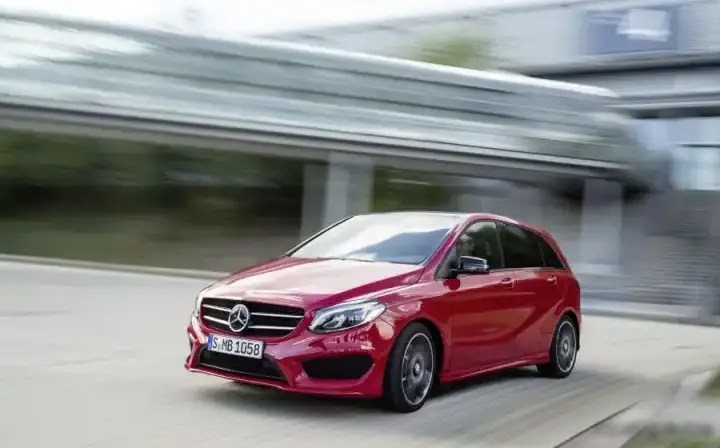
The Mercedes-Benz B-Class (W246 facelift) B 250 4MATIC DCT, produced from 2014 to 2018, represents a significant iteration of Mercedes-Benz’s compact multi-purpose vehicle (MPV). Positioned as a near-premium offering within the compact class, the B 250 4MATIC aimed to blend practicality with a degree of performance and all-weather capability. This variant, equipped with a 2.0-liter turbocharged engine and a dual-clutch transmission (DCT) paired with all-wheel drive, served as a step up from the base models, appealing to buyers seeking a more engaging driving experience without sacrificing the B-Class’s inherent versatility. It was part of the W246 facelift, which brought styling updates and technological improvements to the second generation B-Class.
Technical Specifications
| Brand | Mercedes-Benz |
| Model | B-class |
| Generation | B-class (W246 facelift 2014) |
| Type (Engine) | B 250 (211 Hp) 4MATIC DCT |
| Start of production | 2014 |
| End of production | 2018 |
| Powertrain Architecture | Internal Combustion engine |
| Body type | Hatchback |
| Seats | 5 |
| Doors | 5 |
| Fuel consumption (urban) | 8.4 l/100 km (28 US mpg, 33.6 UK mpg, 11.9 km/l) |
| Fuel consumption (extra urban) | 5.7-5.5 l/100 km (41.3 – 42.8 US mpg, 49.6 – 51.4 UK mpg, 17.5 – 18.2 km/l) |
| Fuel consumption (combined) | 6.7-6.6 l/100 km (35.1 – 35.6 US mpg, 42.2 – 42.8 UK mpg, 14.9 – 15.2 km/l) |
| CO2 emissions | 156-154 g/km |
| Fuel Type | Petrol (Gasoline) |
| Acceleration 0 – 100 km/h | 6.7 sec |
| Acceleration 0 – 62 mph | 6.7 sec |
| Acceleration 0 – 60 mph | 6.4 sec |
| Maximum speed | 235 km/h (146.02 mph) |
| Emission standard | Euro 6 |
| Weight-to-power ratio | 7.1 kg/Hp, 140.2 Hp/tonne |
| Weight-to-torque ratio | 4.3 kg/Nm, 232.6 Nm/tonne |
| Power | 211 Hp @ 5500 rpm |
| Torque | 350 Nm @ 1200-4000 rpm (258.15 lb.-ft. @ 1200-4000 rpm) |
| Engine layout | Front, Transverse |
| Engine Model/Code | M 270.920 |
| Engine displacement | 1991 cm3 (121.5 cu. in.) |
| Number of cylinders | 4 |
| Engine configuration | Inline |
| Compression ratio | 9.8:1 |
| Fuel injection system | Direct injection |
| Engine aspiration | Turbocharger, Intercooler |
| Engine oil capacity | 5.6 l (5.92 US qt | 4.93 UK qt) |
| Coolant | 7.8 l (8.24 US qt | 6.86 UK qt) |
| Kerb Weight | 1505 kg (3317.96 lbs.) |
| Max. weight | 2030 kg (4475.38 lbs.) |
| Max load | 525 kg (1157.43 lbs.) |
| Trunk (boot) space – minimum | 488 l (17.23 cu. ft.) |
| Trunk (boot) space – maximum | 1547 l (54.63 cu. ft.) |
| Fuel tank capacity | 56 l (14.79 US gal | 12.32 UK gal) |
| Length | 4393 mm (172.95 in.) |
| Width | 1786 mm (70.31 in.) |
| Height | 1557 mm (61.3 in.) |
| Wheelbase | 2699 mm (106.26 in.) |
| Front track | 1552 mm (61.1 in.) |
| Rear (Back) track | 1549 mm (60.98 in.) |
| Ride height (ground clearance) | 98 mm (3.86 in.) |
| Minimum turning circle | 11 m (36.09 ft.) |
| Approach angle | 14.2° |
| Departure angle | 19.9° |
| Drive wheel | All wheel drive (4×4) |
| Number of gears and type of gearbox | 7 gears, automatic transmission G-DCT |
| Front suspension | Independent, type McPherson with coil spring and anti-roll bar |
| Rear suspension | Independent coil spring |
| Front brakes | Ventilated discs |
| Rear brakes | Disc |
| Assisting systems | ABS (Anti-lock braking system) |
| Steering type | Steering rack and pinion |
| Tires size | 225/45 R17 |
| Wheel rims size | 17 |
INTRODUCTION
The W246 facelift B 250 4MATIC DCT, launched in 2014, built upon the foundation laid by the second-generation B-Class (W246) introduced in 2011. Mercedes-Benz aimed to broaden the B-Class’s appeal by offering a more dynamic and technologically advanced variant. The “facelift” brought revised styling, including a new front fascia, updated interior trim, and enhanced safety features. The B 250 4MATIC DCT occupied a mid-range position in the B-Class lineup, slotting above the lower-powered gasoline and diesel options, and below any potential AMG-tuned variants. It was primarily marketed in Europe and other international markets, with limited availability in the United States.
Powertrain & Engine Architecture
At the heart of the B 250 4MATIC lies the M270.920 2.0-liter inline-four cylinder engine. This engine is a key member of Mercedes-Benz’s modular engine family, known for its efficiency and performance. It utilizes direct fuel injection, a single turbocharger with an intercooler, and variable valve timing to deliver a balance of power and fuel economy. The engine produces 211 horsepower at 5500 rpm and 350 Nm (258 lb-ft) of torque between 1200 and 4000 rpm. The engine’s aluminum block and head contribute to its relatively lightweight construction.
The “DCT” in the name refers to the 7G-DCT (7-speed dual-clutch transmission). This transmission offers quicker and smoother gear changes compared to a traditional automatic, enhancing the driving experience. The 4MATIC all-wheel-drive system is a fully automatic, variable torque distribution system. It continuously monitors wheel speeds and adjusts the torque split between the front and rear axles to optimize traction and stability, particularly in adverse weather conditions.
Driving Characteristics
The B 250 4MATIC DCT delivers a noticeably more spirited driving experience than the lower-powered B-Class variants. The 2.0-liter turbo engine provides ample power for everyday driving and confident overtaking maneuvers. The 0-60 mph acceleration time of around 6.4 seconds is respectable for a compact MPV. The 7G-DCT transmission contributes to responsive acceleration and seamless gear changes. The 4MATIC system provides enhanced grip and stability, particularly on slippery surfaces. However, the B 250 isn’t a sports car; its focus remains on comfort and practicality. The suspension is tuned for ride comfort, resulting in a slightly softer and less engaging handling experience compared to more performance-oriented vehicles.
Equipment & Trim Levels
The B 250 4MATIC DCT typically came well-equipped as standard. Common features included automatic climate control, a multi-function steering wheel, power windows and mirrors, and a high-quality audio system. The interior typically featured cloth or Artico (MB-Tex) upholstery, with options for leather upgrades. Optional extras included a panoramic sunroof, navigation system, parking assist, and various driver assistance systems such as collision prevention assist and lane keeping assist. Trim levels varied by market, but generally offered packages that bundled popular options together.
Chassis & Braking
The B-Class W246 utilizes a McPherson strut front suspension and an independent multi-link rear suspension. This setup provides a good balance of ride comfort and handling. The 4MATIC models generally featured slightly stiffer springs and dampers compared to the front-wheel-drive variants to compensate for the added weight and improve handling. Braking duties are handled by ventilated discs at the front and solid discs at the rear. ABS (Anti-lock Braking System) and Electronic Stability Program (ESP) are standard safety features.
Market Reception & Comparison
The B 250 4MATIC DCT was generally well-received by automotive critics. It was praised for its refined engine, smooth transmission, and all-weather capability. Compared to the base B-Class models, the B 250 offered a significant performance upgrade. Compared to the B 200 CDI (diesel) variant, the B 250 provided more power and a more responsive driving experience, but at the cost of slightly lower fuel economy. The B 250 4MATIC DCT competed with other premium compact MPVs such as the BMW 2 Series Active Tourer and the Audi A3 Sportback.
Legacy
The M270 engine family, including the one found in the B 250 4MATIC DCT, has proven to be relatively reliable, although some owners have reported issues with the timing chain and oil leaks over the long term. The 7G-DCT transmission is generally robust, but requires regular maintenance, including fluid changes, to ensure optimal performance. Today, the W246 B-Class, including the B 250 4MATIC DCT, can be found on the used car market at relatively affordable prices. It remains a practical and versatile option for buyers seeking a compact MPV with a degree of performance and all-wheel-drive capability.