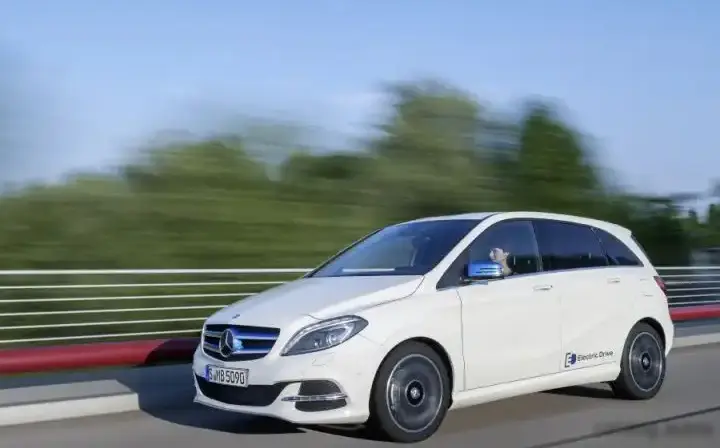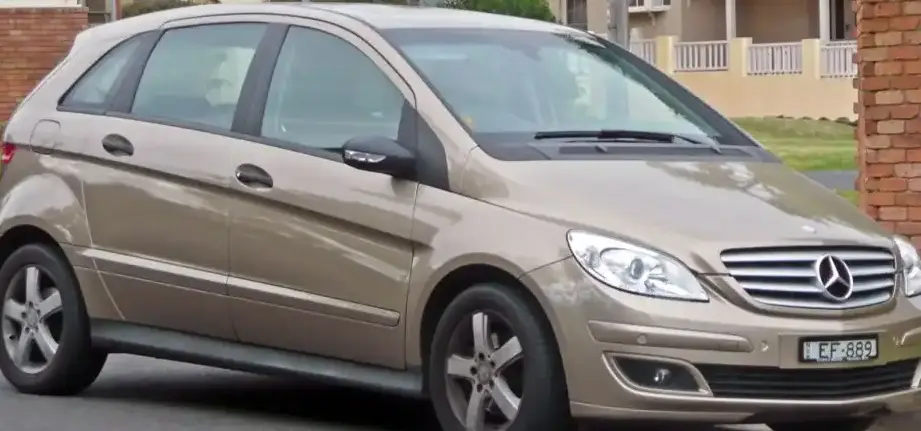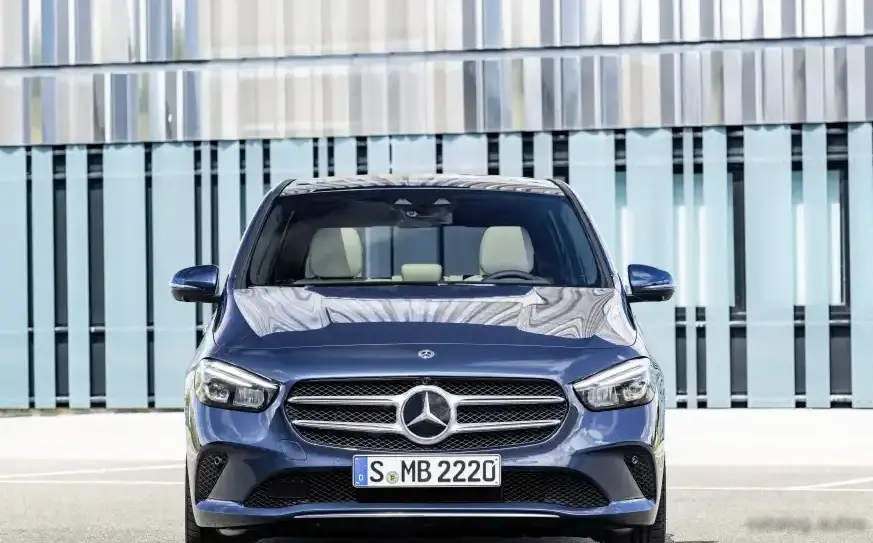
The Mercedes-Benz B-Class (W247) B 160, produced from 2019 to 2022, represents the entry point into the fourth generation of Mercedes-Benz’s compact multi-purpose vehicle (MPV). Positioned as a practical and relatively affordable option within the W247 range, the B 160 aimed to provide comfortable transportation for families and individuals prioritizing fuel efficiency and ease of use. It served as a key model in the European market, where compact MPVs remained popular, offering a blend of hatchback practicality and increased interior space. This variant was typically equipped with a 7-speed dual-clutch transmission, offering a balance between fuel economy and driving convenience.
Technical Specifications
| Brand | Mercedes-Benz |
| Model | B-Class |
| Generation | B-Class (W247) |
| Type (Engine) | B 160 (109 Hp) |
| Start of production | 2019 |
| End of production | 2022 |
| Powertrain Architecture | Internal Combustion engine |
| Body type | Hatchback |
| Seats | 5 |
| Doors | 5 |
| Fuel consumption at Low speed (WLTP) | 6 l/100 km (39.2 US mpg, 47.1 UK mpg, 16.7 km/l) |
| Fuel consumption at very high speed (WLTP) | 6.9 l/100 km (34.1 US mpg, 40.9 UK mpg, 14.5 km/l) |
| CO2 emissions (WLTP) | 165-156 g/km |
| Fuel consumption (economy) – urban | 7.5-7.6 l/100 km (31.4 – 30.9 US mpg, 37.7 – 37.2 UK mpg, 13.3 – 13.2 km/l) |
| Fuel consumption (economy) – extra urban | 4.7-4.9 l/100 km (50 – 48 US mpg, 60.1 – 57.6 UK mpg, 21.3 – 20.4 km/l) |
| Fuel consumption (economy) – combined | 5.7-5.9 l/100 km (41.3 – 39.9 US mpg, 49.6 – 47.9 UK mpg, 17.5 – 16.9 km/l) |
| CO2 emissions | 131-136 g/km |
| Fuel Type | Petrol (Gasoline) |
| Acceleration 0 – 100 km/h | 11.3 sec |
| Acceleration 0 – 62 mph | 11.3 sec |
| Acceleration 0 – 60 mph | 10.7 sec |
| Maximum speed | 198 km/h (123.03 mph) |
| Emission standard | Euro 6d – TEMP – EVAP – ISC |
| Weight-to-power ratio | 12 kg/Hp, 83.2 Hp/tonne |
| Weight-to-torque ratio | 7.3 kg/Nm, 137.4 Nm/tonne |
| Power | 109 Hp |
| Power per litre | 81.8 Hp/l |
| Torque | 180 Nm @ 1375-3500 rpm (132.76 lb.-ft. @ 1375-3500 rpm) |
| Engine layout | Front, Transverse |
| Engine Model/Code | M 282.914 |
| Engine displacement | 1332 cm3 (81.28 cu. in.) |
| Number of cylinders | 4 |
| Engine configuration | Inline |
| Number of valves per cylinder | 4 |
| Fuel injection system | Direct injection |
| Engine aspiration | Turbocharger, Intercooler |
| Engine oil capacity | 5.1 l (5.39 US qt | 4.49 UK qt) |
| Coolant | 6.8 l (7.19 US qt | 5.98 UK qt) |
| Kerb Weight | 1310 kg (2888.06 lbs.) |
| Max. weight | 1935 kg (4265.94 lbs.) |
| Max load | 625 kg (1377.89 lbs.) |
| Trunk (boot) space – minimum | 455 l (16.07 cu. ft.) |
| Trunk (boot) space – maximum | 1540 l (54.38 cu. ft.) |
| Fuel tank capacity | 43 l (11.36 US gal | 9.46 UK gal) |
| Permitted trailer load with brakes (12%) | 1300 kg (2866.01 lbs.) |
| Permitted trailer load without brakes | 690 kg (1521.19 lbs.) |
| Length | 4419 mm (173.98 in.) |
| Width | 1796 mm (70.71 in.) |
| Height | 1562 mm (61.5 in.) |
| Wheelbase | 2729 mm (107.44 in.) |
| Front track | 1567 mm (61.69 in.) |
| Front overhang | 914 mm (35.98 in.) |
| Rear overhang | 776 mm (30.55 in.) |
| Ride height (ground clearance) | 104 mm (4.09 in.) |
| Approach angle | 13.4° |
| Departure angle | 17.2° |
| Ramp-over (brakeover) angle | 9.4° |
| Drivetrain Architecture | The Internal combustion engine (ICE) drives the front wheels of the vehicle. |
| Drive wheel | Front wheel drive |
| Number of gears and type of gearbox | 7 gears, dual-clutch transmission |
| Front brakes | Ventilated discs |
| Rear brakes | Disc |
| Assisting systems | ABS (Anti-lock braking system) |
| Steering type | Steering rack and pinion |
| Power steering | Electric Steering |
INTRODUCTION
The W247 B-Class, launched in 2019, represented a significant step forward in terms of technology and interior refinement for Mercedes-Benz’s compact MPV. The B 160 variant, powered by a 1.3-liter turbocharged engine, served as the entry-level option, prioritizing fuel economy and affordability. It was designed to appeal to buyers seeking a practical, comfortable, and technologically advanced vehicle for daily use. The B 160 occupied the lower end of the W247 lineup, sitting below the B 200 and B 250 models which offered more powerful engine options. It was a direct successor to the W246 B-Class, continuing the tradition of a versatile and space-efficient vehicle.
Powertrain & Engine Architecture
The B 160 is equipped with the M 282.914 engine, a 1.332-liter inline-four cylinder gasoline engine. This engine utilizes direct fuel injection and is coupled with a single turbocharger and intercooler to enhance power and efficiency. The engine’s design incorporates features aimed at reducing friction and optimizing combustion. The engine produces 109 horsepower and 180 Nm (132.76 lb.-ft.) of torque between 1375 and 3500 rpm. The engine is transversely mounted at the front of the vehicle. The B 160 exclusively came with a 7-speed dual-clutch transmission (7G-DCT), which provides quick and smooth gear changes. This transmission is known for its efficiency and responsiveness, contributing to the vehicle’s overall fuel economy.
Driving Characteristics
The B 160’s driving experience is characterized by its comfort and ease of use. While not particularly sporty, the 109 hp engine and 7-speed dual-clutch transmission provide adequate performance for everyday driving situations. Acceleration from 0 to 100 km/h (0-62 mph) takes approximately 11.3 seconds, and the top speed is 198 km/h (123 mph). The dual-clutch transmission offers quick shifts, but can sometimes feel slightly hesitant at low speeds. Compared to the more powerful B 200 or B 250 models, the B 160 feels noticeably less responsive, particularly during overtaking maneuvers. However, its lighter weight and efficient engine contribute to better fuel economy.
Equipment & Trim Levels
The B 160 came standard with a respectable level of equipment, including automatic climate control, a touchscreen infotainment system with smartphone integration (Apple CarPlay and Android Auto), and a suite of safety features such as automatic emergency braking and lane keeping assist. Interior upholstery typically consisted of fabric seats, although leatherette options were available. Optional extras included a larger touchscreen display, a panoramic sunroof, and a premium sound system. The dashboard layout is modern and functional, with a focus on user-friendliness. Trim levels were relatively simple, with most options being added individually rather than through distinct packages.
Chassis & Braking
The W247 B-Class utilizes a MacPherson strut front suspension and a multi-link rear suspension, providing a comfortable and controlled ride. The B 160 is equipped with ventilated disc brakes at the front and solid disc brakes at the rear. Anti-lock braking system (ABS) is standard. The suspension is tuned for comfort, prioritizing ride quality over sporty handling. The steering is electrically assisted, providing light and precise control. The B 160’s relatively low weight contributes to its balanced handling characteristics.
Market Reception & Comparison
The B 160 was generally well-received by critics as a practical and affordable entry point into the W247 B-Class range. Its fuel economy was praised, and the comfortable ride and spacious interior were also noted as positives. However, some reviewers found the engine to be underpowered, particularly when fully loaded or driving on inclines. Compared to the B 200, the B 160 offered a significant price advantage but sacrificed performance. The B 160’s fuel economy figures of 5.7-5.9 l/100 km (41.3-39.9 US mpg) were competitive within its segment.
Legacy
The B 160, while not the most powerful or exciting variant of the W247 B-Class, has proven to be a reliable and practical option in the used car market. The 1.3-liter turbocharged engine, while not known for exceptional longevity, has generally demonstrated reasonable reliability when properly maintained. The 7G-DCT transmission is also generally considered to be durable. The B 160’s affordability and fuel efficiency continue to make it an attractive option for buyers seeking a compact MPV for everyday use. Its blend of practicality, comfort, and technology ensures its continued relevance in the used car market for years to come.