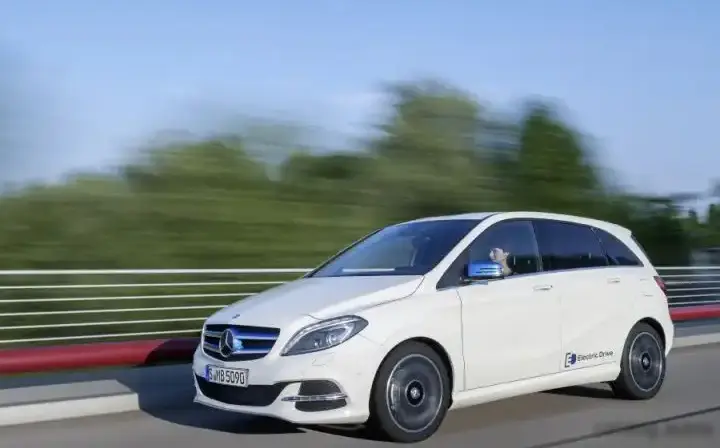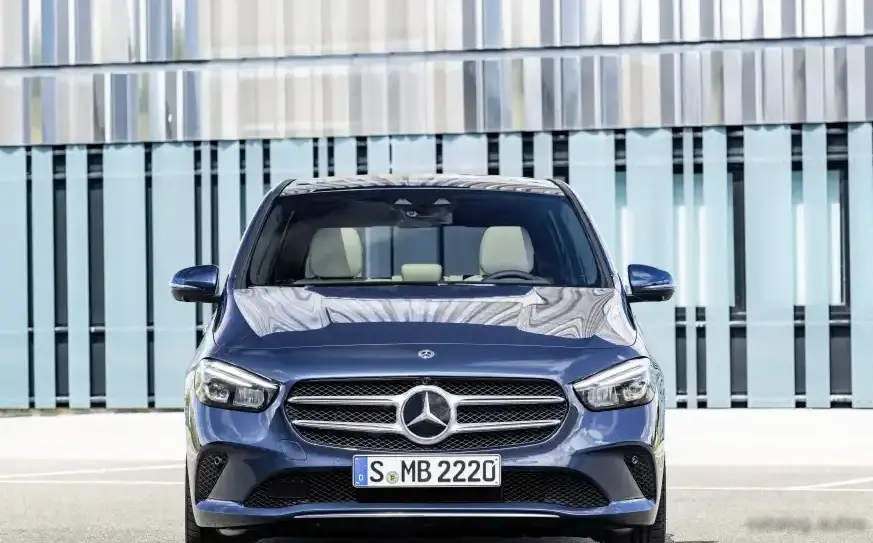
The Mercedes-Benz B-Class (W247) B 220, equipped with a 190 horsepower engine and a dual-clutch transmission (DCT), represents a significant iteration of Mercedes-Benz’s compact multi-purpose vehicle (MPV). Produced from April 2019 to October 2019, this variant occupied a mid-to-upper position within the W247 B-Class lineup, offering a balance of performance, efficiency, and practicality. It was designed to appeal to buyers seeking a more engaging driving experience than the lower-powered models, while remaining more accessible than the range-topping options. The W247 generation, launched in 2018, aimed to modernize the B-Class with updated technology, improved interior quality, and enhanced safety features, competing directly with vehicles like the BMW 2 Series Active Tourer and Audi Q2.
Technical Specifications
| Brand | Mercedes-Benz |
| Model | B-class |
| Generation | B-class (W247) |
| Type (Engine) | B 220 (190 Hp) DCT |
| Start of production | April, 2019 |
| End of production | October, 2019 |
| Powertrain Architecture | Internal Combustion engine |
| Body type | Hatchback |
| Seats | 5 |
| Doors | 5 |
| Fuel consumption (urban) | 8.1-8.2 l/100 km (29 – 28.7 US mpg) |
| Fuel consumption (extra urban) | 5.1-5.2 l/100 km (46.1 – 45.2 US mpg) |
| Fuel consumption (combined) | 6.2-6.3 l/100 km (37.9 – 37.3 US mpg) |
| CO2 emissions | 141-145 g/km |
| Fuel Type | Petrol (Gasoline) |
| Acceleration 0 – 100 km/h | 7.1 sec |
| Acceleration 0 – 62 mph | 7.1 sec |
| Acceleration 0 – 60 mph | 6.7 sec |
| Maximum speed | 239 km/h (148.51 mph) |
| Emission standard | Euro 6d – TEMP – EVAP – ISC |
| Weight-to-power ratio | 7.4 kg/Hp, 134.3 Hp/tonne |
| Weight-to-torque ratio | 4.7 kg/Nm, 212 Nm/tonne |
| Power | 190 Hp |
| Power per litre | 95.4 Hp/l |
| Torque | 300 Nm @ 1600-4000 rpm (221.27 lb.-ft. @ 1600-4000 rpm) |
| Engine layout | Front, Transverse |
| Engine Model/Code | M 260.920 |
| Engine displacement | 1991 cm3 (121.5 cu. in.) |
| Number of cylinders | 4 |
| Engine configuration | Inline |
| Number of valves per cylinder | 4 |
| Fuel injection system | Direct injection |
| Engine aspiration | Turbocharger, Intercooler |
| Engine oil capacity | 5.5 l (5.81 US qt | 4.84 UK qt) |
| Coolant | 10 l (10.57 US qt | 8.8 UK qt) |
| Kerb Weight | 1415 kg (3119.54 lbs.) |
| Max. weight | 2030 kg (4475.38 lbs.) |
| Max load | 615 kg (1355.84 lbs.) |
| Trunk (boot) space – minimum | 455 l (16.07 cu. ft.) |
| Trunk (boot) space – maximum | 1540 l (54.38 cu. ft.) |
| Fuel tank capacity | 43 l (11.36 US gal | 9.46 UK gal) |
| Permitted trailer load with brakes (12%) | 1400 kg (3086.47 lbs.) |
| Permitted trailer load without brakes | 745 kg (1642.44 lbs.) |
| Length | 4419 mm (173.98 in.) |
| Width | 1796 mm (70.71 in.) |
| Height | 1562 mm (61.5 in.) |
| Wheelbase | 2729 mm (107.44 in.) |
| Front track | 1567 mm (61.69 in.) |
| Front overhang | 914 mm (35.98 in.) |
| Rear overhang | 776 mm (30.55 in.) |
| Ride height (ground clearance) | 104 mm (4.09 in.) |
| Approach angle | 13.4° |
| Departure angle | 17.2° |
| Ramp-over (brakeover) angle | 9.4° |
| Drivetrain Architecture | The Internal combustion engine (ICE) drives the front wheels of the vehicle. |
| Drive wheel | Front wheel drive |
| Number of gears and type of gearbox | 7 gears, automatic transmission G-DCT |
| Front brakes | Ventilated discs |
| Rear brakes | Disc |
Powertrain & Engine Architecture
The B 220 utilizes Mercedes-Benz’s M 260.920 engine, a 1.991-liter inline-four cylinder gasoline engine. This engine is part of Mercedes-Benz’s modular engine family, designed for efficiency and scalability. It features direct fuel injection, a single turbocharger with an intercooler, and four valves per cylinder. The turbocharger provides a significant boost in power and torque, allowing the engine to deliver 190 horsepower and 300 Nm (221 lb-ft) of torque between 1600 and 4000 rpm. The engine is paired with a 7-speed dual-clutch transmission (7G-DCT), known for its quick and smooth gear changes. This transmission contributes to both performance and fuel efficiency. The 7G-DCT allows for both automatic operation and manual gear selection via steering wheel-mounted paddle shifters.
Driving Characteristics
The B 220’s 190 hp and 300 Nm of torque provide brisk acceleration, with a 0-60 mph time of approximately 6.7 seconds. The DCT transmission ensures responsive shifts, making overtaking maneuvers and highway merging relatively effortless. Compared to the lower-powered B 180 and B 200 models, the B 220 offers a noticeably more engaging driving experience. While not a sports car, it provides ample power for everyday driving and longer journeys. The gear ratios are tuned for a balance between acceleration and fuel economy, with taller gears for cruising and shorter gears for quicker response. The front-wheel-drive configuration provides good traction in most conditions, although it can exhibit some torque steer under hard acceleration.
Equipment & Trim Levels
The B 220 typically came standard with features such as automatic climate control, a touchscreen infotainment system with Apple CarPlay and Android Auto compatibility, and a suite of safety features including automatic emergency braking, lane keeping assist, and adaptive cruise control. Interior upholstery was generally a combination of fabric and synthetic leather, with options for full leather upgrades. Available optional extras included a panoramic sunroof, a premium sound system, and a head-up display. Trim levels varied slightly depending on the market, but generally offered progressive upgrades in terms of interior materials, exterior styling, and technology features.
Chassis & Braking
The W247 B-Class features a MacPherson strut front suspension and a multi-link rear suspension. The suspension is tuned for comfort and stability, providing a relatively smooth ride quality. The B 220 typically came equipped with ventilated disc brakes at the front and solid disc brakes at the rear. The braking system is assisted by ABS (Anti-lock Braking System), Electronic Stability Program (ESP), and Brake Assist. The steering is electric power-assisted, providing a light and precise feel.
Market Reception & Comparison
The B 220 was generally well-received by automotive critics, who praised its blend of performance, practicality, and technology. It was considered a strong contender in the compact MPV segment, offering a more premium experience than some of its rivals. Fuel economy was also a positive point, with combined fuel consumption figures ranging from 6.2 to 6.3 liters per 100 kilometers (37.9-37.3 US mpg). Compared to the B 200, the B 220 offered a significant performance upgrade, while remaining more affordable than the higher-end models. Reliability reports have been generally positive, with few major issues reported for the M 260 engine and 7G-DCT transmission.
Legacy
The Mercedes-Benz B-Class (W247) B 220 represents a well-rounded and capable compact MPV. The M 260 engine and 7G-DCT transmission have proven to be reliable and efficient powertrains. On the used car market, the B 220 holds its value relatively well, due to its desirable combination of performance, features, and brand prestige. While the MPV segment has seen a decline in popularity with the rise of compact SUVs, the B-Class remains a practical and appealing option for buyers seeking a versatile and comfortable vehicle.