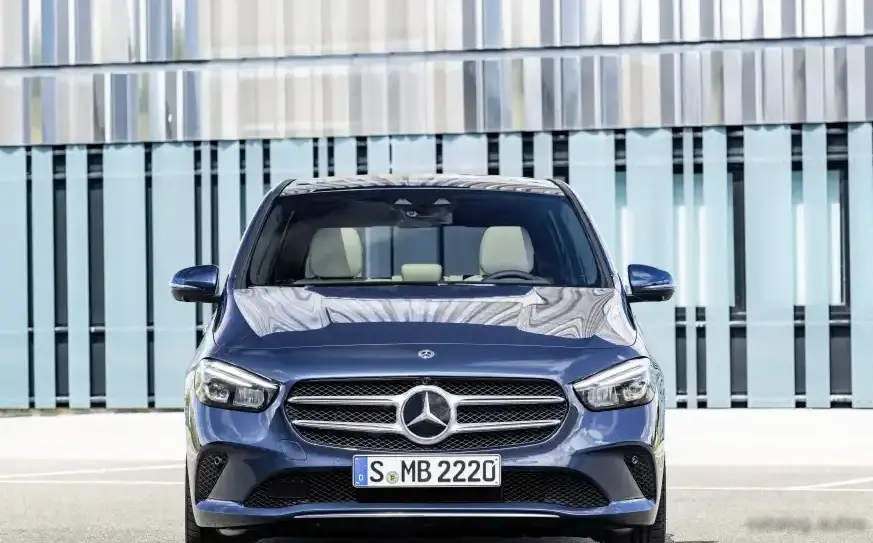
The Mercedes-Benz B-Class (W247) B 250 4MATIC DCT represents a compelling blend of practicality, performance, and technology within the compact luxury hatchback segment. Produced from 2019 to 2022, this variant occupied a mid-to-upper position in the W247 B-Class lineup, offering a significant step up in power and driving dynamics compared to the base models. It was primarily marketed in Europe and other global markets, offering a more engaging alternative to traditional compact hatchbacks while maintaining Mercedes-Benz’s reputation for refinement and build quality. The B 250 4MATIC DCT aimed to appeal to buyers seeking a versatile vehicle capable of both comfortable daily commuting and spirited weekend drives.
Technical Specifications
| Brand | Mercedes-Benz |
| Model | B-class |
| Generation | B-class (W247) |
| Type (Engine) | B 250 (224 Hp) 4MATIC DCT |
| Start of production | 2019 year |
| End of production | 2022 year |
| Powertrain Architecture | Internal Combustion engine |
| Body type | Hatchback |
| Seats | 5 |
| Doors | 5 |
| Fuel consumption at Low speed (WLTP) | 7.1 l/100 km (33.1 US mpg, 39.8 UK mpg, 14.1 km/l) |
| Fuel consumption at very high speed (WLTP) | 8.2 l/100 km (28.7 US mpg, 34.4 UK mpg, 12.2 km/l) |
| CO2 emissions (WLTP) | 161-186 g/km |
| Fuel consumption (economy) – urban | 9.0-9.1 l/100 km (26.1 – 25.8 US mpg, 31.4 – 31 UK mpg, 11.1 – 11 km/l) |
| Fuel consumption (economy) – extra urban | 5.4-5.6 l/100 km (43.6 – 42 US mpg, 52.3 – 50.4 UK mpg, 18.5 – 17.9 km/l) |
| Fuel consumption (economy) – combined | 6.7-6.9 l/100 km (35.1 – 34.1 US mpg, 42.2 – 40.9 UK mpg, 14.9 – 14.5 km/l) |
| CO2 emissions | 153-158 g/km |
| Fuel Type | Petrol (Gasoline) |
| Acceleration 0 – 100 km/h | 6.4 sec |
| Acceleration 0 – 62 mph | 6.4 sec |
| Acceleration 0 – 60 mph | 6.1 sec |
| Maximum speed | 250 km/h (155.34 mph) |
| Emission standard | Euro 6d – TEMP |
| Weight-to-power ratio | 6.6 kg/Hp, 151.4 Hp/tonne |
| Weight-to-torque ratio | 4.2 kg/Nm, 236.5 Nm/tonne |
| Power | 224 Hp |
| Power per litre | 112.5 Hp/l |
| Torque | 350 Nm @ 1800 rpm (258.15 lb.-ft. @ 1800 rpm) |
| Engine layout | Front, Transverse |
| Engine Model/Code | M 260.920 |
| Engine displacement | 1991 cm3 (121.5 cu. in.) |
| Number of cylinders | 4 |
| Engine configuration | Inline |
| Number of valves per cylinder | 4 |
| Fuel injection system | Direct injection |
| Engine aspiration | Turbocharger, Intercooler |
| Engine oil capacity | 5.5 l (5.81 US qt | 4.84 UK qt) |
| Coolant | 10 l (10.57 US qt | 8.8 UK qt) |
| Kerb Weight | 1480 kg (3262.84 lbs.) |
| Max. weight | 2105 kg (4640.73 lbs.) |
| Max load | 625 kg (1377.89 lbs.) |
| Trunk (boot) space – minimum | 445 l (15.72 cu. ft.) |
| Trunk (boot) space – maximum | 1540 l (54.38 cu. ft.) |
| Fuel tank capacity | 51 l (13.47 US gal | 11.22 UK gal) |
| Permitted trailer load with brakes (12%) | 1800 kg (3968.32 lbs.) |
| Permitted trailer load without brakes | 750 kg (1653.47 lbs.) |
| Length | 4419 mm (173.98 in.) |
| Width | 1796 mm (70.71 in.) |
| Height | 1562 mm (61.5 in.) |
| Wheelbase | 2729 mm (107.44 in.) |
| Front track | 1567 mm (61.69 in.) |
| Front overhang | 914 mm (35.98 in.) |
| Rear overhang | 776 mm (30.55 in.) |
| Approach angle | 13.4° |
| Departure angle | 17.2° |
| Drive wheel | All wheel drive (4×4) |
| Number of gears and type of gearbox | 7 gears, automatic transmission DCT |
| Front brakes | Ventilated discs |
| Rear brakes | Disc |
Powertrain & Engine Architecture
The B 250 4MATIC DCT is powered by Mercedes-Benz’s M 260.920 2.0-liter inline-four cylinder engine. This engine is a member of the modular M260 family, characterized by its compact design, direct fuel injection, and single turbocharger with intercooling. The direct injection system, operating at pressures up to 200 bar, ensures precise fuel delivery for optimal combustion efficiency and power output. The engine produces 224 horsepower and 350 Nm (258 lb-ft) of torque, readily available from 1800 rpm. This power is delivered through a 7-speed dual-clutch transmission (DCT), providing quick and smooth gear changes. The 4MATIC all-wheel-drive system utilizes a multi-plate clutch to distribute torque between the front and rear axles, enhancing traction and stability in various driving conditions.
Driving Characteristics
The B 250 4MATIC DCT offers a noticeably more engaging driving experience than the lower-powered B-Class variants. The 2.0-liter turbo engine provides ample power for confident acceleration and effortless highway cruising. The DCT transmission contributes to this responsiveness, offering rapid shifts and a sporty feel. While not a dedicated performance model, the B 250 delivers a 0-60 mph time of around 6.1 seconds. The 4MATIC system provides enhanced grip, particularly in inclement weather, making it a secure and predictable handler. Compared to the manual transmission options available on some B-Class models, the DCT prioritizes convenience and ease of use, though some purists might miss the direct control of a manual gearbox. The gear ratios are tuned for a balance between acceleration and fuel efficiency.
Equipment & Trim Levels
The B 250 4MATIC DCT typically came well-equipped as standard. Features included automatic climate control, a touchscreen infotainment system with Apple CarPlay and Android Auto compatibility, and a suite of safety technologies such as automatic emergency braking, lane keeping assist, and adaptive cruise control. Interior upholstery was typically a combination of Artico leatherette and fabric, with options for full leather upgrades. Available options included a panoramic sunroof, premium sound system, and various driver assistance packages. Trim levels could vary slightly depending on the market, but generally, the B 250 represented a step up in luxury and features compared to the base B 180 and B 200 models.
Chassis & Braking
The W247 B-Class features a MacPherson strut front suspension and a multi-link rear suspension, providing a comfortable and controlled ride. The B 250 4MATIC DCT typically featured slightly stiffer spring rates and dampers compared to the lower-powered models to manage the increased power and weight. Braking duties are handled by ventilated discs at the front and solid discs at the rear. The anti-lock braking system (ABS) and electronic stability program (ESP) are standard features, ensuring safe and predictable braking performance. Steering is via a power-assisted rack and pinion system, offering precise and responsive control.
Market Reception & Comparison
The B 250 4MATIC DCT was generally well-received by automotive critics. It was praised for its refined engine, responsive transmission, and comfortable ride. The 4MATIC all-wheel-drive system was also highlighted as a significant benefit, particularly in regions with challenging weather conditions. Compared to rivals like the BMW 2 Series Active Tourer and Audi Q2, the B 250 offered a compelling combination of practicality, luxury, and performance. Fuel economy was considered respectable for its class, averaging around 35-39 mpg in combined driving. Reliability reports have been generally positive, with few major issues reported with the M 260 engine and DCT transmission.
Legacy
The Mercedes-Benz B-Class (W247) B 250 4MATIC DCT remains a popular choice in the used car market. The M 260 engine has proven to be a durable and reliable unit, and the DCT transmission, while requiring occasional maintenance, is generally robust. The B 250’s blend of practicality, comfort, and performance continues to appeal to buyers seeking a versatile and refined compact hatchback. Its all-wheel-drive system and comprehensive safety features add to its enduring appeal, making it a well-rounded and desirable vehicle in its segment.