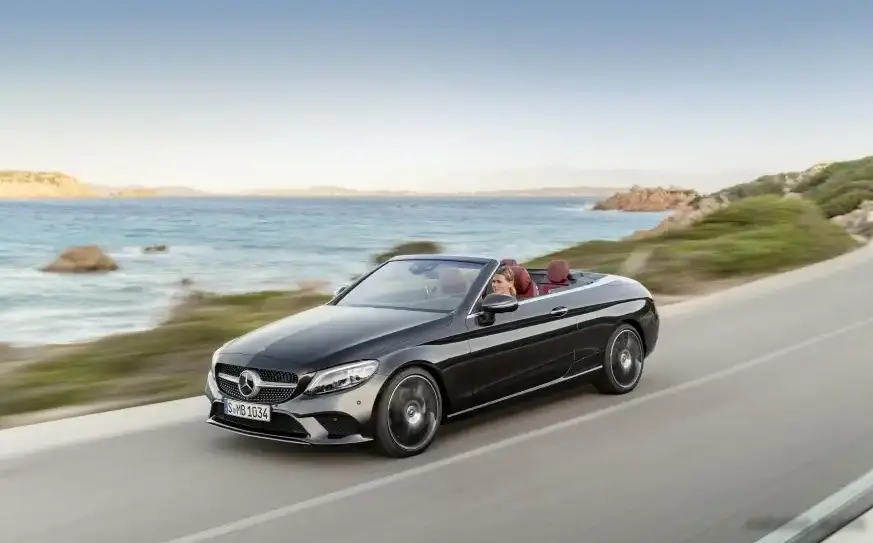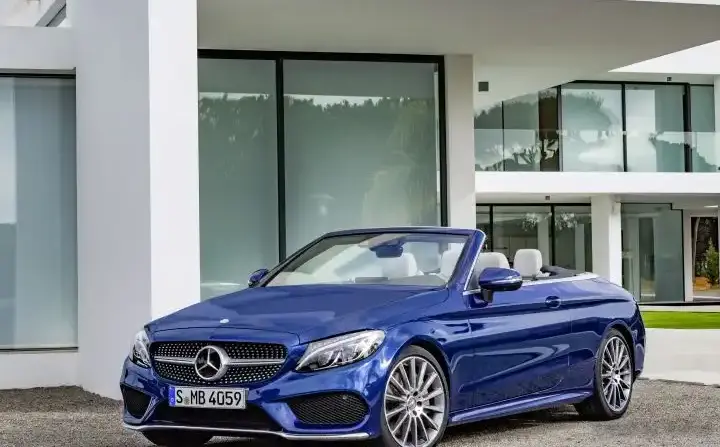
The Mercedes-Benz C-Class Cabriolet (A205), specifically the C 250 variant equipped with the 211 horsepower engine and 9G-TRONIC automatic transmission, was produced from 2016 to 2018. This model represented a key offering within the A205 generation, positioned as a balance between performance and affordability within the C-Class Cabriolet range. It aimed to deliver the open-air experience of a premium convertible with a more accessible price point than the higher-performance AMG models or the more luxurious C 300 and C 43 trims. The C 250 Cabriolet catered to buyers seeking a stylish and comfortable daily driver with respectable power and modern technology.
Technical Specifications
| Brand | Mercedes-Benz |
| Model | C-class |
| Generation | C-class Cabriolet (A205) |
| Type (Engine) | C 250 (211 Hp) 9G-TRONIC |
| Start of production | 2016 |
| End of production | 2018 |
| Powertrain Architecture | Internal Combustion engine |
| Body type | Cabriolet |
| Seats | 4 |
| Doors | 2 |
| Fuel consumption (urban) | 8.2-7.8 l/100 km (28.7 – 30.2 US mpg, 34.4 – 36.2 UK mpg, 12.2 – 12.8 km/l) |
| Fuel consumption (extra urban) | 5.7-5.2 l/100 km (41.3 – 45.2 US mpg, 49.6 – 54.3 UK mpg, 17.5 – 19.2 km/l) |
| Fuel consumption (combined) | 6.6-6.2 l/100 km (35.6 – 37.9 US mpg, 42.8 – 45.6 UK mpg, 15.2 – 16.1 km/l) |
| CO2 emissions | 150-140 g/km |
| Fuel Type | Petrol (Gasoline) |
| Acceleration 0 – 100 km/h | 6.9 sec |
| Acceleration 0 – 62 mph | 6.9 sec |
| Acceleration 0 – 60 mph | 6.6 sec |
| Emission standard | Euro 6 |
| Weight-to-power ratio | 7.9 kg/Hp, 126.7 Hp/tonne |
| Weight-to-torque ratio | 4.8 kg/Nm, 210.2 Nm/tonne |
| Power | 211 Hp @ 5500 rpm |
| Power per litre | 106 Hp/l |
| Torque | 350 Nm @ 1200-4000 rpm (258.15 lb.-ft. @ 1200-4000 rpm) |
| Engine layout | Front, Longitudinal |
| Engine Model/Code | M 274.920 |
| Engine displacement | 1991 cm3 (121.5 cu. in.) |
| Number of cylinders | 4 |
| Engine configuration | Inline |
| Compression ratio | 9.8:1 |
| Fuel injection system | Direct injection |
| Engine aspiration | Turbocharger, Intercooler |
| Engine oil capacity | 7 l (7.4 US qt | 6.16 UK qt) |
| Kerb Weight | 1665 kg (3670.7 lbs.) |
| Max. weight | 2145 kg (4728.92 lbs.) |
| Max load | 480 kg (1058.22 lbs.) |
| Trunk (boot) space – minimum | 285 l (10.06 cu. ft.) |
| Trunk (boot) space – maximum | 360 l (12.71 cu. ft.) |
| Fuel tank capacity | 50 l (13.21 US gal | 11 UK gal) |
| Permitted trailer load with brakes (12%) | 1800 kg (3968.32 lbs.) |
| Permitted trailer load without brakes | 750 kg (1653.47 lbs.) |
| Length | 4686 mm (184.49 in.) |
| Width | 1810 mm (71.26 in.) |
| Width including mirrors | 2016 mm (79.37 in.) |
| Height | 1409 mm (55.47 in.) |
| Wheelbase | 2840 mm (111.81 in.) |
| Front track | 1563 mm (61.54 in.) |
| Rear (Back) track | 1546 mm (60.87 in.) |
| Front overhang | 790 mm (31.1 in.) |
| Rear overhang | 1056 mm (41.57 in.) |
| Drag coefficient (Cd) | 0.31 |
| Minimum turning circle (turning diameter) | 11.22 m (36.81 ft.) |
| Drivetrain Architecture | Rear wheel drive |
| Drive wheel | Rear wheel drive |
| Number of gears and type of gearbox | 9 gears, automatic transmission G-TRONIC |
| Front suspension | Independent multi-link suspension |
| Rear suspension | Independent multi-link suspension |
| Front brakes | Ventilated discs |
| Rear brakes | Disc |
| Assisting systems | ABS (Anti-lock braking system) |
| Steering type | Steering rack and pinion |
| Power steering | Electric Steering |
| Tires size | 225/50 R17 |
| Wheel rims size | 17 |
Powertrain & Engine Architecture
The C 250 Cabriolet utilized Mercedes-Benz’s M 274.920 2.0-liter inline-four cylinder engine. This engine featured direct fuel injection and a single twin-scroll turbocharger with an intercooler. The turbocharging system was crucial for boosting power output from a relatively small displacement engine. The engine produced 211 horsepower at 5500 rpm and 350 Nm (258 lb-ft) of torque available from a low 1200 rpm to 4000 rpm, providing a broad and usable powerband. The 9G-TRONIC automatic transmission, a nine-speed unit, was paired with this engine. This transmission was designed to improve fuel efficiency and provide smooth gear changes. It featured a wide gear ratio spread, allowing the engine to operate in its most efficient range more often.
Driving Characteristics
The C 250 Cabriolet with the 9G-TRONIC transmission offered a comfortable and refined driving experience. While not as overtly sporty as the C 300 or AMG variants, the C 250 provided adequate acceleration, achieving 0-60 mph in approximately 6.6 seconds. The 9G-TRONIC transmission contributed to smooth and almost imperceptible gear changes during normal driving. In Sport mode, the transmission would hold gears longer and downshift more aggressively, providing a more engaging driving experience. Compared to a manual transmission equipped C-Class, the 9G-TRONIC prioritized comfort and fuel economy over outright performance. The broad torque band of the engine meant that the car felt responsive in most driving situations, and the transmission was generally well-matched to the engine’s characteristics.
Equipment & Trim Levels
The C 250 Cabriolet came standard with a respectable level of equipment. Standard features typically included leather upholstery, automatic climate control, a multi-function steering wheel, and a high-resolution infotainment system with a central display screen. Optional extras included features like a premium sound system, navigation, heated seats, and advanced driver-assistance systems such as lane keeping assist and blind spot monitoring. The interior design was generally upscale and modern, reflecting Mercedes-Benz’s commitment to luxury. Trim levels could vary slightly depending on the market, but generally, the C 250 served as the entry point to the C-Class Cabriolet range, offering a balance of features and price.
Chassis & Braking
The C-Class Cabriolet utilized an independent multi-link suspension system at both the front and rear axles. This suspension design provided a comfortable ride quality while maintaining good handling characteristics. The C 250 typically featured ventilated disc brakes at the front and solid disc brakes at the rear. The braking system was equipped with ABS (Anti-lock Braking System) and electronic brake-force distribution. The steering system was a rack-and-pinion type with electric power steering, providing precise and responsive steering feel. The chassis was designed to provide a good balance between rigidity and weight, crucial for a convertible body style.
Market Reception & Comparison
The C 250 Cabriolet was generally well-received by automotive critics. It was praised for its comfortable ride, refined interior, and fuel-efficient engine. However, some critics noted that the engine lacked the outright performance of the C 300 or AMG models. Compared to the C 300, the C 250 offered a lower price point but with less power and slightly less standard equipment. Fuel economy was a strong point for the C 250, with combined fuel consumption figures ranging from 6.2 to 6.6 liters per 100 kilometers (35.6 to 37.9 US mpg). Reliability reports generally indicated good reliability for the M 274 engine and 9G-TRONIC transmission, although regular maintenance was essential.
Legacy
The C 250 Cabriolet (A205) has established itself as a popular choice in the used car market. Its combination of style, comfort, and reasonable running costs makes it an attractive option for buyers seeking a premium convertible. The M 274 engine and 9G-TRONIC transmission have proven to be relatively reliable, although preventative maintenance, such as regular oil changes and transmission fluid services, is crucial for long-term durability. The C 250 Cabriolet represents a well-rounded and accessible entry point into the world of Mercedes-Benz convertibles, offering a blend of luxury, performance, and practicality.