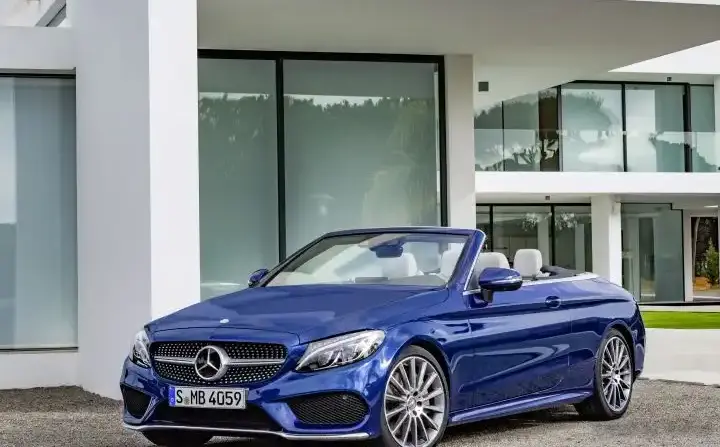
Technical Specifications
| Brand | Mercedes-Benz |
| Model | C-class |
| Generation | C-class Cabriolet (A205) |
| Type | C 400 (333 Hp) 4MATIC 9G-TRONIC |
| Start of production | 2016 |
| End of production | 2018 |
| Powertrain Architecture | Internal Combustion engine |
| Body type | Cabriolet |
| Seats | 4 |
| Doors | 2 |
| Fuel consumption (urban) | 11.2-10.9 l/100 km (21 – 21.6 US mpg, 25.2 – 25.9 UK mpg, 8.9 – 9.2 km/l) |
| Fuel consumption (extra urban) | 6.6-6.3 l/100 km (35.6 – 37.3 US mpg, 42.8 – 44.8 UK mpg, 15.2 – 15.9 km/l) |
| Fuel consumption (combined) | 8.3-8.0 l/100 km (28.3 – 29.4 US mpg, 34 – 35.3 UK mpg, 12 – 12.5 km/l) |
| CO2 emissions | 189-181 g/km |
| Fuel Type | Petrol (Gasoline) |
| Acceleration 0 – 100 km/h | 5.2 sec |
| Acceleration 0 – 62 mph | 5.2 sec |
| Acceleration 0 – 60 mph | 4.9 sec |
| Emission standard | Euro 6 |
| Weight-to-power ratio | 5.4 kg/Hp, 184.5 Hp/tonne |
| Weight-to-torque ratio | 3.8 kg/Nm, 265.9 Nm/tonne |
| Power | 333 Hp @ 5250-6000 rpm |
| Power per litre | 111.1 Hp/l |
| Torque | 480 Nm @ 1600-4000 rpm (354.03 lb.-ft. @ 1600-4000 rpm) |
| Engine layout | Front, Longitudinal |
| Engine Model/Code | M 276.823 |
| Engine displacement | 2996 cm3 (182.83 cu. in.) |
| Number of cylinders | 6 |
| Engine configuration | V-engine |
| Compression ratio | 10.5:1 |
| Fuel injection system | Direct injection |
| Engine aspiration | BiTurbo, Intercooler |
| Engine oil capacity | 6.5 l (6.87 US qt | 5.72 UK qt) |
| Coolant | 10.9 l (11.52 US qt | 9.59 UK qt) |
| Kerb Weight | 1805 kg (3979.34 lbs.) |
| Max. weight | 2285 kg (5037.56 lbs.) |
| Max load | 480 kg (1058.22 lbs.) |
| Trunk (boot) space – minimum | 285 l (10.06 cu. ft.) |
| Trunk (boot) space – maximum | 360 l (12.71 cu. ft.) |
| Fuel tank capacity | 66 l (17.44 US gal | 14.52 UK gal) |
| Permitted trailer load with brakes (12%) | 1800 kg (3968.32 lbs.) |
| Permitted trailer load without brakes | 750 kg (1653.47 lbs.) |
| Length | 4686 mm (184.49 in.) |
| Width | 1810 mm (71.26 in.) |
| Width including mirrors | 2016 mm (79.37 in.) |
| Height | 1409 mm (55.47 in.) |
| Wheelbase | 2840 mm (111.81 in.) |
| Front track | 1563 mm (61.54 in.) |
| Rear (Back) track | 1546 mm (60.87 in.) |
| Front overhang | 790 mm (31.1 in.) |
| Rear overhang | 1056 mm (41.57 in.) |
| Drag coefficient (Cd) | 0.33 |
| Minimum turning circle (turning diameter) | 11.45 m (37.57 ft.) |
| Drive wheel | All wheel drive (4×4) |
| Number of gears and type of gearbox | 9 gears, automatic transmission G-TRONIC |
| Front suspension | Independent multi-link suspension |
| Rear suspension | Independent multi-link suspension |
| Front brakes | Ventilated discs |
| Rear brakes | Disc |
| Assisting systems | ABS (Anti-lock braking system) |
| Steering type | Steering rack and pinion |
| Power steering | Electric Steering |
| Tires size | 225/50 R17 |
| Wheel rims size | 17 |
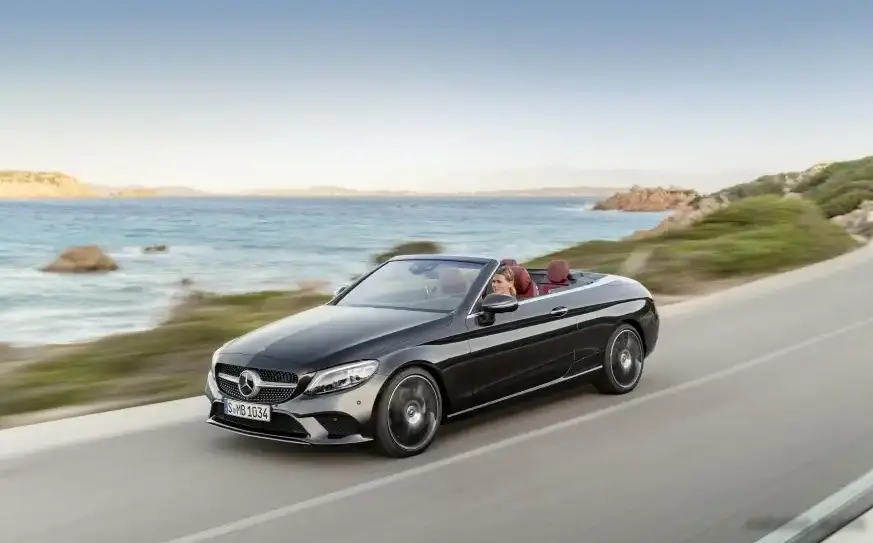
The Mercedes-Benz C 400 4MATIC Cabriolet, produced between 2016 and 2018, was a performance-oriented version of the C-Class Cabriolet. Positioned as a mid-to-high-range offering within the A205 generation, it aimed to deliver a blend of luxury, open-air driving enjoyment, and substantial power. This model occupied a space between the more economical C 300 variants and the higher-performance AMG C 43 and C 63 models. It represented Mercedes-Benz’s attempt to cater to buyers seeking a spirited driving experience without the full commitment – and price tag – of a dedicated AMG vehicle.
Powertrain & Engine Architecture
The C 400 4MATIC’s powertrain revolved around the M276.823 3.0-liter V6 engine. This engine employed direct fuel injection and twin-turbocharging to generate 333 horsepower and 480 Nm (354 lb-ft) of torque. The twin-turbo setup, utilizing smaller turbochargers, was engineered to minimize turbo lag and deliver a broad, flat torque curve across the rev range. The engine featured a compression ratio of 10.5:1 and was mounted longitudinally within the chassis. The 60-degree V-angle engine design contributed to smoother operation and reduced vibrations. The engine was mated to the 9G-TRONIC nine-speed automatic transmission. This transmission was selected for its wide gear ratio spread, optimizing both fuel efficiency and responsive acceleration. The 9G-TRONIC incorporated a torque converter lock-up clutch to enhance efficiency during steady-state cruising and offered manual gear selection through steering wheel-mounted paddle shifters.
Driving Characteristics
The C 400 4MATIC Cabriolet provided a noticeably more engaging driving experience compared to the base C 300 models. The engine’s 333 hp and 480 Nm of torque enabled confident overtaking and brisk acceleration, achieving a 0-60 mph time of approximately 4.9 seconds. The 9G-TRONIC transmission generally offered smooth and quick gear changes, although occasional hesitation could be observed during downshifts. The 4MATIC all-wheel-drive system ensured excellent traction in diverse weather conditions, enhancing stability and driver confidence. The suspension, tuned for a balance between comfort and handling, provided a firm yet controlled ride. Compared to the C 300, the C 400 offered a more dynamic and spirited driving experience, while remaining less aggressively focused than the AMG variants.
Equipment & Trim Levels
The C 400 4MATIC Cabriolet came standard with a generous array of features, including leather upholstery, automatic climate control, a premium audio system, and a power-operated soft top. Interior appointments typically included wood trim and aluminum accents. Optional extras included a Burmester surround sound system, advanced driver-assistance systems like lane keeping assist and adaptive cruise control, and upgraded leather packages. The C 400 generally featured sport seats with enhanced bolstering, providing increased support during spirited driving maneuvers. Exterior customization options included a variety of wheel designs and metallic paint finishes.
Chassis & Braking
The A205 Cabriolet chassis utilized an independent multi-link suspension system at both the front and rear axles, providing a balance of ride comfort and handling precision. The C 400 featured slightly stiffer spring rates and dampers compared to the C 300, further refining its handling characteristics. Braking was accomplished through ventilated discs at all four corners, delivering ample stopping power. The anti-lock braking system (ABS) and electronic stability control (ESC) were standard safety features. The steering system was a rack-and-pinion setup with electric power assistance, offering precise and responsive steering feel.
Market Reception & Comparison
The C 400 4MATIC Cabriolet received generally positive reviews from automotive critics. It was praised for its powerful engine, comfortable ride, and luxurious interior. Some reviewers noted occasional hesitation from the 9G-TRONIC transmission and considered the price relatively high compared to certain competitors. Compared to the C 300 Cabriolet, the C 400 offered a substantial performance upgrade, albeit at a higher cost. In comparison to the AMG C 43 Cabriolet, the C 400 provided a more comfortable ride and a lower price point, but lacked the AMG model’s ultimate performance capabilities and aggressive styling. Fuel economy was respectable for a performance-oriented vehicle, averaging around 28-29 mpg in combined driving conditions.
Legacy
The C 400 4MATIC Cabriolet has become a sought-after option in the used car market. The M276 engine, with regular maintenance, is generally considered reliable. The 9G-TRONIC transmission has also proven durable, although some units have required software updates to address minor glitches. The all-wheel-drive system provides added confidence in challenging weather. Today, these vehicles appeal to enthusiasts who appreciate the combination of luxury, performance, and open-air driving. The C 400 represents a compelling balance within the C-Class Cabriolet lineup, offering a desirable blend of features and performance at a more accessible price point than the higher-performance AMG models.