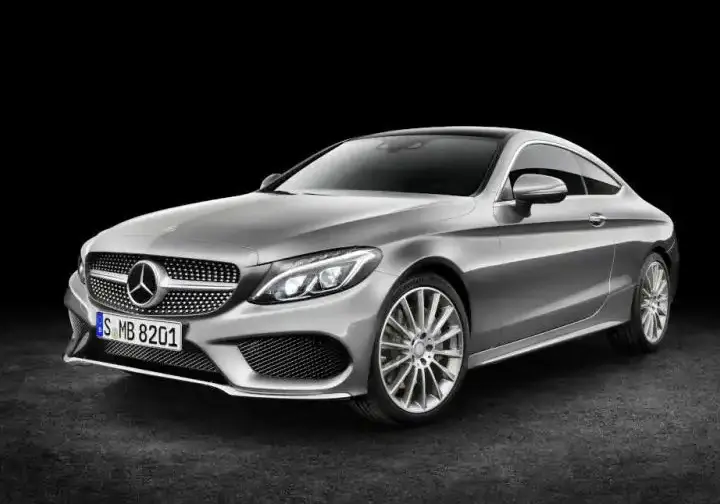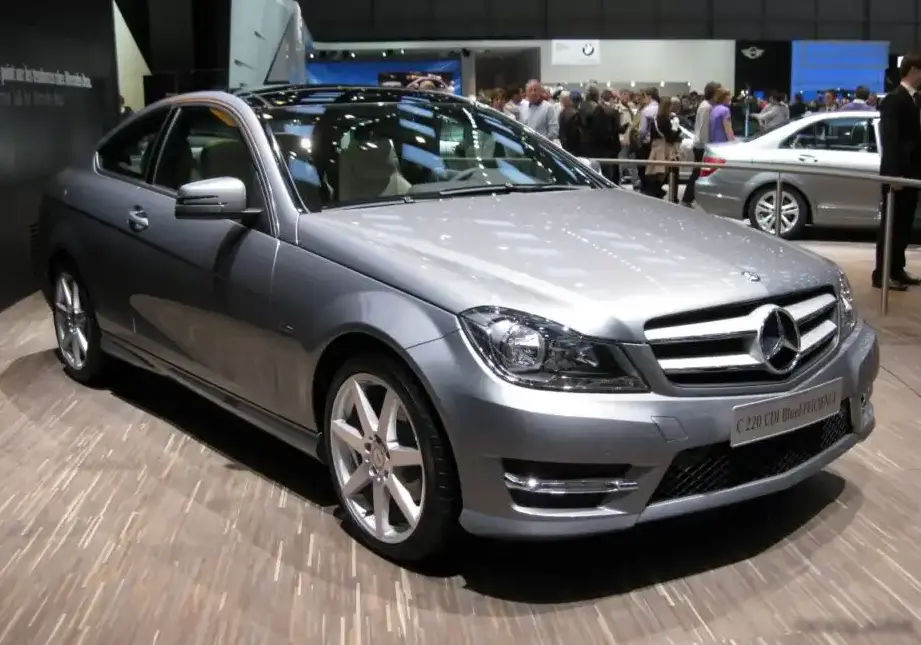
The Mercedes-Benz C-Class Coupe (C204) facelift C 250 Sport, produced from 2012 to 2015, represented a compelling blend of performance and luxury within the compact executive coupe segment. Positioned as a mid-range offering in the C204 lineup, it slotted between the base C 220 and the more potent C 350 models. This variant aimed to deliver a sporty driving experience with reasonable fuel efficiency, appealing to buyers seeking a stylish and capable grand tourer. The C204 generation itself was a significant step forward for Mercedes-Benz, offering a more dynamic and modern alternative to the preceding C-Class (W203) while sharing its underpinnings with the W204 sedan.
Technical Specifications
| Brand | Mercedes-Benz |
| Model | C-Class |
| Generation | C-Class Coupe (C204, facelift 2011) |
| Type (Engine) | C 250 Sport (204 Hp) 7G-TRONIC PLUS |
| Start of production | 2012 |
| End of production | 2015 |
| Powertrain Architecture | Internal Combustion engine |
| Body type | Coupe |
| Seats | 4 |
| Doors | 2 |
| Fuel consumption (economy) – urban (NEDC) | 9.1 l/100 km (25.8 US mpg, 31 UK mpg, 11 km/l) |
| Fuel consumption (economy) – extra urban (NEDC) | 5.7 l/100 km (41.3 US mpg, 49.6 UK mpg, 17.5 km/l) |
| Fuel consumption (economy) – combined (NEDC) | 7 l/100 km (33.6 US mpg, 40.4 UK mpg, 14.3 km/l) |
| CO2 emissions (NEDC) | 163 g/km |
| Fuel Type | Petrol (Gasoline) |
| Acceleration 0 – 100 km/h | 7.2 sec |
| Acceleration 0 – 62 mph | 7.2 sec |
| Acceleration 0 – 60 mph | 6.8 sec |
| Maximum speed | 240 km/h (149.13 mph) |
| Emission standard | Euro 5 |
| Weight-to-power ratio | 7.6 kg/Hp, 131.6 Hp/tonne |
| Weight-to-torque ratio | 5 kg/Nm, 200 Nm/tonne |
| Power | 204 Hp @ 5500 rpm |
| Power per litre | 113.6 Hp/l |
| Torque | 310 Nm @ 2000-4300 rpm (228.64 lb.-ft. @ 2000-4300 rpm) |
| Engine layout | Front, Longitudinal |
| Engine Model/Code | M 271.860 |
| Engine displacement | 1796 cm3 (109.6 cu. in.) |
| Number of cylinders | 4 |
| Engine configuration | Inline |
| Cylinder Bore | 82 mm (3.23 in.) |
| Piston Stroke | 85 mm (3.35 in.) |
| Compression ratio | 9.3:1 |
| Number of valves per cylinder | 4 |
| Fuel injection system | Direct injection |
| Engine aspiration | Turbocharger, Intercooler |
| Valvetrain | DOHC |
| Engine oil capacity | 5.5 l (5.81 US qt | 4.84 UK qt) |
| Kerb Weight | 1550 kg (3417.17 lbs.) |
| Max. weight | 2020 kg (4453.34 lbs.) |
| Max load | 470 kg (1036.17 lbs.) |
| Trunk (boot) space – minimum | 450 l (15.89 cu. ft.) |
| Fuel tank capacity | 59 l (15.59 US gal | 12.98 UK gal) |
| Max. roof load | 100 kg (220.46 lbs.) |
| Permitted trailer load with brakes (12%) | 1800 kg (3968.32 lbs.) |
| Permitted trailer load without brakes | 750 kg (1653.47 lbs.) |
| Length | 4590 mm (180.71 in.) |
| Width | 1770 mm (69.69 in.) |
| Width including mirrors | 1997 mm (78.62 in.) |
| Height | 1406 mm (55.35 in.) |
| Wheelbase | 2760 mm (108.66 in.) |
| Front track | 1549 mm (60.98 in.) |
| Rear (Back) track | 1552 mm (61.1 in.) |
| Front overhang | 775 mm (30.51 in.) |
| Rear overhang | 1055 mm (41.54 in.) |
| Drag coefficient (Cd) | 0.27 |
| Minimum turning circle (turning diameter) | 10.84 m (35.56 ft.) |
| Drivetrain Architecture | The Internal combustion engine (ICE) drives the rear wheels of the vehicle. |
| Drive wheel | Rear wheel drive |
| Number of gears and type of gearbox | 7 gears, automatic transmission G-TRONIC PLUS |
| Front suspension | Independent type McPherson, Transverse stabilizer |
| Rear suspension | Independent multi-link suspension, Transverse stabilizer |
| Front brakes | Ventilated discs |
| Rear brakes | Disc |
| Assisting systems | ABS (Anti-lock braking system) |
| Steering type | Steering rack and pinion |
| Power steering | Hydraulic Steering |
| Tires size | Front wheel tires: 225/40 R18Rear wheel tires: 255/35 R18 |
| Wheel rims size | Front wheel rims: 7.5J x 18Rear wheel rims: 8.5J x 18 |
Powertrain & Engine Architecture
The C 250 Sport was powered by the M271.860 1.8-liter inline-four cylinder engine. This engine was a key component of Mercedes-Benz’s efforts to improve fuel efficiency without sacrificing performance. It featured direct fuel injection and a single turbocharger with an intercooler, producing 204 horsepower at 5500 rpm and 310 Nm (228.64 lb-ft) of torque between 2000 and 4300 rpm. The engine utilized a double overhead camshaft (DOHC) valvetrain with four valves per cylinder. The 7G-TRONIC PLUS automatic transmission, a seven-speed unit, was standard. This transmission was known for its smooth shifting and ability to adapt to driving conditions, contributing to both performance and fuel economy. The transmission’s gear ratios were optimized for both acceleration and highway cruising.
Driving Characteristics
The C 250 Sport with the 7G-TRONIC PLUS offered a comfortable and refined driving experience. While not as overtly sporty as the C 350, it provided ample power for everyday driving and confident overtaking maneuvers. The turbocharger provided a noticeable boost in power, but the 7G-TRONIC transmission sometimes felt hesitant during quick downshifts. Compared to the manual transmission options available on other C-Class models, the automatic prioritized smoothness over outright responsiveness. The rear-wheel-drive configuration contributed to a balanced feel, although it wasn’t as engaging as some of its competitors with all-wheel drive. The steering was precise, but lacked significant feedback.
Equipment & Trim Levels
The “Sport” designation indicated a higher level of standard equipment. Typically, the C 250 Sport included features such as sport seats, aluminum interior trim, a sport steering wheel, and larger alloy wheels. Standard exterior features included a more aggressive front bumper, side skirts, and a rear diffuser. Optional extras included a panoramic sunroof, premium sound system, navigation system, and leather upholstery. The interior design was typical of Mercedes-Benz, with a focus on quality materials and a sophisticated layout. The dashboard featured analog gauges combined with a central infotainment screen.
Chassis & Braking
The C 250 Sport utilized an independent McPherson strut suspension at the front and a multi-link suspension at the rear. This setup provided a good balance between ride comfort and handling. Stabilizer bars were fitted to both axles to reduce body roll during cornering. The braking system consisted of ventilated discs at the front and solid discs at the rear, equipped with ABS (Anti-lock Braking System). The suspension was tuned to provide a comfortable ride without sacrificing handling precision.
Market Reception & Comparison
The C 250 Sport was generally well-received by automotive critics. It was praised for its fuel efficiency, comfortable ride, and stylish design. However, some reviewers noted that the engine lacked the outright punch of its competitors and that the transmission could be slow to respond at times. Compared to the C 350, the C 250 Sport offered a more affordable entry point into the C-Class Coupe range, but with a noticeable reduction in performance. Against rivals like the BMW 3 Series Coupe and Audi A5 Coupe, the C 250 Sport held its own in terms of luxury and refinement, but often lagged behind in terms of driving dynamics.
Legacy
The M271 engine, while generally reliable, is known to require regular maintenance, particularly regarding the timing chain. Oil changes should be performed according to Mercedes-Benz’s recommended intervals. The 7G-TRONIC transmission is also generally durable, but can be susceptible to issues if not properly maintained. Today, the C204 C 250 Sport represents a relatively affordable entry point into the Mercedes-Benz coupe world. Well-maintained examples are still sought after by enthusiasts who appreciate their blend of style, comfort, and reasonable running costs. Its status in the used car market is generally positive, with prices varying depending on mileage, condition, and options.