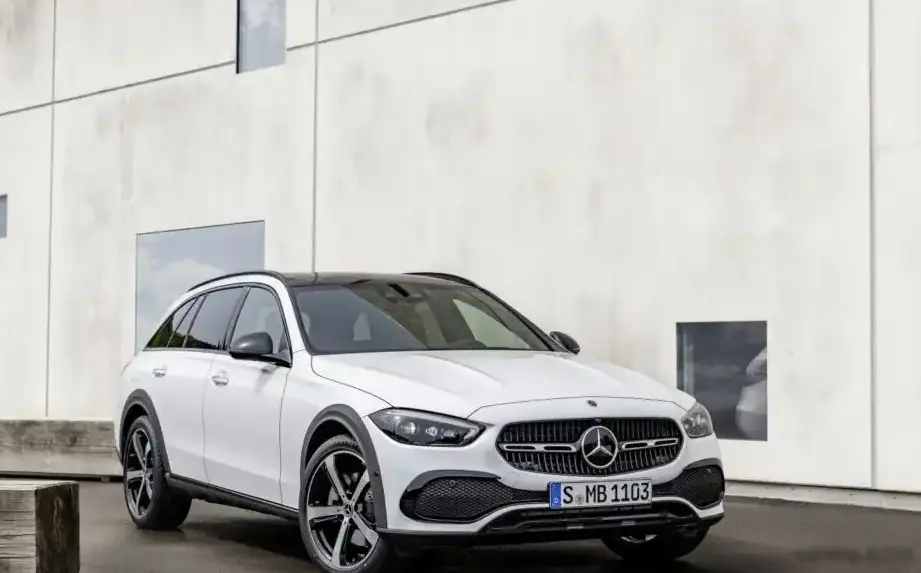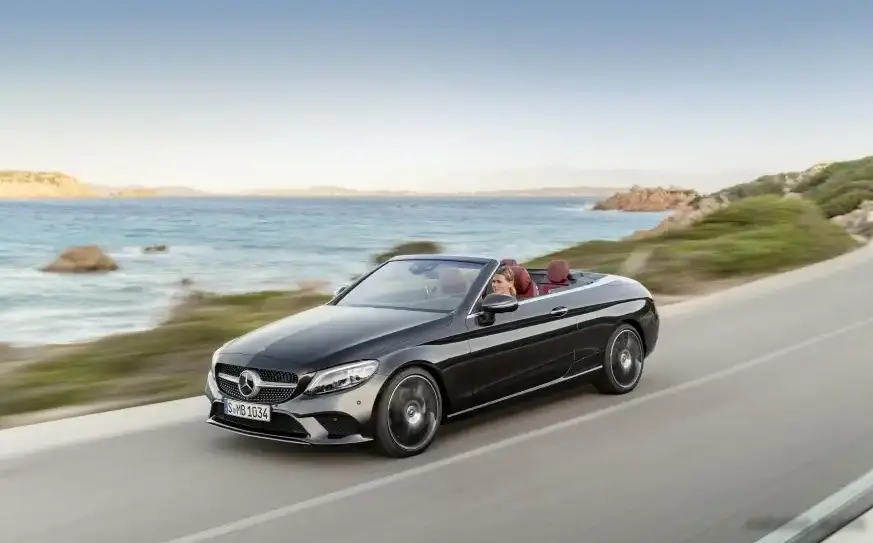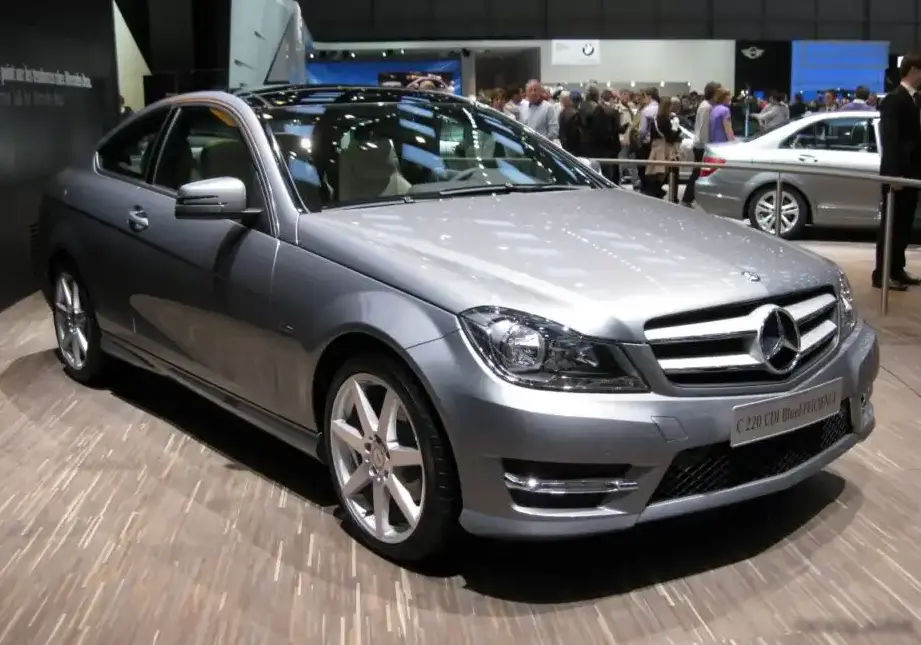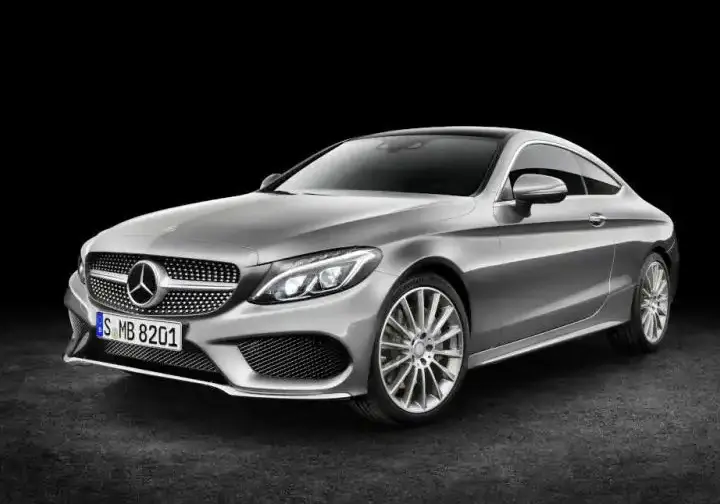
The Mercedes-Benz C 200 Coupe (C205), produced from 2016 to 2018, represented a compelling entry point into the C-Class Coupe range. Positioned as a stylish and accessible alternative to its more powerful siblings, the C 200 combined a turbocharged four-cylinder engine with Mercedes-Benz’s sophisticated 9G-TRONIC nine-speed automatic transmission. This variant aimed to deliver a balance of performance, fuel efficiency, and luxury within the broader C205 generation, which itself was the first coupe iteration based on the W205 C-Class sedan platform.
Technical Specifications
| Brand | Mercedes-Benz |
| Model | C-class |
| Generation | C-class Coupe (C205) |
| Type (Engine) | C 200 (184 Hp) 9G-TRONIC |
| Start of production | 2016 |
| End of production | 2018 |
| Powertrain Architecture | Internal Combustion engine |
| Body type | Coupe |
| Seats | 4 |
| Doors | 2 |
| Fuel consumption (urban) | 7.5 l/100 km (31.4 US mpg) |
| Fuel consumption (extra urban) | 4.7 l/100 km (50 US mpg) |
| Fuel consumption (combined) | 5.8 l/100 km (40.6 US mpg) |
| CO2 emissions | 129 g/km |
| Fuel Type | Petrol (Gasoline) |
| Acceleration 0 – 100 km/h | 7.3 sec |
| Acceleration 0 – 62 mph | 7.3 sec |
| Acceleration 0 – 60 mph | 6.9 sec |
| Maximum speed | 235 km/h (146.02 mph) |
| Emission standard | Euro 6 |
| Weight-to-power ratio | 7.9 kg/Hp |
| Weight-to-torque ratio | 4.8 kg/Nm |
| Power | 184 Hp @ 5500 rpm |
| Torque | 300 Nm @ 1200-4000 rpm (221.27 lb.-ft.) |
| Engine layout | Front, Longitudinal |
| Engine Model/Code | M 274.920 |
| Engine displacement | 1991 cm3 (121.5 cu. in.) |
| Number of cylinders | 4 |
| Engine configuration | Inline |
| Compression ratio | 9.8:1 |
| Fuel injection system | Direct injection |
| Engine aspiration | Turbocharger, Intercooler |
| Engine oil capacity | 7 l (7.4 US qt | 6.16 UK qt) |
| Kerb Weight | 1450 kg (3196.7 lbs.) |
| Max. weight | 2005 kg (4420.27 lbs.) |
| Max load | 555 kg (1223.57 lbs.) |
| Trunk (boot) space – minimum | 400 l (14.13 cu. ft.) |
| Fuel tank capacity | 50 l (13.21 US gal | 11 UK gal) |
| Max. roof load | 75 kg (165.35 lbs.) |
| Permitted trailer load with brakes (12%) | 1800 kg (3968.32 lbs.) |
| Permitted trailer load without brakes | 750 kg (1653.47 lbs.) |
| Length | 4686 mm (184.49 in.) |
| Width | 1810 mm (71.26 in.) |
| Width including mirrors | 2016 mm (79.37 in.) |
| Height | 1405 mm (55.31 in.) |
| Wheelbase | 2840 mm (111.81 in.) |
| Front track | 1563 mm (61.54 in.) |
| Rear (Back) track | 1546 mm (60.87 in.) |
| Ride height (ground clearance) | 89 mm (3.5 in.) |
| Minimum turning circle (turning diameter) | 11.22 m (36.81 ft.) |
| Front suspension | Independent multi-link suspension |
| Rear suspension | Independent multi-link suspension |
| Front brakes | Ventilated discs |
| Rear brakes | Disc |
| Gearbox | 9 gears, automatic transmission G-TRONIC |
| Tires size | 225/50 R17 |
| Wheel rims size | 17 |
Powertrain & Engine Architecture
The C 200 Coupe utilized Mercedes-Benz’s M274.920 2.0-liter inline-four cylinder engine. This engine was a key component of the modular M274 family, known for its direct fuel injection and a single twin-scroll turbocharger with an intercooler. The engine produced 184 horsepower at 5,500 rpm and 300 Nm (221 lb-ft) of torque available from a low 1,200 rpm, providing a broad and usable powerband. The 9G-TRONIC nine-speed automatic transmission was a crucial element in maximizing both performance and fuel economy. This transmission featured a wide range of gear ratios, allowing the engine to operate efficiently at various speeds and loads. The transmission’s programming was tuned to provide smooth shifts and responsive acceleration.
Driving Characteristics
The C 200 Coupe, with its 184 hp and nine-speed automatic, offered a comfortable and refined driving experience. Acceleration from 0 to 60 mph took approximately 6.9 seconds, making it adequately quick for everyday driving. Compared to the more potent C 300 or AMG variants, the C 200 prioritized fuel efficiency and smoothness over outright performance. The 9G-TRONIC transmission’s close gear ratios helped to keep the engine in its optimal power range, minimizing turbo lag and providing responsive acceleration. While not a sports car, the C 200 offered a composed and stable ride, thanks to its well-tuned suspension. The automatic transmission, while efficient, could sometimes feel hesitant during quick downshifts compared to the more aggressive programming found in the higher-performance models.
Equipment & Trim Levels
The C 200 Coupe typically came standard with features such as automatic climate control, a 7-inch infotainment display with a rotary controller, and a suite of safety features including attention assist and collision prevention assist. Interior upholstery was generally MB-Tex artificial leather, with options for genuine leather upgrades. Common optional extras included a larger infotainment screen, a panoramic sunroof, premium sound systems, and various driver assistance packages. Trim levels were relatively streamlined, with options primarily revolving around adding individual features rather than distinct packages. The overall interior design emphasized luxury and modernity, with high-quality materials and a clean, minimalist aesthetic.
Chassis & Braking
The C 200 Coupe featured a fully independent suspension system, with multi-link setups at both the front and rear. This configuration provided a comfortable ride and good handling characteristics. The front brakes were ventilated discs, while the rear brakes were solid discs. The standard wheels were 17-inch alloy wheels, with larger sizes available as options. The steering system was a rack-and-pinion setup with electric power assistance. The chassis was designed to provide a balance between comfort and agility, offering a stable and predictable driving experience.
Market Reception & Comparison
The C 200 Coupe was generally well-received by automotive critics as an accessible and stylish entry point into the C-Class Coupe range. It was praised for its fuel efficiency, comfortable ride, and well-appointed interior. However, some reviewers noted that the engine lacked the punch of the more powerful C 300 variant. Compared to the C 300, the C 200 offered significantly better fuel economy, but at the expense of performance. The C 200 also represented a more affordable option, making it attractive to buyers who prioritized value and efficiency. Its fuel economy figures of around 40.6 US mpg combined were competitive within its segment.
Legacy
The M274 engine, while generally reliable, has been known to exhibit some issues with oil consumption in certain instances. The 9G-TRONIC transmission has also proven to be a robust unit, but requires regular maintenance to ensure smooth operation. In the used car market, the C 200 Coupe represents a relatively affordable and well-equipped option for buyers seeking a stylish and comfortable coupe. Its combination of fuel efficiency, luxury features, and reasonable maintenance costs makes it a practical choice for everyday driving. The C205 generation, including the C 200, helped solidify Mercedes-Benz’s position as a leader in the compact luxury coupe segment.