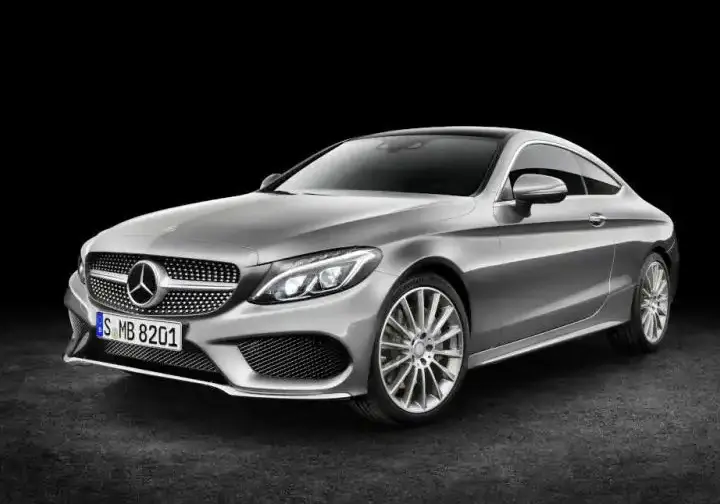
The Mercedes-Benz C 300 Coupe (C205), specifically equipped with the 245 horsepower engine and 7G-TRONIC PLUS automatic transmission, was a key offering in the C-Class Coupe lineup produced between 2015 and 2016. Positioned as a mid-range variant, it bridged the gap between the entry-level C 250 and the performance-oriented AMG models. This coupe aimed to deliver a blend of luxury, performance, and technology within the compact executive segment, appealing to buyers seeking a stylish and capable grand tourer.
Technical Specifications
| Brand | Mercedes-Benz |
| Model | C-class |
| Generation | C-class Coupe (C205) |
| Type (Engine) | C 300 (245 Hp) 7G-TRONIC PLUS |
| Start of production | 2015 |
| End of production | 2016 |
| Powertrain Architecture | Internal Combustion engine |
| Body type | Coupe |
| Seats | 4 |
| Doors | 2 |
| Fuel consumption (urban) | 8.8-8.2 l/100 km (26.7 – 28.7 US mpg) |
| Fuel consumption (extra urban) | 5.7-5.2 l/100 km (41.3 – 45.2 US mpg) |
| Fuel consumption (combined) | 6.8-6.3 l/100 km (34.6 – 37.3 US mpg) |
| CO2 emissions | 157-146 g/km |
| Fuel Type | Petrol (Gasoline) |
| Acceleration 0 – 100 km/h | 6 sec |
| Acceleration 0 – 62 mph | 6 sec |
| Acceleration 0 – 60 mph | 5.7 sec |
| Maximum speed | 250 km/h (155.34 mph) |
| Emission standard | Euro 6 |
| Weight-to-power ratio | 6.1 kg/Hp |
| Weight-to-torque ratio | 4 kg/Nm |
| Power | 245 Hp @ 5500 rpm |
| Torque | 370 Nm @ 1300-4000 rpm (272.9 lb.-ft. @ 1300-4000 rpm) |
| Engine layout | Front, Longitudinal |
| Engine Model/Code | M 274.920 |
| Engine displacement | 1991 cm3 (121.5 cu. in.) |
| Number of cylinders | 4 |
| Engine configuration | Inline |
| Compression ratio | 9.8:1 |
| Fuel injection system | Direct injection |
| Engine aspiration | Turbocharger, Intercooler |
| Engine oil capacity | 7 l (7.4 US qt | 6.16 UK qt) |
| Coolant capacity | 9 l (9.51 US qt | 7.92 UK qt) |
| Kerb Weight | 1490 kg (3284.89 lbs.) |
| Max. weight | 2045 kg (4508.45 lbs.) |
| Max load | 555 kg (1223.57 lbs.) |
| Trunk (boot) space – minimum | 400 l (14.13 cu. ft.) |
| Fuel tank capacity | 66 l (17.44 US gal | 14.52 UK gal) |
| Max. roof load | 75 kg (165.35 lbs.) |
| Permitted trailer load with brakes (12%) | 1800 kg (3968.32 lbs.) |
| Permitted trailer load without brakes | 750 kg (1653.47 lbs.) |
| Length | 4686 mm (184.49 in.) |
| Width | 1810 mm (71.26 in.) |
| Width including mirrors | 2016 mm (79.37 in.) |
| Height | 1405 mm (55.31 in.) |
| Wheelbase | 2840 mm (111.81 in.) |
| Front track | 1563 mm (61.54 in.) |
| Rear (Back) track | 1546 mm (60.87 in.) |
| Ride height (ground clearance) | 89 mm (3.5 in.) |
| Minimum turning circle (turning diameter) | 11.22 m (36.81 ft.) |
| Approach angle | 13.1° |
| Departure angle | 14.5° |
| Drivetrain Architecture | Rear wheel drive |
| Number of gears and type of gearbox | 7 gears, automatic transmission G-TRONIC |
| Front suspension | Independent multi-link suspension |
| Rear suspension | Independent multi-link suspension |
| Front brakes | Ventilated discs |
| Rear brakes | Ventilated discs |
| Assisting systems | ABS (Anti-lock braking system) |
| Steering type | Steering rack and pinion |
| Tires size | 225/50 R17 |
| Wheel rims size | 17 |
Powertrain & Engine Architecture
The C 300 Coupe utilized Mercedes-Benz’s M274.920 2.0-liter inline-four cylinder engine. This engine was a key component of the company’s modular engine family, featuring direct fuel injection and a single twin-scroll turbocharger with an intercooler. The direct injection system allowed for precise fuel delivery, optimizing combustion efficiency and power output. The turbocharger boosted performance, providing 245 horsepower at 5500 rpm and 370 Nm (272.9 lb-ft) of torque available from a low 1300 rpm all the way to 4000 rpm. This broad torque curve contributed to strong acceleration and effortless cruising. The engine’s 9.8:1 compression ratio was a balance between efficiency and performance. The 7G-TRONIC PLUS automatic transmission, a seven-speed unit, was specifically tuned to complement the engine’s characteristics. It offered smooth and responsive gear changes, contributing to both performance and fuel economy. The transmission featured a torque converter lock-up clutch to minimize slippage and improve efficiency at cruising speeds.
Driving Characteristics
The C 300 Coupe with the 7G-TRONIC PLUS transmission delivered a refined and comfortable driving experience. Acceleration from 0 to 60 mph was achieved in approximately 5.7 seconds, making it a reasonably quick vehicle for its class. The automatic transmission’s gear ratios were optimized for both acceleration and fuel efficiency. While not as overtly sporty as the AMG variants, the C 300 offered ample power for everyday driving and highway passing. Compared to the C 250, the C 300 provided a noticeable increase in performance, particularly in mid-range acceleration. The transmission’s shift points were generally well-chosen, providing smooth transitions between gears. Manual shift capability was available, allowing drivers to take more control, but the automatic mode was generally preferred for its convenience and efficiency. The rear-wheel-drive configuration contributed to balanced handling, although it lacked the all-wheel-drive stability of some competitors.
Equipment & Trim Levels
The C 300 Coupe came standard with a generous array of features, including leather upholstery, automatic climate control, a power-adjustable driver’s seat, and a high-quality audio system. The interior design emphasized luxury and sophistication, with high-quality materials and a modern aesthetic. Optional extras included a panoramic sunroof, a premium sound system, navigation, and advanced driver-assistance systems such as lane keeping assist and blind spot monitoring. The dashboard featured a central display screen controlled by a rotary dial and buttons, providing access to various vehicle functions and infotainment options. Interior color choices typically included black, beige, and various shades of gray. Exterior options included a range of paint colors and wheel designs.
Chassis & Braking
The C 300 Coupe featured an independent multi-link suspension at both the front and rear, providing a comfortable ride and good handling characteristics. The suspension was tuned to balance comfort and control, offering a compliant ride over most road surfaces. The braking system consisted of ventilated discs at all four wheels, providing ample stopping power. Anti-lock brakes (ABS) were standard, along with electronic brake-force distribution and brake assist. The steering system utilized a rack-and-pinion setup, offering precise and responsive steering feel. The C 300 Coupe’s chassis was designed to provide a stable and predictable driving experience, with a relatively low center of gravity contributing to reduced body roll during cornering.
Market Reception & Comparison
The C 300 Coupe was generally well-received by automotive critics, who praised its stylish design, luxurious interior, and strong performance. It was often compared to rivals such as the Audi A5 Coupe and the BMW 4 Series Coupe. The C 300 offered a competitive combination of features and performance, and its fuel economy was considered respectable for its class. Some critics noted that the ride could be slightly firm on rough roads, and that the rear seats were somewhat cramped. However, the overall consensus was that the C 300 Coupe was a compelling option in the compact executive coupe segment.
Legacy
The M274 engine, while generally reliable, has been known to exhibit some issues with the timing chain and valve cover gaskets over the long term. Regular maintenance, including oil changes and inspections, is crucial for ensuring its longevity. The 7G-TRONIC PLUS transmission is also generally reliable, but may require fluid changes and occasional servicing. In the used car market, the C 300 Coupe remains a popular choice for buyers seeking a stylish and well-equipped coupe. Its combination of luxury, performance, and technology continues to appeal to a wide range of drivers. Values typically depend on mileage, condition, and options, but well-maintained examples can command a reasonable price.