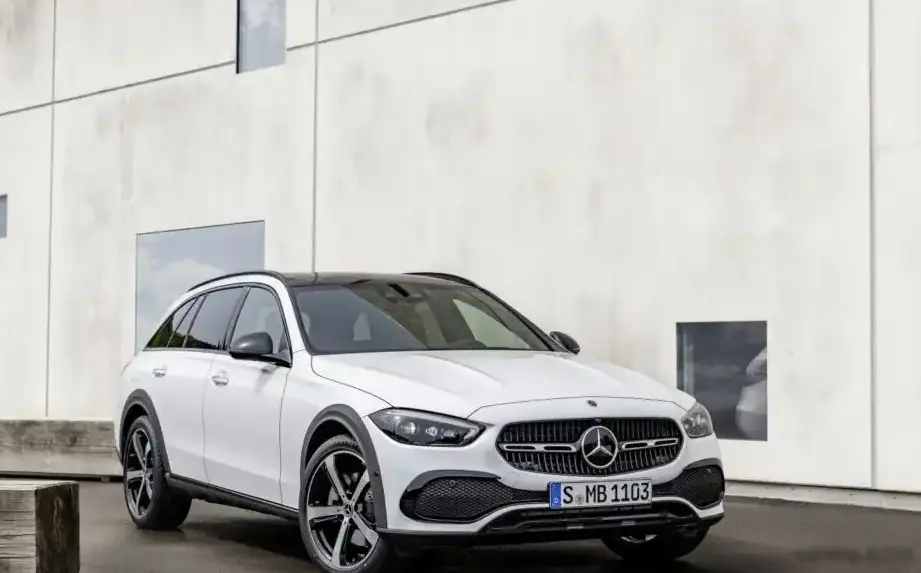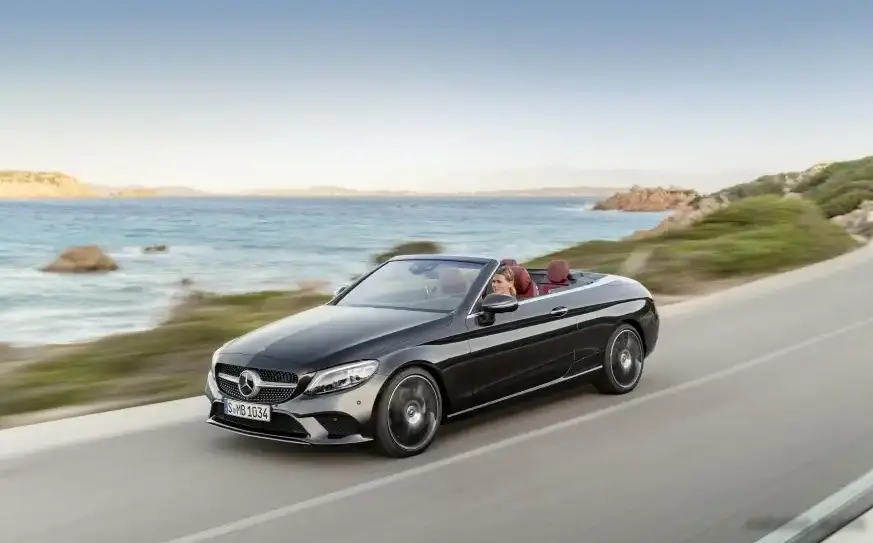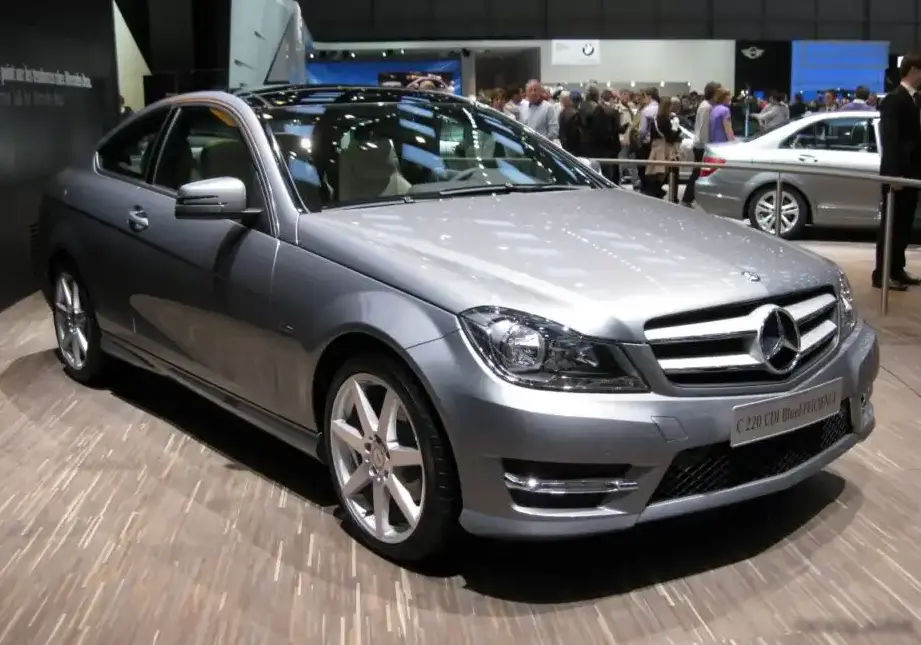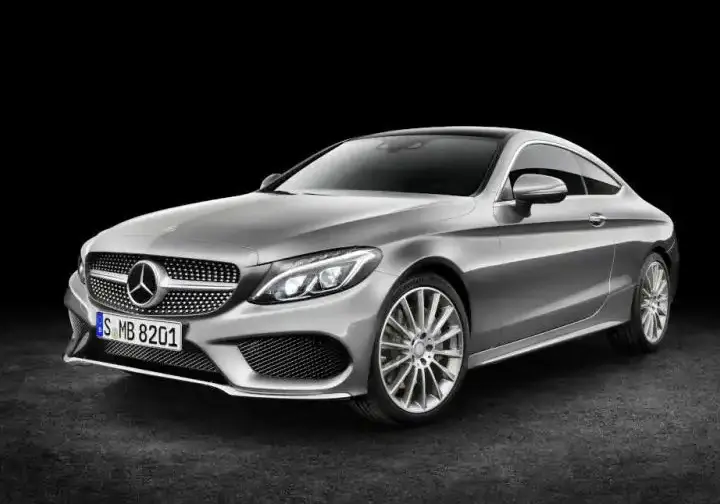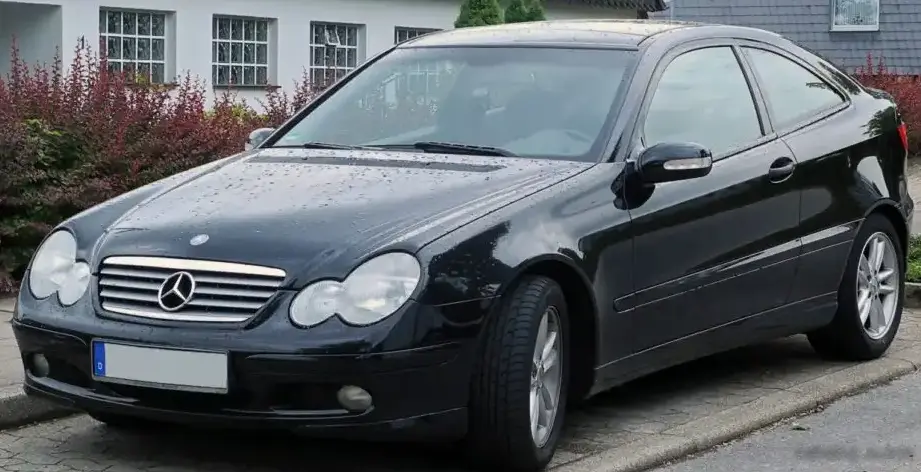
The Mercedes-Benz C-Class Sport Coupe (CL203) AMG C32, produced from May 2002 to March 2004, represented a high-performance variant within the first generation (W203) C-Class coupe lineup. Positioned as the flagship model, it offered a significant performance upgrade over the standard C-Class coupes, bridging the gap between the more mainstream trims and the upcoming, more focused AMG models. This vehicle was primarily aimed at the European market, where compact performance coupes were highly sought after, though a limited number were imported to the United States as grey market vehicles. The C32 distinguished itself with a supercharged V6 engine and a host of performance-oriented enhancements.
Technical Specifications
| Brand | Mercedes-Benz |
| Model | C-class |
| Generation | C-class Sport Coupe (CL203) |
| Type (Engine) | AMG C 32 V6 (354 Hp) Automatic |
| Start of production | May, 2002 |
| End of production | March, 2004 |
| Powertrain Architecture | Internal Combustion engine |
| Body type | Coupe |
| Seats | 4 |
| Doors | 3 |
| Fuel consumption (economy) – urban (NEDC) | 16.7 l/100 km (14.1 US mpg, 16.9 UK mpg, 6 km/l) |
| Fuel consumption (economy) – extra urban (NEDC) | 8.6 l/100 km (27.4 US mpg, 32.8 UK mpg, 11.6 km/l) |
| Fuel consumption (economy) – combined (NEDC) | 11.5 l/100 km (20.5 US mpg, 24.6 UK mpg, 8.7 km/l) |
| Fuel Type | Petrol (Gasoline) |
| Acceleration 0 – 100 km/h | 5.2 sec |
| Acceleration 0 – 62 mph | 5.2 sec |
| Acceleration 0 – 60 mph | 4.9 sec |
| Maximum speed | 250 km/h (155.34 mph), Electronically limited |
| Emission standard | Euro 4 |
| Weight-to-power ratio | 4.2 kg/Hp, 240 Hp/tonne |
| Weight-to-torque ratio | 3.3 kg/Nm, 305.1 Nm/tonne |
| Power | 354 Hp @ 6100 rpm |
| Power per litre | 110.7 Hp/l |
| Torque | 450 Nm @ 4400 rpm (331.9 lb.-ft. @ 4400 rpm) |
| Engine layout | Front, Longitudinal |
| Engine Model/Code | M 112.961 |
| Engine displacement | 3199 cm3 (195.21 cu. in.) |
| Number of cylinders | 6 |
| Engine configuration | V-engine |
| Cylinder Bore | 89.9 mm (3.54 in.) |
| Piston Stroke | 84 mm (3.31 in.) |
| Compression ratio | 9:1 |
| Number of valves per cylinder | 3 |
| Fuel injection system | Multi-port manifold injection |
| Engine aspiration | Supercharger, Intercooler |
| Valvetrain | SOHC |
| Engine oil capacity | 8 l (8.45 US qt | 7.04 UK qt) |
| Coolant | 10.5 l (11.1 US qt | 9.24 UK qt) |
| Kerb Weight | 1475 kg (3251.82 lbs.) |
| Max. weight | 2080 kg (4585.62 lbs.) |
| Max load | 605 kg (1333.8 lbs.) |
| Trunk (boot) space – minimum | 310 l (10.95 cu. ft.) |
| Trunk (boot) space – maximum | 1100 l (38.85 cu. ft.) |
| Fuel tank capacity | 62 l (16.38 US gal | 13.64 UK gal) |
| Length | 4343 mm (170.98 in.) |
| Width | 1728 mm (68.03 in.) |
| Height | 1397 mm (55 in.) |
| Wheelbase | 2715 mm (106.89 in.) |
| Front track | 1518 mm (59.76 in.) |
| Rear (Back) track | 1492 mm (58.74 in.) |
| Front overhang | 788 mm (31.02 in.) |
| Rear overhang | 840 mm (33.07 in.) |
| Drag coefficient (Cd) | 0.29 |
| Minimum turning circle (turning diameter) | 10.76 m (35.3 ft.) |
| Drivetrain Architecture | The Internal combustion engine (ICE) drives the rear wheels of the vehicle. |
| Drive wheel | Rear wheel drive |
| Number of gears and type of gearbox | 5 gears, automatic transmission |
| Front suspension | Independent type McPherson, Transverse stabilizer |
| Rear suspension | Independent multi-link suspension, Transverse stabilizer |
| Front brakes | Ventilated discs |
| Rear brakes | Ventilated discs |
| Assisting systems | ABS (Anti-lock braking system) |
| Steering type | Steering rack and pinion |
| Power steering | Hydraulic Steering |
| Tires size | Front wheel tires: 245/40 ZR 18 Rear wheel tires: 275/35 ZR 18 |
| Wheel rims size | Front wheel rims: 8.5 J x 18 H 2 Rear wheel rims: 10 J x 18 H 2 |
Powertrain & Engine Architecture
The heart of the C32 AMG is the M112.961 3.2-liter V6 engine. This engine is notable for its use of a Lysholm-type twin-screw supercharger, providing instant boost and a broad torque curve. Unlike many turbocharged engines of the era, the supercharger delivers near-instantaneous power delivery, minimizing turbo lag. The engine features multi-port fuel injection and a single overhead camshaft (SOHC) valvetrain. The compression ratio is set at 9:1. The engine produced 354 horsepower at 6,100 rpm and 450 Nm (331.9 lb-ft) of torque at 4,400 rpm. The engine is longitudinally mounted, driving the rear wheels. The transmission is a 5-speed automatic, specifically tuned by AMG for quicker shifts and more aggressive downshifts. This transmission was a crucial component in maximizing the engine’s performance potential.
Driving Characteristics
The C32 AMG offered a distinctly sporty driving experience. The supercharged V6 provided strong acceleration, with 0-60 mph times consistently in the 4.9-5.2 second range. The automatic transmission, while not as engaging as a manual, was responsive and well-matched to the engine’s power delivery. Compared to the standard C-Class coupes, the C32 felt significantly more powerful and agile. The gear ratios were optimized for acceleration, providing strong pull throughout the rev range. While the C32 wasn’t as raw or focused as later AMG models, it offered a compelling blend of performance and everyday usability.
Equipment & Trim Levels
The C32 AMG came standard with a comprehensive list of features, befitting its flagship status. Interior appointments included sport seats upholstered in leather, aluminum trim, and a sport steering wheel. Standard exterior features included AMG body styling, 18-inch alloy wheels, and a sport exhaust system. Optional extras included a sunroof, upgraded audio system, and various customization options for interior trim and paint color. The C32 was generally well-equipped, though some features considered standard on higher-end luxury cars were optional.
Chassis & Braking
The C32 AMG featured a sport-tuned suspension with McPherson struts at the front and a multi-link setup at the rear, both incorporating transverse stabilizers. This suspension setup provided improved handling and reduced body roll compared to the standard C-Class coupes. Braking duties were handled by ventilated discs on all four wheels, providing ample stopping power. The ABS (Anti-lock braking system) was standard. The chassis was reinforced in key areas to handle the increased power and stresses of high-performance driving.
Market Reception & Comparison
The C32 AMG was generally well-received by automotive critics. It was praised for its powerful engine, responsive handling, and comfortable interior. However, some critics noted that the automatic transmission lacked the engagement of a manual gearbox. Compared to other coupes in its class, such as the BMW 3 Series Coupe, the C32 offered a unique combination of performance and luxury. Fuel economy was relatively poor, averaging around 20.5 US mpg combined, but this was typical for a high-performance vehicle of the era. Reliability was generally good, though the complex supercharger system required careful maintenance.
Legacy
The C32 AMG holds a special place in Mercedes-Benz history as the first AMG-tuned C-Class coupe. It paved the way for future high-performance C-Class models and established AMG as a force to be reckoned with in the compact performance segment. Today, the C32 AMG is a sought-after vehicle among enthusiasts, particularly those who appreciate its unique supercharged V6 engine and relatively understated styling. While maintenance costs can be higher than those of standard C-Class coupes due to the complexity of the engine and its components, the C32 remains a rewarding and enjoyable vehicle to own and drive. Well-maintained examples command a premium in the used car market.