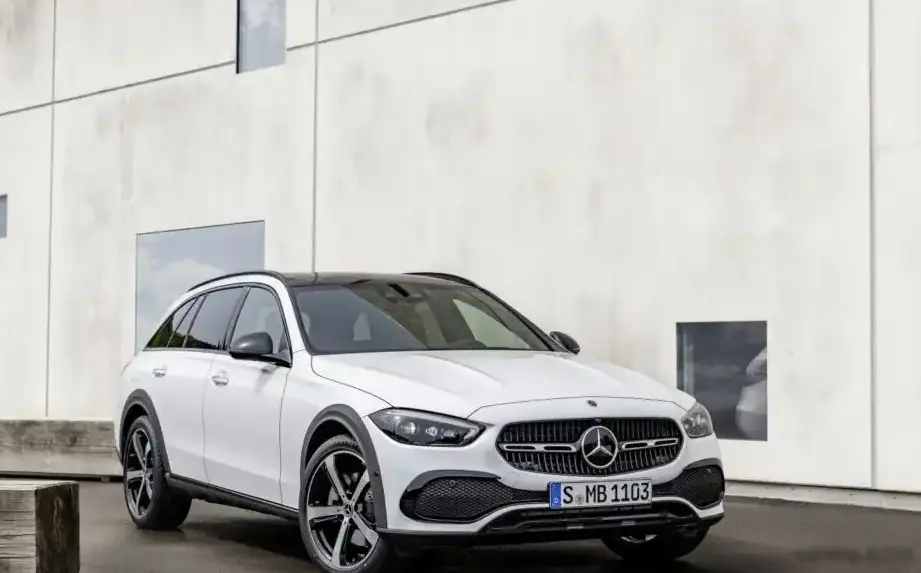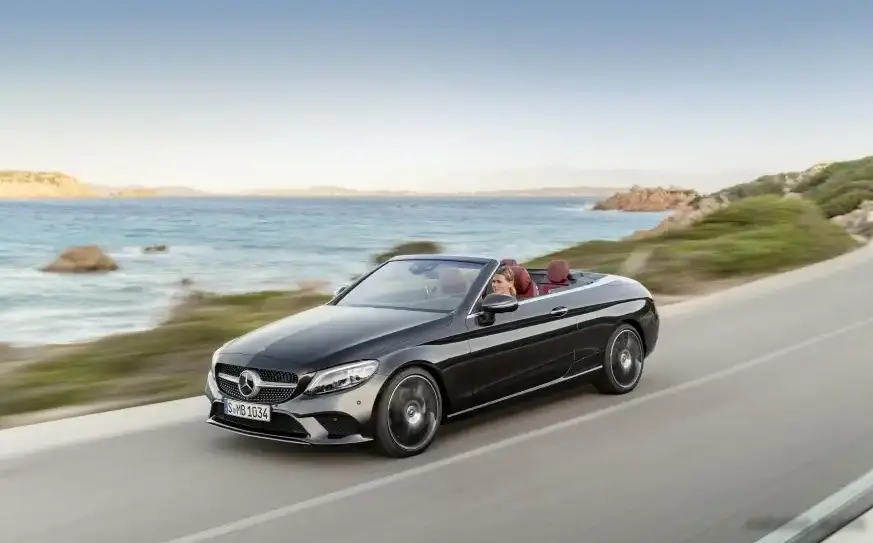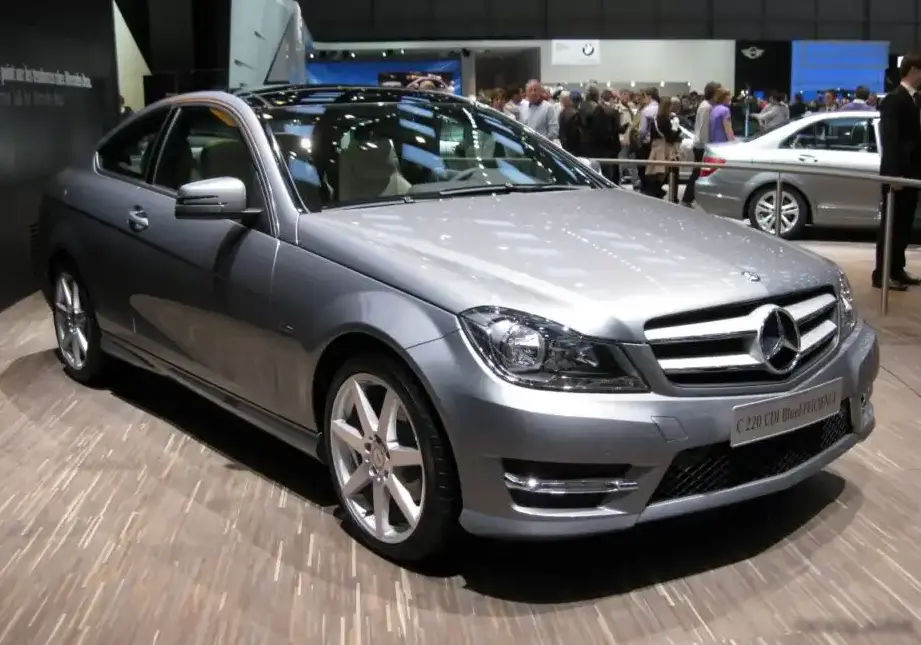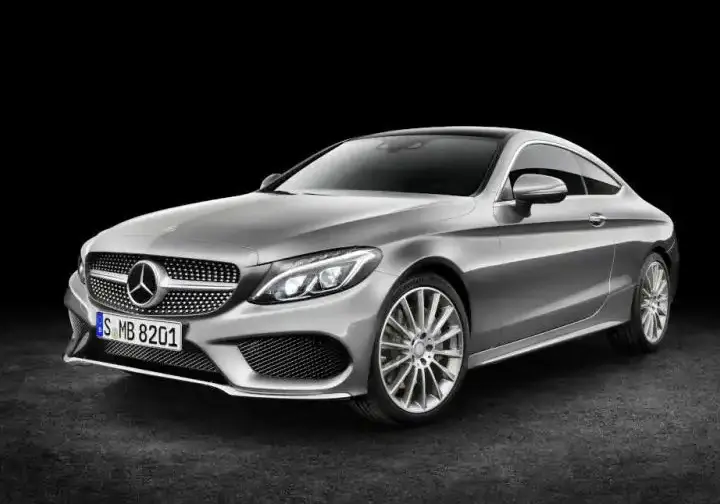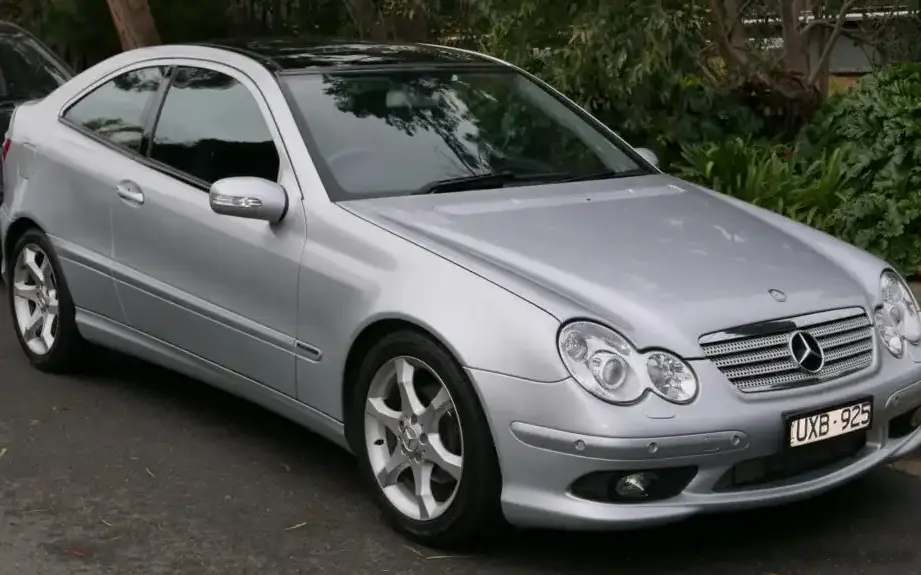
The Mercedes-Benz C-Class Sport Coupe (CL203) C 160 Automatic, produced from April 2005 to December 2006, represented an entry-level offering within the refreshed W203 C-Class range. Positioned as a stylish and accessible coupe, it catered to buyers seeking the Mercedes-Benz experience in a more compact and affordable package. This variant utilized a supercharged 1.8-liter inline-four engine paired with a five-speed automatic transmission, offering a balance between fuel efficiency and reasonable performance. The CL203 facelift, introduced in 2004, brought updated styling cues and minor mechanical refinements to the C-Class range, enhancing its appeal in the competitive compact executive segment.
Technical Specifications
| Brand | Mercedes-Benz |
| Model | C-Class |
| Generation | C-Class Sport Coupe (CL203, facelift 2004) |
| Type (Engine) | C 160 (122 Hp) Automatic |
| Start of production | April, 2005 |
| End of production | December, 2006 |
| Powertrain Architecture | Internal Combustion engine |
| Body type | Coupe |
| Seats | 4 |
| Doors | 3 |
| Fuel consumption (urban) | 11.7-12 l/100 km (20.1 – 19.6 US mpg) |
| Fuel consumption (extra urban) | 6.1-6.6 l/100 km (38.6 – 35.6 US mpg) |
| Fuel consumption (combined) | 8.2-8.5 l/100 km (28.7 – 27.7 US mpg) |
| CO2 emissions | 193 g/km |
| Fuel Type | Petrol (Gasoline) |
| Acceleration 0 – 100 km/h | 11.9 sec |
| Acceleration 0 – 62 mph | 11.9 sec |
| Acceleration 0 – 60 mph | 11.3 sec |
| Maximum speed | 202 km/h (125.52 mph) |
| Emission standard | Euro 4 |
| Weight-to-power ratio | 11.6 kg/Hp |
| Weight-to-torque ratio | 7.4 kg/Nm |
| Power | 122 Hp @ 5200 rpm |
| Torque | 190 Nm @ 1500-4200 rpm (140.14 lb.-ft. @ 1500-4200 rpm) |
| Engine layout | Front, Longitudinal |
| Engine Model/Code | M 271.921 |
| Engine displacement | 1796 cm3 (109.6 cu. in.) |
| Number of cylinders | 4 |
| Engine configuration | Inline |
| Cylinder Bore | 82 mm (3.23 in.) |
| Piston Stroke | 85 mm (3.35 in.) |
| Compression ratio | 10:1 |
| Number of valves per cylinder | 4 |
| Fuel injection system | Multi-port manifold injection |
| Engine aspiration | Supercharger, Intercooler |
| Valvetrain | DOHC |
| Engine oil capacity | 5.5 l (5.81 US qt | 4.84 UK qt) |
| Coolant capacity | 8 l (8.45 US qt | 7.04 UK qt) |
| Kerb Weight | 1410 kg (3108.52 lbs.) |
| Max. weight | 1935 kg (4265.94 lbs.) |
| Max load | 525 kg (1157.43 lbs.) |
| Trunk (boot) space – minimum | 310 l (10.95 cu. ft.) |
| Trunk (boot) space – maximum | 1100 l (38.85 cu. ft.) |
| Fuel tank capacity | 62 l (16.38 US gal | 13.64 UK gal) |
| Max. roof load | 100 kg (220.46 lbs.) |
| Permitted trailer load (braked) | 1500 kg (3306.93 lbs.) |
| Permitted trailer load (unbraked) | 730 kg (1609.37 lbs.) |
| Length | 4343 mm (170.98 in.) |
| Width | 1728 mm (68.03 in.) |
| Width including mirrors | 1960 mm (77.17 in.) |
| Height | 1406 mm (55.35 in.) |
| Wheelbase | 2715 mm (106.89 in.) |
| Front track | 1493 mm (58.78 in.) |
| Rear track | 1464 mm (57.64 in.) |
| Front overhang | 788 mm (31.02 in.) |
| Rear overhang | 840 mm (33.07 in.) |
| Drag coefficient (Cd) | 0.29 |
| Minimum turning circle | 10.76 m (35.3 ft.) |
| Drivetrain | Rear wheel drive |
| Number of gears | 5 |
| Gearbox type | Automatic transmission |
| Front suspension | Independent type McPherson, Transverse stabilizer |
| Rear suspension | Independent multi-link suspension, Transverse stabilizer |
| Front brakes | Ventilated discs |
| Rear brakes | Disc |
| Assisting systems | ABS (Anti-lock braking system) |
| Steering type | Steering rack and pinion |
| Power steering | Hydraulic Steering |
| Tires size | 205/55 R 16 V |
| Wheel rims size | 7 J x 16 H 2 |
Powertrain & Engine Architecture
The C 160 Sport Coupe was powered by the M271.921 engine, a 1.8-liter (1796 cc) inline-four cylinder powerplant. This engine was notable for its Kompressor (supercharger) system, which provided forced induction to enhance low-end torque and overall responsiveness. The supercharger, an Eaton M62 unit, was electronically controlled and engaged at lower engine speeds, supplementing the naturally aspirated intake. Fuel delivery was managed by a multi-port fuel injection system. The engine featured a double overhead camshaft (DOHC) valvetrain with four valves per cylinder, optimizing gas flow for improved performance. The five-speed automatic transmission, a 5G-Tronic unit, was designed to provide smooth and efficient gear changes. This transmission featured a torque converter and electronic control for optimized shift points based on driving conditions.
Driving Characteristics
The C 160 Automatic offered a comfortable and refined driving experience, prioritizing ease of use over outright performance. With 122 horsepower and 190 Nm of torque, acceleration from 0 to 100 km/h took approximately 11.9 seconds. While not particularly quick, the supercharger provided adequate low-end grunt for everyday driving situations. The automatic transmission, while smooth, could feel somewhat hesitant during quick overtaking maneuvers. Compared to the more powerful C 200 Kompressor or the diesel-powered C 220 CDI, the C 160 offered a less engaging driving experience, but its lighter weight and more economical engine contributed to improved fuel efficiency. The gear ratios were tuned for fuel economy and comfort, rather than aggressive acceleration.
Equipment & Trim Levels
The C 160 Sport Coupe typically came equipped with a reasonable level of standard features, including air conditioning, power windows, central locking, and an audio system. The interior featured cloth upholstery and a functional, if somewhat understated, dashboard design. Optional extras included alloy wheels, a sunroof, leather upholstery, and a more advanced audio system. The “Sport” designation indicated the presence of some sporty styling cues, such as a three-spoke steering wheel and revised interior trim. However, it did not include any significant performance upgrades beyond the standard engine and transmission.
Chassis & Braking
The CL203 C-Class Sport Coupe featured an independent suspension system at all four wheels. The front suspension utilized a McPherson strut design, while the rear employed a multi-link setup. Both ends were equipped with a transverse stabilizer bar to reduce body roll during cornering. The C 160 was equipped with ventilated disc brakes at the front and solid disc brakes at the rear. Anti-lock Braking System (ABS) was standard, providing enhanced braking control in emergency situations. The suspension tuning was geared towards comfort and ride quality, rather than outright handling precision.
Market Reception & Comparison
The C 160 Automatic was generally well-received as an affordable and stylish entry point into the Mercedes-Benz C-Class range. Critics praised its comfortable ride and fuel efficiency, but noted its relatively modest performance. Compared to the C 200 Kompressor, the C 160 offered lower running costs but lacked the same level of performance and refinement. The C 220 CDI, with its diesel engine, provided superior fuel economy and torque, but at a higher initial cost. The C 160 appealed to buyers who prioritized comfort, style, and brand prestige over outright performance.
Legacy
The M271 engine, in its various iterations, proved to be a relatively reliable powerplant. However, the supercharger system and automatic transmission require regular maintenance to ensure optimal performance and longevity. The CL203 C-Class Sport Coupe, including the C 160 variant, has become a popular choice among used car buyers seeking an affordable and stylish coupe. While not a performance icon, the C 160 offers a comfortable and refined driving experience, making it a practical and appealing option for everyday use. Parts availability remains good, and the relatively simple mechanical design makes it a relatively easy vehicle to maintain.