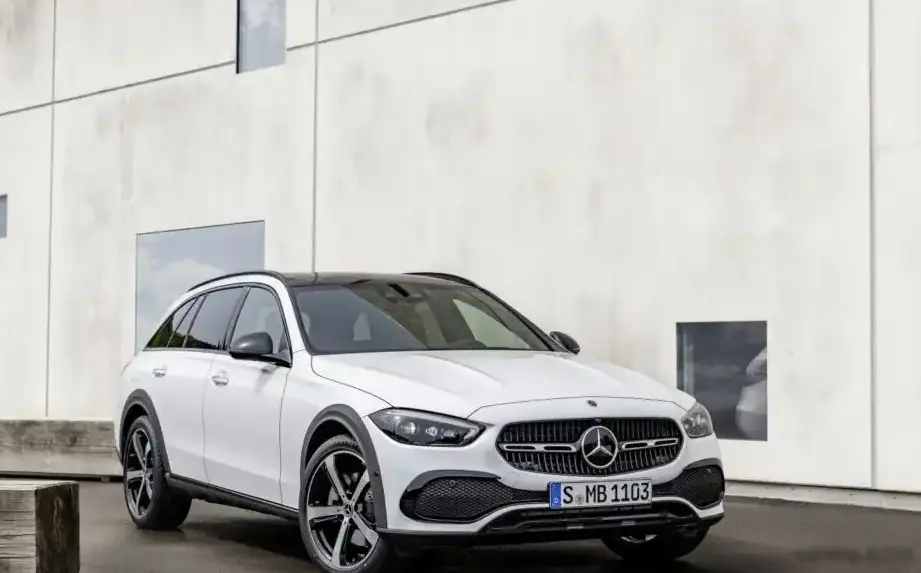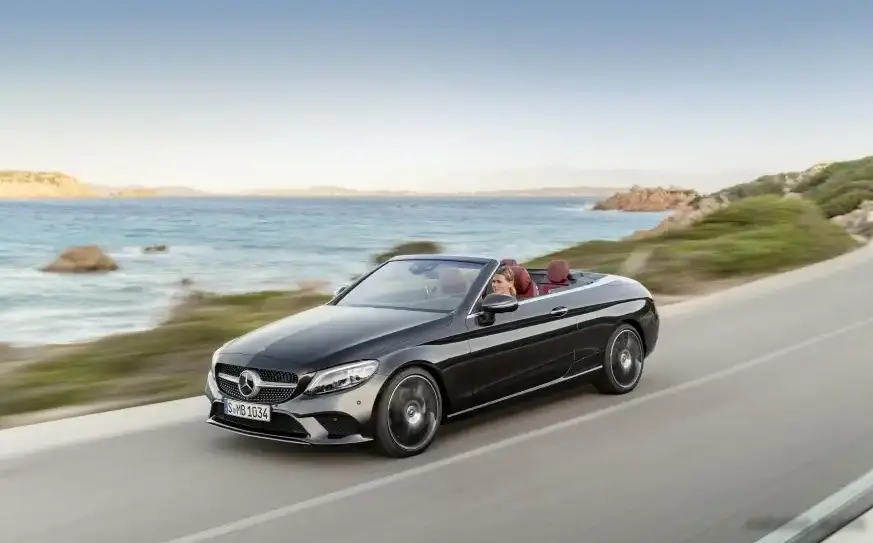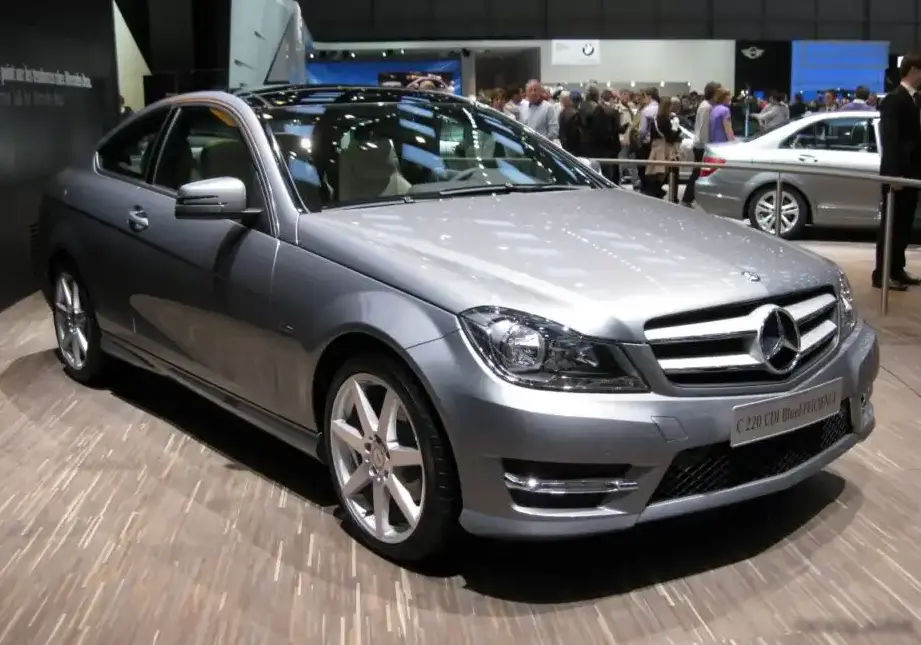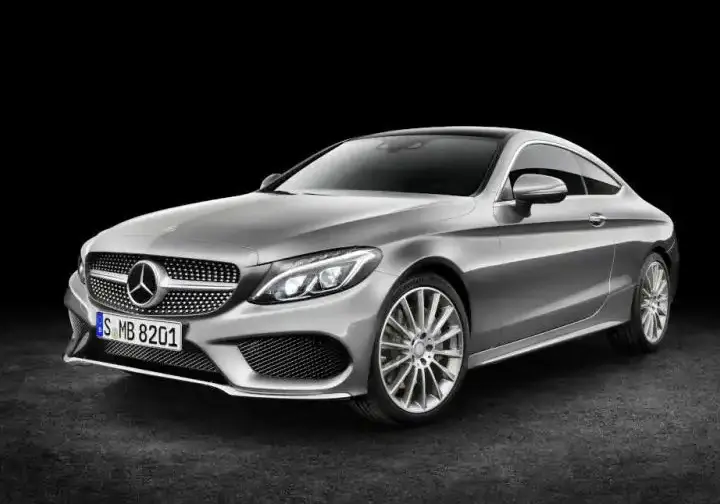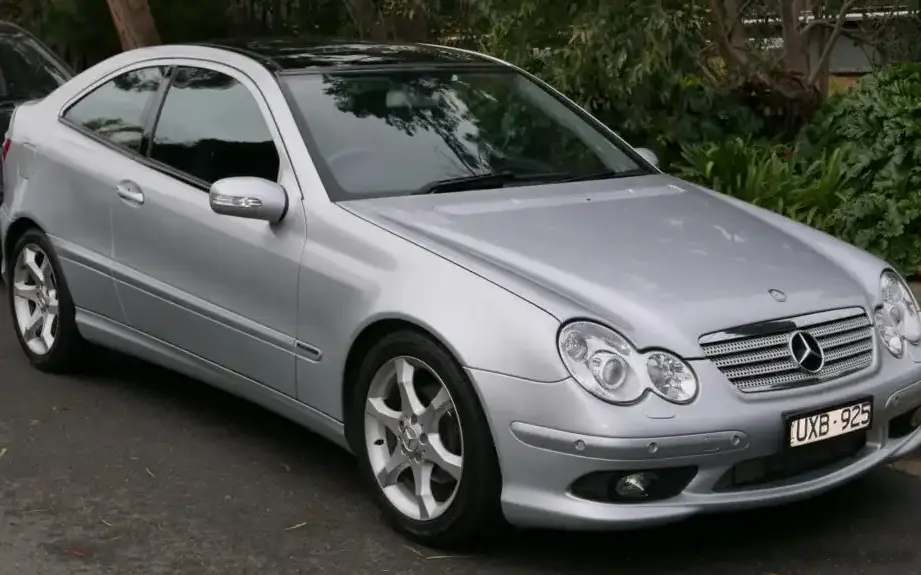
The Mercedes-Benz C-Class Sport Coupe (CL203 chassis, post-facelift introduced in 2004) C 200 CDI, equipped with a 2.1-liter turbocharged diesel engine producing 122 horsepower, represented a fuel-efficient and relatively affordable entry point into the C-Class coupe range. Production of this specific variant ran from April 2005 to April 2008. Positioned as a practical and stylish alternative to more powerful C-Class models, the C 200 CDI catered to buyers prioritizing economy and lower running costs without sacrificing the Mercedes-Benz brand experience. It was part of the W203 series, a significant model for Mercedes-Benz, representing a move towards a more modern and youthful image for the brand.
Technical Specifications
| Brand | Mercedes-Benz |
| Model | C-Class |
| Generation | C-Class Sport Coupe (CL203, facelift 2004) |
| Type (Engine) | C 200 CDI (122 Hp) DPF |
| Start of production | April, 2005 |
| End of production | April, 2008 |
| Powertrain Architecture | Internal Combustion engine |
| Body type | Coupe |
| Seats | 4 |
| Doors | 3 |
| Fuel consumption (urban) | 8.6 l/100 km (27.4 US mpg, 32.8 UK mpg, 11.6 km/l) |
| Fuel consumption (extra urban) | 5.3 l/100 km (44.4 US mpg, 53.3 UK mpg, 18.9 km/l) |
| Fuel consumption (combined) | 6.5 l/100 km (36.2 US mpg, 43.5 UK mpg, 15.4 km/l) |
| CO2 emissions | 172 g/km |
| Fuel Type | Diesel |
| Acceleration 0 – 100 km/h | 11.7 sec |
| Acceleration 0 – 62 mph | 11.7 sec |
| Acceleration 0 – 60 mph | 11.1 sec |
| Maximum speed | 208 km/h (129.25 mph) |
| Emission standard | Euro 4 |
| Weight-to-power ratio | 11.6 kg/Hp, 86.2 Hp/tonne |
| Weight-to-torque ratio | 5.2 kg/Nm, 190.8 Nm/tonne |
| Power | 122 Hp @ 4200 rpm |
| Power per litre | 56.8 Hp/l |
| Torque | 270 Nm @ 1600-2800 rpm (199.14 lb.-ft. @ 1600-2800 rpm) |
| Engine layout | Front, Longitudinal |
| Engine Model/Code | OM 646.962 |
| Engine displacement | 2148 cm3 (131.08 cu. in.) |
| Number of cylinders | 4 |
| Engine configuration | Inline |
| Cylinder Bore | 88 mm (3.46 in.) |
| Piston Stroke | 88.3 mm (3.48 in.) |
| Compression ratio | 18:1 |
| Number of valves per cylinder | 4 |
| Fuel injection system | Diesel Commonrail |
| Engine aspiration | Turbocharger, Intercooler |
| Valvetrain | DOHC |
| Engine oil capacity | 6.5 l (6.87 US qt | 5.72 UK qt) |
| Coolant capacity | 8.5 l (8.98 US qt | 7.48 UK qt) |
| Kerb Weight | 1415 kg (3119.54 lbs.) |
| Max. weight | 1945 kg (4287.99 lbs.) |
| Max load | 530 kg (1168.45 lbs.) |
| Trunk (boot) space – minimum | 310 l (10.95 cu. ft.) |
| Trunk (boot) space – maximum | 1100 l (38.85 cu. ft.) |
| Fuel tank capacity | 62 l (16.38 US gal | 13.64 UK gal) |
| Max. roof load | 100 kg (220.46 lbs.) |
| Permitted trailer load with brakes (12%) | 1500 kg (3306.93 lbs.) |
| Permitted trailer load without brakes | 750 kg (1653.47 lbs.) |
| Permitted towbar download | 75 kg (165.35 lbs.) |
| Length | 4343 mm (170.98 in.) |
| Width | 1728 mm (68.03 in.) |
| Width including mirrors | 1960 mm (77.17 in.) |
| Height | 1406 mm (55.35 in.) |
| Wheelbase | 2715 mm (106.89 in.) |
| Front track | 1493 mm (58.78 in.) |
| Rear track | 1464 mm (57.64 in.) |
| Front overhang | 788 mm (31.02 in.) |
| Rear overhang | 840 mm (33.07 in.) |
| Drag coefficient (Cd) | 0.29 |
| Minimum turning circle | 10.76 m (35.3 ft.) |
| Drivetrain Architecture | Rear wheel drive |
| Number of gears | 6 |
| Type of gearbox | Manual transmission |
| Front suspension | Independent type McPherson, Wishbone |
| Rear suspension | Independent multi-link suspension, Transverse stabilizer |
| Front brakes | Ventilated discs |
| Rear brakes | Disc |
| Assisting systems | ABS (Anti-lock braking system) |
| Steering type | Steering rack and pinion |
| Power steering | Hydraulic Steering |
| Tires size | 205/55 R 16 V |
| Wheel rims size | 7 J x 16 H 2 |
Powertrain & Engine Architecture
The C 200 CDI utilized the OM 646.962, a 2.1-liter inline-four cylinder diesel engine. This engine was a mainstay in the Mercedes-Benz lineup during the mid-2000s, known for its relatively refined operation and fuel efficiency. It featured a common rail direct injection system, delivering fuel at extremely high pressure for optimized combustion. A turbocharger with an intercooler boosted power output, providing 122 horsepower and a substantial 270 Nm (199 lb-ft) of torque. The engine employed a double overhead camshaft (DOHC) valvetrain with four valves per cylinder, enhancing breathing and contributing to its power delivery. The six-speed manual transmission was standard, offering precise gear changes and contributing to the car’s overall efficiency. The inclusion of a diesel particulate filter (DPF) was crucial for meeting increasingly stringent European emission standards.
Driving Characteristics
The C 200 CDI Sport Coupe, with its 122 hp and manual transmission, offered a balanced driving experience. While not overtly sporty, it provided adequate performance for everyday driving and highway cruising. Acceleration from 0-60 mph took around 11.1 seconds, and top speed was rated at 208 km/h (129 mph). The engine’s peak torque, available from 1600-2800 rpm, meant that strong pulling power was readily accessible, making overtaking maneuvers relatively effortless. Compared to the more powerful C 320 CDI or C 350 models, the C 200 CDI felt less urgent, but its lighter weight and efficient engine contributed to better fuel economy. The manual gearbox allowed for greater driver control, but the gear ratios were tuned for economy rather than outright performance.
Equipment & Trim Levels
The C 200 CDI Sport Coupe typically came equipped with a reasonable level of standard features. These included air conditioning, power windows, central locking, and an audio system. The “Sport” designation indicated a slightly more aggressive styling package, often including alloy wheels, a sport-tuned suspension (though subtle), and unique interior trim. Optional extras included leather upholstery, a sunroof, upgraded audio systems, and parking sensors. Interior materials were generally of good quality, reflecting Mercedes-Benz’s reputation for build quality, though the Sport Coupe’s interior was designed to appeal to a younger demographic with a more modern aesthetic.
Chassis & Braking
The CL203 C-Class Sport Coupe featured an independent suspension system all around. The front utilized a McPherson strut setup, while the rear employed a multi-link suspension. This configuration provided a good balance between ride comfort and handling. The C 200 CDI was equipped with ventilated disc brakes at the front and solid discs at the rear. Anti-lock Braking System (ABS) was standard, enhancing braking performance and safety. Stabilizer bars were fitted to both the front and rear axles to reduce body roll during cornering. The steering was a rack-and-pinion system with hydraulic power assistance, providing precise and responsive steering feel.
Market Reception & Comparison
The C 200 CDI Sport Coupe was generally well-received by automotive critics as a practical and economical option within the C-Class range. It was praised for its fuel efficiency, comfortable ride, and relatively refined engine. However, some reviewers noted that its performance was not as exhilarating as that of the more powerful C-Class models. Compared to the C 320 CDI, the C 200 CDI offered significantly better fuel economy but lacked the higher engine output. Against competitors like the BMW 320d and Audi A4 2.0 TDI, the C 200 CDI held its own in terms of refinement and build quality, though some rivals offered slightly more engaging driving dynamics.
Legacy
The OM 646 engine family, including the 2.1-liter variant found in the C 200 CDI, proved to be relatively reliable, although DPF issues could arise with infrequent long-distance driving. Today, the C 200 CDI Sport Coupe represents an affordable entry point into Mercedes-Benz ownership. Well-maintained examples are still relatively common on the used car market. While not a collector’s item, it remains a popular choice for buyers seeking a stylish, economical, and reasonably reliable coupe. The C 200 CDI’s success demonstrated the growing demand for fuel-efficient diesel engines in the European market and helped solidify Mercedes-Benz’s position as a leader in premium automotive technology.