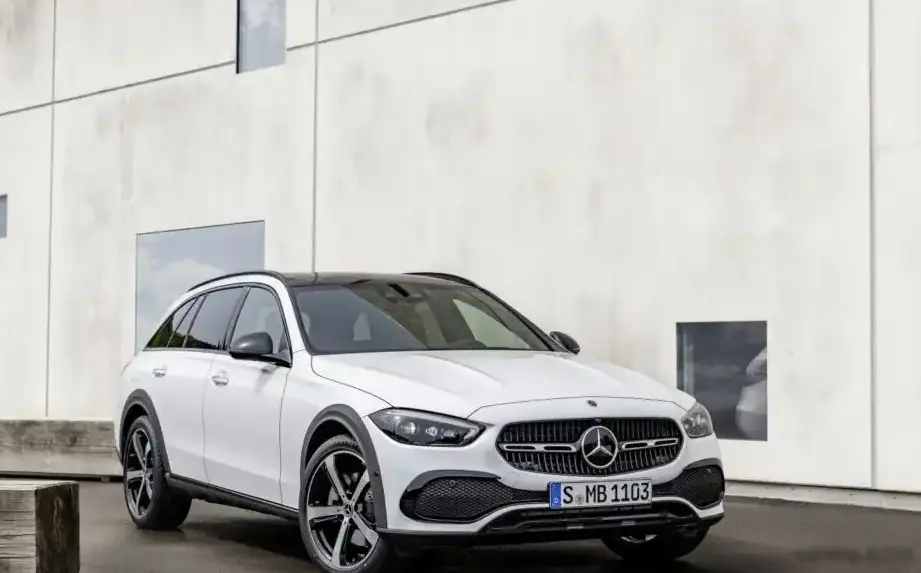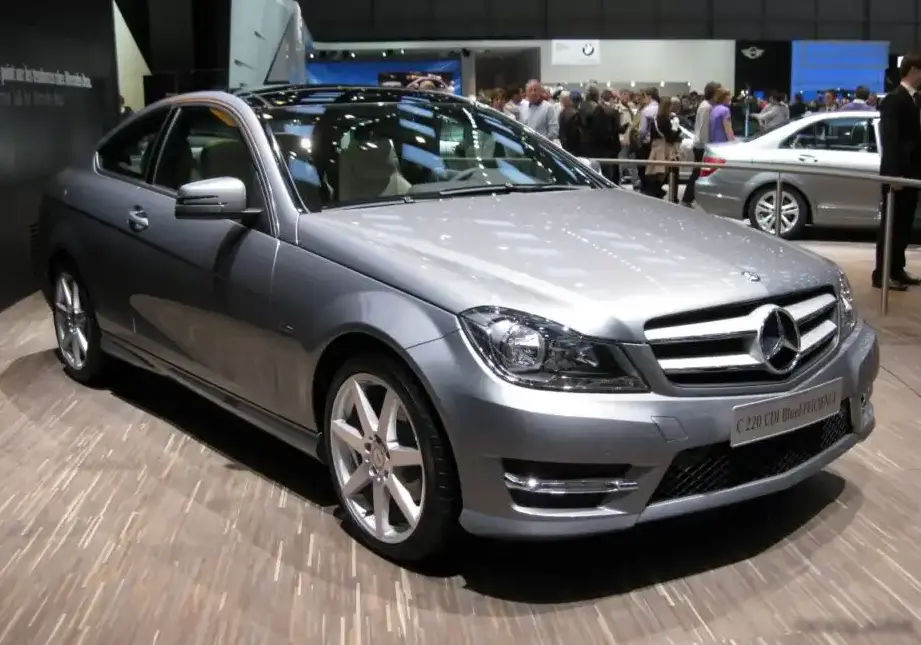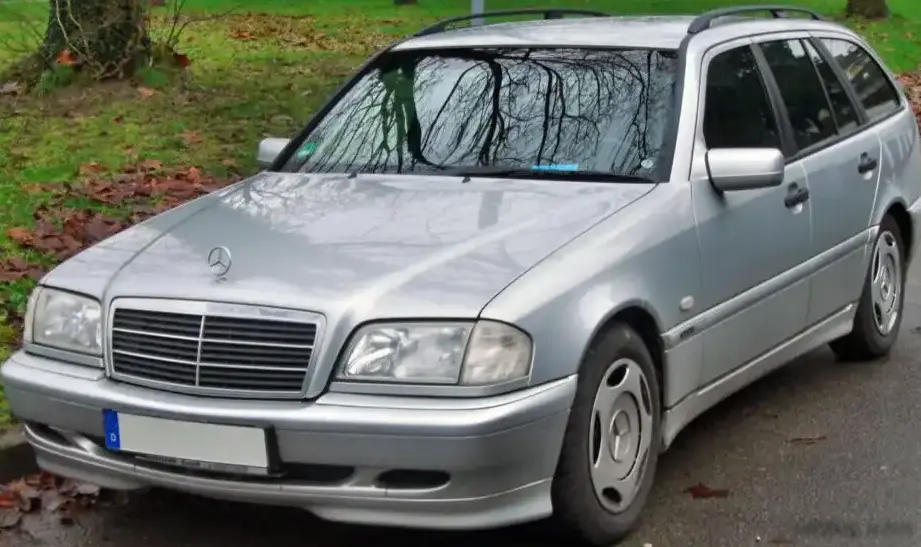
The Mercedes-Benz C-Class T-modell (S202) C 180 2.0, producing 129 horsepower, was a variant of the second-generation C-Class estate produced between 2000 and 2001. This model represented an entry point into the C-Class wagon range, offering a balance of practicality, comfort, and the prestige associated with the Mercedes-Benz brand. It was positioned below the more powerful C 200 Kompressor and C 230 Kompressor models, targeting buyers who prioritized fuel efficiency and a more relaxed driving experience over outright performance. The S202 platform, introduced in 1996 and facelifted in 1997, was a significant step forward for Mercedes-Benz in the compact executive estate segment.
Technical Specifications
| Brand | Mercedes-Benz |
| Model | C-Class |
| Generation | C-Class T-modell (S202, facelift 1997) |
| Type (Engine) | C 180 2.0 (129 Hp) |
| Start of production | June, 2000 |
| End of production | January, 2001 |
| Powertrain Architecture | Internal Combustion engine |
| Body type | Station wagon (estate) |
| Seats | 5 |
| Doors | 5 |
| Fuel consumption (urban) | 13.5 l/100 km (17.4 US mpg, 20.9 UK mpg) |
| Fuel consumption (extra urban) | 7 l/100 km (33.6 US mpg, 40.4 UK mpg) |
| Fuel consumption (combined) | 9.4 l/100 km (25 US mpg, 30.1 UK mpg) |
| Fuel Type | Petrol (Gasoline) |
| Acceleration 0 – 100 km/h | 11.2 sec |
| Acceleration 0 – 62 mph | 11.2 sec |
| Acceleration 0 – 60 mph | 10.6 sec |
| Maximum speed | 203 km/h (126.14 mph) |
| Weight-to-power ratio | 11.2 kg/Hp |
| Weight-to-torque ratio | 7.6 kg/Nm |
| Power | 129 Hp @ 5300 rpm |
| Power per litre | 64.6 Hp/l |
| Torque | 190 Nm @ 4000 rpm (140.14 lb.-ft. @ 4000 rpm) |
| Engine layout | Front, Longitudinal |
| Engine Model/Code | M 111 E 20 EVO / 111.952 |
| Engine displacement | 1998 cm3 (121.93 cu. in.) |
| Number of cylinders | 4 |
| Engine configuration | Inline |
| Cylinder Bore | 89.9 mm (3.54 in.) |
| Piston Stroke | 78.7 mm (3.1 in.) |
| Compression ratio | 10.6:1 |
| Number of valves per cylinder | 4 |
| Fuel injection system | Multi-port manifold injection |
| Engine aspiration | Naturally aspirated engine |
| Valvetrain | DOHC |
| Engine oil capacity | 5.5 l (5.81 US qt | 4.84 UK qt) |
| Coolant | 8.5 l (8.98 US qt | 7.48 UK qt) |
| Kerb Weight | 1440 kg (3174.66 lbs.) |
| Max. weight | 1950 kg (4299.01 lbs.) |
| Max load | 510 kg (1124.36 lbs.) |
| Fuel tank capacity | 62 l (16.38 US gal | 13.64 UK gal) |
| Length | 4516 mm (177.8 in.) |
| Width | 1723 mm (67.83 in.) |
| Height | 1460 mm (57.48 in.) |
| Wheelbase | 2690 mm (105.91 in.) |
| Front track | 1499 mm (59.02 in.) |
| Rear track | 1464 mm (57.64 in.) |
| Drag coefficient (Cd) | 0.33 |
| Drivetrain Architecture | Rear wheel drive |
| Number of gears | 6 |
| Type of gearbox | Manual transmission |
| Front suspension | Double wishbone |
| Rear suspension | Independent multi-link spring suspension with stabilizer |
| Front brakes | Disc |
| Rear brakes | Disc |
| Assisting systems | ABS (Anti-lock braking system) |
| Steering type | Cone worm with recirculation balls |
| Power steering | Hydraulic Steering |
| Tires size | 195/65 R15 |
| Wheel rims size | 6.5J x 15 |
Powertrain & Engine Architecture
The C 180 T-modell was powered by the M111 E 20 EVO engine, a 1.998-liter inline-four cylinder gasoline engine. This engine was a mainstay of the Mercedes-Benz lineup during the late 1990s and early 2000s, known for its relative simplicity and durability. The M111 featured a cast iron block and aluminum cylinder head, incorporating a double overhead camshaft (DOHC) valvetrain with four valves per cylinder. Fuel delivery was handled by a multi-port fuel injection system, providing precise fuel metering for improved efficiency and emissions. The engine produced 129 horsepower at 5300 rpm and 190 Nm (140 lb-ft) of torque at 4000 rpm. The engine was paired with a 6-speed manual transmission, offering a relatively engaging driving experience for the time. An optional 5-speed automatic transmission was also available, though it impacted acceleration slightly.
Driving Characteristics
The C 180 T-modell with the manual transmission offered adequate performance for everyday driving. Acceleration from 0 to 60 mph took around 10.6 seconds, and the top speed was approximately 126 mph. While not a sports car, the engine provided sufficient power for highway cruising and overtaking maneuvers. The 6-speed manual gearbox allowed drivers to keep the engine in its optimal power band, enhancing responsiveness. The automatic transmission, while offering convenience, resulted in slightly slower acceleration and a less engaging driving experience. The rear-wheel-drive configuration provided balanced handling, although it lacked the all-weather capability of all-wheel-drive systems offered on other C-Class variants.
Equipment & Trim Levels
The C 180 T-modell typically came standard with features such as power windows, central locking, and an AM/FM radio. Higher trim levels offered options like leather upholstery, sunroof, automatic climate control, and upgraded audio systems. Safety features included ABS anti-lock brakes and airbags. The interior design was typical of Mercedes-Benz at the time, emphasizing comfort and quality materials. The estate body style provided a generous cargo capacity, making it a practical choice for families and those needing to transport larger items.
Chassis & Braking
The S202 C-Class utilized a double wishbone front suspension and an independent multi-link rear suspension, providing a comfortable ride and good handling characteristics. Stabilizer bars were fitted to both axles to reduce body roll during cornering. The braking system consisted of disc brakes on all four wheels, providing adequate stopping power. The ABS anti-lock braking system helped to maintain steering control during emergency braking situations.
Market Reception & Comparison
The C 180 T-modell was generally well-received by automotive critics as a practical and comfortable estate car. It was praised for its build quality, spacious interior, and fuel efficiency. However, some critics noted that its performance was not as exciting as that of the more powerful C-Class variants. Compared to the C 200 Kompressor, the C 180 offered less power and acceleration, but it was also more affordable and fuel-efficient. The C 180 appealed to buyers who prioritized practicality and value over outright performance.
Legacy
The M111 engine, found in the C 180 T-modell, is known for its reliability and longevity when properly maintained. While not without its potential issues (such as oil leaks and occasional sensor failures), the engine is generally considered to be robust and capable of high mileage. Today, the S202 C-Class T-modell, including the C 180 variant, has become a popular choice among classic Mercedes-Benz enthusiasts. Well-maintained examples are sought after for their practicality, comfort, and classic styling. The C 180, in particular, represents an accessible entry point into the world of classic Mercedes-Benz ownership, offering a blend of German engineering and estate car versatility.